


Want a pest-free garden without chemicals? Certain plants can naturally repel pests, protect your crops, and even attract helpful insects like bees and ladybugs. Here's a quick breakdown of 15 plants that double as natural pest control:
- Marigolds: Repel nematodes, aphids, mosquitoes, and more.
- Nasturtiums: Act as trap crops for aphids, squash bugs, and beetles.
- Basil: Keeps mosquitoes, flies, and tomato hornworms away.
- Rosemary: Deters mosquitoes, spider mites, and cabbage loopers.
- Catnip: Effective against mosquitoes, flies, and cockroaches.
- Garlic: Repels aphids, beetles, and caterpillars.
- Lavender: Keeps moths, fleas, and mosquitoes at bay.
- Chrysanthemums: Contain pyrethrins, repelling ants, fleas, and ticks.
- Petunias: Target aphids, hornworms, and squash bugs.
- Mint: Drives off cabbage moths, fleas, and ants.
- Chives: Protects against aphids and carrot flies.
- Dill: Repels cabbage worms, aphids, and squash bugs.
- Borage: Deters hornworms and cabbage worms.
- Cilantro: Confuses pests like aphids and whiteflies.
- Sunflowers: Trap pests like aphids and beetles.
These plants are easy to grow, cost-effective, and safe for your family and pets. Pair them with proper garden placement for maximum pest control. Plus, many of them attract pollinators and can be used in cooking. Ready to ditch chemicals? Start planting today!
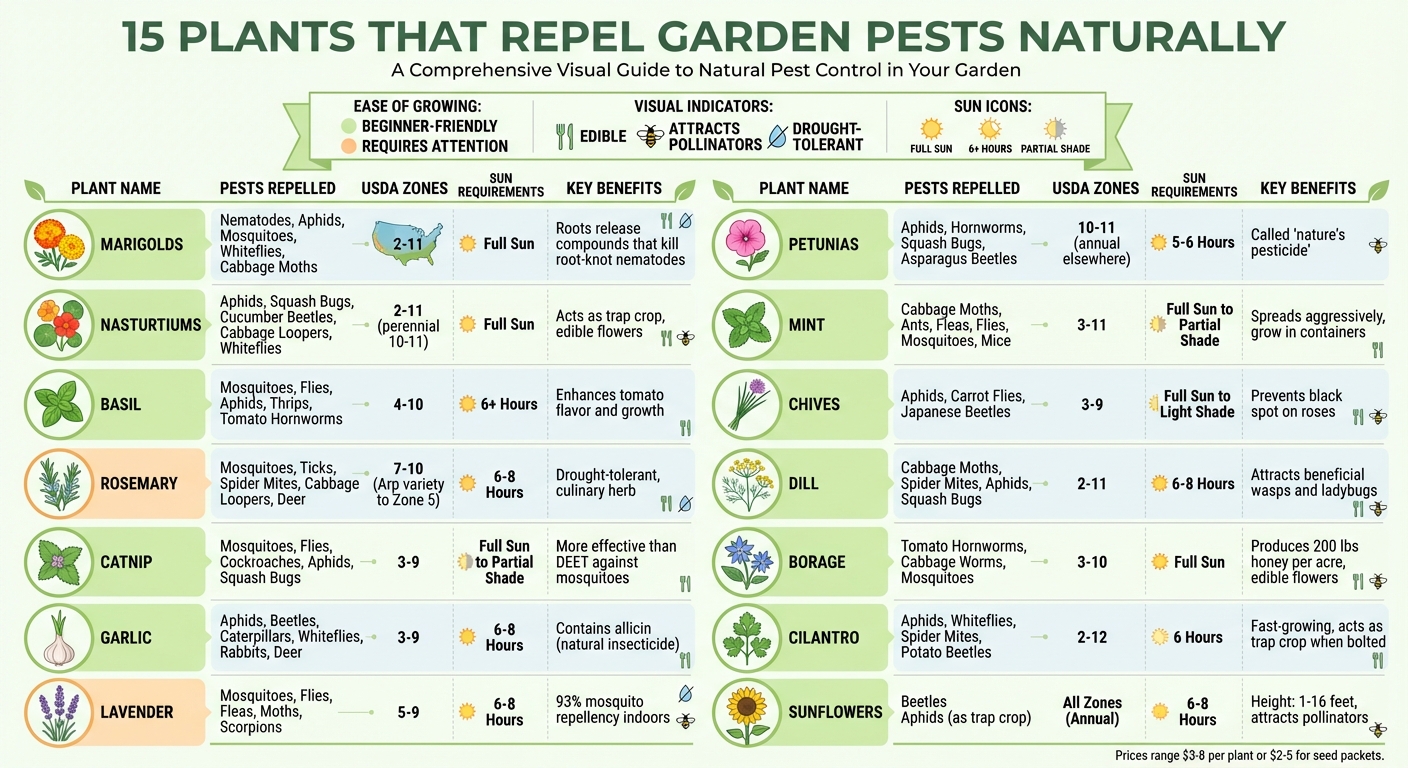
15 Pest-Repelling Plants: What They Repel and Growing Requirements
1. Marigolds
Pest-Repelling Properties
Marigolds are more than just a pretty face in your garden - they're natural pest fighters. Above ground, their musky scent keeps mosquitoes, aphids, whiteflies, cabbage moths, rabbits, and deer at bay. Below ground, their roots release compounds like alpha-terthienyl and thiophene, which are effective against root-knot nematodes, a threat to crops like tomatoes, peppers, and cucumbers.
Nicole Carpenter, President of Black Pest Prevention, highlights their effectiveness:
"Marigolds actually have one legit pest they can be genuinely good at suppressing: root-knot nematodes, for plants like tomatoes, peppers, cucumbers, eggplant, and squash."
To target nematodes, plant marigolds densely and at least two months before introducing your vegetable crops. French marigolds (Tagetes patula) are particularly effective for soil pest control, while taller African marigolds are better at repelling pests like mosquitoes and aphids above ground.
Ease of Cultivation
Marigolds are a gardener’s dream when it comes to ease of care. They germinate in just 4–7 days and bloom within about 8 weeks. These hardy plants thrive in full sun and well-drained soil. Once established, they can handle drought conditions. For best results, water at the base of the plant, allow the soil to dry out between waterings, and remove spent blooms regularly to encourage new growth.
Climate Suitability
Marigolds grow well across USDA Zones 2–11 as annuals. Plant them in spring, spacing French marigolds 8–10 inches apart and African varieties 10–12 inches apart. African and signet marigolds are better equipped to handle dry conditions, while French varieties are more adaptable to wetter environments.
Additional Garden Benefits
Beyond pest control, marigolds attract beneficial insects like bees, butterflies, and ladybugs, which help pollinate and protect your garden. With prices ranging from $3–$8 per plant, marigolds are a cost-effective alternative to chemical pesticides, making them a smart and natural choice for any garden.
sbb-itb-0bbb908
2. Nasturtiums
Pest-Repelling Properties
Nasturtiums are a natural pest deterrent with a unique ability to mask the scent of nearby vegetables using their peppery fragrance. This helps keep pests like squash bugs, cucumber beetles, cabbage loopers, adult cabbage worms, Colorado potato beetles, whiteflies, Mexican bean beetles, and even mosquitoes at bay.
What makes nasturtiums stand out is their role as trap crops. They’re more appealing to pests than many vegetables, drawing aphids (such as green peach, melon, and potato aphids) and flea beetles away from plants like lettuce, kale, and roses. Research published in HortTechnology by Kentucky State University highlights that intercropping nasturtiums with watermelons and muskmelons significantly reduced cucumber beetle populations and damage to these crops.
"Nasturtiums contain a chemical compound that gives them their peppery aroma and flavor. This serves as a non-hazardous way to control pests by turning many insects off."
– Jenna Rich, Organic Farmer
For best results, plant nasturtiums about 4 to 6 feet away from crops to prevent pests from easily moving back to your vegetables. If you’re protecting brassicas from cabbage loopers, aim for one nasturtium plant for every four vegetable plants.
Ease of Cultivation
Nasturtiums are a gardener’s dream when it comes to ease of growth. Their seeds germinate quickly, and they thrive in low-maintenance conditions. Sow seeds directly outdoors in late spring, spacing trailing varieties 12 to 18 inches apart. These plants prefer moist, well-drained soil with low fertility - too much nitrogen can dull their vibrant blooms.
- Trailing varieties: Ideal for ground cover under trellised crops or in hanging baskets.
- Compact bush types: Perfect for borders or tight intercropping spaces.
Once established, nasturtiums need little more than regular watering to flourish.
Climate Suitability
Nasturtiums are grown as annuals in most areas (USDA Zones 2–11) but can act as tender perennials in Zones 10–11. They thrive in full sun and can adapt to a range of climates, making them a reliable choice for gardens across the United States.
Additional Garden Benefits
Nasturtiums don’t just fend off pests - they also attract beneficial insects like ladybugs, hoverflies, lacewings, bees, and butterflies, providing an extra layer of protection for your garden. Beyond their practical uses, they’re entirely edible, with a peppery, watercress-like taste that adds a flavorful twist to salads.
With individual plants costing $3 to $8 and seed packets available for $2 to $5, nasturtiums are an affordable, multi-purpose addition to your garden. Whether you’re looking to protect your crops, attract pollinators, or spice up your meals, these vibrant flowers have something to offer.
Plant These 5 Flowers To REPEL PESTS And ATTRACT POLLINATORS!
For more information on protecting your garden, check out this guide to natural pest deterrents categorized by pest type.
3. Basil
Basil is a garden staple that not only keeps pests at bay but also adds a flavorful touch to your kitchen creations.
Pest-Repelling Properties
Basil emits essential oils like linalool, eugenol, and citronellol, which interfere with scent trails that pests rely on to navigate their surroundings. This aromatic shield is effective against mosquitoes, houseflies, aphids, thrips, whiteflies, tomato hornworms, asparagus beetles, mites, and carrot flies.
Studies show that linalool in basil disrupts mosquito navigation, making it an excellent natural deterrent. When placed near entryways, patios, or crops like tomatoes and peppers, basil acts as a non-toxic barrier to unwanted insects.
"Basil's effectiveness comes from its potent scent and the essential oils it releases - compounds like eugenol, citronellol, and linalool that confuse and repel common pests."
– Cultivated Earth
For quick relief, crush fresh basil leaves and apply their oils to your skin or nearby surfaces. Alternatively, you can make a simple repellent spray by steeping one cup of fresh basil leaves in a cup of boiling distilled water for 2–4 hours. Strain the mixture, then add a tablespoon of vodka or witch hazel to preserve it.
Ease of Cultivation
Basil is incredibly easy to grow, making it a favorite for gardeners. Plant it in well-drained, nutrient-rich soil, ensuring it gets at least six hours of sunlight daily. Space plants 12–24 inches apart and water at the base to avoid fungal issues. Seeds sprout quickly, typically within 5 to 10 days when kept at around 70°F.
To encourage bushier growth, pinch off leaves once the plant reaches six inches tall, and remove flower spikes as they appear to keep the plant focused on producing leaves.
Climate Suitability
Basil thrives in warm conditions and grows best in USDA Hardiness Zones 4–10. It’s sensitive to cold, with temperatures below 40°F causing potential harm. For outdoor planting, wait until daytime temperatures are consistently in the 70s and nighttime temperatures stay above 50°F. These requirements make basil a reliable addition to gardens in warmer climates.
Additional Garden Benefits
Basil offers more than pest control - it’s a magnet for helpful pollinators like bees and butterflies when allowed to flower. It also attracts parasitoid wasps, which hunt harmful garden pests. As a companion plant, basil is said to enhance the growth and flavor of tomatoes while protecting them from hornworms and beetles.
"One of my favorite companion plants is basil, which I use to improve the flavor of tomatoes and keep hornworms at bay."
– Dagny Kream, The Cottage Peach
On top of all that, fresh basil elevates dishes like pesto, salads, and sauces. With its pest-repelling abilities, pollinator appeal, and culinary uses, basil is a must-have for any gardener.
4. Rosemary
Rosemary adds a savory, pine-like fragrance to your garden while working as a natural pest deterrent.
Pest-Repelling Properties
This Mediterranean herb's robust aroma creates a barrier that confuses and keeps pests away. It’s particularly effective against mosquitoes, ticks, thrips, spider mites, cabbage loopers, carrot flies, cockroaches, slugs, snails, Mexican bean beetles, and Japanese beetles. It even discourages larger animals like deer from wandering into your garden.
"Rosemary's strong aroma wards off pests and discourages bugs from nesting on it, particularly those that are more attracted to sweet-smelling plants."
– Sharon Kong Perring, Author
For an extra layer of protection, you can make a homemade spray by boiling a handful of rosemary cuttings in a quart of water for 30 minutes. Strain the liquid, refrigerate it, and use it as needed. Planting rosemary in containers around patios or seating areas can also help create a mosquito-free zone.
Ease of Cultivation
Rosemary is not only effective but also easy to grow. Once established, it requires minimal care and is drought-tolerant, though it does have specific needs. It thrives in sandy, well-draining soil to avoid root rot and requires 6–8 hours of full sunlight daily.
"Rosemary is fairly easy to keep alive throughout the growing season. It's drought-tolerant once it's established in your garden... It really just needs a minimum of care and attention."
– Nicole Burke, Founder of Rooted Garden
For quicker results, start with nursery transplants or rooted cuttings rather than seeds, which can take 15–30 days to germinate. Use the “finger test” before watering: if the soil feels dry 2 inches down, it’s time to water. When harvesting, avoid cutting more than one-third of the plant to allow it to recover properly.
Climate Suitability
Rosemary thrives in warm, sunny climates and is hardy in USDA Zones 7 through 10. While most varieties can’t handle frost, the 'Arp' variety can survive in colder zones, down to Zone 5.
"This one is another plant perfect for summer heat because it likes to be dry."
– Carmen Johnston, Garden Lifestyle Expert
In colder areas, growing rosemary in containers allows you to bring it indoors during winter. Place it near a south-facing window to ensure it gets enough light. The plant prefers soil with a pH of 6.0 to 7.0 and can grow between 2 and 7 feet tall, with a spread of 2 to 4 feet, depending on the variety. To keep your rosemary thriving, plan to replace plants every five years by propagating new ones from cuttings.
Additional Garden Benefits
In addition to repelling pests, rosemary attracts pollinators like bees and butterflies when it blooms. It’s also a great companion plant for brassicas - such as broccoli, cabbage, and kale - helping to mask their scent from pests. Beyond its practical uses, rosemary adds texture and beauty to your garden and serves as a handy source of fresh herbs for cooking.
5. Catnip
Catnip isn’t just for entertaining your feline friends - it’s also a surprisingly effective natural pest repellent. Its unique properties make it a great addition to gardens, particularly for those looking to reduce chemical pesticide use with a natural alternative.
Pest-Repelling Properties
Catnip contains a compound called nepetalactone, which insects find highly irritating. This makes it a natural deterrent for pests like mosquitoes, flies, cockroaches, termites, aphids, squash bugs, cabbage loopers, and certain beetles. In fact, studies have shown that nepetalactone can outperform DEET in repelling mosquitoes and even achieve complete effectiveness against some species. Planting catnip near patios or outdoor seating areas can help keep bugs at bay, offering a natural and pleasant alternative to chemical sprays.
Easy to Grow
Catnip is a hardy plant that thrives with minimal effort. It does best in full sun with well-draining soil and needs only about an inch of water weekly when newly planted. Once established, it becomes drought-tolerant. It’s adaptable to various soil types - whether dry clay, sandy, or rocky - and can handle a wide pH range (5.0 to 8.0).
"Catnip thrives with little care. It needs full sun and well-draining soil."
– Marie Iannotti, Master Gardener
A light application of compost in early spring is all the nutrition catnip requires. Over-fertilizing can actually reduce the plant’s pest-repelling oils. However, catnip can spread aggressively, so it’s best to grow it in containers or hanging baskets to keep it in check. If neighborhood cats are a concern, protect young plants with a wire basket or birdcage.
For better seed germination, try freezing the seeds for a month, thawing them, and then freezing again before planting. Pinching back young plants at 3–4 inches tall encourages bushier growth, while trimming the plant back to 3–4 inches after its first bloom can stimulate a second round of flowering.
Climate and Growing Conditions
Catnip is well-suited for USDA Zones 3 through 9, making it a viable option for most of the U.S. While it loves full sun, a bit of shade can help in hotter southern areas to prevent heat stress. The plant typically grows 2 to 3 feet tall with a spread of 1 to 2 feet. In colder regions, catnip dies back in winter but regrows in spring. Adding a 2–3 inch layer of mulch can protect its roots from extreme winter temperatures.
More Than Just Pest Control
Catnip doesn’t just repel pests - it also draws in beneficial pollinators like honey bees, butterflies, and wasps, which can improve the pollination of nearby crops. Additionally, its leaves can be used to make herbal tea, which some claim helps with anxiety, sleep issues, sore throats, and upset stomachs. The plant is safe for humans and pets in moderation, though cats that overindulge may experience mild digestive upset.
With its ability to protect your garden from pests while attracting helpful pollinators, catnip is a versatile plant that offers multiple advantages for gardeners. Plus, it’s a low-maintenance option that adds value to any outdoor space.
6. Garlic
Garlic is a powerhouse when it comes to natural pest control in the garden. Its strong sulfur compounds create a sharp, pungent smell that confuses and deters pests from finding your plants. The active ingredient, allicin, works as both an insecticide and a fungicide, making garlic a versatile tool for protecting your garden.
Pest-Repelling Properties
Thanks to its potent chemical makeup, garlic is effective against a wide range of pests. It can repel aphids, Japanese beetles, flea beetles, Mexican bean beetles, cabbage loopers, whiteflies, two-spotted spider mites, ticks, caterpillars, slugs, snails, ants, and roaches. Studies even show that garlic extract can eliminate certain root-knot nematodes (Meloidogyne incognita). Larger animals like rabbits and deer also tend to avoid plants treated with garlic.
"Garlic has a strong odor that masks the scents that attract pests to plants. Even better, the solution is harmless to plants, too."
– Shannon Harlow-Ellis, Associate Certified Entomologist, Mosquito Joe
To use garlic in your garden, you can plant it alongside vulnerable crops like carrots, beets, cabbage, or broccoli. Alternatively, try a garlic spray. For a DIY version, blend 3–5 garlic cloves with water, let it sit overnight, strain, and mix in a teaspoon of dish soap or vegetable oil to help it stick to the leaves. Spray this mixture on both sides of the leaves every two weeks, but avoid spraying flowers to protect pollinators.
Ease of Cultivation
Garlic is easy to grow and doesn't demand much attention, partly because its natural pest-repelling properties reduce the need for extra care. To plant garlic, place individual cloves 2 inches deep, pointed side up, and space them 4 to 8 inches apart in rows 6 to 12 inches apart. A 10-foot row can yield about 5 pounds of garlic. Garlic thrives in full sun - 6 to 8 hours a day - and grows best in well-drained, nutrient-rich soil. Avoid using store-bought garlic, as it’s often treated to prevent sprouting and may not suit your local climate.
"I plant in raised beds for good drainage and then mulch with about 6 inches of old hay after the ground freezes. I never water my garlic - I like low-maintenance vegetables!"
– Robin Jarry, Garlic Grower
With its minimal care requirements, garlic is an excellent addition to any garden, especially as part of a natural pest management plan.
Climate Suitability
Garlic grows well in USDA Hardiness Zones 3 through 9, covering much of the U.S.. The key is choosing the right type for your region. Hardneck garlic is ideal for northern areas (Zones 1–6) with cold winters and produces edible scapes in early summer. Softneck garlic, on the other hand, thrives in southern zones (7–10) with milder winters and is known for its longer storage life and suitability for braiding.
Most garlic is planted in late fall, after the first frost, and requires 4 to 10 weeks of cold temperatures (below 45°F) to develop large bulbs. In warmer zones (10 and above), you can replicate winter conditions by refrigerating cloves in a paper bag for 10 weeks before planting. In colder zones, mulching with 6 inches of straw after the ground freezes helps protect the cloves during winter.
Garlic’s adaptability to different climates and its ease of growth make it a reliable ally in keeping your garden healthy and pest-free.
7. Lavender
Lavender stands out as one of the best natural repellents, offering a garden-friendly solution to keep pests away with a customized plan. Its power lies in linalool, the compound behind its soothing scent and pest-repelling abilities.
Pest-Repelling Properties
Lavender is effective against a wide variety of pests, including mosquitoes, flies, fleas, moths, scorpions, and even water scorpions. It works on flying insects, crawling pests, and some arachnids.
"Lavender is the most effective at keeping the most insects away."
– Real Simple
Studies reveal that concentrated forms like linalool diffusers can repel up to 93% of mosquitoes indoors. Outdoors, planting lavender in clusters or as a hedge enhances its protective barrier.
On top of its pest control benefits, lavender is a breeze to grow.
Ease of Cultivation
Lavender thrives with minimal care, especially in hot, dry conditions. It needs full sun (6 to 8 hours daily) and well-draining soil with a pH between 6.5 and 7.5. Proper drainage is crucial, as lavender struggles in wet soils, particularly during winter.
Starting with nursery plants is recommended since lavender seeds can take up to 90 days to germinate. Water young plants once or twice a week until established, then reduce watering to every 2 to 3 weeks. Mature lavender requires no fertilizer and naturally resists deer, rabbits, and squirrels due to its strong aroma. In humid areas, using gravel mulch instead of organic mulch helps keep the plant’s crown dry and prevents fungal problems.
Climate Suitability
Lavender is well-suited for USDA Zones 5–9. English lavender (Lavandula angustifolia) can handle cold winters down to Zone 5, while Spanish lavender (L. stoechas) prefers the milder climates of Zones 7 to 9. In colder regions, you can protect lavender with a winter mulch of straw or evergreen boughs, or grow it in containers that can be moved indoors. For humid southern climates, try growing lavender as an annual or opt for humidity-tolerant varieties like Lavandula dentata.
Additional Garden Benefits
Lavender doesn’t just repel pests; it also enhances your garden in other ways. Growing to about 1 to 3 feet tall and wide, it produces stunning purple blooms that attract helpful pollinators like bees and butterflies. Its use dates back to Roman times, when it was valued for both its insect-repelling and calming properties. Whether you use it to line garden borders, accent patios, or bring life to outdoor spaces, lavender is a beautiful and practical choice for natural pest control.
8. Chrysanthemums
After exploring lavender's aromatic defenses, let's turn to chrysanthemums, another powerful natural pest control option. These flowers are well-known for their ability to repel insects, thanks to pyrethrins - organic compounds that disrupt insects' nervous systems, leading to paralysis and death upon contact or ingestion.
"Chrysanthemums contain pyrethrum, a natural insect repellent commonly used in insecticides."
– Carrie Spoonemore, Co-creator of Park Seed's From Seed to Spoon app
Pest-Repelling Properties
Chrysanthemums are effective against a wide variety of garden pests, including ants, ticks, fleas, spider mites, cockroaches, Japanese beetles, and bed bugs. To make the most of their pest-repelling abilities, plant them within a foot of vegetables or ornamental plants you want to protect. While most garden mums emit a scent that deters pests, only the Dalmatian daisy (Chrysanthemum cinerariifolium) contains enough pyrethrins to act as a true pesticide. In fact, pyrethrins are now among the most widely used pesticides in home gardening.
Ease of Cultivation
Chrysanthemums are relatively simple to grow but do require some care. They thrive in full sun with well-drained, nutrient-rich soil. In warmer areas, offering morning sun paired with some afternoon shade can prevent overheating. For best results, prune young perennial mums early in the season to encourage branching, and remove spent blooms regularly to promote more flowers - this is especially important since the highest concentration of pest-repelling compounds is found in the flower heads. These plants typically grow between 1 and 3 feet tall and wide.
Climate Suitability
Chrysanthemums are hardy in USDA Zones 5 through 9, making them a versatile choice for many U.S. gardens. They need consistent watering and occasional fertilizer during their active growing season. In hotter climates, shielding them from intense afternoon sun helps maintain their health and encourages blooming.
Additional Garden Benefits
Beyond pest control, chrysanthemums brighten your garden with vibrant colors from late summer through fall. They also attract beneficial insects like ladybugs, which naturally help manage other pests. Pyrethrins, which degrade quickly in the environment, provide a more eco-friendly alternative to synthetic pesticides. However, if you plan to process dried flowers into a powder for pest control, wear a mask - pyrethrum can irritate the respiratory system, especially for those with ragweed allergies.
9. Petunias
Let’s shift our focus to petunias - bright, colorful flowers that double as a natural pest deterrent.
"Petunias - sometimes called 'nature's pesticide' - can repel aphids, tomato hornworms, asparagus beetles, leafhoppers, and squash bugs."
– Peyton Lambton, Lifestyle Expert
Pest-Repelling Properties
Petunias are more than just pretty blooms; they’re a secret weapon against common garden pests. These flowers release a licorice-like scent, have sticky hairs that trap crawling bugs, and produce natural chemicals (like pyrethrins and alkaloids) that interfere with insect nervous systems. This makes them effective against a range of pests, including aphids, squash bugs, tomato hornworms, thrips, whiteflies, asparagus beetles, leafhoppers, and Japanese beetles. To maximize their pest-fighting power, plant petunias around the edges of your vegetable garden - especially near tomatoes, beans, and squash. Hanging baskets are another great way to position them in pest-prone areas. Pair petunias with marigolds or basil to create a layered, aromatic barrier that pests will avoid.
Ease of Cultivation
Petunias are a gardener’s favorite for a reason - they’re low-maintenance and bloom beautifully. They thrive in full sun, needing at least 5 to 6 hours of sunlight daily, and do best in well-drained soil enriched with compost or peat moss. To keep them blooming all season long, remove faded flowers regularly (a practice called deadheading). If they start looking scraggly by mid-summer, cutting them back by half encourages fresh, bushy growth. In garden beds, petunias typically need a deep watering once a week, but container-grown plants may require more frequent attention. A balanced fertilizer (like 10-10-10) at planting, followed by liquid feeding every three weeks, ensures they grow strong and vibrant.
Climate Suitability
While petunias are treated as annuals in most of the United States, they’re actually tender perennials in USDA Zones 10 and 11. These flowers handle heat and drought well, making them a reliable choice for hot summers. Transplant them outdoors when the soil warms to about 60°F and there’s no longer a frost risk. If you’re starting them from seed indoors, plant them about eight weeks before your area’s last expected frost date.
Additional Garden Benefits
Petunias don’t just fend off pests - they also bring in garden helpers like ladybugs, lacewings, and hoverflies, which naturally manage pest populations. Plus, they attract pollinators such as bees, butterflies, and hummingbirds. As a bonus, petunias are safe for cats and dogs, making them a pet-friendly option for natural pest control. For more comprehensive protection, consider a Bi-Monthly Pest Remedy Kit to supplement your garden's natural defenses. When combined with other pest-repelling plants, they create a well-rounded garden defense system that keeps your crops protected throughout the growing season.
10. Mint
Mint is a go-to herb for natural pest control, and it’s incredibly simple to grow - even for beginners.
"Most mints are very high in oily aromatics that are easily extracted from the leaves. Mint repels cabbage moths, ants, mice, and fleas."
– Chuck Pavlich, Director of New Product Development, Terra Nova Nurseries
Pest-Repelling Properties
The secret to mint’s effectiveness lies in its menthol content, which overwhelms pests’ sensory systems. This strong aroma masks the scents insects and rodents rely on to find food. Mint works against a wide variety of pests, including mosquitoes, aphids, fleas, flies, ants, whiteflies, and cabbage moths. It even deters larger pests like mice, rats, and deer. To maximize its pest-repelling power, crush the leaves to release their aromatic oils. You can also rub the crushed leaves on your skin while gardening or make a simple DIY bug spray by boiling dried mint leaves, straining the liquid, and mixing it with half a cup of rubbing alcohol.
Easy to Grow
Mint is one of the easiest herbs to cultivate and thrives in almost any soil type, from clay to sandy soils, as long as it stays consistently moist. It tolerates both full sun and partial shade but spreads aggressively through underground runners. To keep it under control, plant mint in containers or raised beds with barriers extending 10–15 inches below the soil. To maintain its vigor and oil content, water it regularly (1 to 2 inches per week) and prune it back to about 1 inch above the ground two or three times per season. If you want to propagate more mint, simply root 3- to 4-inch stem cuttings in water.
Adaptable to Different Climates
Mint is a hardy perennial that thrives in USDA Zones 3 through 11, making it suitable for nearly every part of the U.S. It can survive temperatures as low as -20°F and will reliably return each year. Plant mint in the spring after the final frost, once temperatures have stabilized. With over 600 varieties to choose from - like spearmint, peppermint, apple mint, and Corsican mint - you’re bound to find one that suits your garden.
More Than Just Pest Control
Mint doesn’t just keep pests at bay; it also attracts helpful pollinators like bees and butterflies, boosting your garden's overall health. Plus, it’s a versatile herb for teas, salads, and garnishes, and its fresh scent adds a pleasant touch to any garden space. Just be sure to keep it contained - mint can grow up to 3 feet tall and spread as wide as 5 feet if left unchecked.
11. Chives
Chives are the quiet champions of companion planting - easy to grow, resilient, and great at keeping pesky insects out of your garden.
"Chives emit skunk-like sulfur compounds that can serve as natural repellents to many garden pests. The strong odor repels aphids from roses and Japanese beetles from beans."
– Paul Reynolds, Garden Writer
Pest-Repelling Properties
Chives owe their pest-repelling reputation to sulfur-based compounds like allicin and sulfides. These create a strong scent that drives away insects. They’re especially effective against aphids and carrot rust flies, with moderate success in deterring Japanese beetles. Some gardeners even report that chives help keep cabbage loopers, slugs, and rabbits at bay.
To get the most out of their natural defenses, plant chives strategically instead of grouping them in one spot. Position them upwind of crops you want to protect so their scent can drift effectively. For instance, interplant chives with carrots in a checkerboard layout, aiming for about one chive plant per 3 square feet. Younger plants tend to release stronger odors, so consider replanting periodically.
This built-in pest control, combined with their hardy growth, makes chives an effortless addition to any garden.
Easy to Grow
Chives are incredibly low-maintenance and adaptable. They thrive in full sun to light shade, preferring moist, well-drained soil with a slightly acidic to neutral pH. Seeds usually germinate in 2 to 3 weeks when temperatures range between 60°F and 70°F, and you can start harvesting about 60 days after planting. They’re hardy in USDA zones 3 through 9, tolerating freezing temperatures and returning reliably each spring.
Mature chives grow to about 8–12 inches tall and spread roughly 12 inches wide. This makes them perfect for borders or filling spaces between larger plants. To keep them vigorous, divide clumps every 2–4 years in spring and trim the leaves down to 1–2 inches above the soil.
Additional Garden Benefits
Chives offer more than just pest control. Their nectar-rich flowers attract pollinators like bees and butterflies, as well as helpful predators that can keep other pests in check. They also enhance the growth and flavor of nearby crops like tomatoes, strawberries, and carrots. When planted near roses, they may even help prevent black spot.
As a bonus, chives are edible. The leaves and flowers add a mild onion flavor to dishes like salads, garnishes, or infused vinegars. However, keep in mind that chives are toxic to dogs and cats, so plant them away from areas your pets frequent.
12. Dill
Dill is more than just a flavorful herb; it's a garden ally that helps protect your plants, attracts helpful insects, and grows so vigorously it’s often called "dill weed."
"With its delicate fronds, tangy flavor, and natural pest-repelling powers, dill is the herb that does it all... it practically grows like one!"
– Catherine Boeckmann, Executive Digital Editor and Master Gardener, The Old Farmer's Almanac
Pest-Repelling Properties
Dill’s strong aroma works wonders in keeping pests at bay. It naturally deters cabbage moths, spider mites, aphids, cabbage butterflies, cabbage loopers, cabbageworms, squash bugs, and tomato hornworms. This makes it an ideal companion for crops like cabbage, broccoli, and Brussels sprouts. However, keep dill away from carrots, as both are prone to Carrot motley dwarf (CMD), a disease spread by aphids.
To take full advantage of dill’s pest-repelling abilities, plant it near crops that need extra protection. Its scent acts as a natural shield, cutting down on pest problems without relying on chemicals.
Ease of Cultivation
Growing dill couldn’t be simpler. Sow seeds directly into your garden, as the plant’s long taproot doesn’t handle transplanting well. Plant seeds ¼ inch deep in rich, well-draining soil when temperatures are between 60°F and 70°F. Seedlings usually emerge in 10–14 days.
Dill thrives in full sunlight (6 to 8 hours daily) and prefers soil with a pH between 5.5 and 7.0. Keep the soil consistently moist, as drought or extreme heat can cause the plant to bolt (flower prematurely), stopping leaf production. To ensure a steady supply, sow seeds every 2–3 weeks until midsummer. Fully grown plants can reach heights of 3–5 feet, so pick a spot sheltered from strong winds or use bamboo stakes for support.
Once established, dill not only protects your crops but also enriches your garden’s ecosystem.
Additional Garden Benefits
Dill does more than repel pests - it’s a magnet for pollinators. Its flowers draw in bees, butterflies, and beneficial insects like ladybugs, lacewings, hoverflies, and parasitic wasps. These insects provide natural pest control; for instance, a single ladybug can eat up to 5,000 aphids in its lifetime.
"The flowers are attractive to small wasps, flies and other insects, including beneficial flower or hover flies (family Syrphidae), the larvae of which eat aphids."
– Susan Mahr, University of Wisconsin – Madison
To maximize these benefits, let some dill plants flower instead of harvesting all the foliage. This approach not only supports pollinators but also reinforces dill’s role as a key player in natural pest management.
13. Borage
Borage is a multi-talented companion plant that works wonders in your garden by keeping pests at bay, drawing in helpful insects, and improving soil health. Known as “bee bread” for its appeal to pollinators, this fast-growing annual is both functional and visually striking.
Pest-Repelling Properties
Borage helps protect your garden by naturally deterring tomato hornworms, cabbage worms, and even mosquitoes. Its unique scent and ability to attract beneficial predators like parasitic braconid wasps, hoverflies, and lacewings make it a vital player in pest control. It also acts as a trap crop for slugs and snails, diverting them from more delicate plants like lettuce or cabbage.
"I can attest that I have not found a single hornworm in my tomatoes this year, and I've used no other repellent!"
– Allan Douglas, Gardening Contributor
For maximum effectiveness, plant borage around the edges of your tomato beds or near crops like strawberries, squash, and cabbage to extend its protective reach.
Ease of Cultivation
Borage is incredibly easy to grow, even if you’re new to gardening. It thrives in USDA zones 3 through 10 and adapts well to less-than-ideal soil conditions, including dry or sandy areas, as long as there’s proper drainage. Since its long taproot makes transplanting tricky, it’s best to sow the seeds directly into the ground. Plant them ¼ to ½ inch deep, and once seedlings are about 6 inches tall, thin them to 18–24 inches apart to promote good airflow and reduce the risk of diseases like powdery mildew.
This hardy annual matures in roughly 8 weeks and grows to heights between 1 and 3 feet. It self-seeds generously, often popping up year after year without any extra effort. To keep blooms coming throughout the season, sow seeds every 3 to 4 weeks from spring to mid-summer.
Additional Garden Benefits
Borage is a magnet for pollinators, producing up to 200 pounds of honey per acre and providing between 60 to 160 pounds of pollen. Its deep taproot pulls trace minerals from lower soil layers, making these nutrients accessible to nearby plants. When borage dies back, it decomposes quickly, acting as a natural green manure that enriches the soil.
"Borage even dies well! It is a big annual plant that grows fast, looks superb, and then conveniently flops over as if preparing for the compost heap."
– Andy Wilcox, Master Gardener
Planting borage near strawberries not only boosts pollination but can also result in larger, juicier berries. On top of all that, its edible flowers and tender young leaves have a crisp, cucumber-like taste, making them a delightful addition to salads.
14. Cilantro
Cilantro grows quickly, keeps pests at bay, and brings a burst of fresh flavor to your kitchen. This cool-season annual is simple to grow and offers more than just pest control.
Pest-Repelling Properties
Cilantro's strong aroma confuses pests, making it harder for them to find their target plants. It naturally deters common nuisances like aphids, whiteflies, spider mites, carrot flies, potato beetles, cabbage loopers, moths, and other beetles. Planting cilantro near tomatoes, peppers, and Brassicas - such as cabbage, broccoli, and kale - can discourage pests while boosting vegetable growth.
When cilantro bolts (produces flowers), it acts as a trap crop by attracting pests away from vegetables like broccoli. This dual-purpose function protects your crops and simplifies your gardening efforts.
Ease of Cultivation
Cilantro thrives in temperatures ranging from 50°F to 85°F, is hardy in USDA zones 2 through 12, and performs best with about six hours of full sun daily. As a cool-season herb that tolerates light frosts, it can be planted as soon as the soil is workable in spring. In hotter climates, providing some light afternoon shade can help prevent early bolting.
Since cilantro has a deep taproot and doesn’t transplant well, direct-sow the seeds about ¼ inch deep. To speed up germination, soak the seeds in water for 24 hours before planting. Cilantro typically matures in 1.5 to 2 months and lasts 8 to 10 weeks before flowering. To enjoy a continuous harvest, sow new seeds every 2 to 3 weeks.
"It is not the heat of the air that causes cilantro to bolt, but rather the heat of the soil."
– Cerena Childress, The Green Bean Connection
To prevent early bolting, keep the soil consistently moist and use mulch to maintain cooler soil temperatures. Cilantro is also space-efficient, allowing up to nine plants per square foot.
Additional Garden Benefits
Cilantro does more than repel pests - it also attracts helpful insects. Its flowers lure pollinators like bees and butterflies, along with predatory insects such as ladybugs, hoverflies, parasitic wasps, and green lacewings that feed on aphids and caterpillars.
"Cilantro flowers attract predators like ladybugs and parasitic wasps to help you take care of aphids and caterpillars that are especially attracted to these cruciferous plants."
– Nicole Burke, Founder, Rooted Garden
As cilantro grows tall and bolts, it provides shade for low-growing greens like lettuce and spinach. Its roots also play a role in improving soil health by preventing erosion and adding organic matter.
15. Sunflowers
Sunflowers do more than brighten up your garden - they act as natural pest control solutions. Instead of repelling pests with strong scents, sunflowers work as trap crops, drawing harmful insects away from your vulnerable plants.
Pest-Repelling Properties
Sunflowers attract beetles and aphids, keeping these pests preoccupied and away from more delicate crops. Thanks to their toughness, sunflowers can handle pest damage without issue, making them reliable decoys. They also bring in predatory insects that help control pests naturally. By planting sunflowers strategically, you can protect sensitive plants while pests gather on the sunflowers instead. However, steer clear of planting them near potatoes, as this can lead to unwanted complications.
Ease of Cultivation
Sunflowers are known for being incredibly low-maintenance. They thrive in full sun, needing about 6 to 8 hours of direct light daily, and grow best in nutrient-rich soil enriched with composted manure or slow-release fertilizer. Their deep taproots mean seeds should be sown directly into the ground about 1 to 1.5 inches deep and spaced 6 inches apart once the soil warms to at least 50°F. Most sunflower varieties reach maturity in 70 to 95 days, with heights varying from 1 foot for smaller types to over 16 feet for giant ones. Weekly deep watering is sufficient, and taller varieties may need staking to withstand strong winds.
"If flowers could throw a party, sunflowers would be the hosts - tall, bright, and always facing the fun (aka the sun)." – Catherine Boeckmann, Executive Digital Editor and Master Gardener
Additional Garden Benefits
Sunflowers don’t just manage pests - they also contribute to a thriving garden ecosystem. They attract essential pollinators like bees and butterflies, and their seeds provide nourishment for birds. When used as the tallest layer in a three-tier planting system, sunflowers can improve your garden's resilience in hot, dry conditions while adding a visually striking element to your landscape.
How to Use Companion Planting
Companion planting takes pest-repelling plants to the next level by strategically arranging them for maximum effectiveness. When done right, this technique not only manages pests but also enhances your garden's overall health and design.
Start with a 3-layer planting method to make the most of your garden space. Use tall crops like staked tomatoes or sunflowers as the top layer, bushy mid-level plants such as peppers, basil, or marigolds in the middle, and ground-covering plants like nasturtiums or chives below. This layered approach creates multiple levels of defense while optimizing vertical space.
For border planting, surround your vegetable beds with marigolds or nasturtiums to form a natural pest barrier. Another option is interplanting rows by alternating vegetables with pest-repelling herbs. For example, plant a row of tomatoes, followed by basil and marigolds. This not only protects your crops but also results in a visually appealing, layered garden design. Strongly scented herbs like basil, sage, and chives are particularly effective when placed near vegetables, as their aromas can mask the scent of crops and keep pests like carrot flies at bay.
If you're working with aggressive growers like mint, catnip, or oregano, use pots to control their spread. Pots also make it easier to move these plants around as needed to protect vulnerable crops. For trap cropping, placement matters. For pests that don’t move far, like aphids, plant trap crops such as nasturtiums directly next to your vegetables. For more mobile pests like cabbage worms, place trap crops 8 to 12 feet away to lure them out of your main growing area.
"Herbs are a fantastic choice as companion plants. They are more than just flavor boosters for your cooking - they're also natural defenders in your garden." - Carrie Spoonemore, Founder of Seed to Spoon
Here’s a quick reference table to help you pair vegetables with their ideal companions:
| Vegetable/Flower | Recommended Companion | Pests Repelled |
|---|---|---|
| Tomatoes | Basil, Marigolds, Borage | Hornworms, aphids, whiteflies, nematodes |
| Cabbage/Brassicas | Dill, Rosemary, Sage, Thyme | Cabbage moths, loopers, maggots |
| Carrots | Chives, Rosemary, Sage, Onions | Carrot flies, aphids |
| Cucumbers | Nasturtiums, Marigolds, Radishes | Cucumber beetles, squash bugs, aphids |
| Roses | Chives, Geraniums, Petunias | Aphids, Japanese beetles, leafhoppers |
Using Remedy Kits for Extra Protection
Natural pest-control methods are a fantastic starting point, but sometimes pests can still overpower your defenses. That’s where an extra layer of protection can make all the difference. While pest-repelling plants provide a solid first line of deterrence, heavy infestations may call for additional tools.
When pests start causing noticeable damage, Remedy's DIY Pest Control kits step in with professional-grade solutions that are safe for both pets and kids. These kits are designed to work alongside your natural pest-control efforts, following the principles of Integrated Pest Management (IPM). While your companion planting strategy helps deter pests day-to-day, these kits are perfect for tackling more severe infestations.
The trick is knowing when to bring in reinforcements. Use your pest-repelling plants for regular protection, but if you spot significant crop damage - like cabbage worms chewing through brassicas or Japanese beetles attacking your roses - it’s time to act. Remedy's kits include straightforward instructions tailored to your specific pest issue and location, making it easy to apply targeted treatments.
To make things even simpler, Remedy offers virtual support to help you identify pests and provides step-by-step guidance customized for your garden. This support enhances your existing companion planting strategy, ensuring you can fine-tune your pest control approach when nature needs a little help. As J&J Nursery and Garden Center puts it:
"The goal isn't to completely eliminate every bug - after all, nature thrives on balance. Instead, these methods aim to deter pests while encouraging healthy plant growth and biodiversity".
This method prioritizes maintaining a balanced ecosystem without resorting to harsh chemicals. Your pest-repelling plants work to disguise scents and ward off casual invaders, while Remedy's professional-grade kits handle the more persistent pests. Together, they create a well-rounded system that keeps your garden healthy and thriving.
Conclusion
Natural pest control does more than just protect your garden - it enhances its beauty and functionality. By planting pest-repelling plants, you’re not only defending your garden but also preserving essential pollinators like bees and butterflies, which chemical sprays often harm. Plus, many of these plants serve a dual purpose: they’re stunning additions to your landscaping and flavorful ingredients for your kitchen.
Making this switch can also save money. With Americans spending over $26 billion annually on pest control, growing these plants is a cost-effective, long-term solution. It reduces reliance on harmful chemicals, creating a safer environment for your family and pets.
It’s easy to get started. Plant a few of these natural defenders near your vegetable beds or outdoor seating areas. For a quick burst of pest-repelling power, crush rosemary or thyme leaves to release their essential oils. If you’re working with plants like mint, which can spread aggressively, grow them in containers to keep them manageable.
Natural methods are most effective when used as part of a well-rounded approach. Gardening expert Melissa Strauss explains it perfectly:
"It makes sense to discover the most natural ways to repel the bad insects while not harming the good insects or ourselves in the process."
Your pest-repelling plants act as the first line of defense, working tirelessly to protect your garden. And when pests become too persistent, our DIY kits provide the extra help you need to tackle severe infestations. Together, these methods create a resilient system - your plants handle the everyday work, while professional-grade solutions step in when nature needs a hand.
This balanced approach helps you cultivate a thriving, sustainable garden that’s both beautiful and protected.
FAQs
How fast do pest-repelling plants start working?
Pest-repelling plants typically start showing results within minutes to a few hours. How long their effects last can vary - ranging from just a few minutes to several hours - depending on the specific plant and the type of pest it’s meant to deter.
Where should I plant them for best results?
For optimal results, position pest-repelling plants in areas with plenty of sunlight, near vegetable gardens, or along the edges of your yard. Lavender and catnip flourish in sunny locations, while basil and marigolds are great choices for vegetable beds or patio containers. Placing these plants around borders or near entryways can act as a natural barrier, helping to keep pests at bay.
When should I use a Remedy kit instead?
When you’re looking for a tailored, long-term pest control solution, a Remedy kit is a solid choice. It offers professional-grade effectiveness while being safe for both pets and kids. Plus, it comes with the convenience of regular shipments to keep your home protected. Remedy also offers virtual support to help you identify pests and provide guidance, making pest management easier and stress-free.