


Your kitchen is a hotspot for pests like ants, flies, and cockroaches because of food, moisture, and warmth. But chemical pesticides pose health risks, especially for children. Instead, you can use these 9 non-toxic methods to keep pests away safely:
- Dish Soap Spray: Mix soap and water to kill pests on contact.
- Garlic Oil Spray: A natural repellent for ants, flies, and mosquitoes.
- Hot Pepper Spray: Capsaicin irritates pests like ants and beetles.
- White Oil Spray: Suffocates soft-bodied insects like aphids.
- Tomato Leaf Spray: Repels aphids and small caterpillars.
- Essential Oil Spray: Peppermint, citrus, or lavender oils deter ants, mice, and spiders.
- Neem Oil Treatment: Disrupts pest growth and reproduction.
- Diatomaceous Earth: Dehydrates crawling pests like roaches and ants.
- Prevention Tips: Seal cracks, store food in airtight containers, and fix leaks.
These methods are safe, effective, and avoid toxic chemicals. Combine them with good kitchen hygiene for lasting results.
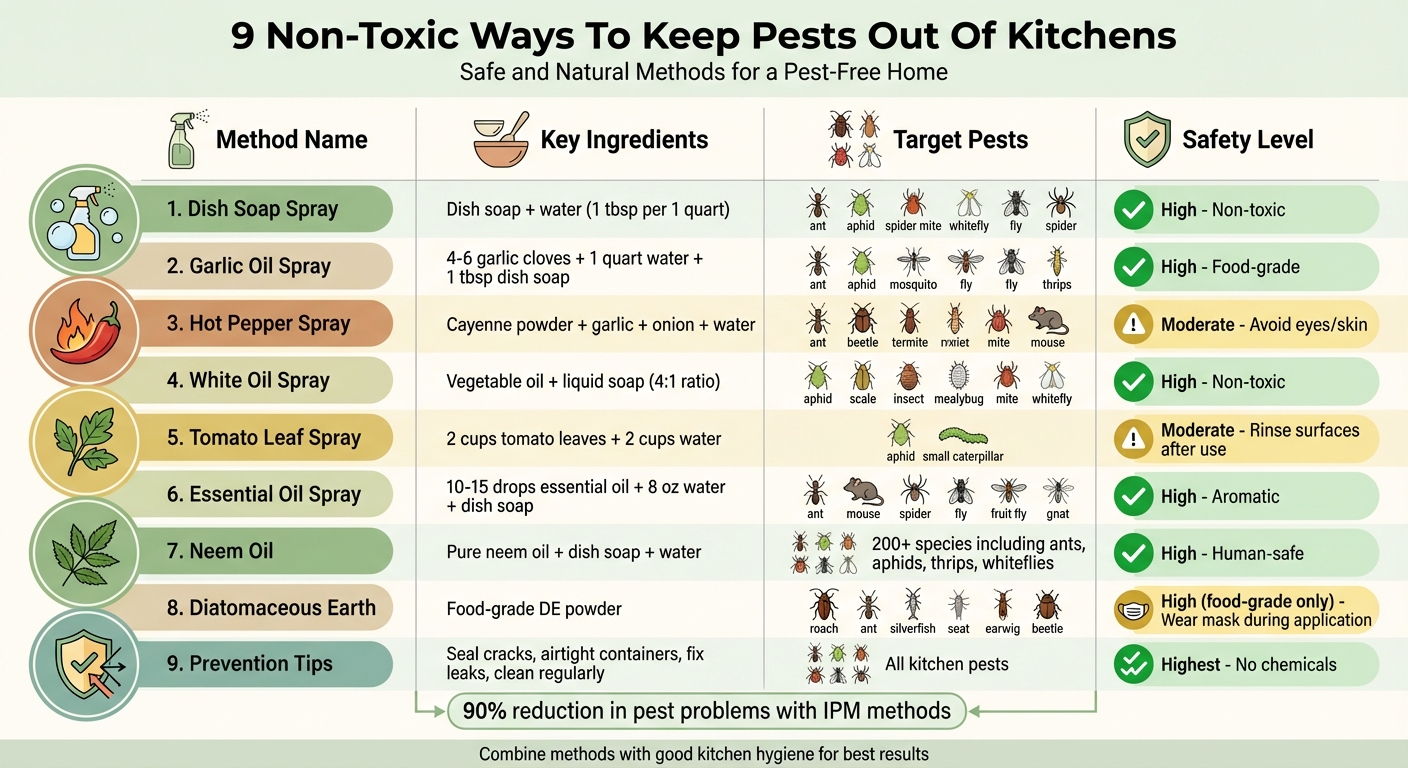
9 Non-Toxic Kitchen Pest Control Methods Comparison Chart
1. Dish Soap Spray
Ingredients and Preparation Method
You probably already have everything you need for this simple pest spray right by your sink. Combine 1 tablespoon of liquid dish soap with 1 quart of water in a spray bottle, then give it a good shake. For more stubborn pests like ants, mix equal parts dish soap and water. If aphids are bothering your kitchen herbs, try a mix of 2 tablespoons dish soap, 1 tablespoon vegetable oil, and 1 gallon of water.
Why does this work? The soap breaks down the protective coating on insects, causing them to dehydrate quickly.
Application Instructions
Once your solution is ready, here’s how to use it effectively. Spray it directly on pests for immediate results . You can also apply it to areas where insects sneak into your kitchen, like baseboards, windowsills, and cracks . After treating countertops, wipe them down to remove any pheromone trails that could attract more bugs.
For fruit flies, make a simple trap: add a few drops of dish soap to a small bowl of apple cider vinegar. The soap breaks the surface tension, causing flies to sink and drown . Remember to shake the spray bottle each time before use to keep the mixture evenly blended .
Target Pests
This spray is a great option for ants, aphids, spider mites, whiteflies, house flies, and spiders . It’s especially effective on soft-bodied insects that depend on their protective outer layers for survival. This simple solution is a cornerstone of non-toxic pest control, though for more comprehensive protection, you might consider a DIY pest control kit.
Safety for Food Preparation Areas
Dish soap spray is safe to use in your kitchen . That said, it’s always smart to test it on a small area first, especially on surfaces that might react to soap or moisture. After spraying, wipe down any treated surfaces before preparing food.
sbb-itb-0bbb908
2. Garlic Oil Spray
Ingredients and Preparation Method
Garlic owes its pest-repelling power to allicin, a sulfur compound that messes with pests' sensory systems, working as both a repellent and a mild insecticide. Here's what you'll need:
- 4–6 fresh garlic cloves (fresh garlic is key since it has more allicin than garlic powder)
- 1 quart of water
- 1 tablespoon of liquid dish soap
- Optional: 2 tablespoons of vegetable oil (helps the spray stick better)
Start by crushing the garlic and letting it sit for 10–15 minutes to activate the allicin. Mix everything together, then strain the mixture using a fine mesh sieve or cheesecloth. This step ensures your spray bottle doesn’t clog. Store the leftover solution in the fridge, where it will stay effective for up to two weeks.
Application Instructions
Spray this mixture on areas where pests are likely to enter, like baseboards, windowsills, and cracks. For plants, gently mist both sides of the leaves - this works particularly well for herbs or indoor greenery. Use it weekly to keep pests away or every 3–4 days if you’re dealing with an infestation, or consider a quarterly pest remedy kit for long-term protection. Once applied, the spray remains effective for about 90 hours.
Before going all in, test a small area to make sure it doesn’t stain or damage surfaces. While preparing the spray, wear gloves and goggles, and work in a well-ventilated space to avoid irritation from the strong garlic fumes.
Target Pests
This garlic oil spray tackles a range of common pests, including ants, aphids, spider mites, whiteflies, thrips, mosquitoes, and flies. It can even discourage larger nuisances like rabbits and deer from raiding your outdoor garden. The best part? It spares beneficial insects like bees and ladybugs, making it a smart, eco-friendly choice for your home and garden. Its dual function as a repellent and mild insecticide also keeps your kitchen pest-free without compromising food safety.
Safety for Food Preparation Areas
Since this spray is non-toxic and biodegradable, it’s safe to use near food prep zones. That said, you should stop spraying at least 24 hours before handling food in treated areas. Always rinse any produce thoroughly before eating. To keep the strong garlic smell under control, focus your spray on entry points or hidden spots rather than all over. If the aroma feels overwhelming, add 5–10 drops of lavender or lemon essential oil to the mix for a more pleasant scent.
Next up, we’ll dive into another natural option - hot pepper spray - to further strengthen your kitchen’s pest defenses.
3. Hot Pepper Spray
Ingredients and Preparation Method
Hot pepper spray offers a natural, spicy way to keep pests at bay without relying on chemicals. The key ingredient here is capsaicin - the compound that gives peppers their heat. According to the Environmental Protection Agency, capsaicin acts as a biochemical pesticide by irritating pest tissues. To create this spray, combine:
- 1 tablespoon of cayenne powder
- 1 chopped garlic clove
- 1 chopped small onion
- 1 quart of water
Let the mixture steep for about an hour to fully infuse the water with its spicy properties. Afterward, strain it through a fine-mesh sieve and mix in 1 tablespoon of dish soap. This blend is most effective when used fresh, so it’s best to prepare small amounts that can be used within a week. Apply this powerful mixture around areas where pests are likely to enter.
Application Instructions
Once your spray is ready, apply it to areas where pests tend to gather or enter your home. Focus on spots like doorways, windowsills, and cracks. Spray generously, as the strong scent disrupts the pheromone trails that ants and other pests use to locate food.
"It's the spicy security guard your garden never knew it needed." - Ryan Knoll, Owner, Tidy Casa
Target Pests
This spray works against a variety of pests, including ants, beetles, termites, mites, and even mice. Its intense aroma and spicy taste not only repel these intruders but also help mask food odors that might otherwise attract them.
Safety for Food Preparation Areas
While this spray is a great pest deterrent, capsaicin can irritate tissues, so avoid spraying it near your eyes or on surfaces that come into direct contact with food. Before applying it widely in your kitchen, test a small, hidden area to ensure it doesn’t damage or stain your finishes. Also, keep in mind that capsaicin can harm beneficial insects like bees, so avoid using it near flowers or areas visited by pollinators.
4. White Oil Spray
Ingredients and Preparation Method
White oil spray is made using just two basic ingredients: vegetable oil and liquid soap. The mix follows a simple 4:1 ratio - four parts vegetable oil to one part liquid soap. For instance, you can combine 2 cups of vegetable oil (sunflower, canola, or soybean are good options) with 1/2 cup of pure liquid castile soap or dish soap in a jar. Shake the mixture thoroughly until it transforms into a creamy, white emulsion.
Before using, dilute the concentrate. Add 1 tablespoon of the mixture to 32 ounces of water in a spray bottle. Store the concentrate in a cool, dry place, and it will keep for up to three months. A single batch can produce nearly 18.8 gallons of ready-to-use spray.
Application Instructions
Apply the diluted solution directly to pests, ensuring you cover them completely. White oil works by suffocating insects, clogging their breathing pores. For the best results, spray both the tops and undersides of leaves, along with branches and other areas where pests might hide. Avoid spraying during extremely hot weather - temperatures above 86°F can cause the oil to block plant pores and harm foliage. Also, steer clear of flowers to protect pollinators like bees.
Target Pests
This spray is effective against a wide range of pests, including aphids, scale insects, mealybugs, citrus leaf miners, mites, whiteflies, caterpillars, and young grasshoppers. Since it works by physically suffocating pests rather than using chemicals, insects cannot develop resistance to it.
Safety for Food Preparation Areas
White oil is safe to use in kitchens and around food. It poses no risk to humans, birds, or earthworms. However, its oil-based formula may stain painted surfaces or cabinets, so it's a good idea to test it on an inconspicuous area first. If you use it on herbs or produce, simply rinse them thoroughly with water before eating - there’s no waiting period required.
"The benefit of natural horticultural oils is that they're non-toxic pesticides that are perfectly safe to use. There is no withholding period, so crops that have been sprayed can be washed with water and eaten on the same day." - Deep Green Permaculture
Next, let’s look at another natural and safe solution, or consider a Bi-Monthly Pest Remedy Kit to keep your kitchen pest-free.
5. Tomato Leaf Spray
Ingredients and Preparation Method
Tomato leaf spray taps into the pest-repelling qualities of tomato plants. To prepare it, gather 2 cups of fresh tomato leaves and stems along with 2 cups of water. Chop the leaves into smaller pieces and let them steep in water for about 12 hours. After steeping, strain the mixture using cheesecloth or a fine mesh strainer to remove the plant material. Dilute the remaining liquid with another 2 cups of water and pour it into a spray bottle for easy application.
Application Instructions
Use the spray on areas where pests are likely to enter or linger, such as baseboards, windowsills, doorways, and countertops. If houseplants are affected, lightly mist the undersides of their leaves. Since the active compounds in the spray degrade over time, reapply every few days or after cleaning the treated surfaces.
Target Pests
This spray is most effective against soft-bodied insects like aphids and small caterpillars. It acts as a repellent, discouraging pests from settling in the treated areas rather than killing them outright.
Safety for Food Preparation Areas
While this spray is plant-based and leaves no harmful residues, tomato leaves do contain mild toxins that could cause stomach upset if ingested in large quantities. To stay on the safe side, clean any food preparation surfaces with soap and water after applying the spray. Also, keep the solution out of reach of children and pets, and wash your hands thoroughly after handling it. Up next, we’ll look at another natural way to keep pests at bay in your kitchen.
6. Essential Oil Spray Solutions
Ingredients and Preparation Method
Looking for a safe, chemical-free way to keep pests out of your kitchen? Essential oil sprays are a great option. They work by disrupting the scent trails pests rely on to navigate. Some of the most effective oils include peppermint, lemongrass, eucalyptus, citrus (like lemon or orange), clove, and lavender. Here's a simple recipe: combine 10–15 drops of your chosen essential oil with 8 oz of water and a few drops of dish soap in a spray bottle. For a stronger solution to tackle ants, mix 10 drops of peppermint oil, 10 drops of lemon oil, 1 tablespoon of white vinegar, and 1 cup of water.
Application Instructions
To use, spray the mixture along common pest entry points such as baseboards, windowsills, doorways, vents, and under sinks. For fruit flies, try mixing 10 drops of lemongrass oil with 1 cup of near-boiling water and pour it down the drains at night - this helps stop them from nesting. If spraying isn't feasible in tight spaces like behind appliances, soak cotton balls in a mixture of 5 drops each of eucalyptus and citronella oils, then place them in corners or under cabinets. Shake the spray bottle well before each use, and reapply every few days or after cleaning, as the oils lose their potency over time.
"A few peppermint oil drops in water make a spray that spiders just can't stand. It's like installing an invisible 'keep out' sign that also freshens up the place." – Ryan Knoll, Owner, Tidy Casa
Target Pests
Different oils work better for specific pests:
- Peppermint: Repels ants, mice, spiders, and flies.
- Lemongrass: Effective against fruit flies, gnats, and mosquitoes - and can even kill fruit flies on contact.
- Citrus oils: Great for deterring ants and spiders.
- Eucalyptus: Keeps cockroaches, mites, and gnats at bay.
- Clove or cedarwood: Ideal for pantry moths - try placing oil-infused sachets in your pantry.
These sprays are best for prevention or minor infestations, creating a barrier that pests prefer to avoid.
Safety for Food Preparation Areas
When using essential oils in the kitchen, avoid spraying directly onto food, fruits, or vegetables. Focus on entry points and surfaces away from food prep areas, and always clean countertops with soap and water after application to remove any residue. Be cautious with citrus and tea tree oils, as they can be harmful to pets if used in high concentrations. Store your spray bottles in a cool, dark location to preserve their effectiveness, and handle concentrated eucalyptus oil with care - it’s flammable, so ensure proper ventilation and keep it away from open flames.
7. Neem Oil Treatment
Ingredients and Preparation Method
Neem oil, extracted from the seeds of the neem tree, offers a natural way to tackle pests thanks to azadirachtin, a compound that disrupts pest hormones. To make an effective spray, you'll need 100% pure, cold-pressed neem oil (around $11 per bottle), mild liquid dish soap, and distilled or purified water. The dish soap ensures the oil blends well with the water.
It’s important to mix only what you’ll use within 8 hours, as neem oil loses its effectiveness after that time once diluted. To prepare, combine 1–2 tablespoons of neem oil and 1–2 teaspoons of dish soap with 1 gallon of distilled water. Adjust these amounts proportionally for smaller batches.
"Neem oil spray is most effective the first 8 hours after being mixed with water." – Raise Your Garden
Application Instructions
Use a fine mister to spray the solution directly on ant trails, entry points, windowsills, and crevices where pests might sneak into your kitchen. For severe infestations, soak cotton balls with the mixture and place them in problem areas. If your kitchen herbs are under attack by aphids or whiteflies, spray the plants thoroughly, ensuring the undersides of the leaves are coated until the plant is dripping.
Here’s a pro tip: don’t crush sprayed ants. Let them return to their colony to spread the treatment further. For active infestations, apply the spray every 3–4 days. For ongoing prevention, spraying every 7–14 days should suffice.
Target Pests
Neem oil is a versatile solution, effective against over 200 insect species. In kitchens, it’s particularly useful for ants, as it disrupts their life cycle by interfering with molting, reproduction, and growth. It also tackles pests on kitchen plants, such as aphids, thrips, whiteflies, spider mites, mealybugs, and beetle larvae.
"Neem oil harbors a compound called azadirachtin, which interferes with ant hormones, molting process, reproduction, and growth - leading to a wipeout of invading ant colonies." – Wendy Leigh, Tasting Table
What’s great is its selective action - it primarily affects pests that chew on treated surfaces, leaving beneficial insects like bees and butterflies unharmed.
Safety for Food Preparation Areas
Neem oil is safe to use in areas where food is prepared, as it’s non-toxic to humans, pets, and the environment. It biodegrades quickly, breaking down into harmless components within 45 minutes to 3 hours after drying. However, it does have a strong scent, often compared to garlic and sulfur.
For food safety, avoid spraying directly on food or open countertops. Instead, focus on entry points and areas away from food prep. Always test the spray on a small, hidden area first. If you have leftover concentrate, store it in a cool spot - it may thicken in cold temperatures but can be warmed back to liquid form by placing the container in warm water.
Next, we’ll dive into a method that combines physical barriers with natural ingredients.
8. Diatomaceous Earth and Physical Barriers
Ingredients and Preparation Method
Diatomaceous earth (DE) and physical barriers provide a natural, chemical-free way to manage pests. DE is a fine powder derived from fossilized diatoms. It's vital to use food-grade DE for safety - avoid industrial or pool-grade versions entirely. A 4-lb bag of food-grade DE, often sold with a duster, typically costs about $16.99. You can apply it directly or mix it in equal parts with cocoa powder or flour to attract cockroaches.
"Always choose food-grade diatomaceous earth." – Shannon Harlow-Ellis, Associate Certified Entomologist, Mosquito Joe
Application Instructions
For effective use, apply a thin, barely noticeable layer of DE. Thick piles tend to repel pests rather than attract them. A dust bulb or a flour sifter (priced around $16.52) can help ensure an even application. Focus on areas where pests are likely to travel, such as:
- Behind stoves and refrigerators
- Under sinks
- Along baseboards
- Inside cracks and crevices
Always wear a dust mask and gloves during application to protect yourself.
"Thick layers can actually deter pests from walking through it. Stick with a thin layer of product only." – Trent Frazer, Lead Entomologist, Aptive
DE is only effective when dry, so moisture from spills, cleaning, or high humidity can reduce its impact. Reapply after cleaning or if the kitchen becomes damp. To clean up excess DE, use a damp cloth instead of a vacuum, as vacuums may spread the powder into the air or damage the motor. Store unused DE in an airtight container to maintain its dryness.
To further enhance the effectiveness of DE, seal cracks and gaps with clear caulk, especially around baseboards, behind appliances, or in walls. This combined approach prevents pests from entering while maintaining a safe, non-toxic environment.
Target Pests
DE works by absorbing oils and fats from an insect's exoskeleton, causing dehydration and eventual death. It's particularly effective against crawling insects with hard exoskeletons, such as:
- Ants
- Cockroaches
- Silverfish
- Earwigs
- Beetles
However, DE is ineffective against flying insects or rodents. It's worth noting that over 160 registered pest control products use DE as an active ingredient.
"Diatomaceous earth, on the other hand, physically damages the insect's outer shell." – Trent Frazer, Lead Entomologist, Aptive
Safety for Food Preparation Areas
Food-grade DE is safe for humans and pets, making it a reliable option in kitchens. Since it works by physically damaging insects rather than using chemicals, there's no risk of pests developing resistance. Once settled, DE is safe, but it’s best to avoid applying it on countertops or food prep areas. Instead, target hidden spots where pests are active but food isn’t present.
"This makes it a good option for sensitive sites and situations where the use of traditional pesticides could be problematic." – James Agardy, Certified Entomologist, Viking Pest Control
Using DE alongside physical barriers creates a solid, non-toxic pest control strategy, keeping your kitchen safe and pest-free.
Easy Recipes for Organic Pest Control You Wish You Knew Sooner!
9. Prevention and Environmental Management
When it comes to long-term pest control, prevention is the real game-changer. Forget about relying solely on sprays or powders—using a Monthly Pest Remedy Kit provides a more consistent approach - keeping pests out starts with making your kitchen a place they don't want to visit. By controlling food sources, moisture, and entry points, you can dramatically reduce pest issues. In fact, studies on Integrated Pest Management (IPM) show you can cut pest problems by 90% and save about one-third on pest-removal costs.
"Sanitation is key to stopping them from foraging." – Jody Gangloff-Kaufmann, Entomologist, Cornell University
Start with Sanitation
The first step is to eliminate food sources. Store dry goods like flour, rice, grains, and even pet food in airtight glass or metal containers - pests like mice can squeeze through openings as small as 1/4 inch, and insects such as moths and weevils can easily get into cardboard or paper bags. Clean up crumbs and spills right away, and avoid leaving pet food out overnight. To ward off fruit flies, move ripening fruit from the counter into the fridge.
Control Moisture
Damp areas are a haven for pests like cockroaches and silverfish, so keeping things dry is crucial. Fix leaky pipes and faucets as soon as you notice them. After using the sink, dry it out, and make sure garbage disposals and drains are free of food debris to keep fruit flies at bay.
Seal Entry Points
Finally, block pests from getting in. Seal cracks and gaps using silicone caulk, and place steel wool or metal mesh around pipes - materials rodents can’t chew through. Check for openings around baseboards, windows, and utility pipes. Use trash cans with tight-fitting lids and clean them regularly with hot, soapy water, followed by a rinse using 1/4 cup of chlorine bleach to eliminate lingering food odors. Declutter your space by getting rid of newspapers and cardboard boxes, which can become hiding spots for insects and rodents.
"Eliminating food sources and moisture, along with sealing entry points, forms the cornerstone of successful pest prevention in kitchens." – Dan Stockslager, Region Manager, Orkin
Comparison Table
Here's a quick look at nine non-toxic pest control methods for your kitchen, highlighting their key ingredients, how to use them, and the pests they target.
| Method | Main Ingredients | Application Process | Target Pests | Food Area Safety |
|---|---|---|---|---|
| Dish Soap Spray | Dish soap, water | Mix 1 tablespoon of dish soap with 1 quart of water; spray directly on pests | Aphids, mites, fruit flies | High – non-toxic |
| Garlic Oil Spray | Garlic, water | Boil garlic cloves in water, strain, and spray | Mosquitoes, ants | High – food-grade |
| Hot Pepper Spray | Cayenne or chili peppers, water | Mix the pepper with water and spray or sprinkle the powder directly | Ants, beetles | Safe – use caution with skin and eyes |
| White Oil Spray | Vegetable oil, dish soap, water | Mix 1 tablespoon oil and 2 tablespoons dish soap per gallon; spray | Soft-bodied insects, aphids | High – non-toxic |
| Tomato Leaf Spray | Tomato leaves, water | Steep tomato leaves in boiling water for 30 minutes, allow to cool, then spray | Aphids, various insects | Moderate – best used on plants |
| Essential Oil Spray | Peppermint, lemon, lavender oil | Mix 10–15 drops of oil with 1 cup water and a few drops of dish soap; spray at entry points | Ants, mice, spiders | High – aromatic |
| Neem Oil | Neem seed extract | Apply as a spray to surfaces or plants | Thrips, aphids, flies (200+ species) | High – human-safe |
| Diatomaceous Earth | Food-grade fossilized algae | Sift onto surfaces, let sit for 24–36 hours, then vacuum | Roaches, ants, silverfish, spiders | High (food-grade only) |
| Prevention/Management | Caulk, vinegar, airtight containers | Seal cracks, store food properly, and clean with a vinegar solution | All kitchen pests | Highest – no chemicals |
Important Notes
While these methods are non-toxic, some require extra care. For instance, hot pepper spray can irritate skin and eyes, and diatomaceous earth should be applied while wearing a mask to avoid inhaling the fine powder. Additionally, ingredients like garlic (and onion, if included) can be harmful to pets if consumed in large quantities, so make sure treated areas are out of reach for cats and dogs.
This table is a handy guide to help you select the best pest control solution for your kitchen.
Conclusion
Using non-toxic pest control methods offers a safer and often more effective alternative to chemical treatments. Consider this: Americans carry an average of 43 different pesticides in their bloodstreams, and children under six make up 50% of all pesticide poisoning cases in the U.S.. By opting for natural solutions like essential oil sprays or diatomaceous earth, you minimize these risks and protect your loved ones.
"Pesticides can't always eradicate pest infestations because they can't kill them off at every stage of their life cycles." - Miriam Rotkin-Ellman, Senior Scientist, NRDC
Prevention and routine maintenance are the backbone of effective pest control. Integrated Pest Management (IPM) has shown to cut pest-removal costs by a third and reduce complaints by 90%. Simple steps like sealing cracks with caulk, storing food in airtight containers, and repairing leaky faucets can deny pests the essentials they need to survive - food, water, and shelter. Unlike chemical sprays, which pests can develop resistance to, these measures are longer-lasting and more cost-effective.
Consistency matters. Make it a habit to wipe counters after meals, empty trash cans regularly, and vacuum behind appliances. These small efforts eliminate the crumbs and debris that attract pests. Pairing these habits with natural deterrents, like peppermint oil or bay leaves, creates a home environment where pests simply can’t thrive.
Start small - try one or two of these methods and build from there. Over time, you’ll maintain a pest-free kitchen, safeguard your family’s health, and save money - all without relying on harsh chemicals. A little effort goes a long way toward a cleaner, safer home.
FAQs
Which non-toxic method works best for roaches vs. ants?
To deal with roaches, prioritize removing their access to food, water, and shelter. Keep your spaces clean, dry, and well-sealed. If you're looking for natural solutions, options like diatomaceous earth or borax can be effective, but be cautious when using these around children and pets.
For ants, try spraying them with soapy water, sealing off their entry points, and using natural repellents such as citrus oil or cayenne pepper. Both roaches and ants can often be managed effectively with non-toxic approaches that take their habits and environments into account.
How often should I reapply these sprays to keep pests away?
The frequency of reapplying natural pest sprays varies based on the type of solution and the pest you're targeting. Here's a quick guide:
- Vinegar sprays: These may need to be applied several times a day to maintain their effectiveness.
- Herbal or essential oil sprays: Typically, reapplying every few days should suffice, depending on the pest situation.
Sticking to a regular application schedule helps ensure these sprays continue to work effectively.
When should I stop DIY and get professional help?
If pests are proving difficult to identify, need specialized treatment, or keep coming back despite your best efforts, it’s time to call in a professional. Also, if you’re unsure about what kind of pest you’re dealing with or feel uneasy using pesticides, a professional can handle the situation safely and effectively. When the problem gets complicated or your DIY solutions just aren’t working, it’s best to leave it to the experts.