


Managing pests doesn't have to mean relying on chemicals. The key is prevention and smarter, eco-friendly methods. Here's how you can make your home less inviting to pests:
- Fix leaks, seal cracks, and clear clutter to remove food, water, and shelter that pests rely on.
- Manage waste properly by using secure trash bins and maintaining compost piles to deter rodents and insects.
- Remove standing water to stop mosquitoes and other pests from breeding.
- Use natural repellents like marigolds, basil, and lavender in your garden.
- Install physical barriers such as mesh screens, door sweeps, and weatherstripping to block pests.
- Introduce natural predators like lady beetles or use microbial controls like Bacillus thuringiensis (Bt) for targeted pest management.
Regular monitoring and maintenance are essential. Integrated Pest Management (IPM) combines these steps with minimal pesticide use, making it safer for your family and the environment. This layered approach provides a long-term solution to keep pests under control.
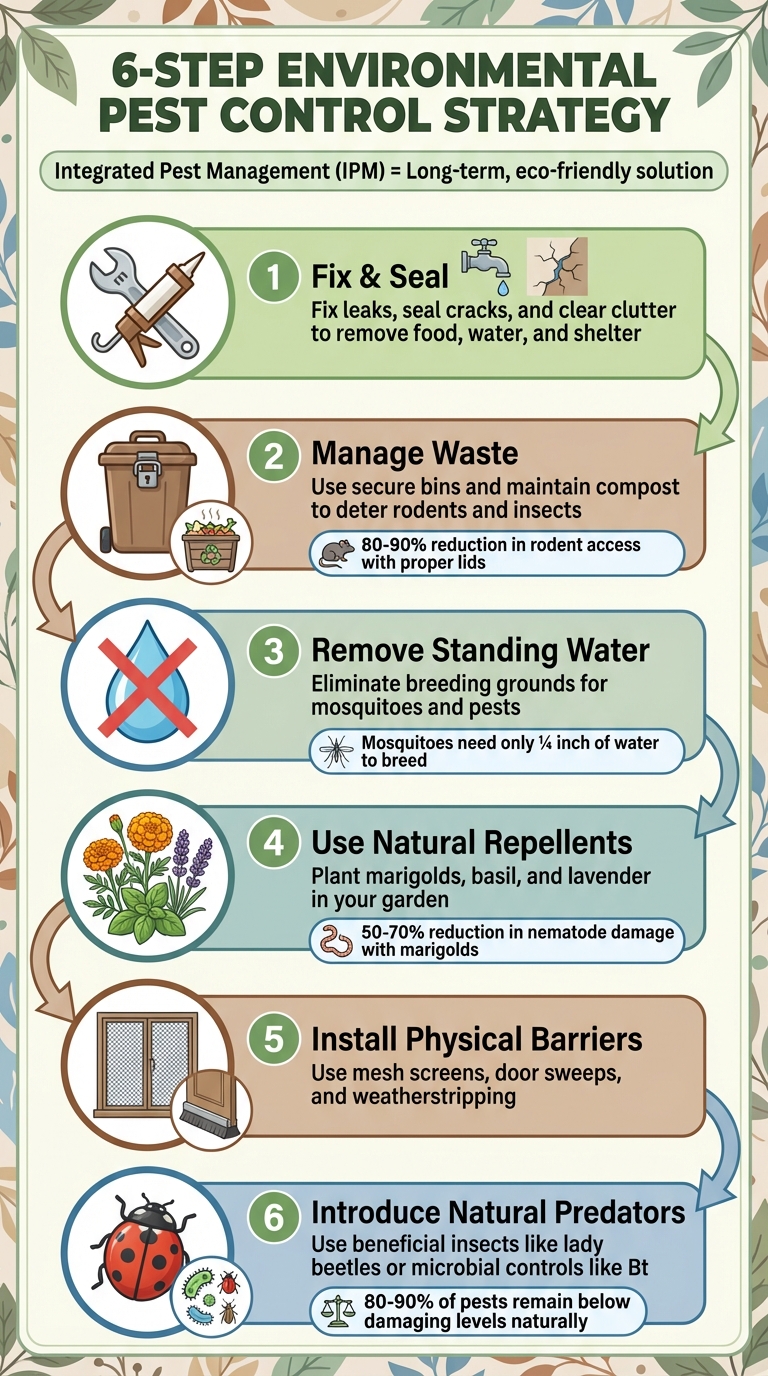
6-Step Environmental Pest Control Strategy Guide
Natural Pest Control Methods for the Garden - Keep Bugs From Ruining Your Harvest Without Pesticides
Preventative Practices for Pest Control
Prevention is always better than dealing with an infestation later. The best way to tackle pests is by removing what draws them in to begin with. Adjusting how you manage waste and plan your landscaping can make your space far less appealing to pests, creating an environment they simply won’t want to call home.
Proper Waste Management
Unsecured trash is a buffet for pests. Rodents like rats only need a mere 1–2 ounces of food per day, and trash cans without proper lids make it easy for them to find a meal. Opt for metal or heavy-duty plastic bins with tight-fitting lids to reduce rodent access by a whopping 80–90%. For an extra layer of protection, clean your bins weekly with a vinegar solution to remove food residue and odors that attract flies and insects.
Composting requires special care to avoid turning it into a pest hotspot. Enclosed systems like tumbler or bokashi composters work best for kitchen scraps. If you’re using an outdoor compost pile, bury food waste 6–8 inches deep and turn the pile weekly to maintain a temperature of 130–160°F - this heat destroys insect larvae. Adding layers of "browns" like dried leaves or cardboard also helps. These enclosed or well-maintained methods can cut pest issues by 95% compared to open compost piles.
Landscaping also plays a key role in pest prevention.
Landscaping and Garden Design
Planting native, pest-resistant plants can naturally repel unwanted visitors. Options like marigolds, basil, and lavender are not only beautiful but also effective. For example, marigolds planted near tomatoes can reduce nematode damage by 50–70% in trials. Basil keeps flies and mosquitoes away, while lavender discourages aphids from settling in.
Proper spacing and pruning are essential. Keep plants 18–24 inches apart to improve airflow, which lowers the risk of fungal issues and removes hiding spots for insects. Regular pruning, especially in spring and fall, is key - trimming juniper hedges, for instance, helps eliminate bagworm habitats. Adding 2–3 inches of organic mulch and compost enriches the soil with beneficial microbes, boosting plant health. According to NC State Extension, healthy plants are 30–50% less likely to attract pests since stressed plants are more vulnerable to aphids and other insects.
Habitat Modification for Pest Control
Changing the environment pests depend on is a game-changer. Habitat modification involves removing or altering the food, water, and shelter pests need to survive and reproduce. Without these essentials, pests can’t settle in or multiply around your property.
This strategy aligns with the broader principles of Integrated Pest Management (IPM), which prioritizes prevention and uses pesticides only when absolutely necessary. Habitat modification not only tackles the root causes of pest problems but also offers a more cost-effective, long-lasting, and family-friendly alternative to constant chemical treatments. A key focus here is eliminating water sources to disrupt pest breeding cycles.
Removing Standing Water
Standing water is a breeding ground for mosquitoes and many other pests. In warm conditions, most mosquito species in the U.S. can develop from eggs to biting adults in just 7–10 days - and they only need about ¼ inch of water to do it. By removing or refreshing water sources before their life cycle is complete, you can stop the problem before it even begins.
Inspect your property weekly, especially after rain or irrigation, and look for anything that holds water for more than a few days. Regularly empty and scrub items like birdbaths, buckets, and flowerpot saucers to prevent mosquito breeding. Pay attention to often-overlooked spots like wheelbarrows, children’s toys, tarps, trash can lids, and clogged gutters. Store items like buckets and trash cans upside down or covered to keep them from collecting rainwater.
Clogged gutters are a common but underestimated mosquito hotspot. They also contribute to wood decay, which attracts pests like carpenter ants and termites. Clean them regularly and extend downspouts several feet from your foundation to prevent puddles. If you have low spots in your yard that collect water, fill them with soil or gravel to improve drainage. Also, check your irrigation system to avoid overwatering - excess moisture not only attracts mosquitoes but also encourages plant diseases and weeds that harbor other pests.
Beyond mosquitoes, many household pests thrive in damp conditions. Cockroaches, termites, earwigs, certain ants, and some flies all depend on moisture to survive. Fix plumbing leaks, insulate pipes that sweat, and use dehumidifiers or exhaust fans in damp areas like basements, crawl spaces, kitchens, and bathrooms. Keep mulch and dense vegetation a few inches away from your home’s foundation to eliminate damp, sheltered areas where pests can hide and breed.
Sealing Entry Points
Sealing off entry points is another critical step in keeping pests out. Gaps around doors and windows can let in ants, spiders, cockroaches, and small beetles. Cracks in your foundation or exterior walls act as highways for pests like ants, roaches, and even rodents. Openings around utility lines, cables, and plumbing give pests direct access to your living spaces. Damaged or unscreened vents and attic openings can invite insects, bats, and small mammals into your home.
By combining water and shelter reduction with sealing access points, you create a multi-layered defense against pest infestations.
Start with a thorough inspection of your home’s exterior. Walk around your property with a flashlight, paying close attention to areas where siding meets the foundation, around windows and doors, and near utility penetrations like cables, AC lines, and plumbing. A good rule of thumb: if a gap can fit a pencil, pests can get through.
Use exterior-grade silicone or polyurethane caulk to seal narrow gaps, while larger cracks in masonry or foundations may require mortar or patching compounds. Replace or install weatherstripping around doors and windows, and add door sweeps to close gaps at thresholds, especially for garage and back doors. Fit vents, windows, and crawl space openings with tight mesh screens (¼-inch hardware cloth works well) to block rodents, bats, and insects while maintaining airflow.
Inside your home, check for daylight visible around doors or utility lines - if you see light, pests can likely get through. For areas prone to rodents, use materials they can’t chew through, like steel wool backed with caulk, metal flashing, or hardware cloth. Focus on garage door bottoms, gaps at the base of siding, and openings around AC lines and cables.
After any construction, cable installation, or renovation, inspect for new gaps and seal them promptly. This proactive sealing approach ensures your home stays pest-proof, preventing infestations before they start. It’s a simple yet effective way to make your living spaces less inviting to unwanted guests.
Natural Predators and Organisms for Pest Management
Biological control involves using living organisms - like predators, parasitoids, and pathogens - to manage pest populations. Instead of depending entirely on chemical treatments, this method taps into nature's own systems to help keep pests under control in your home and garden.
This approach fits into the principles of Integrated Pest Management (IPM). By combining biological controls with habitat adjustments, you can create a more effective and sustainable defense against pests. The key is knowing which beneficial organisms target specific pests and understanding how to support or introduce them properly. Let’s dig into how these natural predators can enhance your pest control strategy.
Attracting Helpful Insects
Certain insects, like lady beetles, green lacewings, parasitic wasps, and predatory mites, are excellent allies in pest control. Lady beetles, for example, feast on aphids, whiteflies, and soft-bodied scale insects often found on roses, vegetables, and ornamental plants. Their larvae are particularly effective, devouring hundreds of aphids during their development. Similarly, green lacewing larvae, nicknamed "aphid lions", can eat over 200 aphids in a single week.
To attract these helpful insects, grow a variety of flowering plants that bloom from early spring to fall. Small-flowered plants like dill, fennel, alyssum, yarrow, and asters are especially good choices. Including native plants alongside groundcovers, shrubs, and trees provides shelter and overwintering spots for these insects. A small, clean water source can also make a big difference in supporting their populations.
Avoid using broad-spectrum insecticides, as they can harm these natural allies. Research shows that when such chemicals are avoided, 80–90% of pest species in many landscapes remain naturally below damaging levels. If action is needed, stick to targeted spot treatments in line with IPM guidelines.
For faster results, you can purchase and release beneficial insects. Release them in the evening or early morning near areas with high pest activity, and lightly mist plants to encourage the insects to stay on the foliage. Avoid using insecticides before and after these releases to give the beneficial insects the best chance to thrive.
Using Microbial Controls
Microbial controls are another effective tool, targeting pests with precision while leaving beneficial organisms unharmed. This method uses microorganisms - like bacteria, fungi, viruses, or protozoa - or their byproducts to suppress specific pests. One well-known example is Bacillus thuringiensis (Bt), a bacterium that produces proteins toxic to certain insect larvae when ingested.
Different strains of Bt are tailored to specific pest groups: Bt kurstaki (Btk) targets leaf-feeding caterpillars, Bt israelensis (Bti) works against mosquito and fungus gnat larvae, and Bt tenebrionis is effective against some beetle larvae, such as the Colorado potato beetle. Because Bt is highly selective, it only affects pests that consume treated material, leaving humans, pets, and most beneficial organisms unharmed when applied correctly. For example, Bti is widely used in U.S. public health programs to control mosquito larvae without harming fish, amphibians, or most aquatic insects.
To use Bt effectively, apply it during the pests' active feeding stages, ensuring thorough coverage of foliage. Reapply after heavy rain or rapid plant growth. For mosquito control, apply Bt products only to standing water that cannot be drained - never to drinking water - and always follow EPA-approved guidelines.
Proper storage is essential for maintaining the effectiveness of microbial products. Keep them in a cool, dry place, and always use EPA-registered products, following label instructions for safe and effective application.
sbb-itb-0bbb908
Physical Barriers and Mechanical Controls
To strengthen your home’s defenses against pests, physical barriers and mechanical controls are excellent additions to habitat modifications and natural pest control methods. These tools, such as screens, door sweeps, and weatherstripping, provide a chemical-free way to block pests. They’re affordable, easy to maintain, and, when layered with other strategies, make your home far less appealing to unwanted visitors.
Let’s start by addressing one of the most effective physical controls: mesh screens.
Installing Mesh Screens
Window and vent screens are a reliable way to keep flying pests like mosquitoes, flies, and wasps out of your home. For larger pests, an 18×16 mesh (18 strands per inch in one direction, 16 in the other) works well, while a 20×20 or finer mesh is ideal for blocking smaller insects like mosquitoes and gnats without sacrificing airflow.
To install screens, measure the frame accurately, cut the mesh slightly larger than the frame, and seal the edges securely using spline or caulk. This seal is just as important as the mesh itself; even tiny gaps can let insects sneak in. Don’t forget to secure attic vents, soffit vents, crawlspace openings, and dryer vents with metal hardware cloth (¼-inch openings) to block pests while maintaining ventilation.
For areas with high humidity or near the coast, opt for rust-resistant materials like fiberglass or aluminum. If you have pets that tend to push against screens, heavy-duty or pet-resistant mesh is a better choice. Inspect your screens every season for damage - tears, loose spline, or warped frames - and repair or replace them as needed to ensure they remain effective.
Using Traps and Sticky Barriers
While screens prevent many pests from entering, traps are great for catching those that manage to get inside. Traps and sticky barriers are chemical-free and highly effective. For example:
- Sticky traps (glue boards): These are perfect for catching crawling insects like roaches and spiders. Place them along walls, under sinks, or behind appliances where pests are likely to travel.
- Yellow or blue sticky cards: These attract and trap flying pests like whiteflies and fungus gnats in gardens or greenhouses. They also help monitor pest activity, allowing you to decide if further action is needed.
- Pheromone traps: These use species-specific scents to lure pests like moths or beetles, making them an eco-friendly alternative to broad-spectrum insecticides.
- Rodent traps: Mechanical snap traps or enclosed multi-catch traps effectively capture mice and rats. These are safer options for households with kids or pets since they don’t rely on chemical rodenticides.
For outdoor use, sticky bands wrapped around tree trunks can stop ants and crawling larvae from reaching foliage. When placing traps, focus on high-activity areas like walls and entry points, but ensure they’re out of reach of children and pets. Outdoors, use guards or covers to prevent accidentally trapping birds or beneficial insects.
Check traps weekly to monitor pest activity, replace full or dirty traps, and adjust their placement to target the most active areas. Dispose of used traps in sealed bags to avoid spreading pests, and consider keeping simple records of what you catch to refine your pest management approach.
One common pitfall is overlooking complete coverage - leaving just one unscreened window or unsealed gap can undo all your hard work. Similarly, neglecting to replace damaged screens or full traps renders them ineffective. These physical controls are most effective when combined with proper sanitation, moisture management, and the elimination of food sources. By addressing what attracts pests in the first place, you’ll build a stronger, more comprehensive defense.
Monitoring and Adjusting Your Pest Control Plan
Keeping an eye on things is at the heart of Integrated Pest Management (IPM). Simply putting up traps or barriers isn’t enough - they need regular attention and tweaking. Pest control is not a one-time fix; it’s an ongoing effort. Regular checks allow you to catch issues early, see what’s working, and make changes before a small problem turns into a major infestation.
According to the U.S. EPA, IPM relies on thresholds and real data to guide actions, which can reduce chemical use by 30–70%. Let’s explore how to set up effective monitoring tools to support this process.
Setting Up Monitoring Tools
To get started, place monitoring tools where pests are most likely active. Sticky traps, pheromone traps, and yellow cards are effective when positioned behind appliances, under sinks, along baseboards, near food storage areas, or just above plant canopies. Check these traps weekly, and keep a detailed log that includes dates, locations, pest types, and counts.
This log becomes your roadmap. For example, you might notice that ants are more active near the back door every spring or that cockroach activity spikes after heavy rain. By comparing weekly counts, you’ll see whether your pest control methods are making a difference or if adjustments are needed.
Decide on action thresholds based on what you observe. For instance, in a garden, you might choose to intervene when a certain percentage of leaves show damage or when trap counts exceed a specific number per card.
Evaluating Your Control Methods
Once you’ve implemented control measures, revisit key areas within 7–14 days. Are trap counts going down? Are there fewer signs of pest activity, like droppings or damaged plants? If the numbers steadily decline over several weeks, it’s a good sign your methods are effective - stick with them.
But if trap counts stay high or even rise, it’s time to rethink your approach. You might need to seal more entry points, switch bait types, or add physical barriers. Following IPM’s least-toxic hierarchy is key: start with sanitation and exclusion, move on to mechanical controls like traps, then consider biological options such as beneficial insects. Use targeted pesticides only when other methods fall short.
Consistency is crucial. Don’t skip trap checks or overreact to a single pest sighting. Schedule regular inspections - weekly for high-risk indoor areas like kitchens and bathrooms, and weekly during warmer months for outdoor spaces and foundations. Reliable data helps you make smarter, more effective adjustments.
Combining Natural Methods with Remedy DIY Kits

Take your pest control efforts to the next level by blending natural strategies with our tailored Remedy DIY kits. Start by reducing pest access: keep your space clean, seal up entry points, and make habitat adjustments. Then, enhance these efforts with targeted products from our kits. Below, we’ll dive into how these customized solutions, safety practices, and virtual support can strengthen your pest control plan.
Customizing Solutions for Specific Pests
Once you’ve tackled the basics - like sealing cracks and fixing moisture issues - our customized Remedy kits step in to provide precise pest control. Got ants in the kitchen? The kit includes gel baits for indoor ant trails and a non-repellent perimeter treatment to target hidden colonies outside. Dealing with cockroaches? Our baits are designed to be carried back to their nests, ensuring colony-wide control while keeping pesticide use to a minimum.
Keeping Your Family and Pets Safe
Your safety is a priority. That’s why our kits feature EPA-approved, professional-grade products that are safe for both pets and kids. With tamper-resistant bait stations and treatments applied in wall voids, you can avoid exposing open sprays. Just make sure treated areas are off-limits until they dry and store all products securely. This approach combines low-toxicity solutions with natural methods to keep your home safe.
Getting Expert Help Through Virtual Support
Need advice? Snap a photo or record a video of the pest problem and share it with our virtual support team. They’ll help you fine-tune your treatment plan - whether that means switching bait types, adjusting treatment areas, or adapting to seasonal changes. With their guidance, you’ll stay on top of your pest management strategy.
Conclusion
Keeping pests at bay requires a multi-faceted approach. Start by addressing the basics: clean up food spills, seal cracks and gaps, eliminate standing water, and encourage helpful insects to thrive in your yard. Adding physical barriers like screens and traps strengthens your defenses without relying on chemicals. This strategy aligns with the principles of Integrated Pest Management (IPM), which prioritize prevention, monitoring, and the careful use of targeted treatments when absolutely necessary.
No single solution works for every pest problem. Instead, combining preventative measures, biological controls, and physical barriers offers a long-term, reliable defense. These methods work together to disrupt pests at different stages of their life cycles, reduce the risk of resistance, and provide lasting protection for your home.
For an added layer of defense, our Remedy kits complement these environmental tactics. After sealing leaks, managing waste, and closing entry points, these kits provide precise, EPA-approved treatments starting at under $30. Designed with safety in mind, they’re easy to use around children and pets, with clear instructions for application. This layered approach gives you the effectiveness of professional pest control, paired with the flexibility and savings of a do-it-yourself solution.
FAQs
What are some natural ways to keep pests out of my home?
Keeping pests at bay naturally starts with a clean and tidy home. Begin by sealing up entry points - check for cracks, gaps, or spaces around doors and windows, and close them off to prevent pests from sneaking in. Inside, eliminate what attracts them: clean up food crumbs promptly, store your food in airtight containers, and fix any leaks or standing water that might draw them in.
Outside, a little yard maintenance goes a long way. Trim back overgrown plants, keep firewood stacks away from the house, and ensure your yard has proper drainage to prevent water from pooling. These simple habits make your home and yard far less appealing to pests.
What are some effective natural ways to keep garden pests away?
Keeping garden pests under control doesn't have to mean turning to harsh chemicals. Nature provides plenty of options to protect your plants. For instance, planting basil, mint, lavender, or marigolds can act as a natural barrier. These plants give off scents that many pests simply can't stand.
Another option is using natural sprays like neem oil or a homemade garlic spray. Both are gentle on your plants but tough on pests, making them a safe and effective way to keep your garden thriving.
How can I attract helpful insects to control pests naturally?
To draw helpful insects to your garden, aim to make it an inviting space for them. Start by planting a mix of native flowering plants - these provide the nectar and pollen that many of these insects need to thrive. Steer clear of broad-spectrum pesticides, as they can harm beneficial insects along with the pests you're trying to manage. Additionally, create undisturbed spots like mulch beds or small patches of tall grass; these areas serve as safe shelters and breeding grounds for these natural pest controllers. Welcoming these insects into your garden can help keep pest populations in check without resorting to harsh chemicals.