


Ants can be a persistent problem in homes, especially kitchens, where they search for food and water. Instead of using harsh chemicals, you can tackle these pests with simple, natural remedies. Here's a quick guide to eco-friendly ant control:
- Disrupt Trails: Clean pheromone trails with a 50/50 mix of vinegar and water or diluted lemon juice.
- Seal Entry Points: Identify and seal cracks, gaps, and spaces around doors, windows, and utility pipes.
- DIY Baits: Use borax-sugar mixtures to target colonies at their source.
- Natural Repellents: Spray solutions made from vinegar, lemon juice, or essential oils like peppermint along entry points.
- Outdoor Control: Use diatomaceous earth or heat treatments to manage outdoor nests.
- Prevention: Trim vegetation away from your home and keep mulch at least 6–12 inches from the foundation.
These methods are safe, affordable, and effective when applied consistently. For severe infestations, consider a professional-grade DIY pest control kit for long-term results.
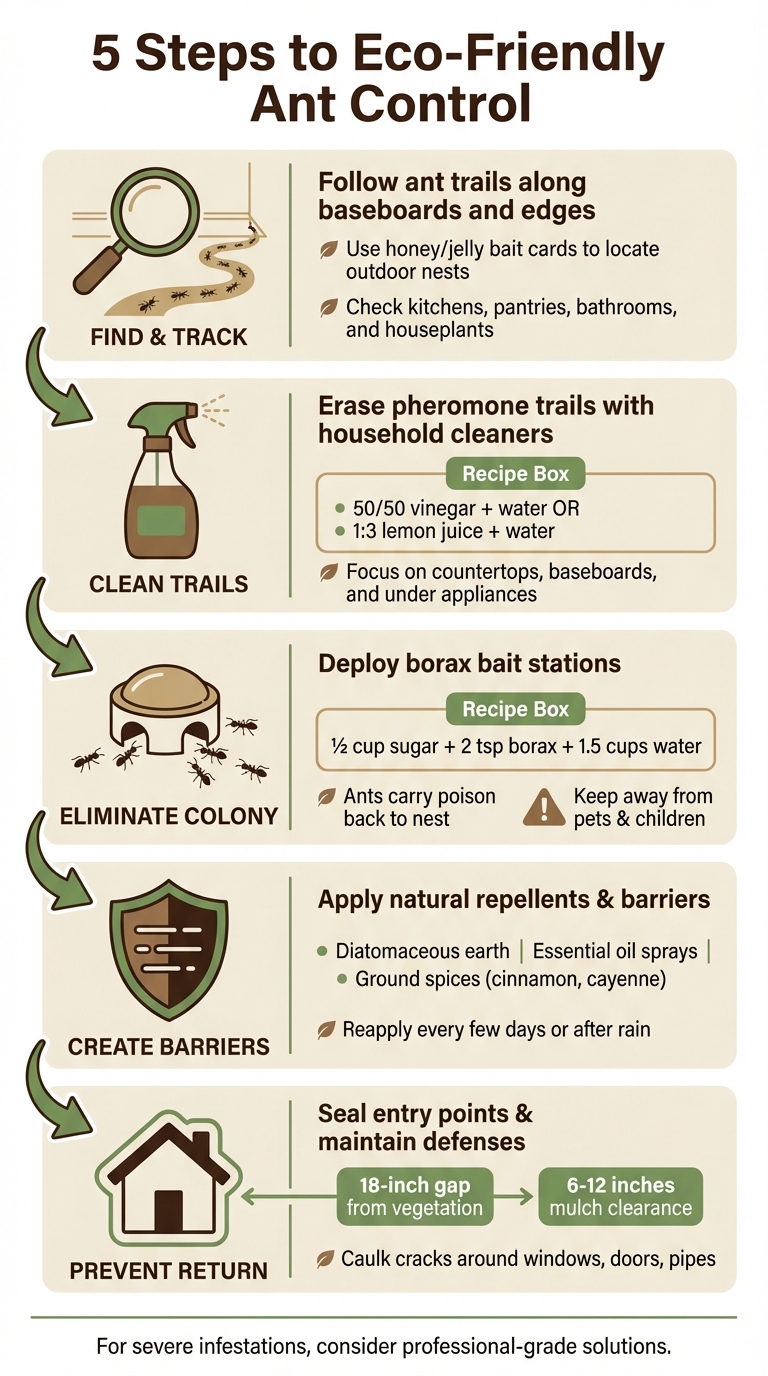
5-Step Eco-Friendly Ant Control Process: From Detection to Prevention
3 Natural Ant Control Methods Using Household Ingredients That Actually WORK
sbb-itb-0bbb908
Find Ant Trails and Entry Points
To stop ants from invading your space, you first need to figure out where they're coming from. Instead of killing the ants you see, follow them. Ants tend to move in neat, single-file lines along edges like baseboards, kitchen backsplashes, or floorboards. Watch carefully to see where they disappear into walls or floors - those are the gaps you'll need to seal. Use the same approach outside your home to identify entry points.
Start your search in areas like kitchens, pantries, and bathrooms, which provide food, moisture, and warmth. If you have houseplants, check the soil for swarms, as these could indicate a nest hiding in the pot. Whether inside or outside, finding these entry points is key to planning your next steps.
For outdoor tracking, try this trick: place small dabs of honey or jelly on an index card near areas where you suspect ants are entering. Once the ants find the bait, they’ll create a clear trail leading back to their nest. As Bob Gilbert puts it:
Think like an ant. A scout enters your home looking for resources for the colony. If it finds food or water, then it will recruit others to take advantage of it.
When inspecting the outside of your home, look for cracks in the foundation, gaps around windows and doors, and spaces where utilities enter the house. Also, check for tree branches or vines that touch your walls - these can act as "highways" for ants to bypass ground-level barriers and reach higher floors. Trim any vegetation back at least 10–12 inches from your foundation to block these routes.
Clean Away Pheromone Trails with Household Cleaners
Ants rely on pheromone trails - an invisible scent marker that helps them navigate between their nest and food sources. If you don’t remove these trails, ants will keep returning to the same spots, even after you’ve cleaned up the food. Breaking this cycle is crucial.
A simple solution is to spray a 50/50 mix of white vinegar and water directly on the trails and then wipe down surfaces like countertops, baseboards, and floors where ants have traveled. Alternatively, you can use diluted lemon juice (1 part lemon juice to 3 parts water), which not only erases the trails but also masks food scents. Glass cleaners with ammonia are another effective option for cleaning and deodorizing.
Pay extra attention to areas where food particles tend to collect - under kitchen appliances, between couch cushions, and along the edges of cabinets. Regular cleaning in these spots prevents scout ants from laying new trails and inviting more ants into your home. Once the trails are gone, you’ll be ready to move on to setting up eco-friendly baits or using a Bi-Monthly Pest Remedy Kit to maintain a barrier.
DIY Ant Control Solutions
Now that you've erased the pheromone trails, it's time to focus on eliminating the ant colony. Here's a closer look at some eco-friendly solutions that can help.
Make Borax Bait Stations
Borax is an effective option for targeting ant colonies because it acts as a slow-acting stomach poison. Worker ants consume the bait and carry it back to the nest, eventually spreading it throughout the colony. To create a liquid bait, mix ½ cup of sugar and 2 teaspoons of borax in 1.5 cups of water. If you prefer a paste, combine 1 tablespoon of borax, 6 ounces of sugar, and 7 tablespoons of warm water for a 5% concentration.
Place the bait in shallow containers - like bottle caps or jar lids - near ant trails. Be sure to keep these out of reach of children and pets. Check the bait stations every few days and replace them as needed. Over time, you should notice a decline in ant activity as the colony becomes exposed to the poison.
Create Natural Repellent Sprays
Repellent sprays are great for keeping ants from entering your home, though they won't eliminate existing colonies. A simple option is a 50/50 mix of white vinegar and water. If you want a less pungent scent, try mixing one part lemon juice with three parts water. For a stronger deterrent, combine 8 ounces of water with 30 to 40 drops of peppermint or tea tree essential oil and 30 drops of rubbing alcohol.
Spray these mixtures along door frames, windowsills, baseboards, and cracks where ants are entering. Reapply every few days or after cleaning. If you're working with natural stone countertops like marble or granite, avoid vinegar-based sprays as the acidity can damage the surface. Instead, opt for a soapy water solution.
Apply Diatomaceous Earth Barriers
Food-grade diatomaceous earth (DE) is another effective way to deal with ants. It works by damaging their exoskeletons, causing dehydration and death. Most ants that come into contact with DE die within 48 hours.
Sprinkle a thin layer of food-grade DE along entry points, under appliances, and around baseboards. For hard-to-reach spots like narrow cracks, use a bulb duster for precise application. Reapply monthly indoors or after rain if you're treating outdoor areas, as moisture reduces its effectiveness. Be sure to wear a dust mask while applying DE to avoid inhaling the fine particles.
Set Up Spice Barriers
Ground spices such as cinnamon, cayenne pepper, and cloves can act as natural deterrents. These spices create both a physical and scent barrier that ants dislike. Sprinkle your chosen spice along windowsills, door thresholds, and countertop edges where you've spotted ant activity. This method won't kill ants but can work well alongside borax bait stations or diatomaceous earth for a more comprehensive pest control approach. Refresh the spice barriers every few days or after cleaning to maintain their effectiveness.
Control Outdoor Ants with Heat
If ants have taken over your yard or garden, heat-based methods can be an effective way to deal with them. These techniques work best on sunny, cool mornings.
Trap Solar Heat on Ant Mounds
Soil solarization uses the sun’s energy to heat the soil to temperatures that can kill ants and other pests. To get the best results, start by wetting the soil to at least 12 inches deep - moisture helps conduct heat more effectively and makes pests more vulnerable.
For smaller mounds, place the moist soil in a sealed black bag or container on a pallet, then cover it with a double layer of clear plastic. For larger areas, opt for transparent plastic tarps instead of black ones. Clear plastic traps radiant heat, warming the soil’s top 12–18 inches to around 140°F. To seal in the heat, dig a trench about 4–6 inches deep around the area, tuck the plastic edges into it, and cover them with soil.
This process typically takes 4 to 6 weeks during the hottest part of summer to work effectively. You can track the progress using a soil thermometer - aim for temperatures between 110°F and 125°F in the top 6 inches of soil. Another option is to pour 2–3 gallons of near-boiling water (190°F–212°F) onto the mound. However, this method has a success rate of only 20–60% and often requires multiple treatments. Once the colony is eliminated, it’s important to restore the health of the soil.
Restore Soil After Treatment
Heat treatments can damage nearby plants and beneficial soil organisms, so it’s essential to help the soil recover. Add composted manure, such as Black Cow, or other organic materials to the treated area. This helps replenish nutrients and revitalize the soil’s microbiome.
Solarization also speeds up the breakdown of organic matter, releasing nutrients that are vital for soil health.
Prevent Future Ant Problems
After tackling an active infestation, the next step is keeping those ants from coming back. While DIY remedies can provide short-term relief, they often fall short when it comes to reaching hidden colonies. These colonies can lurk deep within walls, foundations, or soil, far out of reach for most household treatments. For lasting results, you'll need a mix of physical barriers and professional-grade solutions. Let’s start by addressing the gaps ants use to get inside.
Seal Cracks and Entry Points
Ants are experts at sneaking through the smallest openings, so sealing every possible entry point is crucial. Use silicone caulk, putty, or weather stripping to close up cracks around windows, doors, and foundations. Pay extra attention to spots where utility pipes and wires enter your home, as these are frequent access points. If you encounter larger gaps, petroleum jelly can act as a temporary fix until you can apply a permanent sealant.
To further block ant pathways, maintain an 18-inch gap between your home and any vegetation. Additionally, keep mulch at least 6–12 inches away from your foundation to reduce potential nesting spots nearby.
"The key to preventing ants is 'proactive maintenance.'" - Richard Christner, Co-owner, Whitmore Pest and Wildlife Control, Inc.
Use Customized Kits for Long-Term Protection
If ants persist despite your efforts, it might be time to step up your game with professional-grade solutions. Building on your DIY groundwork, customized pest control kits can provide the extra layer of defense you need. These kits are tailored to the specific ant species and the unique conditions of your home. They include pet- and child-safe products that target colonies at their source, offering protection far beyond what standard DIY methods can achieve.
Each kit comes with detailed instructions and virtual support to help identify pests and ensure proper use. Plus, regular shipments keep your defenses strong, combining eco-friendly practices with the professional-grade tools needed to eliminate colonies for good.
Conclusion
Tackling ant problems effectively requires a multi-step plan that balances immediate action with long-term prevention. Start by disrupting pheromone trails using household cleaners like vinegar or lemon juice, then target the colony with borax-based baits. Adding physical barriers - such as diatomaceous earth, spice lines, or outdoor heat treatments - provides extra protection. For the best results, ensure your baits match the ants’ dietary preferences.
That said, DIY solutions might not always reach hidden colonies. Many treatments need patience and consistent reapplication. Preventing future infestations is equally important - seal up cracks, repair leaks, and maintain a gap of at least 18 inches between vegetation and your home’s foundation to reduce the chances of ants returning. While these methods work well for smaller issues, more severe infestations may call for stronger actions.
For persistent problems, professional-grade solutions can make a significant difference. Our customized pest remedy kits are designed to address your specific ant situation and home setup. These kits include products that are safe for pets and children, along with clear instructions and virtual support to ensure you can effectively target the colonies without simply scattering the ants.
FAQs
Are DIY ant remedies safe for kids and pets?
DIY ant remedies can be a safer option for households with kids and pets, especially when they’re made using everyday items like vinegar, lemon juice, or baking soda. That said, it’s important to be cautious with certain ingredients. For example, essential oils, while effective, can irritate or even be toxic to pets if ingested or used in strong concentrations. Always handle these remedies with care - follow instructions, use them responsibly, and keep them stored securely out of reach to avoid accidental exposure.
How long do borax baits take to stop ants?
Borax baits typically need a few days to start working against ants. Within one to two weeks, you’ll notice a major reduction in the colony, as the ants transport the bait back to their nest and distribute it throughout the group.
Why do ants keep coming back after I clean?
Ants keep coming back even after cleaning because they rely on pheromone trails left by other ants to find food. These trails act like a roadmap, guiding them straight to the source. On top of that, their colonies are often hidden - whether inside your home or somewhere outdoors - making it tricky to tackle the real problem. To stop them for good, you’ll need to do more than just clean. Removing food sources and breaking those trails can slow them down, but the ultimate solution lies in eliminating the colony itself.