


Natural pest deterrents are a safer alternative to chemical pesticides, using ingredients like essential oils, minerals, and biological agents to target pests without harmful residues. Here’s a quick breakdown of key methods and tips:
- Repellents: Use oils like peppermint or citronella to disrupt pests' senses. For example, peppermint oil repels ants and flies, while garlic spray wards off mosquitoes.
- Barriers: Block access with diatomaceous earth, copper tape, or caulk to prevent pests like slugs, spiders, and ants from entering.
- Biological Controls: Introduce natural predators or microbes, such as nematodes for garden grubs or Bacillus thuringiensis for caterpillars.
Quick Tips:
- Seal entry points and eliminate food sources to prevent infestations.
- Use diluted essential oils safely around kids and pets.
- Reapply natural products like diatomaceous earth after rain for continued effectiveness.
- For severe infestations, pair these methods with DIY pest control kits starting under $30.
This guide covers targeted strategies for indoor pests (ants, cockroaches, spiders, moths), outdoor nuisances (mosquitoes, flies, ticks), garden invaders (aphids, slugs), and wildlife (mice, raccoons). Learn how to combine these solutions for a safer, pest-free home.
Natural Pest Control for the Garden 🐛 | Organic Methods That Actually Work (Zone 9 Tips!)
How Natural Pest Deterrents Work
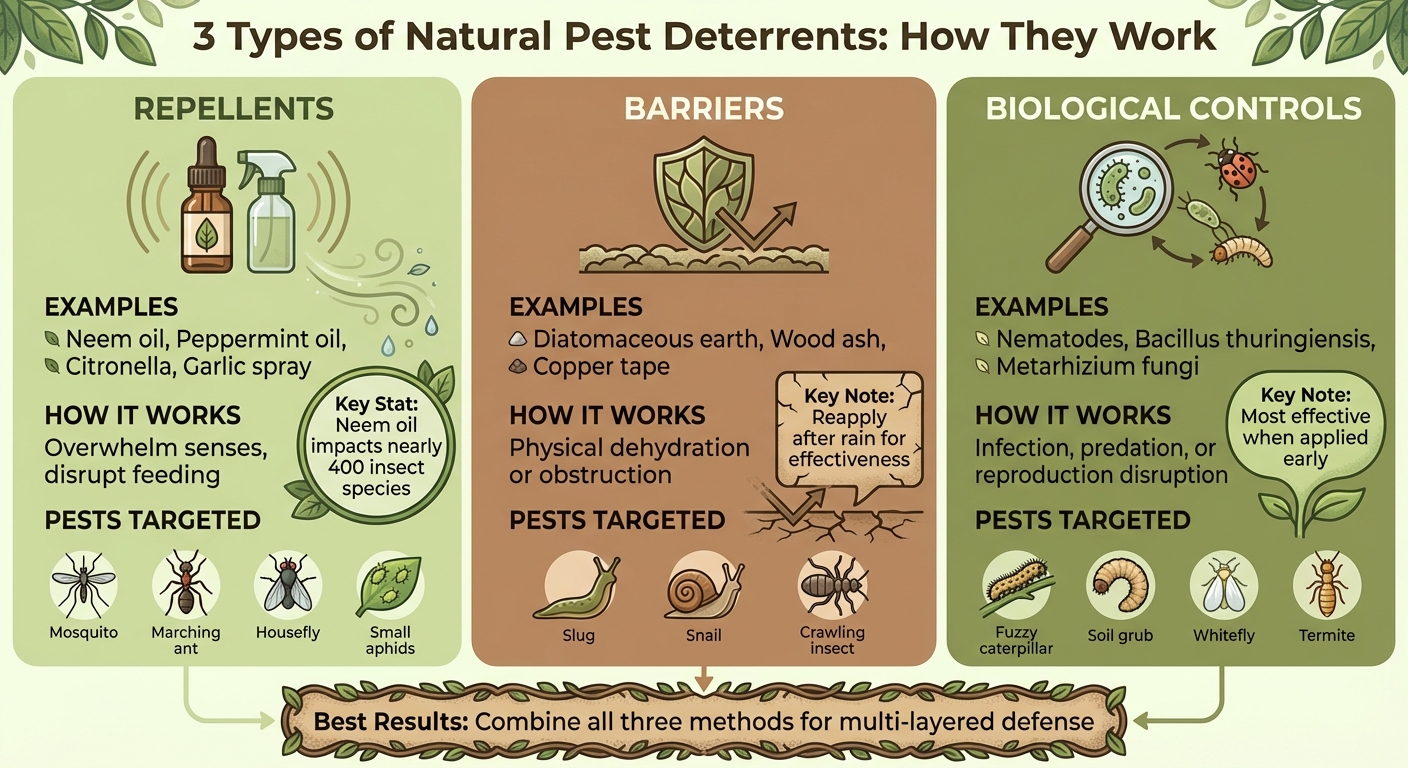
Natural Pest Deterrent Types: Repellents, Barriers, and Biological Controls Comparison
Natural pest control relies on three core strategies: repellents like peppermint oil and citronella to overwhelm pest senses, barriers such as diatomaceous earth and caulk to block access, and biological controls like parasitic nematodes and beneficial fungi to target pests directly. Combining these methods can significantly improve results. For instance, sealing cracks around windows (barrier), placing mint sachets near entry points (repellent), and introducing nematodes to garden soil (biological control) creates a multi-layered defense. This approach aligns with the EPA's Integrated Pest Management (IPM) strategy, which prioritizes prevention, followed by physical barriers, and finally, low-toxicity treatments when necessary. Let’s break down each method to see how they work together for effective pest control.
Types of Natural Deterrents: Repellents, Barriers, and Biological Controls
Repellents disrupt pests’ ability to feed and reproduce. Neem oil, for example, impacts nearly 400 insect species. A simple garlic spray - one part garlic juice mixed with five parts water - can repel mosquitoes for up to six hours when applied to the skin. Catnip sachets are great for deterring cockroaches, while peppermint oil sprays can keep ants, flies, and even rodents at bay.
Barriers act as physical obstacles that pests can’t cross or survive. Wrapping copper tape around plant pots creates a mild electric reaction that repels slugs and snails on contact. Indoors, sealing cracks with caulk is a simple yet effective way to keep spiders and other crawling insects out.
Biological controls leverage natural predators and microorganisms to manage pests. Parasitic nematodes target beetle larvae and caterpillars in moist soil, while Bacillus thuringiensis (BT) disrupts the digestion of caterpillars without harming other insects. Fungi like Isaria fumosorosea can infect and control aphids, thrips, and whiteflies. These methods are most effective when applied early in an infestation.
| Type | Examples | How It Works | Pests Targeted |
|---|---|---|---|
| Repellents | Neem oil, peppermint oil, citronella, garlic spray | Overwhelm senses, disrupt feeding | Mosquitoes, ants, flies, aphids |
| Barriers | Diatomaceous earth, wood ash, copper tape | Physical dehydration or obstruction | Slugs, snails, crawling insects |
| Biological | Nematodes, Bacillus thuringiensis, Metarhizium fungi | Infection, predation, or reproduction disruption | Caterpillars, grubs, whiteflies, termites |
Prevention and Safe Usage Tips
Prevention is your first line of defense. Seal entry points with caulk or weatherstripping, especially around doors, windows, and foundation cracks. Eliminate attractants like standing water, food crumbs, and open pet food bowls - pests are less likely to linger if there’s nothing to eat or drink. Store pantry items in airtight containers and empty trash bins regularly. In your yard, companion planting with marigolds or lemongrass can naturally ward off insects.
When using natural deterrents, safety is crucial. Essential oils and neem oil should always be diluted - typically one to two tablespoons of neem oil per gallon of water to avoid harming plants. Test sprays on a small area before broader application. Keep all products out of reach of children and pets; even natural substances like catnip can have unpredictable effects on animals. Wear gloves when handling diatomaceous earth or potent essential oils, and apply sprays in the evening to minimize harm to beneficial insects. For indoor spaces, ventilate thoroughly after application.
Reapply products like diatomaceous earth and wood ash after rain to maintain their effectiveness. While these methods require regular upkeep, they offer a safer alternative for households with children and pets.
When to Use Remedy Kits with Natural Deterrents
If natural methods alone don’t resolve persistent infestations, our DIY kits provide an extra layer of protection. While natural solutions work well for prevention and minor infestations, they may fall short for severe or recurring problems. For example, rodent droppings can pose health risks, and consistent pest activity may require a more robust approach. Our kits bridge the gap between store-bought sprays - which often cost $30–$60 and deliver only short-term relief - and professional services that can exceed $500 annually.
Each kit is tailored to specific pest issues and locations, featuring EPA-approved formulas safe for children and pets. Kits include a battery-powered sprayer, gloves, and detailed instructions to create a strong perimeter barrier around your home’s foundation, doors, and windows. Starting at under $30, they complement natural methods by providing lasting protection when needed.
"Our ant, bug & spider problem have been out of control this summer. We've tried several products from the store with no success. This took care of it." - Jen Y.
For best results, combine both strategies: use natural deterrents for ongoing prevention and apply our kits during active infestations. Treat your home’s exterior first, and use any remaining product for indoor spot treatments. Always keep children and pets away from treated areas until the spray dries completely. If using indoors, clean any residue with a damp rag and soap while wearing gloves. This dual approach ensures a safer, pest-free environment.
Natural Deterrents for Indoor Pests
Keeping indoor pests at bay requires a mix of strategies: using repellents that mess with their senses, blocking their access points, and removing the things that attract them in the first place. Below, you'll find effective, natural ways to deal with ants, cockroaches, spiders, and moths.
Ants
Start with a simple soapy water spray. Just mix a few drops of dish soap in water, load it into a spray bottle, and hit the ant trails. This solution disrupts their exoskeleton, effectively stopping them in their tracks. For a longer-term fix, place cucumber peels - especially the bitter varieties - near entry points, as ants tend to avoid their smell. Alternatively, scatter crushed mint leaves, cloves, or mint tea bags in active areas to repel them with their strong aroma.
To make sure they don’t come back, trace ant trails and seal their entry points with caulk or weatherstripping. Wipe down surfaces with a vinegar solution (equal parts vinegar and water) to erase their pheromone trails. Store food in airtight containers and empty trash bins daily. For a DIY bait, mix 1 cup of sugar, 1½ tablespoons of borax, and 1½ cups of warm water. Place the mixture in shallow dishes where ants can access it but keep it out of reach of pets and kids. The ants will carry it back to their colony, helping to eliminate the problem at its source.
Cockroaches
Cockroaches love moisture and clutter, so start by fixing any leaky faucets and using dehumidifiers to keep humidity levels low. Declutter storage areas to remove potential hiding spots. For active infestations, food-grade diatomaceous earth is a great option - dust it along baseboards, under sinks, and behind appliances. This powder damages their exoskeletons, leading to dehydration over time.
Catnip can also help. Try placing sachets of dried catnip in problem areas or make a spray by simmering catnip in water, straining it, and applying it along baseboards. For a bait option, mix boric acid, sugar, and water into small balls and place them in hidden spots like under cabinets. When roaches eat the bait, it dehydrates them, reducing populations significantly. Combining these methods can cut down cockroach activity by up to 70%.
Spiders
Spiders often enter homes looking for prey like flies and ants, so keeping other pests under control is a good first step. To deter spiders, use a peppermint oil spray - combine 10–15 drops of peppermint oil with 1 cup of water and spray it on windowsills, corners, and baseboards. A vinegar spray (equal parts white vinegar and water) is another effective option, especially when applied to webs and entry points.
Regular cleaning is key. Declutter basements, garages, and closets, vacuum corners to remove webs and eggs, and install door sweeps to block entry. Planting mint near entryways can add another layer of protection. Reapply sprays weekly, as their effectiveness fades over time.
Pantry Moths and Clothes Moths
Pantry moths (like Indian meal moths) target dry goods such as flour and grains, while clothes moths go after fabrics like wool and silk. For pantry moths, inspect your food storage, toss out infested items, vacuum shelves, and clean surfaces with hot soapy water or vinegar. Transfer dry goods into glass jars or airtight containers, and consider adding a bay leaf inside to repel larvae. Freezing suspected items for 72 hours can kill any eggs.
For clothes moths, launder or dry clean vulnerable fabrics, then use cedar chips or cedar oil in storage areas. Cedar’s scent naturally keeps moths away, but it needs refreshing every three months. You can also make sachets with a mix of bay leaves, cloves, lavender, cinnamon sticks, eucalyptus, peppercorns, or wormwood, and place them in closets or drawers. Hanging lavender or clove sachets in closets adds extra protection without relying on chemical pesticides.
These natural methods can be paired with DIY pest control solutions for a more comprehensive approach to keeping your home pest-free.
Natural Deterrents for Outdoor and Flying Pests
To ensure a thorough defense against pests, outdoor strategies should work hand-in-hand with indoor and garden methods. By disrupting breeding cycles and blocking access, you can significantly reduce pest populations.
Mosquitoes
Standing water is a breeding ground for mosquitoes. These pests can multiply in just a week of stagnant water. To stop them, take a weekly walk around your property and empty anything that holds water - birdbaths, flowerpot saucers, clogged gutters, old tires, or even bottle caps. If you can’t remove stagnant water, consider using EPA-registered Bti products. You can also plant mosquito-repelling greenery like citronella, Thai lemongrass, or marigolds near seating areas.
For personal protection, mix one part garlic juice with five parts water in a spray bottle. Lightly apply it to exposed skin or hang soaked cotton strips in outdoor areas. This natural repellent can last up to six hours. Neem oil is another option - mix 1–2 tablespoons per gallon of water and apply it in the evening. Its compounds help disrupt mosquito feeding and reproduction.
Surprisingly, fans can make a big difference. Research shows that using box or oscillating fans on porches can cut mosquito landings by 50–65% by dispersing human scent and carbon dioxide. Also, check that your window and door screens are in good shape, and try scheduling outdoor activities during peak mosquito hours (dusk and dawn) in areas with fan coverage.
Let’s move on to steps for keeping flies at bay.
Flies
Cleanliness is key to keeping flies away. Rinse recyclables, secure trash bags, and use tight-fitting lids on both indoor and outdoor containers. Clean sink drains and garbage disposals regularly with hot, soapy water or a mix of baking soda and vinegar to remove buildup that attracts drain flies. Store ripe fruit in the refrigerator or covered containers to avoid fruit flies.
Natural repellents can also help. Place crushed mint or eucalyptus sachets near entry points. Wrap bay leaves, cloves, or eucalyptus in cheesecloth and hang them by open windows or place them on absorbent cloths in problem areas. Even potted basil near outdoor seating or fruit bowls can discourage flies with its strong scent.
For fruit flies, a simple trap does the trick. Combine apple cider vinegar, a few drops of dish soap, and a sprinkle of sugar in a bowl. Cover it with plastic wrap poked with small holes. Flies are drawn in but can’t escape. Place these traps near kitchens or patios and refresh every 2–3 days as needed.
Now, let’s address outdoor crawling pests like fleas and ticks.
Fleas and Ticks
Indoors, vacuum carpets and furniture frequently and wash pet bedding in hot water (at least 130°F) to remove pests. Vacuuming alone can eliminate up to 96% of adult fleas. Dispose of vacuum bags in sealed trash bags immediately after use.
Outside, keep your yard tidy. Mow regularly and remove leaf litter and brush piles where fleas and ticks like to hide. Short grass and pruned shrubs increase sunlight and airflow, making the area less inviting to pests. Since ticks often linger along the outer 9–12 feet of lawns near wooded areas or stone walls, create a wood chip or gravel barrier between these zones and play areas to reduce tick encounters.
Food-grade diatomaceous earth (DE) is another natural option. Apply a thin layer - about 1/16 inch - along carpet edges, cracks, and under furniture, and let it sit for 24–48 hours before vacuuming. DE physically damages and dries out pests but only works in dry conditions. Wear a dust mask during application and keep pets and kids away until the dust settles (1–2 hours). For outdoor use, apply 1–2 pounds per 1,000 square feet sparingly to avoid harming beneficial insects.
For severe infestations, combine these natural methods with targeted DIY kits designed to be safe for pets and children. This integrated approach mirrors the comprehensive pest management strategy used indoors and outdoors.
sbb-itb-0bbb908
Natural Deterrents for Garden Pests
Garden pests like aphids, caterpillars, slugs, and snails can wreak havoc on your plants, leaving behind chewed leaves, slimy trails, and other telltale signs of damage. The good news? You can protect your garden using natural methods that avoid harsh chemicals. Let’s explore some effective strategies for keeping these common pests in check.
Aphids and Caterpillars
Aphids often gather on tender new growth and the undersides of leaves, leaving sticky honeydew and causing leaves to curl. Caterpillars, on the other hand, chew irregular holes in foliage and leave droppings (called frass) on leaves and soil. A simple solution is a homemade spray: mix 1 tablespoon of liquid castile or mild dish soap with a quart of water and spray it on affected areas during early morning or late evening. Test the mixture on a small area first to ensure it won’t harm your plants.
For a more lasting solution, try neem oil. Mix 1–2 tablespoons of neem oil per gallon of water and thoroughly coat the leaves where pests are feeding. Neem oil not only repels pests but also disrupts their growth. Reapply every 7–14 days, and to protect pollinators, spray when bees are less active and avoid spraying directly on open flowers.
Beneficial insects are another powerful ally. Lady beetles and their larvae are particularly effective at reducing aphid populations. To attract these helpful bugs, plant nectar-rich flowers like dill and fennel, and steer clear of broad-spectrum insecticides. You can also purchase lady beetles or lacewing eggs from garden suppliers. Release them in the evening near problem areas, and provide water and flowering plants nearby to help them thrive.
For an extra layer of protection, make a tomato-leaf spray by soaking chopped tomato leaves in water. This solution can deter aphids and caterpillars, but don’t use it on tomatoes, peppers, eggplants, or potatoes. Always wear gloves when handling homemade sprays and reapply after rain.
Slugs and Snails
Slugs and snails leave behind ragged holes with smooth edges and shiny slime trails. To keep them at bay, try physical barriers. Sprinkling wood ash around plant bases can dehydrate and deter these pests, but use it sparingly to avoid raising soil pH over time. Diatomaceous earth is another effective option. It forms a dry, abrasive barrier that repels slugs and snails - just make sure to reapply after rain.
Copper tape is a clever deterrent as well. When wrapped around pots, raised beds, or plant stems, it gives slugs and snails a mild electric-like sensation that keeps them away. For a more hands-on approach, pick slugs and snails off plants in the early morning or evening. You can also set beer traps: bury shallow containers filled with beer or yeast-water at soil level to lure and drown them. Empty and refill these traps every 1–3 days. Another trick is to place boards or inverted pots on damp soil to create hiding spots, making it easier to collect and remove them.
Companion Planting
Companion planting is a smart, natural way to manage pests. By pairing certain plants together, you can repel harmful insects or attract beneficial ones. For instance, marigolds can help deter nematodes and some insects while also attracting pollinators. Similarly, basil planted near tomatoes and other vegetables can repel flies and other pests. Flowers like dill and fennel draw in predators like lady beetles, lacewings, hoverflies, and parasitic wasps, which feast on aphids and caterpillars.
Interplanting pest-prone crops with flowering herbs and marigolds can create a balanced ecosystem where natural predators thrive. Start with healthy soil, give plants enough space, and rotate crops to reduce stress and prevent pest outbreaks. Regularly monitoring your garden allows you to catch problems early, and tolerating low levels of pests can actually support beneficial insect populations, helping maintain a natural balance.
For ongoing pest challenges, you might consider using Remedy DIY Pest Control kits. They’re designed to complement natural methods and provide eco-friendly, pet- and child-safe protection. Learn more by visiting Remedy.
Natural Deterrents for Rodents and Wildlife
Rodents and wildlife like mice, rats, squirrels, and raccoons can wreak havoc on your home and yard. To keep them at bay, focus on sealing entry points, using natural repellents, and making your property less inviting.
Mice and Rats
The first step to keeping mice and rats out is sealing up any potential entry points. These critters can squeeze through openings as small as 1/4 inch, so inspect your home's foundation, doors, windows, vents, and pipes. Fill any gaps with steel wool and seal them with caulk or metal flashing - materials that rodents can't chew through. Adding door sweeps, weatherstripping, and repairing damaged screens or walls will further strengthen your defenses.
For a natural way to repel them, try peppermint oil. Its strong menthol scent overwhelms rodents' sensitive noses. Soak cotton balls with 10–15 drops of pure peppermint essential oil and place them in areas where rodents are likely to travel, like cabinets, garages, and along baseboards. Refresh these every 3–5 days or after cleaning. Cloves are another effective option because they contain eugenol, a compound rodents dislike. Use whole cloves or cotton balls soaked in clove oil near entry points or nesting areas. For extra effectiveness, you can mix equal parts peppermint and clove oil in sachets and place them in attics or along baseboards.
To prevent attracting rodents in the first place, keep food sealed tightly. Mice and rats can survive on just 3–4 grams of food a day. Store pantry items in airtight glass or metal containers, clean up crumbs and spills immediately, secure trash in lidded bins, remove clutter, vacuum regularly, and fix any leaks to eliminate moisture.
Once small rodents are under control, it’s time to address larger wildlife that may require more robust measures.
Squirrels, Raccoons, and Other Wildlife
Larger animals like squirrels and raccoons need sturdier barriers to keep them out. Cover roof vents, chimneys, and attic openings with metal flashing or hardware cloth (using a 1/4-inch mesh). To stop climbers, install conical baffles on bird feeders and trees. For trash, use heavy-duty bins with tight-fitting lids secured with bungee cords, and position them 20–50 feet away from your house.
Another effective method is using motion-activated sprinklers and lights to scare off wildlife. Place sprinklers near trash areas, gardens, or entry points - some models can cover up to 1,200 square feet and activate within half a second. At night, solar-powered lights with strobe functions can reduce wildlife visits by up to 80% within a couple of weeks as animals learn to avoid the area.
Modifying your yard can also make it less appealing to pests. Trim overhanging branches at least 8–10 feet away from your roof to block access routes. Remove brush piles, fallen fruit, and birdseed spills. Adding gravel borders around your home and keeping grass trimmed below 3 inches can help deter burrowing and nesting.
Keep in mind that even natural deterrents like essential oils can cause respiratory irritation if used in high concentrations. Always use them in well-ventilated areas and avoid direct skin contact.
If you’re dealing with a more persistent problem, our Remedy DIY Pest Control kits are a great option. These kits include professional-grade products, clear instructions, and ongoing virtual support, making them a safe and effective solution for tougher infestations. They’re also designed to be pet- and child-safe, giving you peace of mind while protecting your home.
Combining Natural Deterrents with DIY Pest Control
Start by layering natural deterrents to keep pests at bay. Begin with basic prevention: seal up entry points, store food properly, and get rid of standing water. Then, use pest-specific natural treatments to create an ongoing barrier. For example, peppermint oil works well for ants and mice, neem spray (mix 1–2 tablespoons per gallon of water) targets garden pests, and catnip sachets can deter cockroaches. Keep in mind, these methods need regular reapplication, especially after rain or cleaning efforts. This layered approach not only helps prevent infestations but also prepares you to tackle pests more aggressively if they persist.
For more serious infestations - like stubborn ant trails, roaches that remain despite proper cleaning, or recurring rodent activity - you may need to combine natural remedies with professional-grade DIY products. Pairing essential oil barriers with deep cleaning and using targeted baits or residual sprays can disrupt the pest cycle effectively.
To strengthen your pest control plan, consider integrating professional-grade solutions alongside your natural deterrents. When natural methods alone aren’t enough, Remedy DIY Pest Control kits provide an affordable and effective option. These kits are tailored to specific pests and include professional-grade, pet- and child-safe formulas, a battery-powered sprayer, gloves, clear instructions, and virtual support - all starting at under $30. Compare that to the $500+ annual cost of hiring professional services.
For the best results, focus on creating a strong exterior barrier around your home’s foundation, doors, and windows using professional-grade products. Indoors, stick to natural deterrents for regular maintenance. This two-pronged approach stops pests before they enter and keeps your living spaces free from heavy chemicals. If pests do make their way inside, you can use any leftover product for targeted spot treatments, working hand-in-hand with your natural methods.
FAQs
How can I use essential oils as pest repellents safely around children and pets?
To safely use essential oils as pest repellents around kids and pets, make sure to dilute them according to the recommended instructions before applying. Keep the space well-ventilated, and ensure children and pets are out of the area during application. Wait until treated surfaces are fully dry before allowing them back in. Never apply essential oils directly on pets or on spots they often lick or chew. Use gloves when handling the oils, and promptly clean up any spills with a damp cloth. Always follow the product label's directions carefully to ensure safe and proper use.
What are some effective natural ways to keep rodents out of my home?
To keep rodents out of your home without using harsh chemicals, start by sealing up any gaps or cracks that could serve as entry points. Rodents are known to dislike strong scents, so consider using peppermint oil or cloves in areas where they might try to sneak in. Maintaining a clean home, especially by eliminating food crumbs, is another key step to avoid attracting them. For added protection, you can also use natural deterrent sprays around potential entry points to create a barrier they won’t want to cross.
When should I add a DIY pest control kit to my natural pest control efforts?
If natural remedies aren't cutting it for your pest problem, a DIY pest control kit might be the solution you need. These kits are especially handy when pests are multiplying quickly, causing damage, or becoming too stubborn to handle with basic methods. They come with professional-grade treatments designed to address your specific pest issue and suit your home's unique needs.
What’s more, these kits often include step-by-step instructions and ongoing support, making them a smart choice for keeping pests at bay in the long run.