


Your kitchen is packed with everyday items that double as natural pest deterrents. From peppermint oil to garlic, these solutions are safer DIY pest control alternatives to chemical pesticides, especially for minor pest problems. They’re easy to prepare, cost-effective, and generally safe for homes with kids and pets when used correctly. However, they require frequent reapplication and may not work for severe infestations.
Here’s a quick look at the top kitchen-based pest deterrents:
- Citronella Oil: Best for mosquitoes; dilute with a carrier oil for safe use.
- Peppermint Oil: Repels ants, spiders, and rodents; use as a spray or on cotton balls.
- Garlic: Deters aphids, ants, and cockroaches; apply as a spray or scatter cloves.
- Onions: Keeps ants, spiders, and mosquitoes away; use slices or sprays.
- Lavender: Repels moths, mosquitoes, and bedbugs; use sprays or sachets.
- Lemon Eucalyptus Oil: Effective against mosquitoes and ticks; apply as a spray.
- Hot Peppers: Targets aphids and mites; prepare as a spray for plants.
- Mint and Citrus: Combines peppermint and citrus for ants and flies; use sprays or peels.
- Rosemary and Thyme Oils: Repels mosquitoes and lice; apply as sprays or use fresh.
- Salt Spray: Dehydrates flea eggs and larvae; use salt for carpets or Epsom salt for gardens.
These remedies are great for prevention and minor pest issues but may not suffice for large infestations. Always test sprays on small areas and keep pets and kids away during application.
Quick Tip: Reapply every 3–5 days for maximum effectiveness.
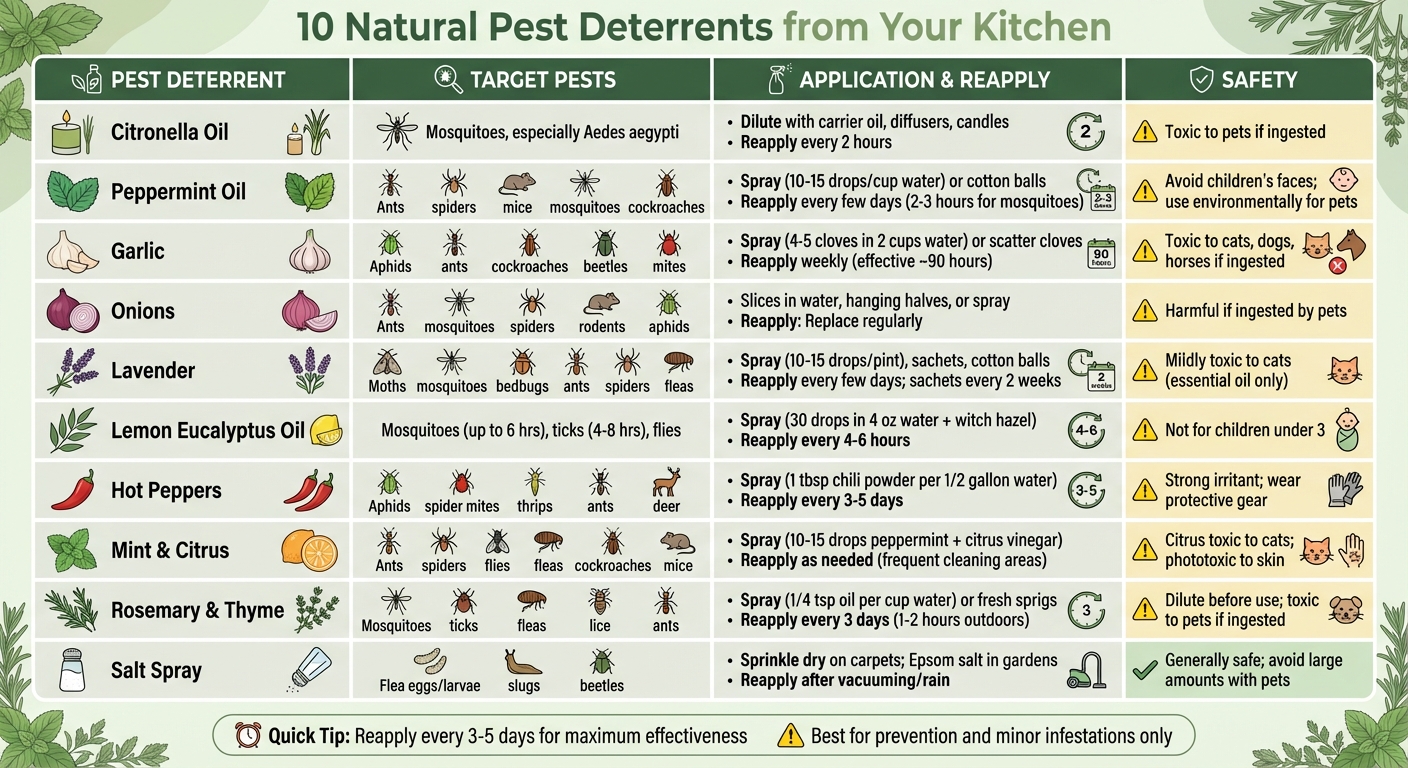
10 Natural Kitchen Pest Deterrents: Quick Reference Guide
1. Citronella Oil
Targeted Pests
Citronella oil, derived from lemongrass (Cymbopogon), is well-known for its ability to repel mosquitoes. It works by masking the scents - like carbon dioxide and human sweat - that mosquitoes rely on to find their targets. This makes it especially useful against Aedes aegypti, the mosquito species responsible for spreading diseases such as Zika, yellow fever, and dengue.
Preparation and Application Methods
To use citronella oil safely and effectively as part of a quarterly pest remedy kit, dilute it with a carrier oil like coconut oil before applying it to your skin. You can also use it in outdoor settings by adding it to diffusers, bio-based candles, or torches. For the best results, reapply every two hours to maintain its protective effects.
Effectiveness and Limitations
While citronella oil has some repellent properties, studies suggest that citronella candles and bracelets are less effective at keeping Aedes aegypti mosquitoes at bay. Additionally, the CDC does not include citronella oil in its list of recommended repellents, favoring oil of lemon eucalyptus instead, which has been shown to reduce mosquito attraction by up to 60%.
Safety for Pets and Children
When used correctly, citronella oil is safe for children and pets. However, it can be toxic to dogs and cats if ingested, potentially leading to symptoms like vomiting and muscle tremors. To avoid any issues, keep citronella products out of their reach and ensure pets don’t lick treated surfaces or skin.
sbb-itb-0bbb908
2. Peppermint Oil and Leaves
Targeted Pests
Peppermint oil is a natural deterrent for a variety of common household pests, including ants, spiders, mice, mosquitoes, cockroaches, moths, flies, fleas, aphids, beetles, silverfish, dust mites, and stink bugs. The secret lies in menthol, a compound that disrupts the scent trails and sensory cues pests use to navigate. However, its effectiveness can vary based on factors like how it's prepared, its concentration, the application method, and the type of pest you're dealing with.
Preparation and Application Methods
Making a peppermint-based spray is simple. Mix 1 cup of water with 10 to 15 drops of peppermint essential oil and add 1 teaspoon of mild dish soap to help the oil mix evenly with the water. If you'd prefer a more natural approach, steep a handful of fresh peppermint leaves in 2 cups of boiling water. Once prepared, use a spray bottle to apply the mixture along baseboards, door frames, window tracks, or any other potential entry points. For enclosed spaces like cabinets, drawers, or under sinks, soak cotton balls in pure peppermint oil and place them strategically in these areas.
Effectiveness and Limitations
Peppermint oil works as a repellent rather than a pesticide - it keeps pests away but doesn’t eliminate them. To maintain its effectiveness, reapply the spray every few days during active pest seasons. In the case of mosquitoes, you’ll need to reapply every 2–3 hours. A homemade peppermint spray can retain its potency for about a week if stored in a cool, dark place. For larger infestations, though, you might need to call in professional pest control services or explore stronger solutions.
Safety for Pets and Children
While peppermint oil is a natural option, it does come with safety considerations. It can irritate the skin and should never be applied to a child’s face, as inhaling menthol can cause respiratory issues in infants and young children. For pets, like cats and dogs, it’s safer to use peppermint oil as an environmental treatment - apply it along floor edges or entry points, but avoid direct contact with their fur or skin. Before using the spray on furniture or fabrics, test it on a small, hidden area to ensure it doesn’t cause staining or damage.
3. Garlic
Targeted Pests
Garlic isn't just for spicing up your meals - it’s also a powerful pest deterrent. Its strong odor, thanks to the active compound allicin, keeps a variety of pests at bay. In the garden, garlic works against aphids, mites, beetles, and even larger animals like rabbits and deer. Indoors, it can help fend off ants, cockroaches, and mealworm beetles, making it a versatile tool for pest control.
Preparation and Application Methods
To create a basic garlic spray, blend 4–5 cloves with 2 cups of water, let it steep overnight, and then strain. For a more potent mix, blend 6 cloves with 4 cups of water, dilute the mixture 1:10, or simmer 6 crushed cloves in 2 quarts of water for 15 minutes. Add 1 tablespoon of hot chili powder and a bit of dish soap to help the solution stick to leaves. Apply this spray weekly, focusing on the undersides of leaves where pests often lay eggs.
For indoor use, scatter peeled garlic cloves or sprinkle garlic powder in problem areas like cabinets, crevices, and behind appliances. If you're a gardener, planting garlic alongside crops like carrots and beets can provide continuous protection from pests.
Effectiveness and Limitations
Garlic spray remains effective for about 90 hours. However, it needs reapplication after rain or heavy watering. Avoid using it in temperatures above 90°F, as it can damage plants. While garlic is a strong deterrent, it can also repel beneficial pollinators and nematodes, and it doesn’t work against all pests, such as the allium leaf miner. Always test the solution on a small section of a plant before widespread use to avoid leaf burn.
Safety for Pets and Children
Garlic can be toxic to pets like cats, dogs, and horses if ingested. The ASPCA cautions that garlic, along with onions and chives, can make animals sick. Keep pets away from treated areas until the spray has dried. For children, avoid direct exposure by wearing gloves and goggles during preparation and application. If you're adding hot peppers to the mix, apply the spray in the evening when there’s little to no breeze to prevent fumes from spreading. This ensures safety for everyone while keeping pests at bay.
4. Onions
Targeted Pests
Onions aren't just a kitchen staple; they can also serve as a natural pest deterrent. Thanks to their sulfur compounds, onions emit a strong, sharp odor that pests like ants, mosquitoes, spiders, and rodents find unbearable. In gardens, onions can help keep aphids, flea beetles, and carrot flies at bay.
"Onions are thought to repel bugs because they produce sulfur compounds that emit a strong, unpleasant odor that they find unbearable." - Bug House Pest Control
Spiders, for example, rely on sensors in their legs to detect smells and tastes, making them particularly sensitive to the onion's pungent aroma. Similarly, rodents may find the sulfur smell irritating to their eyes, and if rats consume onions, it can lead to anemia.
Preparation and Application Methods
For indoor pest control, try placing slices of onion in water near windows or doors to ward off unwanted visitors. Another easy option is to cut an onion in half, thread it with a needle, and hang it near entry points. Be sure to replace the slices regularly to maintain their effectiveness.
In the garden, onions can be used in a few ways:
- Chop 4 cups of onions, steep them in 2 quarts of water for 24 hours, strain, and spray the liquid directly onto plants.
- For a quicker option, soak chopped onions in water for a few hours and use immediately.
- Plant onions alongside roses, carrots, or tomatoes, or scatter onion peels around the base of plants.
Effectiveness and Limitations
While onions are an affordable and natural way to deter pests, their effectiveness tends to be temporary and localized. They excel at encouraging pests to move elsewhere but may not completely eliminate an infestation. Regular reapplication is necessary to maintain their impact, especially in outdoor settings.
Safety for Pets and Children
One of the advantages of using onions is their non-toxic nature compared to chemical pesticides, making them a safer choice for households with children and pets. However, there are some precautions to keep in mind. Onion remedies should be kept out of reach of kids and animals, as onions can be harmful if ingested, particularly for rodents, where they can cause anemia. Always use separate utensils for preparing onion-based solutions and wash your hands thoroughly after handling them.
5. Lavender
Targeted Pests
Lavender’s strong fragrance acts as a natural deterrent to a variety of pests. Thanks to its essential oils, which are rich in linalool and camphor, it can repel mosquitoes, houseflies, moths, ants, silverfish, spiders, bedbugs, dust mites, fleas, ticks, crickets, stinkbugs, and even small garter snakes. Additionally, lavender helps mask human odors like sweat and carbon dioxide, making you less attractive to mosquitoes .
Preparation and Application Methods
Lavender can be used in several ways to keep pests at bay. For a simple spray, combine 10–15 drops of lavender essential oil with a pint of water in an amber glass spray bottle. To target spiders, mix 15 drops of lavender oil with 3 parts water and 1 part vinegar. You can also place 5–7 drops of lavender oil on cotton balls and store them in small open jars around your home.
For closets and drawers, dried lavender sachets are a handy option. These not only repel moths but also leave linens smelling fresh. Spritzing your mattress and bedding with a lavender spray can help deter bedbugs and dust mites. During late summer, spraying window screens daily with a lavender solution can discourage stinkbugs. For additional protection, try adding a few drops of lavender oil to the rinse water when hand-washing wool clothing to prevent moth damage.
"Lavender pillows and sachets are wonderful in linen cupboards and dressers and will keep away moths and other insects while leaving a fresh scent." - Dorene Petersen, Founding President, American College of Healthcare Sciences
Effectiveness and Limitations
Lavender essential oil is particularly effective because of its concentrated aroma. Dried lavender flowers can also work well in enclosed spaces for longer-term use. To keep it effective, refresh cotton balls every few days and replace sachets about every two weeks. However, while lavender offers a natural and non-toxic alternative to chemical pesticides, it may not be enough to handle severe or large-scale infestations, which often require a professional pest remedy kit.
Safety for Pets and Children
Lavender is generally considered safe for children and pets, though caution is needed with cats. Cats cannot metabolize linalool, a compound in lavender essential oil, making it mildly toxic for them. While fresh lavender plants are safe in small amounts, avoid applying the essential oil directly to a cat’s skin or fur, as they may ingest it while grooming. To minimize risk, apply lavender in areas less accessible to pets, such as carpets or tucked between furniture cushions. For households with cats or small children, lavender hydrosols - a gentler, distilled alternative - can provide effective pest control with less risk.
"Fresh lavender is not toxic to felines, only the essential oils derived from the plants are." - Alexander Jones, Author, Feline Living
6. Lemon Eucalyptus Oil
Targeted Pests
Lemon eucalyptus oil stands out as a natural option for pest control, particularly against mosquitoes and ticks. As a plant-based alternative to DEET, it offers effective protection: a 30% concentration of Oil of Lemon Eucalyptus (OLE) can repel mosquitoes for up to 6 hours, deer ticks for around 4 hours, and lone star or brown dog ticks for over 8 hours. The active ingredient, PMD, works by masking the scents that attract insects. Beyond mosquitoes and ticks, this oil is also effective against flies, cockroaches, lice, ants, and spiders.
It's worth noting that OLE is a refined extract with high PMD levels, while the essential oil version contains lower and more variable PMD concentrations. The EPA classifies OLE as a biopesticide, meaning it's a naturally occurring substance with lower risks compared to traditional pesticides.
Preparation and Application Methods
To create a DIY lemon eucalyptus spray, mix 30 drops of lemon eucalyptus essential oil with 2 ounces each of distilled water and witch hazel in a spray bottle. For a stronger solution, combine 10–20 drops of the oil with 1 cup of isopropyl alcohol or witch hazel. Shake the mixture well before each use to ensure the oil is evenly dispersed. When applying to your face, spray into your hands first to avoid eye irritation, as OLE can cause significant discomfort if it comes into contact with your eyes.
For indoor pest control, spray the diluted mixture around entry points like windows, doors, and baseboards. Outdoors, apply directly to skin and clothing, but test on a small fabric patch first to avoid staining. Reapply every 4–6 hours for mosquito protection and every 4 hours for ticks. This versatile solution works well for both indoor and outdoor use, fitting perfectly into eco-friendly pest management approaches.
Effectiveness and Limitations
OLE has proven to provide between 5 and 7 hours of mosquito protection in independent studies. Products like Murphy's Naturals Lemon Eucalyptus Oil Mosquito & Tick Repellent Spray have received high praise, with a 4.7 out of 5-star rating from 233 reviews. Many users highlighted its effectiveness in areas with heavy mosquito activity, such as forests and lakes. Consumer Reports also recommended 4 out of 8 products containing 30% OLE.
"It [Oil of Lemon Eucalyptus] still doesn't last as long as people would like [against ticks], but it did a pretty good job." - Joel Coats, PhD, Professor Emeritus of Entomology and Toxicology, Iowa State University
Unlike citronella or peppermint oils, which evaporate quickly and may only last 2 hours or less, OLE offers longer-lasting protection of 5 hours or more. However, some users reported issues with spray nozzles clogging over time, which can be a minor inconvenience.
Safety for Pets and Children
OLE is not recommended for children under 3 years old.
"It's not registered for children under 3 years of age." - Mustapha Debboun, PhD, Medical and Veterinary Entomologist
Pregnant or nursing mothers should also avoid using this oil. For pets, essential oils can be harmful if not used correctly, so consult a veterinarian before applying any essential oil products near animals. To ensure safety, always test a small patch of skin for allergic reactions before applying the repellent more broadly. Store homemade mixtures in dark-colored bottles or in a cool, dark spot to maintain their effectiveness over time.
7. Hot Peppers
Targeted Pests
Hot peppers are a natural way to keep many garden pests at bay, according to DIY pest control reviews, thanks to capsaicin - an alkaloid that the EPA classifies as a biochemical pesticide. This compound is particularly effective against cabbage looper larvae, spider mites (cayenne pepper works especially well here), aphids, thrips, lace bugs, and alfalfa weevils. Beyond insects, hot peppers also help prevent onion flies from laying eggs, slow the growth of spiny bollworms, and repel ants and deer. However, it's worth noting that capsaicin does not deter birds.
Preparation and Application Methods
A simple spray can be made by mixing 1 tablespoon of chili powder and 3 drops of dish soap into 1/2 gallon of water. For a more robust pepper spray, blend 2 cups of chopped hot peppers (like jalapeño, cayenne, serrano, or habanero) with one head of garlic and 1 tablespoon of cayenne pepper. Add the mixture to 4 gallons of water, let it steep for 24 hours, strain it through cheesecloth, and mix in 3 tablespoons of dish soap. Apply the spray to both the upper and lower surfaces of leaves every 3 to 5 days for the best results.
Effectiveness and Limitations
Hot pepper sprays work well for small pest problems by disrupting pests' nervous systems, which reduces their ability to move and feed. However, they’re not the best solution for large-scale infestations. One major drawback is their potential harm to beneficial pollinators like bees, so avoid spraying flowering plants. Also, refrain from applying the spray when temperatures exceed 90°F, as it can scorch leaves on heat-stressed plants. Keep in mind that rain can wash away the spray, requiring reapplication.
Safety for Pets and Children
Capsaicin is a strong irritant that can cause burning sensations on the skin, eyes, and nose. To protect yourself, wear goggles, gloves, long sleeves, and a mask while preparing and applying the spray. Before widespread use, test the spray on a small area of foliage to ensure it doesn’t harm your plants. Keep children and pets away from treated areas until the spray has dried completely.
8. Mint and Citrus Combination
Targeted Pests
The pairing of mint and citrus creates a potent, natural pest deterrent. This combo is effective against ants, spiders, mosquitoes, flies, fleas, cockroaches, moths, and even mice. Peppermint contains menthol, which messes with pests' scent receptors, while citrus peels are rich in D-limonene. This compound acts as a contact insecticide by breaking down the waxy layer on an insect's exoskeleton, essentially suffocating it.
"D-limonene coats the bug's exoskeleton, breaking down the waxy coating on its body, which, in turn, suffocates the insect."
– Kristine Gill, House Digest
Preparation and Application Methods
This blend is both eco-friendly and easy to make with items you likely already have at home. For an all-purpose spray, mix the following:
- 10–15 drops of peppermint essential oil
- 2 oz of distilled water
- 2 oz of white vinegar infused with citrus peels (soak the peels in vinegar for two weeks beforehand)
Alternatively, steep orange peels in 2 cups of boiling water for 24 hours, strain the liquid, and pour it into a spray bottle. Use these sprays on countertops, baseboards, window sills, and door frames - areas pests commonly use to enter your home.
For targeted treatments, rub fresh citrus peels on entry points or place cotton balls soaked in peppermint oil in cracks and crevices. To repel flies and moths, stick cloves into lemon or orange peels and leave them in problem areas. For floors, add lemon juice and a few drops of peppermint oil to your mop water to keep fleas and cockroaches at bay.
Effectiveness and Limitations
This duo is great for managing minor pest issues but won’t handle large infestations, like a full-blown rodent problem or a cockroach colony. The spray works well for ants, killing them on contact by damaging their exoskeleton. However, reapplication is often needed, especially in areas that are cleaned frequently or see heavy foot traffic.
Safety for Pets and Children
While safe for humans in general (D-limonene is FDA-approved), citrus oils can be toxic to cats if ingested or exposed in significant amounts. Keep pets away from treated zones during application. Peppermint oil, on the other hand, should only be used in well-ventilated areas and stored out of children's reach - it’s flammable and harmful if swallowed. Also, citrus oils are phototoxic, which means skin exposed to sunlight after contact could experience irritation or burns. Always test sprays on a small area first, and never apply undiluted essential oils directly to skin or pets.
9. Rosemary and Thyme Oils
Targeted Pests
Rosemary and thyme essential oils are a clever way to tackle household pests using items you might already have in your kitchen. Thyme oil is particularly effective against mosquitoes, ticks, and fleas, while rosemary oil is known to repel head lice and mosquitoes. Both oils also help deter pests like ants, cockroaches, and flies. Their potent scents - thanks to compounds like cineole and camphor in rosemary - interfere with pests' ability to detect scents, making treated areas less appealing.
"These plant-based ingredients confuse and overwhelm a bug's sense of smell, making them less likely to land on you." – Bend Soap Co.
Preparation and Application Methods
Making a rosemary and thyme spray is simple. For a basic repellent, mix 1/4 teaspoon of essential oil with 1 cup of water. If you need a stronger blend to kill pests on contact, increase the concentration to 1/2 teaspoon per cup of water. Shake the bottle well before each use to ensure the oil and water are properly combined. Spray this mixture on plants, baseboards, or other problem areas every three days to keep pests at bay.
For outdoor use, toss fresh rosemary sprigs onto fire pit coals to keep mosquitoes away. If you're using rosemary oil to prevent lice, mix a few drops with a carrier oil like almond or jojoba, and lightly mist it onto hair to avoid buildup. Store your spray in a cool, dark place and use it within 1–2 months to ensure it remains effective.
Effectiveness and Limitations
While these oils are great for repelling pests, they need frequent reapplication - about every 1–2 hours when outdoors, especially if you're sweating or swimming. They serve as excellent preventative measures but may not be strong enough to eliminate an existing pest infestation.
Safety for Pets and Children
Always dilute rosemary and thyme oils before use to prevent skin irritation. Keep these oils out of reach of pets, as ingestion can be toxic and may cause symptoms like vomiting or muscle tremors. If your pet ingests the oils, contact a veterinarian immediately.
For children, avoid direct application to the skin. Instead, spray the mixture on their clothing or outdoor gear. Always test a small patch first to check for any allergic reactions.
Easy Recipes for Organic Pest Control You Wish You Knew Sooner!
10. Salt Spray
Salt offers an interesting twist in natural pest control, utilizing a mechanical method to tackle unwanted pests.
Targeted Pests
Salt is particularly effective against flea eggs and larvae by pulling out moisture and dehydrating them completely. Meanwhile, Epsom salt (magnesium sulfate) takes it a step further - it acts as both an abrasive and a toxin. Its magnesium content can kill soft-bodied insects on contact and even harm rodents if ingested.
Preparation and Application Methods
For fleas indoors, finely ground table salt works best in its dry form. Sprinkle it on carpets and pet bedding, let it sit for a day or two to dehydrate flea eggs and larvae, and then vacuum thoroughly. In outdoor spaces, Epsom salt granules can be scattered sparingly around plant bases and pots to keep slugs and beetles at bay. However, avoid spraying salt solutions on plant leaves, as this can cause leaf damage. Reapply after rain or as needed when the salt dissipates.
Effectiveness and Limitations
Salt is highly effective at targeting flea eggs and larvae in carpets but doesn’t repel adult fleas. In the garden, it’s important to use Epsom salt sparingly - too much magnesium can disrupt plant calcium absorption, which may lead to plant health issues. The good news? Salt doesn’t harm beneficial pollinators like bees.
Safety for Pets and Children
"The safety of these natural concoctions for families, especially those with children and pets, is a considerable advantage. Most ingredients are non-toxic and already part of the daily home environment." – Natura Pest Control
Regular table salt is generally safe for homes with pets and kids, but Epsom salt can be problematic if ingested in large amounts. For pets, this could lead to symptoms like vomiting and muscle tremors. To be safe, keep pets away from treated areas until all traces of salt have been vacuumed up.
Conclusion
Turning to kitchen ingredients for pest control offers a safer way to protect your family, pets, and the environment from harmful chemicals. According to the EPA, many chemical pesticides include ingredients that can harm the nervous system and are linked to cancer. In contrast, DIY solutions made with items like vinegar, garlic, and peppermint oil are generally safer when used properly.
A layered approach works best for pest control. For instance, adding a bit of dish soap to sprays can help them stick to surfaces more effectively. Placing aromatic barriers like mint or lavender near entry points can also boost your defenses against pests.
These homemade solutions are effective for minor pest problems and ongoing prevention. They’re also a more affordable option compared to commercial treatments, though they might not fully resolve established infestations. Since natural sprays can evaporate quickly, reapplying them regularly is key to maintaining their effectiveness. For tougher infestations, stronger measures may be needed.
If your DIY efforts fall short - especially with pests like termites, carpenter ants, or rodents - it’s time to consider professional-grade options. While kitchen remedies are a great starting point, they’re just one layer of defense. At Remedy, we provide pet- and child-safe products tailored to your specific pest challenges and home environment. With easy-to-follow instructions and ongoing virtual support, you can tackle pests effectively without inviting strangers into your home.
Start with simple kitchen solutions for routine pest prevention, and if the problem persists, take your strategy to the next level.
FAQs
Which kitchen deterrent works best for my specific pest?
Keeping pests out of your kitchen can be simple if you use the right natural deterrents for each type. For ants and spiders, cinnamon, citrus peels, or peppermint oil work wonders. If fruit flies are your problem, set up a vinegar trap using apple cider vinegar - they can’t resist it. Need to tackle mosquitoes or aphids? A mix of garlic and citrus solutions can help keep them at bay. Match the method to the pest, and you’ll have a safer, pest-free kitchen without resorting to harsh chemicals.
How often should I reapply these natural sprays?
To keep natural pest deterrent sprays working effectively, make sure to reapply them every 7 to 14 days. This ensures consistent protection and helps keep pests under control throughout the season.
When should I stop DIY and get professional help?
If natural remedies like cinnamon or coffee grounds aren't keeping pests at bay, or if the problem has escalated into a full-blown infestation, it's time to call in the professionals. While DIY methods can handle minor issues, they often fall short when dealing with severe or persistent pest problems. For pests that pose serious risks - like termites, which can destroy property, or rodents, which carry diseases - professional pest control services offer a safer and more effective solution. Experts ensure thorough treatment to protect both your home and your health.