


Companion planting helps naturally manage pests in your garden by using plant pairings that confuse pests, attract pest-eating insects, or divert pests to sacrificial plants. This method reduces the need for synthetic pesticides while promoting healthier crops. Key strategies include:
- Masking plant scents: Aromatic plants like basil, onions, and rosemary make it harder for pests to locate crops.
- Attracting predator insects: Plants such as dill, fennel, and marigolds lure insects like ladybugs and lacewings that feed on pests.
- Using trap crops: Decoy plants like radishes or blue Hubbard squash draw pests away from main crops.
For example, intercropping onions with carrots confuses carrot flies, and planting marigolds near tomatoes deters nematodes and whiteflies. Research shows these tactics can significantly reduce pest damage and improve crop health. Want a pest-free garden? Start with simple combinations like basil with tomatoes or nasturtiums with squash.
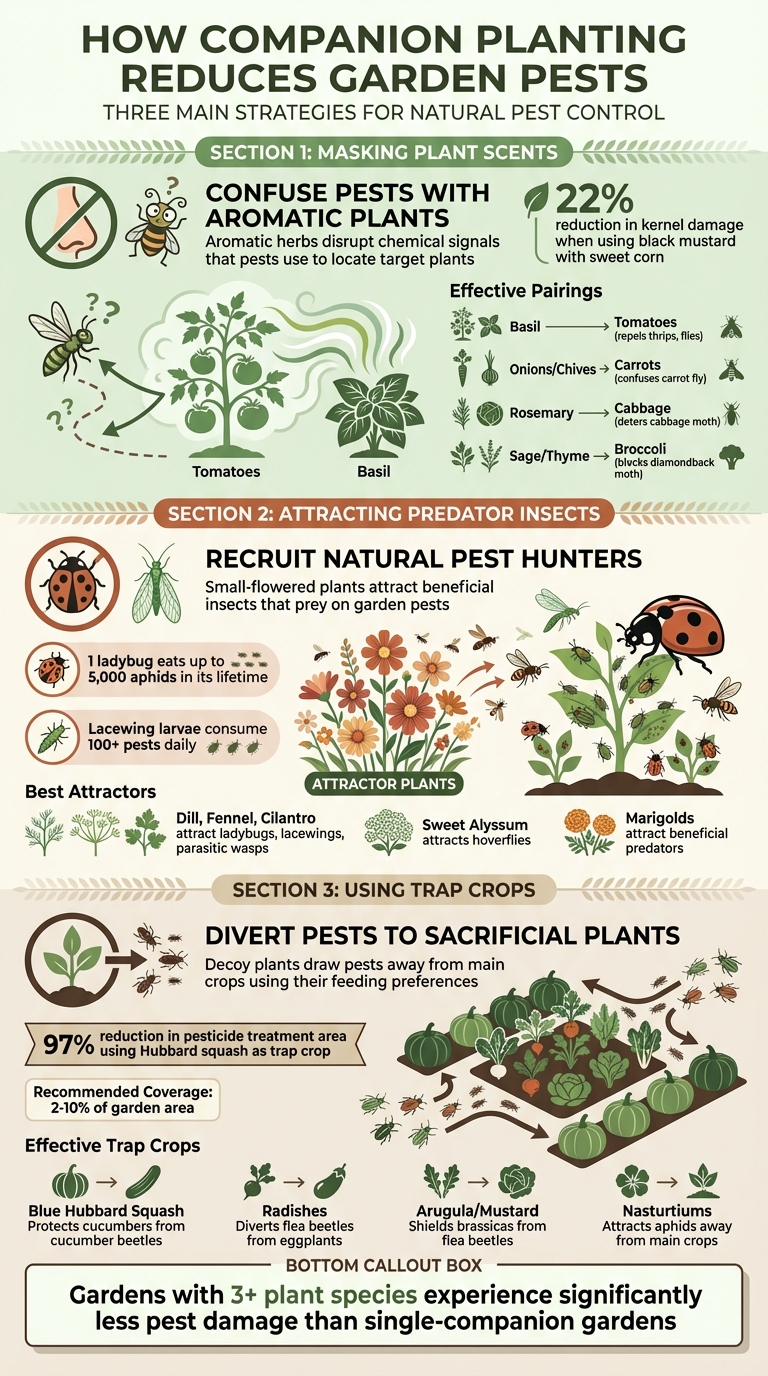
How Companion Planting Reduces Garden Pests: 3 Natural Strategies
Companion Planting for Natural Pest Control | Organic Gardening Tips
How Companion Planting Reduces Pests
Companion planting offers a natural way to protect your garden by employing three key strategies: confusing pests, attracting helpful predators, and using sacrificial plants to divert threats. Let’s break down how these methods work.
Masking Scents That Pests Use to Find Plants
Many pests rely on scent to locate their preferred plants. Introducing aromatic herbs and flowers into your garden can disrupt these chemical signals, making it harder for pests to zero in on their targets. As the University of Minnesota Extension notes, "Make insects less likely to land on your garden vegetables because there are too many signals to interpret".
Mixing aromatic plants with your vegetables breaks up the scent and visual cues that pests follow. For example, planting onions near carrots can confuse carrot flies, while basil near tomatoes helps repel other pests. A Napa Master Gardener shared success using lemon balm near roses, explaining, "The lemon balm scent obscures the rose fragrance, and the aphids have passed it by this year".
Even research backs this up: using black mustard as a companion plant reduced kernel damage in sweet corn by 22%. Additionally, gardens with three or more plant species tend to experience less pest damage compared to those relying on a single companion plant.
Here’s a quick look at some effective combinations:
| Masking Plant | Target Pest | Protected Crop |
|---|---|---|
| Basil | Thrips, Flies, Mosquitoes | Tomatoes, Asparagus |
| Onion/Chives | Carrot Fly, Aphids | Carrots, Lettuce, Celery |
| Sage/Thyme | Cabbage Moth, Diamondback Moth | Broccoli, Brussels Sprouts |
| Rosemary | Cabbage Moth, Carrot Fly | Cabbage, Carrots |
| Mint | Cabbage Moth, Ants | Cabbage Family, Tomatoes |
Attracting Predator Insects
Some companion plants bring in beneficial insects that prey on pests. The best choices are plants with small, accessible flowers, like those in the Umbelliferae family - fennel, dill, cilantro, and parsley. These plants attract ladybugs, lacewings, and parasitic wasps, which are natural enemies of garden pests. Sweet alyssum is another standout for drawing hoverflies, thanks to its extended blooming period.
These predators are incredibly effective: a single ladybug can consume up to 5,000 aphids in its lifetime, while lacewing larvae can eat more than 100 pests daily.
Research supports this strategy. A 2006 Iowa State University study found that planting thyme, onion, and nasturtium around broccoli significantly reduced damage from cabbage loopers and imported cabbageworms. Similarly, a 2019 study in Florida showed that interplanting African marigolds and sweet alyssum with squash increased the presence of aphid predators and improved crop yields. Allowing vegetables like onions, broccoli, and carrots to flower can also help attract these helpful insects, keeping them close to the crops you want to protect.
Using Trap Crops as Decoys
Trap crops act as decoys by drawing pests away from your main plants. As Jon Ault from Johnny's Selected Seeds explains, "Trap cropping is a strategy that pulls pests away from cash crops by exploiting their feeding preferences".
Placing trap crops around the edges of your garden or at row ends can intercept pests before they reach your primary plants. This reduces the need for chemical treatments and lowers pesticide use. For instance, planting a mix of trap crops (three or more species) has been shown to be more effective than relying on just one.
At Johnny's Research Farm, using Hubbard squash as a perimeter trap crop and green zucchini at row ends resulted in a 97% reduction in the area needing pesticide treatment and nearly eliminated insecticide costs. Ideally, trap crops should cover 2% to 10% of your garden area. Here are some effective pairings:
- Blue Hubbard squash: Protects cucumbers and squash from cucumber beetles and squash bugs.
- Arugula or mustard: Shields brassicas from flea beetles.
- Radishes: Diverts flea beetles away from eggplants and cucumbers.
Best Companion Plants for Common Garden Pests
Now that you know how companion planting works, let’s dive into some plant pairings that can naturally fend off common garden pests. These combinations are backed by research and offer a practical way to protect your crops without relying on chemicals.
Garlic, Onions, and Chives
Garlic, onions, and chives are excellent for keeping pests like aphids, carrot flies, beetles, slugs, and cabbage worms at bay. They work by masking the scent of nearby vegetables, making it harder for pests to locate their targets.
For best results, plant these alliums directly alongside your vegetables. For instance, placing chives between carrot rows can confuse carrot flies while also enhancing the carrots' flavor. Studies in Iowa found that interplanting onions with broccoli and cabbage significantly reduced damage caused by cabbage loopers and imported cabbageworms.
However, avoid planting garlic and onions near beans and peas, as they can inhibit growth. Instead, pair them with carrots, tomatoes, lettuce, celery, beets, and cabbages for a harmonious garden.
Marigolds for Nematodes and Whiteflies
French marigolds are a gardener’s ally against root-knot nematodes and whiteflies. Their roots release thiophene, a natural nematode deterrent, while their airborne limonene protects tomato plants from whiteflies.
"Companion planting with French marigolds protects tomato plants from glasshouse whiteflies through the emission of airborne limonene." – University of Minnesota Extension
To maximize their benefits, plant marigolds 10–12 inches apart near crops like tomatoes, peppers, zucchini, potatoes, and squash. For nematode control, grow marigolds and till them into the soil the year before planting your main crop. Water at soil level to avoid fungal diseases, and as a bonus, marigolds attract beneficial insects like ladybugs and hoverflies that feast on aphids and other soft-bodied pests.
Basil for Tomato Hornworms and Mosquitoes
Basil is more than just a kitchen staple - it’s a natural repellent for tomato hornworms, thrips, armyworms, mosquitoes, and aphids. It also supports tomato plants by masking their scent and boosting their overall health.
"Basil simply makes tomatoes healthier, releasing volatiles that prime the tomato's defense system, enhancing its response to wounding and pest attack." – The Old Farmer's Almanac
Plant basil about 10 inches away from tomatoes. This spacing not only deters pests but can also increase tomato yields by roughly 20%. Additionally, basil attracts pollinators that benefit nearby fruiting crops. It’s a great companion for peppers and potatoes as well, offering pest-repelling advantages across a variety of nightshade plants.
sbb-itb-0bbb908
Step-by-Step Guide to Implementing Companion Planting
Want to give companion planting a shot? Here’s a straightforward guide to help you dive in and make it work for your garden.
Step 1: Identify Your Garden's Pest Problems
Before picking companion plants, it’s crucial to figure out what pests you're up against. The best times to scout for pests are early morning and evening, as that’s when many are most active. While inspecting your plants, take note of both the pests you see and the damage they’ve caused.
Different pests leave distinct signs. Flea beetles, for example, leave tiny holes in leaves, while caterpillars chew along the edges. If you notice clean, angled cuts on leaves, rabbits might be the culprits. Damage higher up on plants? That’s often a sign of deer. Look for other clues like tracks, droppings, or unusual patterns of leaf damage.
"Identifying garden pests is the first step to controlling them, and the sooner that garden pest identification occurs, the better your chances of preventing a full-scale animal assault." – Safer Brand
Create a list of your plants and their usual pest problems. For instance, cucurbits like squash are often targeted by squash vine borers. Keeping a garden journal is a great idea - it helps you track pest activity, damage patterns, and which companion planting strategies work best. Over time, this journal becomes a personalized resource you can rely on.
Once you’ve identified the pests, you’re ready to choose companion plants that can help tackle them.
Step 2: Research Suitable Companion Plants
Now that you know your pest challenges, it’s time to find plants that can help. University Extension Services, like those from the University of Minnesota or West Virginia University, are excellent resources for reliable companion planting recommendations. Be cautious of outdated advice; for example, studies have shown that marigolds don’t effectively repel potato beetles, despite popular belief.
You can also turn to digital tools like the Almanac Garden Planner or the From Seed to Spoon app. These tools simplify the process by offering expert-curated pairings. The Almanac Garden Planner even has a "Show Companions" feature that highlights compatible plants for your chosen crop. Similarly, the From Seed to Spoon app provides detailed pairing suggestions aimed at pest control.
For localized advice, reach out to your local Master Gardener Help Desk. These free services allow you to send photos and questions to get tailored recommendations based on your region and soil conditions. Don’t forget to double-check spacing requirements on seed packets. Companion plants need to be close enough to work - usually within two to three rows.
With your research complete, you can start designing a garden layout that maximizes pest protection.
Step 3: Plan Your Garden Layout
The way you arrange your plants can make or break your companion planting efforts. For example, intersperse pest-repellent plants like garlic or onions throughout your beds. Meanwhile, place trap crops - such as nasturtiums or radishes - along the edges to draw pests away from your main vegetables. The placement of trap crops depends on the pest. For less mobile pests like aphids, plant the trap crop right next to your main plants. For highly mobile pests like cabbage worms, position the trap crop a little farther away.
Avoid planting straight rows of the same crop. Instead, mix plants with different heights, colors, and textures to confuse pests and make it harder for them to locate their preferred targets. Group plants with similar sun, water, and nutrient needs for better growth, and pair crops with different root depths - like tomatoes (deep roots) and lettuce (shallow roots) - to make the most of soil nutrients.
For high-value crops, scatter them throughout the garden instead of grouping them in one area. This reduces the risk of losing your entire harvest to a single pest infestation. Lastly, practice crop rotation by changing the location of your crops each year. This helps prevent soil-borne pests and diseases from building up over time.
Companion Planting Chart
When planning your garden, this chart is a handy guide for pairing vegetables with plants that naturally help with pest control. It also includes practical spacing tips to keep your crops thriving.
| Vegetable Crop | Common Pests | Recommended Companion Plants |
|---|---|---|
| Tomatoes | Tomato hornworms, thrips, whiteflies, aphids, nematodes | Basil, marigolds, borage, parsley, asparagus |
| Cabbage/Broccoli | Cabbage loopers, diamondback moths, aphids, flea beetles | Sage, thyme, rosemary, nasturtium, dill, garlic, alyssum |
| Carrots | Carrot flies, nematodes, aphids | Onions, leeks, chives, rosemary, sage, marigolds |
| Cucumbers | Cucumber beetles, squash bugs, aphids | Radishes, nasturtium, dill, tansy, corn, sunflowers |
| Potatoes | Colorado potato beetles, aphids, flea beetles | Basil, cilantro, tansy, horseradish, beans, garlic |
| Peppers | Aphids, thrips, whiteflies, corn borers | Onions, chives, basil, rosemary, dill |
| Squash/Pumpkin | Squash bugs, squash vine borers, cucumber beetles | Nasturtium, radishes, mint, borage, marigolds |
| Beans | Aphids, beetles, leafhoppers | Lovage, rosemary, nasturtium, corn |
| Lettuce | Aphids, cutworms, slugs | Alyssum, chives, garlic, onions, radishes |
For the best results, plant companions within 2–3 rows of each other. If one plant needs 6 inches of spacing and the other 12 inches, aim for a middle ground of 9 inches.
Let herbs like basil, dill, and cilantro bloom in your garden. Their flowers attract predatory insects that naturally keep pests in check.
Conclusion
Companion planting turns your garden into a natural, self-sustaining system that helps keep pests in check. By taking advantage of how plants naturally interact, you can cut back on pesticide use while encouraging a healthier environment. As UC Master Gardener Cynthia Nations puts it, "When we choose different plants to grow together, we create a polyculture that fosters biodiversity and a stable environment for our crops."
Ready to put these natural defenses to work? Start small by trying some of the proven pairings mentioned earlier - like planting basil next to tomatoes, onions alongside carrots, or surrounding your squash with nasturtiums. Keep an eye on how your garden responds and adjust based on your local conditions. Just remember, beneficial insects might take a little time to settle in, so be patient as your garden evolves.
While companion planting is a powerful tool, some situations may call for extra help. If pests get out of hand, additional steps might be necessary. That’s where Remedy comes in. We offer custom pest control solutions that are safe for pets and kids, blending natural methods with targeted treatments to keep your garden thriving.
FAQs
How does companion planting help control pests naturally?
Companion planting is a smart way to manage pests in your garden without relying on chemicals. Certain plants, like dill, fennel, cilantro, and alyssum, naturally attract insects that help control pest populations. These plants produce nectar and pollen, which draw in beneficial insects like parasitic wasps, hoverflies, and lady beetles. These helpful bugs feed on pests such as aphids and caterpillars, keeping your garden's ecosystem balanced.
Beyond attracting predators, companion plants also provide shelter and create small habitats that encourage these insects to stick around. Aromatic herbs like basil and mint add another layer of defense by masking the scent of your crops, making it harder for pests to find them. Pairing diverse plantings with thoughtful pest control methods can help your garden thrive while reducing the need for chemicals.
What are the best companion plants to naturally reduce pests in my garden?
Companion planting is a smart way to keep pests at bay by pairing plants that naturally repel or confuse harmful insects. Take basil planted near tomatoes, for instance - it helps fend off aphids and whiteflies while also drawing in pollinators. Another great example is marigolds interplanted with tomatoes or eggplants, as they release compounds that drive away nematodes and flea beetles.
If you’re growing cabbage, broccoli, or other brassicas, surrounding them with dill, rosemary, or sage can help mask their scent and attract helpful insects like lady beetles. Similarly, planting carrots next to onions or garlic takes advantage of the strong aromas that keep carrot flies away. One of the most time-tested combinations is the “Three Sisters”: corn, pole beans, and squash. This trio not only keeps pests in check but also makes the most of your garden’s space and improves soil health.
By choosing the right plant pairings, you can cut down on the need for chemical sprays. And if an infestation does pop up, a Remedy DIY Pest Control kit provides a safe, targeted solution that complements companion planting, protecting your garden while keeping beneficial insects safe.
What are trap crops, and how do they help with pest control?
Trap crops are plants grown specifically to draw pests away from your main crops. These plants act as a decoy, attracting pests with their appealing scents or vibrant colors. Once pests flock to the trap crops, they can be dealt with more efficiently - whether that's by removing the affected plants, manually picking off the insects, or using a targeted pest control method.
For trap cropping to work well, it's important to plant these decoy crops a few weeks ahead of your main vegetables. This way, they reach their most enticing stage, like flowering or fruiting, before pests start targeting your primary garden. Where you place the trap crops matters too - options include planting them as a border, in alternating rows, or even mixed in with your main crops. This approach helps protect your vegetables by reducing pest damage and cutting down on the need for broad-spectrum pesticides. It's a smart, eco-friendly strategy for managing pests in your garden.