


Moisture in your yard is a magnet for pests like mosquitoes, termites, ants, and cockroaches. These pests rely on damp environments for survival, breeding, and shelter. Whether it's standing water, damp mulch, or overwatered plants, excess moisture creates the perfect conditions for infestations.
Key Takeaways:
- Mosquitoes breed in standing water as small as a bottle cap.
- Termites thrive in damp mulch and moist soil near foundations.
- Ants and other pests nest in humid soil or decaying wood.
- Overwatering plants or poor drainage can lead to pest-friendly conditions.
To prevent pests, focus on managing moisture by improving drainage, watering plants correctly, and keeping mulch away from your home's foundation. These steps are far more effective than relying solely on chemical treatments.
How Can Water-wise Landscaping Prevent Pests From Overwatering? - The Plant Enthusiast
Why Moisture Attracts Pests: The Science
Pests rely on water to survive, reproduce, and thrive, making moisture one of the key factors that draws them in.
How Pests Use Moisture to Survive
Water is essential for the survival of many pests, including cockroaches, ants, and rodents, which all need direct access to it for hydration and other basic functions. Certain pests, like centipedes, are especially vulnerable to dry conditions because they lack a waterproof outer layer. This forces them to stay in dark, damp areas to avoid losing body fluids too quickly. Without enough moisture, they can die in just a few days.
Take the booklouse species Liposcelis entophilia, for example. When the relative humidity drops to 43%, their populations completely die out within six days. Similarly, most psocid species cannot survive if the humidity falls below 50%, and foreign grain beetles won’t even reproduce unless the air is at least 65% humid.
Mosquitoes, on the other hand, depend on standing water for three out of four stages of their life cycle: egg, larva, and pupa. In warm summer conditions, they can complete this cycle in as little as a week. Some species have even adapted to lay eggs that remain dormant in moist soil for months - or even years - until flooding triggers them to hatch.
How Moisture Creates Pest Shelter and Breeding Sites
Moisture doesn’t just keep pests alive - it also creates the perfect environment for them to settle and multiply. Damp conditions turn areas into pest hotspots by offering shelter, food, and breeding grounds.
For instance, excess moisture encourages the growth of mold, mildew, and fungi, which serve as food sources for pests like silverfish, booklice, and small scavenger beetles. Even something as simple as an over-watered houseplant can lead to an infestation, producing hundreds of fungus gnats that thrive in the moist soil and organic debris. Similarly, damp environments like mulch attract decomposers such as millipedes and sowbugs, which in turn lure predators like spiders and centipedes.
Moisture also weakens building materials, making them easier for pests to exploit. Damp or rotting wood becomes a prime target for termites and carpenter ants looking to tunnel through and establish colonies. Landscaping choices, like thick mulch or low-growing plants, can trap moisture against your home’s foundation. This creates consistently humid, sheltered spots where pests can hide from predators and temperature fluctuations.
Pests That Thrive in Moist Landscapes
Moisture doesn’t just attract pests - it creates the perfect environment for them to thrive. Let’s take a closer look at the specific pests that make damp landscapes their home.
Termites in Damp Mulch and Soil
Termites are notorious for thriving in moist environments, especially in damp wood and soil around your home’s foundation. When water collects near the base of your house, it increases the risk of termite infestations and structural damage to wooden elements. Wet mulch is a double threat, providing both the moisture and easy access to wood that termites need to establish colonies. Early signs of termite activity often include mud tubes along your foundation or wood that sounds hollow when tapped.
Ants Nesting in Humid Soil
Damp soil is a haven for ants, giving them the perfect conditions to build and expand their colonies. Carpenter ants, in particular, are drawn to moisture-damaged or rotting wood, where they create their nests. Additionally, moist plants can attract aphids, which serve as a food source for ants. If you notice ant mounds in shaded, damp areas or see ants tending to aphids on your plants, it’s a clear sign that excess moisture is supporting these pests.
Mosquitoes Breeding in Standing Water
Standing water is a mosquito magnet. Mosquitoes rely on stagnant water to lay their eggs and for larvae to grow. Just a small amount of water, like what fits in a bottle cap, can be enough for mosquito eggs to hatch. In the summer, their life cycle - from egg to adult - can take less than a week. The Asian tiger mosquito, a common pest in residential areas, typically stays within 100 to 300 yards of its breeding site. So, if you have standing water in your yard, you’re essentially inviting them to stay.
"Standing water is more than a backyard inconvenience. It's the perfect breeding ground for one of the most dangerous pests: mosquitoes." - Western Pest Services
Cockroaches and Rodents in Moist Areas
Cockroaches and rodents are equally drawn to damp, sheltered spaces. Cockroaches thrive in dark, humid spots like wet mulch, soaked wood, and yard debris. Rodents, including rats and mice, need water to survive and are drawn to soft, wet ground, which makes burrowing and tunneling much easier. Overgrown, moist vegetation provides the perfect hiding spots for these pests. Roof rats, in particular, are incredibly agile, capable of jumping 3 feet vertically and over 4 feet horizontally to access entry points.
Moisture doesn’t just invite pests - it helps them multiply, creating a bigger problem for your home and yard.
sbb-itb-0bbb908
How to Manage Moisture in Your Landscape
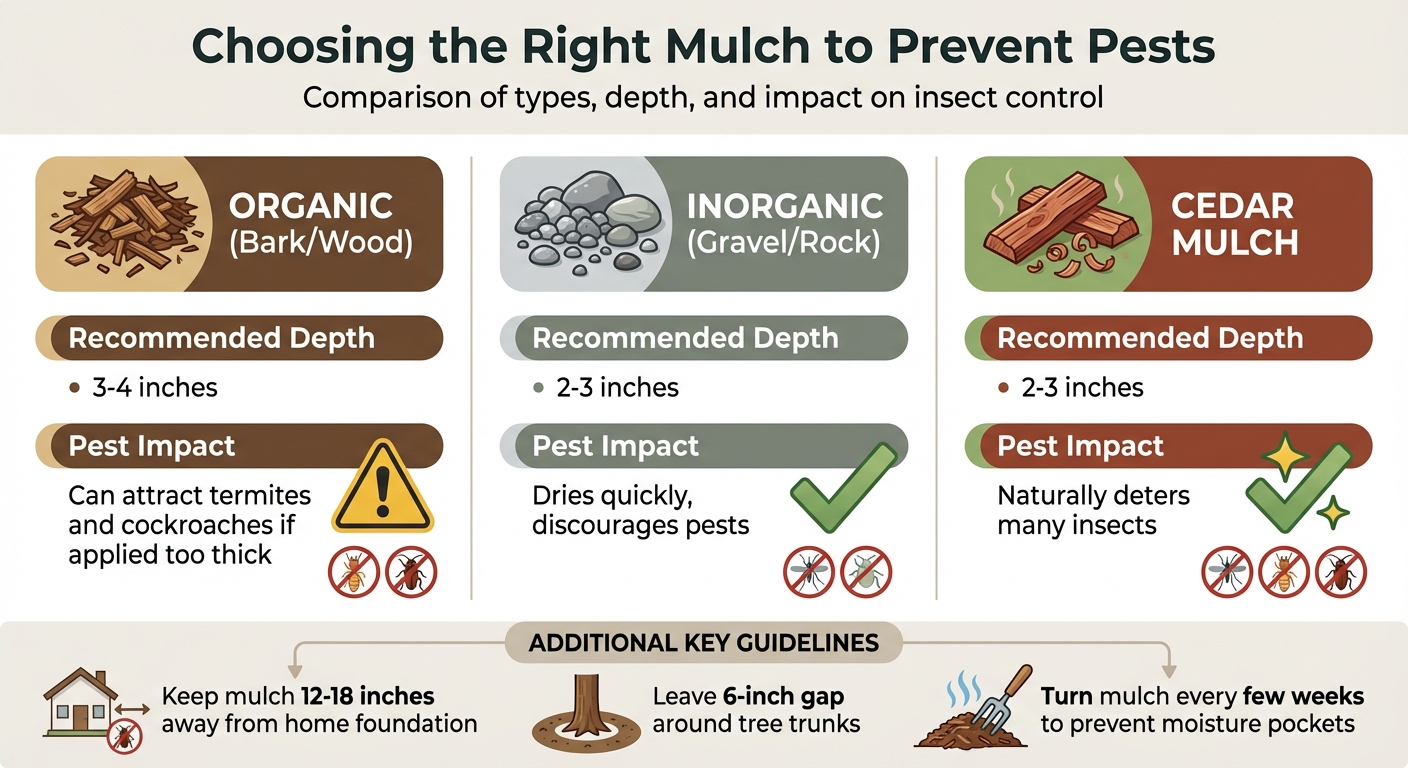
Mulch Types Comparison for Pest Control in Landscaping
Managing moisture in your landscape is key to a healthy garden and keeping pests at bay. It’s not about depriving your plants of water - it’s about striking the right balance. Below are some practical strategies to help you maintain that balance while protecting your home and garden.
How to Apply Mulch Correctly
Mulch is a great way to support plant health, but if applied incorrectly, it can also attract pests. The trick is to use it wisely. Keep mulch at least 12 to 18 inches away from your home’s foundation to remove hiding spots for pests like termites, cockroaches, and mice. Around trees and shrubs, leave a 6-inch gap between the mulch and the trunk to prevent root collar diseases and rodent damage.
Pay attention to thickness, too. Organic mulches like wood chips or bark should be applied 3 to 4 inches deep - any thicker, and you risk limiting water access to roots while creating a cozy shelter for pests. Near your foundation, stick to 2 to 3 inches of mulch or opt for gravel or stone, which dries quickly and is less appealing to insects. Cedar mulch is another good option since its natural oils repel many pests. For best results, turn your mulch every few weeks to break up moisture pockets and discourage pests from settling in.
| Mulch Type | Recommended Depth | Pest Impact |
|---|---|---|
| Organic (Bark/Wood) | 3–4 inches | Can attract termites/roaches if too thick |
| Inorganic (Gravel/Rock) | 2–3 inches | Dries quickly, discourages pests |
| Cedar Mulch | 2–3 inches | Naturally deters many insects |
Setting Up Proper Grading and Drainage
Good drainage starts with proper grading. Ensure the ground around your home slopes away from the foundation to keep water from pooling near your structure. If you notice low spots in your yard, fill them with loamy sand or sandy loam to improve drainage and eliminate standing water that could attract mosquitoes.
For persistent issues, consider installing a French drain or interceptor drain to redirect subsurface water away from your home. You can also use landscaping features like swales (shallow, grassy depressions) or rain gardens to safely capture and absorb runoff. Make sure your gutters and downspouts are connected to drainage pipes that direct water to appropriate areas.
"If the water 'resurfaces' under the house... problems can be created for wet conditions, termite and other pest habitats." - Oklahoma State University
Watering Plants Without Creating Excess Moisture
Watering effectively is just as important as drainage and mulching when it comes to controlling moisture. Aim to water early in the morning. This reduces evaporation and ensures water reaches the roots instead of lingering on leaves, which can encourage fungal diseases and attract pests. Focus on watering the root zones, keeping water away from plant trunks and your home’s foundation to avoid crown diseases and discourage pests like ants and termites.
Most landscapes need about one inch of water per week, including rainfall, to stay healthy. Drip irrigation or soaker hoses are excellent tools for delivering water slowly and directly to plant roots, keeping foliage dry and reducing humidity. For added precision, consider a weather- or soil moisture–based irrigation controller to water only when necessary. The "cycle-and-soak" method - watering in short intervals with breaks - helps water absorb gradually, preventing pooling.
"Improper water management is probably the biggest cause of poor performance and survival of trees and shrubs. Too much or too little soil moisture damages or kills plants and favors many pest problems." - University of California Statewide IPM Program
Don’t forget to inspect your irrigation system monthly. Fix leaks, broken sprinkler heads, or clogs to avoid creating soggy spots that pests love. Even small issues, like misaligned sprinkler heads, can lead to the damp conditions pests thrive in.
Using Remedy DIY Pest Control Kits for Moisture-Related Pests
Sometimes, controlling moisture alone isn’t enough to keep pests at bay. Even when you've done everything to reduce dampness, certain pests can still thrive. That’s where our customized pest control kits come in, offering targeted solutions specifically designed for moisture-related pest problems. These kits provide professional-grade tools to tackle the issue head-on.
Custom Kits for Moisture-Loving Pests
Each kit is tailored to address your specific pest problem and the unique conditions of your location. For example, we include biological agents like Bacillus thuringiensis israelensis (Bti) to target mosquito larvae, as well as bait stations designed to eliminate ant colonies by focusing on foraging workers. For ants nesting in humid soil, our bait stations use attractants that the workers carry back to the colony, wiping out the entire nest - not just the ants you see on the surface. Whether you’re dealing with termites in damp mulch, cockroaches in wet crawl spaces, or any other moisture-loving pests, we build your kit to fit your exact needs.
Professional-Grade Products That Are Family-Safe
Our kits include the same high-quality products used by pest control professionals, but they’re designed to be safe for use around pets and children. These treatments are effective at creating barriers in damp areas like basements or spots with poor drainage. So, while you’re tackling pest problems, your kids can still play in the yard, and your pets can roam freely in treated areas. It’s a practical, family-friendly way to manage pests without compromising on effectiveness.
Simple Application with Expert Support
Every kit comes with clear, step-by-step instructions, so you don’t need any special skills or equipment to get started. Just follow the guide, and you’re ready to go. And if you have questions or need help identifying a pest, our virtual support team is just a message away. We also offer ongoing protection with regular shipments, helping you stay ahead of potential infestations. It’s an easy, accessible way for homeowners to handle pest control like a pro.
Conclusion
Moisture in your landscape isn’t just a small annoyance - it’s often the main reason pests like termites, mosquitoes, and ants show up. These pests are more than just a nuisance; they’re a clear sign that there’s too much moisture around. The good news? This is a problem you can manage.
By recognizing these warning signs, you can take action right away. Simple steps like improving drainage, adjusting your watering schedule, keeping mulch away from your home’s foundation, and emptying water-collecting containers can make a big difference. Reducing moisture at its source is far more effective than relying only on chemical treatments.
For situations where extra help is needed, our customized kits provide the perfect reinforcement. These kits pair professional-grade pest treatments with the moisture control strategies you’re already using, offering a comprehensive solution to protect your home and yard. When you maintain balanced humidity, pests lose their foothold - and our kits help you achieve that balance both indoors and outdoors.
Consistency is key. Fix leaks as soon as they happen, clean your gutters twice a year, and adjust watering based on rainfall. Combine these habits with targeted pest control, and you’ll enjoy a pest-free landscape all year long.
FAQs
How can I reduce moisture in my yard to keep pests away?
Excess moisture in your yard can turn into a magnet for pests. Tackle the problem with these straightforward tips:
- Get rid of standing water: Inspect your yard for low spots, clogged gutters, or containers that collect rainwater. Fix any leaks and make sure downspouts are free of blockages.
- Improve drainage: Adjust the soil's grade so it slopes away from your home. For persistently soggy areas, consider options like swales or French drains to help water flow properly.
- Fine-tune your watering routine: Water early in the morning and stick to about ½ inch per week - just enough without overdoing it. Keep sprinklers clear of debris to ensure even distribution.
- Handle mulch and organic debris carefully: Limit mulch depth to no more than 2 inches and keep it at least 6 inches away from your home’s foundation to avoid trapping moisture that could attract pests.
By tackling these areas, you can cut down on yard moisture and make your outdoor space far less inviting to unwelcome critters.
How can excess moisture in landscaping lead to pest problems?
Excess moisture in your yard can create a haven for pests. Watch for signs of moisture-related infestations, like musty smells, mold or mildew on walls or mulch, and damp or weakened wood - these can attract termites and carpenter ants. You might also spot mud tubes, hollowed wood, or swarms of winged insects, which are telltale signs of trouble.
Standing water is a mosquito magnet, while damp soil often draws ants and rodents. Snails and slugs leave slimy trails and chew irregular holes in plants, especially after rain. You may also notice cockroaches, flies, or other pests clustering around wet areas, along with droppings or gnaw marks - clear indicators of a moisture problem.
To tackle these issues, start by addressing the root cause: fix any leaks, improve drainage, and avoid overloading mulch. Once the moisture is under control, you can use our pet- and child-safe DIY pest control kits to handle the pests that remain.
What types of mulch are best for preventing pests in landscaping?
The kind of mulch you choose can play a big role in managing pest activity around your home. Organic mulches - like wood chips, bark, or pine needles - tend to trap moisture. This creates a damp environment that pests such as termites and ants find appealing, especially if the mulch is piled too thickly or placed directly against your home’s foundation.
In contrast, inorganic mulches - like gravel, river rock, or rubber - don’t hold water and offer fewer hiding places for pests. These materials are often combined with landscape fabric to reduce moisture even further, making the area less inviting to insects.
To keep pests at bay, it’s best to use a thin layer (no more than 2 inches) of inorganic mulch near your home or ensure organic mulch is kept at least a foot away from the foundation. If pests remain a problem despite these steps, we offer a customized Remedy DIY pest control kit designed to target moisture-loving insects in your yard.