


Pests invade homes mainly because they’re drawn to food, water, and shelter. Understanding their feeding habits can help you manage infestations more effectively. Here’s a quick breakdown of what pests eat and how they behave:
- Ants: Love sugary and protein-rich foods. They leave pheromone trails to guide others to food sources.
- Cockroaches: Eat almost anything, including grease, starches, and decaying matter. They’re nocturnal and often feed in groups.
- Rodents: Prefer grains, seeds, and protein-rich foods. They hoard food and are cautious of new objects like traps.
- Pantry Pests: Target dry goods like flour, cereals, and nuts. Their larvae often infest stored food.
- Moisture Feeders: Pests like silverfish eat starchy materials and thrive in damp areas.
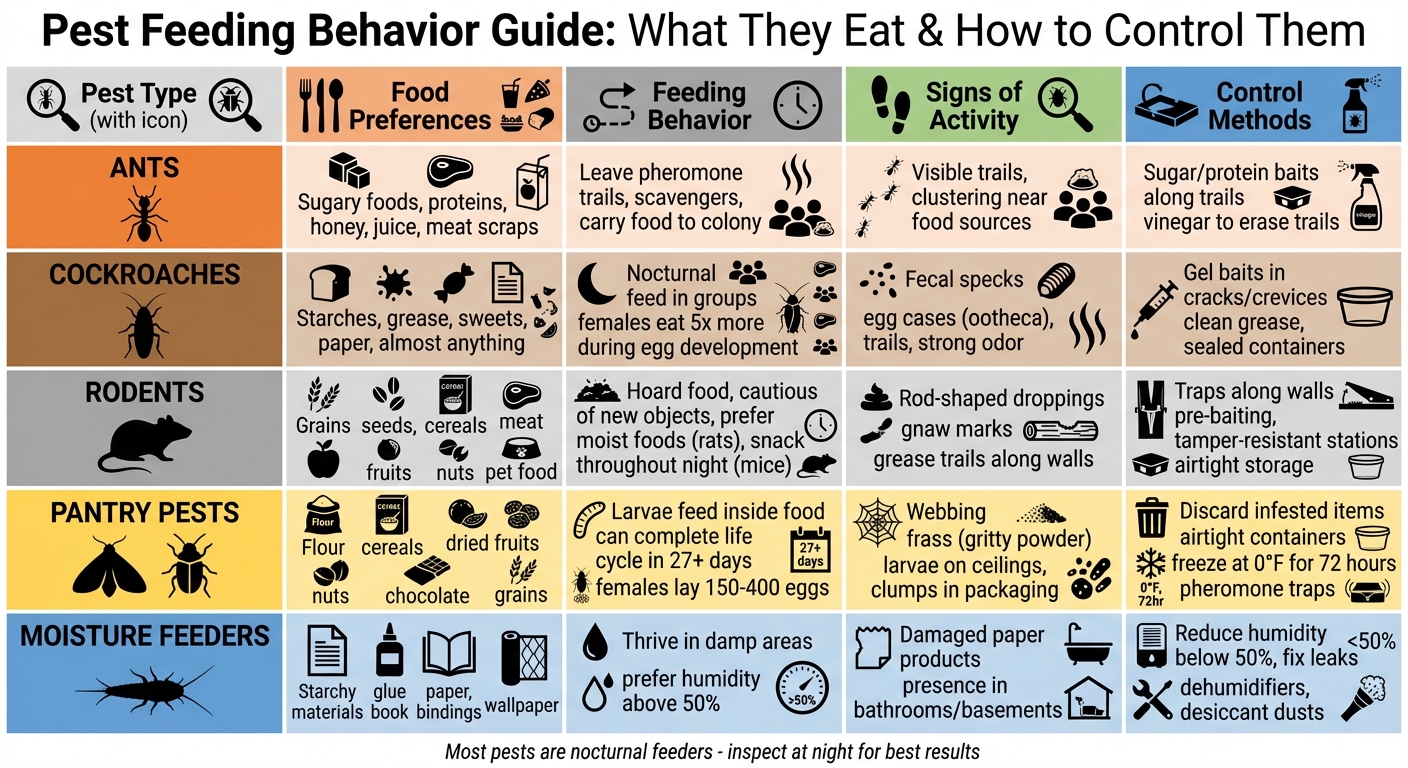
Common Household Pests Feeding Habits and Control Methods Comparison Chart
How Pests Feed: Basic Patterns and Preferences
Types of Pest Diets
Household pests fall into a few main dietary categories. Cockroaches, for instance, are omnivores with a broad appetite. They’ll eat just about anything - starches, grease, sweets, plant matter, garbage, and even dead insects or feces. Indian meal moth larvae, a common pantry nuisance, prefer grains, cereals, flour, dried fruits, nuts, and chocolate. Ants, on the other hand, act as scavengers, while rodents - also omnivores - favor grains, meats, fats, and pet food, particularly high-protein and fatty options over simple starches. Below, we’ll explore the specific foods that attract these pests and shed light on their feeding preferences.
What Foods Attract Pests
Pests are drawn to foods that match their nutritional requirements. Sugars and sweets, like spilled juice, honey, or candy, are irresistible to ants and cockroaches. Protein-rich foods, such as meat scraps, pet food, and dead insects, not only support cockroach growth but also lure rodents. Fats and grease - often found on stovetops, inside trash cans, or near appliances - are prime targets for cockroaches. Starchy foods, including bread, cereal, pasta, and rice, appeal to cockroaches, rodents, and pantry pests alike. Rotting organic matter, like decaying produce or fermenting liquids, is another major attractant. Pantry pests, in particular, gravitate toward cereals, flour, cornmeal, dried fruit, nuts, chocolate, and spices, as these provide the starch, sugar, and fat their larvae need to grow.
When and How Pests Feed
Most household pests are nighttime feeders, becoming active shortly after the sun sets. Cockroaches emerge from their hiding spots at night, memorizing food locations and taking direct routes on return trips. Ants, meanwhile, leave chemical trails to guide other workers to a valuable food source. Social pests like German cockroaches often form feeding groups, drawn together by cues in their feces that mark productive feeding sites. Female German cockroaches increase their food intake significantly during egg development, then eat less after mating. Young nymphs tend to stay close to these feeding hubs, relying on fecal pellets and even dead cockroaches as concentrated nutrition sources. This nocturnal, group-oriented feeding behavior explains why pests are rarely seen during the day but are more noticeable in a dark kitchen late at night.
Feeding Habits by Pest Type
Understanding how pests feed is essential for implementing targeted control methods. Let’s dive into the feeding behaviors of different pests and how they shape effective management strategies.
Ant Feeding Behavior
Ants are scavengers with a sweet tooth, often searching for sugary treats and proteins. They use their mandibles to carry food back to the colony and leave pheromone trails to guide other ants to food sources like spilled juice, honey, or meat scraps.
If you're tackling ants yourself, tailor your bait to what the colony needs at the moment. For example, sugar-based baits (like boric acid mixed with honey) work when ants are seeking carbohydrates, while protein-based baits (such as peanut butter) are more effective during brood-rearing times. Place baits along their trails, especially near entry points like windowsills or baseboards, so workers can carry it back to the nest. After resolving the infestation, clean surfaces with vinegar to erase pheromone trails and prevent re-infestation.
Cockroach Feeding Behavior
Cockroaches are omnivores with a broad diet that includes starches, grease, sweets, and even paper. German cockroaches, the most common indoor species, are nocturnal and tend to gather in groups at feeding sites marked by fecal pheromones.
Female German cockroaches eat significantly more during egg development - up to five times more than males - while young nymphs stay close to feeding hubs. Keeping a clean environment is your first line of defense: regularly clean grease traps, stovetops, and floors, store food in sealed containers, and promptly dispose of trash. Gel baits work well when placed in hidden areas where cockroaches forage, capitalizing on their natural behaviors, including cannibalism.
Rodent Feeding Behavior
Different rodent species have distinct food preferences. House mice snack on seeds, grains, and cereals throughout the night, while rats prefer larger meals of moist foods like meat and grains. Roof rats are partial to fruits, nuts, and berries. All rodents tend to hoard food near their nests and are naturally cautious of unfamiliar objects, including bait stations.
To outsmart rodents, patience is key. Place rodenticide blocks (e.g., those with bromadiolone) in tamper-resistant stations along walls or pathways where you've noticed droppings or gnaw marks. Pre-baiting with enticing foods like peanut butter or oats can help overcome their initial hesitation before introducing the rodenticide. Also, store food in durable containers, as rodents can easily chew through materials like cardboard.
Pantry Pests and Stored Food Feeders
Pantry pests, such as Indian meal moths, saw-toothed grain beetles, and rice weevils, target dry goods. Their larvae feed inside infested items, leaving behind webbing or frass (a gritty powder). For instance, a single Indian meal moth female can lay 150–400 eggs over one to two weeks directly on food.
Infestations often start with contaminated packaged goods. Under ideal conditions, these pests can complete their life cycle in just over 27 days. You might notice larvae crawling to pupate in cracks or even on ceilings - clear signs of an active problem. To manage these pests, discard infested items in sealed bags, transfer unaffected dry goods to airtight glass or metal containers, and freeze suspect items at 0°F for 72 hours to eliminate eggs or larvae. Vacuum shelves thoroughly, paying special attention to cracks and corners, and use pheromone traps to monitor adult moth activity. Check grocery packaging for damage or clumps that might indicate eggs before bringing items home.
Occasional Invaders and Moisture Feeders
House flies and silverfish are examples of pests with unique feeding habits. House flies liquefy food by regurgitating saliva before sponging it up. They're drawn to decaying food, garbage, and moist waste. Silverfish, on the other hand, prefer starchy materials like glue, paper, and decaying matter, often feeding on book bindings or wallpaper in damp areas.
To deter flies, seal trash cans tightly, clean up spills quickly, and eliminate standing water near sinks or drains. For silverfish, controlling moisture is essential: reduce humidity to below 50% with dehumidifiers, fix leaks promptly, and improve ventilation in damp spaces. In targeted areas like bathrooms or storage zones, use desiccant dusts or sticky traps to manage their populations effectively.
sbb-itb-0bbb908
Using Feeding Behavior to Plan Pest Control
Inspecting for Food Sources
Start by thoroughly checking your kitchen for any signs of food residue or pest activity. Look on counters, behind appliances, under sinks, and near dishwashers for crumbs, grease, or leftover food. Don’t forget to inspect pantry shelves for telltale signs like food dust, webs, or chew marks on items like cereal, flour, nuts, and pet food. Pay close attention to pet feeding areas, including bowls, storage bins, and the surrounding floor where stray kibble might accumulate.
Be on the lookout for indicators such as visible pests, small droppings (rod-shaped for rodents or pepper-like specks for cockroaches), gnaw marks on food packaging, grease trails along walls, and clustering near specific foods. Also, check opened or rarely used packages, wall-floor junctions, and cracks where food debris might settle. To keep things organized, take photos or jot down notes about each location. This will help you focus your cleanup efforts and avoid wasting time on areas that don’t need attention. These observations will form the foundation for a detailed map of where pests are feeding.
Mapping Pest Feeding Areas
Use your inspection findings to create a floor plan that marks all signs of pest activity. For ants, note the locations of trails, entry points (like cracks or window frames), and the types of food they’re drawn to, such as sugar spills, pet food, or pantry items. For cockroaches, record where you see fecal specks, egg cases, or strong odors - these are often near food and water sources, like inside cabinets, behind appliances, or near garbage areas. For rodents, map out where you find droppings, gnaw marks on containers, grease trails along baseboards, and any hidden food stashes. For pantry pests, highlight shelves or containers showing larvae, beetles, or webbing, and identify whether the infestation is concentrated on specific items like cereal or pet food.
By mapping these high-activity zones and movement paths, you can pinpoint where to clean thoroughly, secure food storage, and place traps or baits more effectively. Since many pests are active at night, consider doing a late-evening inspection with a flashlight to spot cockroach feeding areas or checking traps in the morning for signs of overnight rodent activity. This mapped data will guide your pest control efforts with precision.
Choosing the Right Control Methods
Select pest control methods tailored to the feeding habits of each pest. For ants, place sweet or protein-based baits along active trails near food sources and entry points. The workers will carry the bait back to the colony, addressing the problem at its source. For cockroaches, use gel bait in cracks and crevices close to food and water, such as under sinks, behind stoves and refrigerators, and inside lower cabinets where fecal spotting is visible. Since German cockroaches rely on pheromones and path integration to find food, it’s most effective to place baits within 24 inches of their hiding spots.
For rodents, set traps along walls where they frequently travel and bait them with foods they already favor, like peanut butter or pet food. For pantry pests, discard infested food and transfer the rest into airtight containers to prevent further contamination. Maintaining a clean environment is equally important: clean up crumbs, grease, and spills quickly, wash dishes daily, vacuum pantry shelves and cracks, and take out the trash regularly.
To make pest control easier, Remedy offers customized kits designed to align with these strategies. Our EPA-approved formulas are safe for pets and children while creating a protective barrier when applied to your home’s foundation and entry points. Paired with targeted baiting and thorough sanitation, these solutions help you use pest feeding behavior to achieve long-term control.
Conclusion
Gaining insight into what pests eat, when they feed, and where they roam gives you the upper hand in managing infestations. Pests are drawn to food, moisture, and shelter - removing these essentials is the first step in keeping them at bay. Each pest has its own preferences: ants are drawn to sugars and proteins, cockroaches go after grease and starches, rodents seek out grains and stored foods, and pantry pests thrive on dry goods. Most infestations start and linger in areas where food is readily available - think unsealed pantry items, dirty dishes, trash cans, pet food bowls, and stray crumbs.
Understanding these feeding habits allows you to fine-tune your pest control efforts. By tracking food trails, using pest-specific baits, and properly securing stored foods, you can create a focused and effective strategy. This approach works far better than relying on broad-spectrum spraying.
Small, consistent habits can also make a big difference in keeping pests out. Store dry goods in airtight containers, clean up spills right away, take out the trash regularly, and fix any leaks to cut down on moisture. Once you realize that pests invade your home simply because they're following a food source, you can respond with precision. To make this easier, we provide specialized kits with professional-grade products that are safe for pets and children, paired with clear instructions to help you place baits, traps, and treatments exactly where they’re needed.
You don’t have to eliminate every pest around your home. By making your space less appealing as a food source and using targeted, behavior-based strategies, you can manage ants, cockroaches, rodents, and pantry pests effectively - with fewer chemicals and greater peace of mind.
FAQs
How can understanding pest feeding habits help control infestations?
Understanding what pests eat and where they find food is crucial for keeping infestations under control. Begin by pinpointing the food sources that might be drawing them in - this could be anything from crumbs and spills to improperly sealed food items. Once identified, clean up these attractants and focus on the areas where pests are most active.
To tackle the problem effectively, carefully apply treatments as directed in your DIY pest control kit. By disrupting their feeding habits, you make your home less inviting to pests, gradually cutting down on infestations.
What are the most effective ways to bait ants and cockroaches?
To tackle ants and cockroaches effectively, start by placing bait stations in spots where you've noticed their activity - think entry points, trails, or areas they frequent most. Choose baits that cater to their tastes: sweet or greasy baits tend to attract cockroaches, while ants typically go for sugary or protein-based options. Be sure to position the bait stations where pests can access them, but keep them safely out of reach of kids and pets.
Keep an eye on the bait stations and replace them regularly to maintain their effectiveness. For a stronger defense, consider adding spot treatments and barrier sprays as part of your pest control strategy. Just be sure to carefully follow the instructions for each product to maximize results and maintain long-term protection.
What’s the best way to keep pantry pests out of my food?
Keeping your pantry pest-free starts with proper storage. Use airtight containers for dry goods like flour, rice, and cereal to keep pests out. Make it a habit to inspect your food regularly for signs of trouble - look for things like webbing or tiny insects. If you spot anything suspicious, throw the affected items away immediately.
Maintaining a clean and dry pantry is just as important. Wipe up spills and crumbs as soon as they happen, and organize your shelves so older items are up front, making them easier to use before they expire. These simple steps can go a long way in keeping unwanted visitors out of your food supply.