


Dealing with wildlife like deer and squirrels ruining your garden can be frustrating. Instead of spending on pricey chemical repellents, you can make your own using everyday items like eggs, garlic, and hot peppers. These natural solutions are safe for kids, pets, and the environment while effectively deterring animals by targeting their sensitive noses and taste preferences. Research shows DIY repellents can reduce wildlife visits by 50%-70% when applied consistently.
Key Takeaways:
- Ingredients: Eggs, garlic, hot peppers, vinegar, dish soap, and essential oils.
- Recipes: Egg-based sprays, hot pepper solutions, and garlic-onion blends.
- Application Tips: Spray in the evening, reapply after rain, and test on a small plant area first.
- Tools Needed: Blender, spray bottle, cheesecloth, and jars for storage.
These DIY repellents are easy to make, cost-effective, and biodegradable, helping you protect your garden naturally. For tougher pest issues, ready-made kits are also an option.
Why Make Your Own Wildlife Repellents
Lower Costs and Easy Access to Ingredients
Making your own wildlife repellents can save you a lot compared to buying commercial products like Liquid Fence. Bob Vila sums it up well:
Commercial deer repellents tend to be pricey, so why not mix up your own, using ingredients likely already in your home?
Most DIY repellents use everyday household items - think eggs, garlic, cayenne pepper, vinegar, and dish soap. These are not only affordable but also easy to find.
Some effective options are even free. For example, spreading pet fur from your dog's brush or human hair from your hairbrush around your garden can mimic the scent of predators, keeping animals at bay.
Safe for Children, Pets, and Nature
Homemade repellents often use food-grade ingredients, making them a safer alternative for your family, pets, and the environment. Unlike synthetic pesticides, items like eggs, hot sauce, and soap are non-toxic and won't harm the soil. Garden expert Jenny Krane highlights this benefit:
Natural, do-it-yourself solutions are less toxic, which helps maintain the quality of your garden soil.
These repellents work by making plants smell or taste unpleasant to wildlife, rather than harming them. They’re biodegradable and won’t pollute the soil or water, making them perfect for organic vegetable gardens where avoiding chemical residues is a priority.
Adjust Recipes for Different Animals
One of the best parts of DIY repellents is the ability to customize them for specific pests. For example, "fear" repellents like putrid egg sprays mimic predator scents, while "taste" repellents such as spicy pepper sprays make plants unappealing to nibblers. Rabbits tend to avoid garlic-based sprays, while squirrels dislike cinnamon or strongly scented bar soap.
To make your repellent more effective, you can reduce the water content or let the mixture sit in the sun for 24–48 hours to boost its potency. Adding milk, yogurt, or dish soap helps the mixture stick to leaves. Switching up your formulas regularly also prevents wildlife from adapting to a single scent.
sbb-itb-0bbb908
Ingredients and Tools You'll Need
Common Ingredients for Wildlife Repellents
Some everyday items can work wonders in keeping wildlife out of your garden. Cayenne pepper or hot sauce is highly effective because it irritates the eyes, nose, and throat of deer and squirrels, deterring them from coming back. Eggs, when left to sit, release a sulfur-like smell that mimics predator urine, a natural warning signal for deer to stay away.
Garlic and onions have strong odors that overwhelm the sensitive noses of rabbits and deer, while white vinegar creates a sharp, sour scent that squirrels dislike. Adding dish soap helps the repellent stick to leaves while giving them an unpleasant soapy taste. For a gentler alternative, castile soap is plant-friendly and less likely to harm delicate foliage. Other handy ingredients include ammonia, which mimics the scent of predators, essential oils like peppermint or eucalyptus for their strong fragrances, and cinnamon, which is particularly effective against squirrels.
Once you've chosen your ingredients, you'll need the right tools to mix and apply your homemade repellents efficiently.
Tools and Equipment for Making Repellents
Creating and applying repellents is easy with just a few tools. A high-powered blender is great for pureeing garlic, onions, or peppers to release their active compounds. For application, a garden sprayer or spray bottle is essential. Handheld bottles work for smaller areas, while pump sprayers are better for larger spaces. To avoid clogging the nozzle, strain your mixture using cheesecloth, a coffee filter, or a fine strainer.
For storage, use jars with lids or repurpose old milk jugs to let your mixtures ferment in the sun, which can boost their effectiveness. If you're using solid repellents like soap bars, place them in muslin bags or nylon stockings and hang them about 4 feet off the ground - right at a deer's nose level. A funnel is also helpful for transferring liquids into containers without spills.
Safety Tips When Handling Ingredients
Some ingredients, like hot peppers and ammonia, can cause irritation. Always wear gloves when handling them, start blending at a low speed to avoid splashing, and work in a well-ventilated area to protect your skin and eyes.
Before using any repellent across your entire garden, test it on a small area first to ensure it won’t harm your plants - this is especially important for vinegar or oil-based mixtures. Avoid spraying on windy days to prevent blowback and never apply during the midday sun to avoid scorching leaves. If you're using repellents on edible plants, make sure to wash your produce thoroughly before consuming it. Taking these precautions will help you create safe and effective solutions with a Quarterly Pest Remedy Kit to protect your garden while keeping your family safe.
DIY Deer Repellent Keep Rabbits Skunks Possums Raccoons Moose Out Of The Garden
Many homeowners have successfully used these methods to protect their gardens, as seen in our customer success stories.
Homemade Wildlife Repellent Recipes
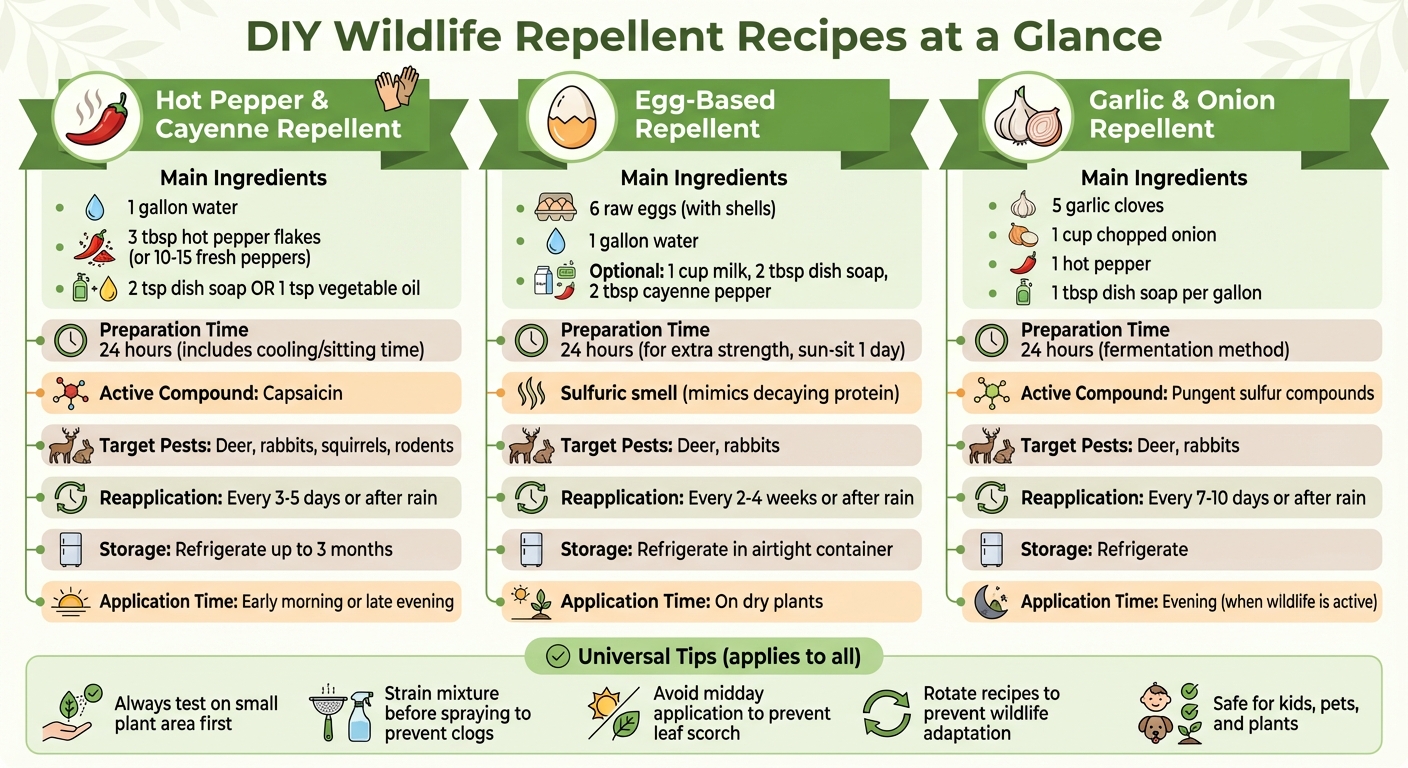
DIY Wildlife Repellent Recipes Comparison Chart
Hot Pepper and Cayenne Repellent
Capsaicin, the compound that gives peppers their heat, is a natural irritant for many animals, including deer, rabbits, squirrels, and rodents. It’s been used in repellents since 1962, as recognized by the EPA.
To make this repellent, start by mixing 1 gallon of water with 3 tablespoons of hot pepper flakes (or 10–15 fresh peppers, blended). Bring the mixture to a boil, then simmer for 15–20 minutes to extract the capsaicin. Let it cool and sit for 24 hours to intensify the solution. Strain it using cheesecloth or a fine mesh strainer to avoid clogging your spray bottle.
Once strained, add 2 teaspoons of dish soap or 1 teaspoon of vegetable oil to help the spray stick to plant surfaces. Pour the mixture into a spray bottle and apply it to leaves, stems, and soil during the early morning or late evening to avoid stressing your plants. Reapply every 3–5 days or after heavy rain. Store any leftover solution in the refrigerator, where it will stay usable for up to three months. This repellent is safe for kids, pets, and plants.
If spicy sprays aren’t your style, you might want to try the egg-based formulas below.
Egg-Based Repellent Formulas
Egg-based repellents rely on their strong sulfuric smell to keep animals like deer and rabbits at bay. The odor mimics decaying proteins, which these creatures instinctively avoid. Research from the University of Nebraska, Lincoln in 2001 found that repellents made with putrescent whole egg solids effectively reduce deer damage.
For a simple formula, blend 6 raw eggs (shells included) with 1 gallon of water. To create a stronger version, add 1 cup of milk, 2 tablespoons of liquid dish soap, and 2 tablespoons of cayenne pepper. Blend thoroughly, then strain the mixture through cheesecloth or a coffee filter to prevent clogging. For extra strength, let the mixture sit in the sun for a full day before using.
This spray works best on dry plants, targeting new growth and areas where wildlife activity is high. Reapply every 2–4 weeks or after heavy rain. Be cautious not to spray directly on the edible parts of fruits and vegetables. Like the pepper-based repellent, this is safe for children, pets, and your garden.
Garlic and Onion Repellent Solutions
Garlic and onions release a strong, pungent smell that can irritate the sensitive noses of deer and rabbits. Freshly crushed garlic and chopped onions are generally more effective than powdered alternatives, and you can adjust how you prepare them - crushed or boiled - depending on the animals you’re dealing with.
For a fermented puree, blend 5 garlic cloves, 1 cup of chopped onion, and 1 hot pepper with water. Let the mixture sit for 24 hours to strengthen its potency, then strain and dilute it with water before use. For a boiled concentrate, combine 1 chopped onion, 1 jalapeño, and a pinch of cayenne pepper in water. Boil for about 20 minutes, let it cool, and strain thoroughly.
In both methods, adding 1 tablespoon of liquid dish soap per gallon helps the solution stick to plants. Apply it in the evening, when wildlife tends to be more active, and avoid spraying during midday to prevent plant damage. Reapply every 7–10 days or after rain, and test the spray on a small section of the plant first to ensure no adverse effects. Store leftovers in the refrigerator to keep them effective. Like the other recipes, this one is safe for kids, pets, and your garden.
How to Apply and Maintain Your Repellents
Application Methods That Work
Evening is the best time to apply repellents since wildlife tends to be more active then. Plus, applying during the midday sun can risk scorching your plants. Make sure the foliage is dry before you start - this keeps the mixture from washing off or getting diluted.
For proper coverage, spray all parts of the plant, including the stems, tops, and undersides of the leaves. Before treating your entire garden, test the repellent on a small section of one plant. This ensures it won’t damage or burn the leaves.
To avoid clogs, strain your mixture using a coffee filter or fine mesh before pouring it into your spray bottle. Also, clean the spray bottle thoroughly after each use. To keep wildlife guessing, switch up your recipes. For instance, alternate between egg-based and garlic-based sprays. As Vern Grubinger explains:
It's important to apply repellents at the first sign of damage, or even before damage occurs.
While applying repellents correctly is crucial, maintaining a consistent schedule and storing them properly is just as important.
How Often to Reapply and Storage Guidelines
Repellents should be reapplied every 1–2 weeks, especially after heavy rain or morning dew. New plant growth needs immediate attention since it won’t be covered by earlier applications.
For mixtures that contain perishable ingredients like eggs or milk, store them in the refrigerator in airtight containers, such as jars with tight-fitting lids. Label each jar with the date and ingredients so you can monitor freshness and plan your reapplications. Egg-based and garlic/pepper sprays need reapplication every 1–2 weeks, while essential oil-based sprays can last up to 5 weeks in dry weather.
Before using, give your container a good shake to remix any ingredients that might have separated. Some gardeners even let egg or garlic mixtures ferment in the sun for a few days to strengthen the scent, but always strain the mixture again before transferring it to your spray bottle.
| Repellent Type | Reapplication Frequency | Storage Method |
|---|---|---|
| Egg-Based Spray | Every 1–2 weeks | Refrigerate in a lidded jar |
| Garlic/Pepper Spray | Every 1–2 weeks | Refrigerate |
| Essential Oil–Based | Every 5 weeks (dry conditions) | Store in a cool, dark place |
Ready-Made DIY Kits as an Option
Remedy DIY Pest Control Kits

For those who enjoy tackling pest problems themselves but want a stronger, longer-lasting solution, our professional-grade DIY kits are a great choice. While homemade repellents can handle mild pest issues, our kits are designed to address more persistent problems. Each kit is tailored to your specific needs, factoring in your zip code and home size to ensure the right tools and products for your pest challenges and local climate.
What’s included? Each kit comes with everything you need: a battery-powered sprayer, an application bag, a pesticide bottle, gloves, and straightforward instructions to set up a protective barrier around your home’s foundation, doors, and windows.
What makes these kits stand out is the ongoing support we provide. Every subscription includes access to pest control experts via chat or email for help with pest identification and application tips. Plus, we send reminders when it’s time to reapply and deliver new kits on a schedule customized to your climate, whether that’s monthly or bi-monthly. Our products are formulated to target over 100 different pests.
The cost? Your first kit is available for under $30, with free shipping for subscriptions. New customers can even snag their first kit for free using the coupon code "FREEKIT". Whether you prefer to mix your own solutions or opt for our ready-made kits, both options help keep your garden protected naturally.
When Ready-Made Kits Make Sense
For gardens facing heavy pest problems, our kits offer a convenient and highly effective alternative to homemade repellents. While most DIY mixtures achieve about 15%–43% effectiveness and last only 2–3 weeks, our kits deliver up to 95% effectiveness and remain effective for 6–12 weeks.
These kits are especially useful for busy homeowners who want to skip the hassle of frequent mixing and reapplication. They’re also a lifesaver during winter months, as specialized anti-desiccants included in the kits can protect plants for up to 6 months. Dr. Sarah Rautio from Michigan State University Extension highlights the difference:
Your homemade versions may not be quite as effective as store repellents which could be made with much more concentrated scents.
Conclusion
Making your own wildlife repellents is an easy and cost-effective way to safeguard your garden using everyday ingredients like eggs, garlic, and hot peppers. These natural, biodegradable solutions work by repelling pests with strong tastes and smells they dislike.
The secret to success? Consistency and variety. Apply your repellents regularly and rotate between different recipes - such as egg-based and garlic or pepper-based mixtures - to prevent animals from getting used to a single scent.
Homemade repellents are most effective when combined with other protective measures. Pair them with physical barriers like fencing or motion-activated devices for a stronger defense. This layered approach ensures better protection for your garden.
Whether you stick with DIY recipes or explore options like our Remedy DIY Pest Control Kits for tougher challenges, you’ll have what you need to keep pests at bay. Give these methods a try and enjoy a pest-free, thriving garden!
FAQs
Which DIY repellent works best for deer vs. squirrels?
When it comes to keeping deer and squirrels at bay, homemade repellents can be surprisingly effective by targeting their keen sense of smell. For deer, mixtures with strong odors - like garlic, hot peppers, or eggs - tend to work best. These scents are unpleasant to them and encourage them to steer clear.
Squirrels, on the other hand, dislike spicy or bitter substances. Sprays made with hot peppers are a great option to deter them from invading your space.
One important tip: reapply these repellents regularly, especially after it rains. This ensures they remain effective and continue to discourage these animals from sticking around. These DIY solutions are a simple way to make your yard less inviting for both deer and squirrels.
Will these sprays harm bees or other beneficial insects?
Homemade wildlife repellents are often crafted to keep animals like deer at bay while leaving beneficial insects, such as bees, unharmed. That said, certain mixtures with strong odors or chemical components could unintentionally affect pollinators if misapplied. To reduce this risk, steer clear of spraying near blooming plants or directly on spots where bees are actively foraging.
When should I switch to a Remedy DIY Pest Control kit?
If your homemade wildlife repellents - like garlic, cayenne pepper, or dish soap mixtures - aren’t cutting it anymore, it might be time to switch things up. Persistent or tough wildlife problems often need a more dependable approach. Remedy DIY Pest Control kits offer professional-grade products that are safe for both pets and kids. Plus, they come with straightforward instructions to make the process simple. When constant reapplication of DIY solutions falls short, Remedy can provide the long-term protection you’re looking for.