


Foam and caulk are two of the best tools for sealing gaps to keep pests out of your home, often included in a DIY pest control kit.
Here’s the quick takeaway:
- Use caulk for small gaps (under 1/4 inch), like cracks around windows, doors, and trim. It provides a smooth, flexible seal that blocks insects and moisture effectively.
- Use foam for larger, irregular gaps (1/4 inch to 3 inches), such as around pipes, utility lines, and wall penetrations. It expands to fill uneven spaces and provides insulation.
Both materials create barriers against pests like mice, cockroaches, and ants, but neither is fully rodent-proof - reinforcing with steel wool or mesh is recommended for rodent-prone areas. Foam offers better insulation and is ideal for concealed spaces, while caulk is better for visible areas that require a clean finish.
Quick Comparison:
| Factor | Caulk | Expanding Foam |
|---|---|---|
| Gap Size Suitability | Small cracks (< 1/4 inch) | Larger gaps (1/4 inch to 3 inches) |
| Pest Resistance | High for insects; low for rodents | Moderate for insects; low for rodents |
| Durability | Up to 30 years | 5–20 years |
| Ease of Application | High (precise, neat finish) | High (fills uneven spaces) |
| Cost | Low | Moderate to high |
For the best results, combine both: fill large gaps with foam, then seal with caulk for a polished, durable barrier.
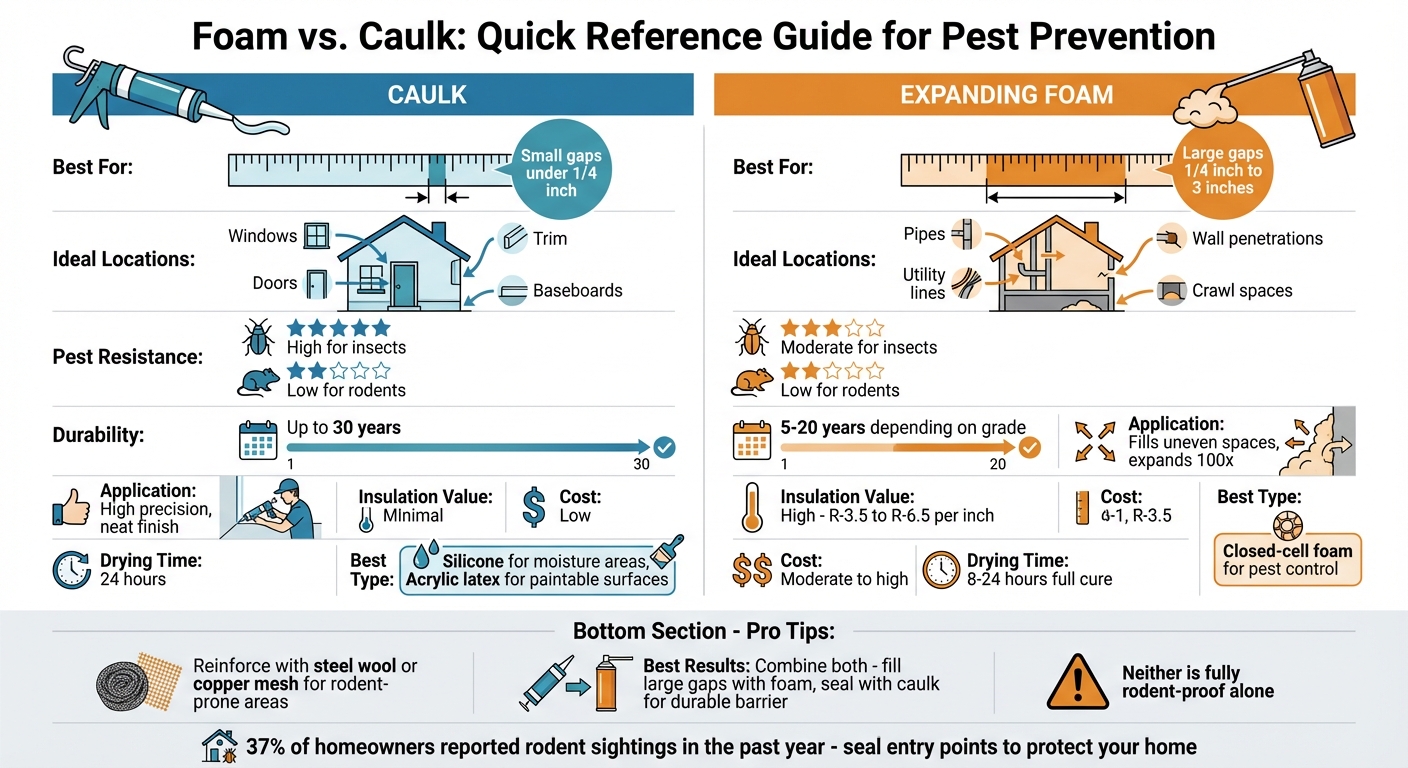
Foam vs Caulk Comparison Chart for Pest Prevention
How Expanding Foam Works to Block Pests
Main Characteristics of Expanding Foam
Expanding foam is a polyurethane-based liquid that can swell up to 100 times its original size when exposed to air and moisture. This makes it perfect for sealing gaps around pipes, wires, and utility lines. Within about 12 hours, the foam expands, hardens, and transforms into a rigid, water-resistant barrier. Once set, it becomes a tough, dense plastic that adheres tightly to surfaces like wood, metal, masonry, and concrete. This creates an airtight seal that effectively blocks common entry points for pests.
For pest control, closed-cell foam is the go-to choice. Its denser and more rigid structure makes it far more effective than open-cell foam when it comes to keeping pests out.
"Once it sets, it's like concrete's lightweight cousin - with better insulation." - HomeBugShield
Now, let’s take a closer look at how these characteristics make expanding foam a key player in pest prevention.
How Foam Prevents Pest Entry
Expanding foam acts as a physical barrier that rodents can’t chew through or dislodge. Once cured, the material is inert and offers no nutritional value, so pests have no reason to attempt eating it. For an extra layer of protection, you can combine foam with steel wool or copper mesh. Packing these materials into gaps before applying foam creates a nearly impenetrable barrier that rodents are unable to gnaw through.
sbb-itb-0bbb908
How Caulk Works to Block Pests
Main Characteristics of Caulk
Caulk is perfect for sealing small gaps - up to 1/4 inch wide. Unlike expanding foam, it doesn’t swell after application. Instead, it’s applied as a smooth bead using a caulking gun, creating a neat, controlled seal. This makes it ideal for narrow seams around areas like window and door frames, baseboards, crown molding, and where cabinets meet walls.
One of its standout features is its flexibility and resistance to water. High-quality caulk can stretch or compress by 25%–50% and still return to its original shape. This elasticity allows it to maintain a tight seal as materials expand or contract due to temperature changes. It’s also well-suited for areas prone to moisture - think kitchen sinks, bathtubs, and plumbing gaps.
Different types of caulk are designed for specific surfaces:
- Silicone: Best for non-porous materials like glass and metal.
- Acrylic latex: A good choice for paintable interior trim.
- Polyurethane or masonry caulk: Ideal for concrete and foundation work.
These characteristics make caulk a reliable tool for sealing gaps and preventing pest entry.
How Caulk Prevents Pest Entry
The flexibility and water resistance of caulk make it highly effective at sealing entry points that pests might exploit. Mice, for instance, can squeeze through openings as small as 1/4 inch - about the size of a dime. Larger pests can also take advantage of similarly small gaps.
Once cured (usually within 24 hours), caulk forms a durable, flexible barrier that deters pests like cockroaches, spiders, and termites. Its smooth, continuous seal also helps prevent moisture buildup and wood rot, which often attract pests like silverfish.
"Pest proofing is the best method of pest control." For ongoing protection, consider a Quarterly Pest Remedy Kit to maintain your home's barrier. - Robert Corrigan, President, RMC Pest Management Consulting
Expanding Foam vs Sealant | When to Use Each | FAQ with Construction Foam @3csealants
Foam vs. Caulk: Side-by-Side Comparison
Let’s break down the differences between foam and caulk to help you decide which one suits your project best. Each has specific strengths, depending on the type of gap or space you’re sealing.
Caulk works well for sealing small gaps under 1/4 inch, while foam is better for larger, uneven openings up to 3 inches. This makes foam especially useful around plumbing or utility openings, where surfaces are often irregular. These gap-size capabilities also influence other factors, such as durability and pest resistance.
When it comes to lifespan, high-quality caulk can last up to 30 years. Foam gap fillers, on the other hand, typically last 5–10 years, though professional-grade spray foam can exceed 20 years. However, foam is vulnerable to sunlight exposure and requires painting or covering for outdoor applications. These differences in durability also play a role in how well each material keeps pests out.
Neither foam nor caulk is completely rodent-proof - mice and rats can chew through both. Still, caulk generally forms a tighter seal against tiny insects like mites, ants, and psocids. Dr. Bobby Corrigan, a rodent expert, explains:
"Expanding foam is often not complete enough to exclude small arthropods such as mites, ants, psocids and other small insect pests from all areas."
Comparison Table
| Factor | Caulk | Expanding Foam |
|---|---|---|
| Gap Size Suitability | Small cracks (under 1/4 inch) | Large, uneven gaps (1/4 inch to 3 inches) |
| Pest Resistance | High for insects; low for rodents | Moderate for insects; low for rodents (easily chewed) |
| Ease of Application | High (manual tube/gun) | High (aerosol straw or professional gun) |
| Drying Time | Varies by type | 10–20 minutes (tack-free); 8–24 hours (full cure) |
| Durability | Up to 30 years | 5–10 years (gap fillers); 20+ years (insulation foam) |
| Insulation Value | Minimal | High (R-3.5 to R-6.5 per inch) |
| Cost | Low | Moderate to high |
This side-by-side comparison highlights the strengths and limitations of each material, making it easier to determine which is the right fit for your sealing needs.
Advantages and Disadvantages of Foam
Foam is widely recognized for its ability to seal gaps effectively, especially when it comes to keeping pests at bay. Let’s take a closer look at what makes foam a go-to solution and where it might fall short.
Benefits of Using Foam
One of foam’s standout features is its ability to fill large, uneven gaps - areas where caulk often falls short. This makes it ideal for sealing those tricky, hard-to-reach spaces that pests frequently exploit to enter your home.
Foam doesn’t just seal; it creates an airtight and watertight barrier. This helps block drafts and odors that pests rely on to locate entry points. Some specialized "pest block" foams go even further by incorporating bittering agents to deter gnawing and borates, which act as a stomach poison for insects like ants and cockroaches. Once hardened, foam offers no food value and doesn’t provide nesting material, unlike fiberglass insulation, which rodents can easily tear apart.
Closed-cell foam also serves as a vapor barrier, keeping structural wood dry. This can be a major deterrent for moisture-loving pests such as termites and carpenter ants.
Drawbacks of Using Foam
Despite its benefits, foam does have its downsides. For starters, applying foam can be messy. It sticks to skin, clothing, and tools, and once it cures, it’s nearly impossible to remove. Excess foam often needs to be trimmed after hardening, and improper application can lead to over-expansion, potentially warping door or window frames.
Health risks are another concern. Uncured foam contains diisocyanates, which make up about half of its composition. These chemicals can cause serious respiratory issues, including asthma and lung damage, if inhaled during application. The U.S. Environmental Protection Agency advises that professional-grade foam application requires full protective gear, including fresh air-supplied respirators.
Curing time is another consideration. Foam can take up to 10 days to fully cure, compared to caulk’s much faster 24-hour timeline. Additionally, foam degrades when exposed to UV light unless it’s painted or otherwise shielded. Lastly, pest-blocking foam tends to be pricier, costing 20% to 50% more than standard expanding foam.
Advantages and Disadvantages of Caulk
Caulk is a dependable tool for sealing small gaps and cracks, especially when precision is key. However, like any material, it has its strengths and weaknesses that you should weigh before starting your project.
Benefits of Using Caulk
Caulk shines in situations where accuracy is critical. It’s specifically designed to seal joints, cracks, and seams that are less than 1/4 inch wide. This makes it a go-to solution for closing off tiny gaps that pests could use as entry points.
Silicone-based caulks, in particular, are water-resistant, making them perfect for sealing plumbing penetrations in moisture-prone areas like kitchens and bathrooms. As Silicone Depot highlights:
"Cockroaches need water even more than they need food, so ensure your plumbing is sufficiently caulked where it meets the wall."
The smooth, non-porous surface of caulk also prevents dirt, bacteria, and food particles from building up, reducing potential hiding spots for small pests.
Another major advantage is flexibility. High-quality silicone sealants can stretch up to three times their original width or compress to half their width. This elasticity is crucial for maintaining a tight seal in areas prone to movement, like around pipes or in buildings that shift over time. While oil-based caulks might only last 1 to 4 years, premium siliconized acrylic latex or ethylene copolymers can last as long as 30 years. On top of that, most pests cannot chew through cured latex or silicone caulk.
These features make caulk an excellent choice for precise sealing jobs, but it does have its limitations.
Drawbacks of Using Caulk
Caulk’s effectiveness is limited when dealing with gaps larger than 1/4 inch. For voids exceeding 1/2 inch, expanding foam is usually needed to ensure a complete seal. This often means you’ll need to combine both materials for thorough pest-proofing.
Another downside is that caulk isn’t rodent-proof. Mice and rats can chew through standard caulk, so areas prone to rodent activity often require reinforcement with materials like stainless steel wool or copper mesh. Additionally, caulk doesn’t provide much in the way of thermal insulation or noise reduction, unlike expanding foam.
Certain types of caulk also lack elasticity. Without elastomeric properties, caulk can crack or pull away in areas that experience seasonal movement or temperature changes. Water-based and latex caulks are particularly prone to shrinking as they dry - by as much as 5% to 10% - which can reopen entry points for insects. Moreover, standard acrylic or latex caulks typically last only 3 to 5 years, whereas foam can remain effective for over 20 years.
Environmental factors can further degrade caulk. Polyurethane-based caulks, for instance, may become brittle and crack after prolonged exposure to UV light. Silicone-based caulks, while more durable, can lose their effectiveness in extreme cold, particularly below 0°F. Freezing temperatures can cause caulk to contract, potentially creating new gaps for rodents seeking warmth during winter.
When to Use Foam vs. When to Use Caulk
Choosing between caulk and expanding foam often comes down to the size of the gap and the specific situation. Caulk works best for gaps smaller than 1/4 inch, providing an airtight seal that keeps out small pests like ants and cockroaches. On the other hand, expanding foam is ideal for filling irregular gaps that are 1/4 inch or larger, especially those too deep or uneven for caulk to handle.
The type of pest you're dealing with also affects your choice. For rodents, the best strategy is to pack the gap with steel wool and then seal it with pest-specific foam that includes bittering agents to deter chewing. When dealing with tiny insects, silicone caulk effectively seals small entry points and prevents infestations.
Moisture exposure is another factor to consider. In areas like kitchens and bathrooms, where water is a concern, waterproof silicone caulk is the way to go. As Silicone Depot explains:
"If you have small joints or seams to fill, something like our Food Grade 100% RTV Silicone Sealant is just the thing - and... is safe to use everywhere in your home, including your kitchen".
Expanding foam shines in larger, less visible areas, such as around utility penetrations where pipes or electrical lines enter from the outside or run through attics and crawl spaces.
For visible areas, caulk is the better choice since it creates a clean, paintable finish. Foam, while effective, is harder to shape and finish neatly, making it better suited for concealed spaces. Additionally, caulk has the flexibility to handle seasonal shifts and vibrations from pipes, while foam, being more rigid, may crack over time. In spaces prone to temperature changes or movement, silicone caulk holds up better and keeps its seal intact.
Sometimes, the best solution involves both materials. Use foam to fill large voids, then apply caulk on top to create a flexible, polished seal that looks good and lasts. Up next, we'll walk through how to apply these sealants effectively to keep pests out.
How to Apply Foam and Caulk for Pest Prevention
Before you start sealing gaps, make sure the surface is clean and dry. Remove any old sealant, dirt, or debris using a wire brush or caulk remover. For added protection, pack gaps with mesh - copper mesh works best in damp areas - as it deters rodents from chewing through. Once the surface is prepped and reinforced, you’re ready to apply caulk or foam.
For small gaps (less than 1/4 inch), cut the nozzle of the caulk tube at a 45° angle, pierce the inner seal, and apply a steady bead of caulk. Smooth it immediately with a wet finger or tool, as the caulk will start to skin over in just 2–5 minutes. Let it cure for 24 hours before exposing it to water.
For larger gaps (over 1/4 inch), expanding foam is your go-to solution. Shake the can thoroughly and apply the foam sparingly - fill the gap only about one-third of the way, as the foam will expand. Lightly misting the area can help speed up the curing process. Once the foam hardens, trim and sand it for a smooth finish. Be cautious not to disturb the foam while it cures.
Safety tips to keep in mind:
- Always wear gloves when handling foam.
- Avoid using foam near electrical boxes, open flames, or high-heat vents.
- Work in a well-ventilated area, and don’t apply exterior sealants if the temperature is below 40°F.
If you want to simplify this process, consider using our professional-grade pest control kits. These kits include everything you need - mesh, sealants, and easy-to-follow instructions tailored to your home’s specific needs. For more precise application, professional "gun foam" systems are a great alternative to standard DIY straw applicators, offering better control for sealing tight utility gaps. By following these steps, you’ll create a long-lasting, pest-resistant barrier that works seamlessly with your overall pest exclusion plan.
Conclusion
Caulk is your go-to for sealing small cracks under 1/4 inch, like those around baseboards, window trim, or joints where a neat, paintable finish is needed. For larger gaps over 1/4 inch - such as around pipe penetrations, wall cavities, or foundation cracks - expanding foam is the better choice. For the most effective seal, use both: fill deeper gaps with foam and finish with caulk to create a tight, durable barrier.
Did you know that about 37% of homeowners reported spotting a rodent in their home within the last year? That’s why sealing entry points is so important. In rodent-prone areas, always back up expanding foam with steel wool or copper mesh - rodents can chew through foam alone.
This level of attention to sealing doesn’t just stop pests; it also helps protect your home for the long haul.
Of course, sealing gaps is just one part of pest prevention. It blocks new pests from entering, but you'll also need to address any existing issues inside. For a complete solution, consider using our professional-grade kits. They include everything you need - mesh, sealants, and step-by-step instructions tailored to your specific pest concerns.
Sealing your home doesn’t just keep pests out; it also helps maintain your home’s overall condition. Take a close look at vulnerable areas like corner posts, utility line gaps, foundation cracks, and spaces behind baseboards. A few hours spent sealing these spots now can save you months of dealing with unwanted pests down the road.
FAQs
How do I find the main pest entry gaps in my home?
Inspect areas where pests are likely to sneak in, such as cracks in the foundation, gaps around plumbing under sinks, damaged doors or windows, utility line openings, roof vents, and ventilation systems. A flashlight can help you spot smaller openings that might otherwise go unnoticed. Look for telltale signs like droppings or trails that indicate pest activity. Once you find these gaps, seal them using materials like foam or caulk to effectively block pests from making their way inside.
What’s the best way to reinforce foam or caulk to stop rodents?
To keep rodents out effectively, you need the right materials and proper application techniques. Silicone caulk is a great choice because rodents have a hard time chewing through it. For larger gaps, pack them with steel wool before sealing to add an extra layer of protection. If you're using foam, go for expanding polyurethane foam, but be mindful - low-expansion foam works best for delicate spots to avoid overfilling.
Make sure to clean the surfaces thoroughly before applying any sealant. To ensure your seals remain effective, inspect them twice a year and reapply as needed. Consistent maintenance is key to keeping those pesky rodents out!
Can I use foam or caulk safely around plumbing and electrical lines?
Yes, you can use both caulk and expanding foam to seal around plumbing and electrical lines, as long as they’re applied properly.
- Caulk is ideal for smaller gaps (less than 1/4 inch) and does a great job of blocking air and water leaks.
- Expanding foam is better suited for larger gaps, but you’ll need to apply it with care. Over-expansion can be an issue, especially when working near electrical components.
Before sealing, make sure the product is compatible with the materials you're working with. Also, think about whether you might need future access to the area before deciding which sealant to use.