


Pests thrive in hot, dry climates, making effective pest control challenging. High temperatures break down many treatments quickly, while pests like scorpions, ants, termites, and cockroaches become more aggressive and invade homes in search of food and water. Cracks in buildings caused by heat create easy entry points for these pests.
Key Solutions for Pest Control in Arid Areas:
- Remedy DIY Kits: Heat-resistant, customizable, and safe for families and pets.
- Natural Options: Neem oil, diatomaceous earth, and insecticidal soap for targeted pest management.
- Synthetic Treatments: Pyrethrin sprays and Bacillus thuringiensis for quick and effective results.
- Application Tips: Apply treatments in the early morning or evening to avoid evaporation and ensure better coverage. Fix water leaks and seal cracks to reduce pest access.
Managing pests in these conditions requires timing, proper application techniques, and choosing products designed to withstand extreme heat.
Pests looking to move inside as temperatures hit triple digits
sbb-itb-0bbb908
Why We Recommend Remedy DIY Pest Control Kits for Hot, Dry Climates

Remedy's pest control kits are specially designed to handle extreme heat. In areas where temperatures often soar past 110°F, typical sprays can break down in just a few days. But our professional-grade formulas are made to stay effective, even in the harsh desert heat. This means you won’t be wasting money on products that degrade quickly on your walls or foundation.
We start by tailoring your kit based on your Zip Code, home size, and the pests you’re dealing with. Whether it’s scorpions sneaking into wall seams, ants invading kitchens, or termites targeting heat-cracked structures, our kits are customized to address the specific challenges of your arid environment. This targeted approach ensures you get the most effective solution for your pest problems.
Safety is a top priority, especially for indoor use. Our formulas are pet- and child-safe, leaving no harmful chemical residues behind. This balance of safety and effectiveness is a cornerstone of our product lineup, giving you peace of mind while tackling pests.
To make things easier, we provide virtual support to help you navigate the unique challenges of pest control in hot, dry climates. Our experts guide you in identifying tiny entry points pests use and help you time your applications for the best results. With this support, you’ll never feel unsure about your next steps.
Getting started is simple and affordable. First-time customers can use the code "FREEKIT" at checkout to receive their initial shipment free. You also have the flexibility to pay per shipment or save with advance payments. With no contracts and the option to pause or skip shipments as needed, you can adjust your plan based on seasonal pest activity. This flexibility ensures you always get the right products at the right time.
Best Pest Control Products for Arid Environments
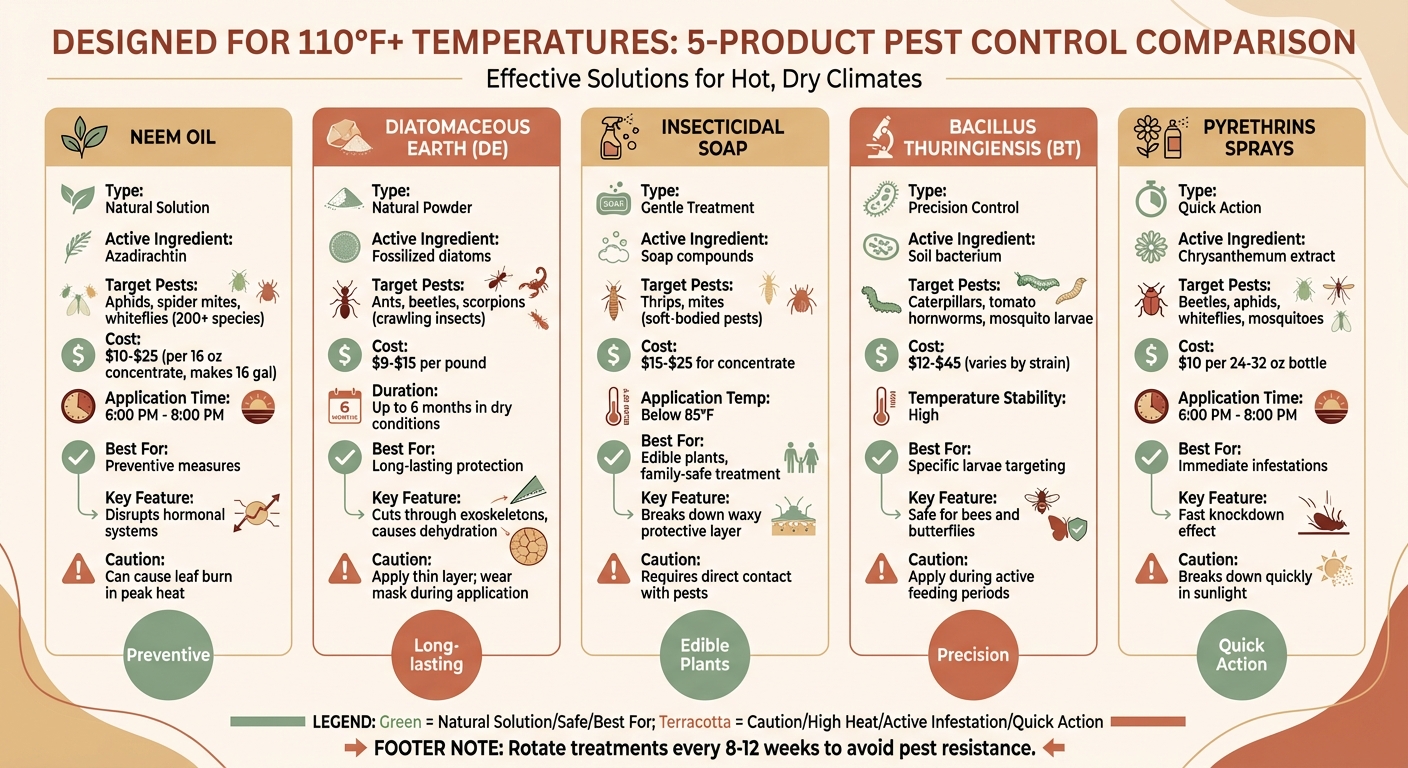
Best Pest Control Products for Hot, Dry Climates: Comparison Guide
Managing pests in scorching, dry climates requires products that can handle extreme heat while effectively targeting common pests. When temperatures soar above 110°F, it’s essential to choose solutions designed to perform under such conditions. Here are five reliable options for tackling pest problems in arid environments.
Neem Oil: A Natural Solution
Neem oil, containing azadirachtin as its active ingredient, disrupts the hormonal systems of over 200 insect species, making it an effective choice for pests like aphids, spider mites, and whiteflies. A 16-ounce bottle of concentrate can produce around 16 gallons of spray and costs between $10 and $25, offering significant savings compared to ready-to-use versions.
However, neem oil should be applied with care. Using it during peak heat can cause leaf burn, so it’s best to mix it with an emulsifier (like mild dish soap) and apply between 6:00 PM and 8:00 PM to ensure proper drying on the leaves’ undersides.
Diatomaceous Earth: Long-Lasting Protection
Diatomaceous earth (DE) is a natural powder derived from fossilized diatoms. It works by cutting through the exoskeletons of crawling insects, causing them to dehydrate. Its effectiveness is enhanced in arid climates, as dry conditions help it remain active for up to six months.
"The arid Arizona climate increases the efficacy of [insect dusts] as they stay active longer in low-humidity settings."
– Bug & Weed Mart
For best results, apply a thin layer in cracks, crevices, and along baseboards where pests like ants, beetles, and scorpions are likely to travel. Avoid overapplication, as too much powder can repel pests instead of killing them. Priced at $9–$15 per pound, DE is both affordable and effective. Remember to wear a mask during application to avoid inhaling the fine dust.
Insecticidal Soap: Gentle but Effective
Insecticidal soap is perfect for dealing with soft-bodied pests like thrips and mites. It works by breaking down their protective waxy layer, causing dehydration. This product is safe to use on edible plants and is low-risk for families and pets. Concentrates typically cost between $15 and $25.
For the best results, use insecticidal soap when temperatures are below 85°F, ideally in the early morning or evening. Ensure thorough coverage, as the soap needs to make direct contact with pests to work effectively.
Bacillus thuringiensis (Bt): Precision Pest Control
Bt, a naturally occurring soil bacterium, targets specific larvae such as caterpillars, tomato hornworms, and mosquito larvae by producing proteins toxic to them when ingested. It remains stable in high temperatures and is safe for beneficial insects like bees and butterflies. Depending on the strain, Bt products range from $12 to $45.
Apply Bt during periods when larvae are actively feeding for the best results.
Pyrethrin Sprays: Quick Action
Pyrethrin, derived from chrysanthemum flowers, attacks the nervous systems of pests like beetles, aphids, whiteflies, and mosquitoes, providing a fast knockdown effect. A 24- to 32-ounce bottle costs around $10.
Since pyrethrin breaks down quickly under sunlight, it’s best to apply it between 6:00 PM and 8:00 PM for immediate infestations. Its rapid action makes it a go-to solution for urgent pest problems.
These products are carefully selected to deliver reliable, heat-tolerant pest control solutions tailored to the challenges of arid climates.
Application Tips for Hot, Dry Conditions
Timing matters when applying pest control products in hot, dry climates. Aim to apply treatments early in the morning or late in the evening, when temperatures dip below 85°F. Midday heat speeds up evaporation, which can lead to incomplete coverage and reduced effectiveness.
Wind is just as critical as temperature. Early morning and late evening hours often come with calmer winds, reducing the risk of treatments drifting into non-target areas or onto beneficial pollinators. This is especially crucial in desert settings, where even a light breeze can carry products away from their intended targets. Pairing these weather strategies with proper irrigation management, combined with a comprehensive DIY pest control kit, helps create an environment that’s less appealing to pests.
Irrigation adjustments can make a big difference. Water your landscape in the morning to limit damp conditions that attract pests. Fix any leaky faucets or irrigation lines promptly - small water sources can act as "pest oases", drawing in scorpions, rodents, and insects. If you use drip irrigation instead of basin or furrow systems, you’ll reduce the amount of free water pests rely on for travel while also extending the effectiveness of insecticidal dusts.
Tailor your application technique to the climate. For dust-based treatments like diatomaceous earth, apply a thin layer - overapplication can actually repel insects instead of killing them. When using liquid treatments, focus on crack-and-crevice applications rather than broad sprays to limit evaporation and environmental exposure. Many desert pests, including scorpions and cockroaches, are most active at night, making evening applications particularly effective for increasing contact rates. By adapting your approach to these conditions, you can significantly improve pest control results in extreme heat and arid environments.
Conclusion: Pest Control in Arid Environments
Hot and dry climates demand more than just standard pest control methods. The intense heat in these regions can speed up the breakdown of certain products, while pests like scorpions, termites, and rodents adapt their behavior to survive the harsh conditions. As Jonathan Anderson of Green Home Pest Control explains:
"Arizona's high temperatures can cause some organic products to break down quickly. A spray that works well in coastal California might not last long on a stucco wall in Phoenix".
To tackle these challenges, professional-grade solutions tailored to the environment - such as Integrated Pest Management (IPM) - are essential. IPM focuses on sealing structural weak points and addressing moisture issues, delivering lasting results. For example, in exclusion-focused treatments, scorpion sightings have dropped by 80% within six weeks. This approach blends natural and synthetic methods to maximize effectiveness.
Recognizing the unique demands of arid climates, we developed our Remedy DIY Pest Control kits specifically for homeowners in these regions. These kits feature professional-grade products designed to endure temperatures exceeding 110°F and are customized to address specific pests and locations. With heat-resistant materials and straightforward instructions, our kits help create strong perimeter barriers against desert pests.
A combination of natural and synthetic treatments offers dependable protection. For preventive measures, diatomaceous earth and neem oil are effective, while pyrethrin sprays and Bacillus thuringiensis target active infestations. To avoid pest resistance, rotate treatments every 8–12 weeks. This balanced strategy ensures comprehensive and lasting pest control.
FAQs
How often should I reapply treatments in extreme heat?
In very hot conditions, treatments often require reapplication every 7 to 21 days, depending on the specific product and the level of pest activity. That said, consistently high temperatures can sometimes reduce the need for frequent applications, as extreme heat may naturally lower pest populations. Be sure to follow the instructions provided with your product for the most effective results.
What’s the safest way to use diatomaceous earth indoors?
To use diatomaceous earth safely indoors, focus on applying it in areas where pests tend to hide, such as cracks, crevices, and along baseboards. Always wear a mask during application to avoid inhaling the dust, as it can irritate your respiratory system. If you can, try to minimize its use indoors to lower any potential risks. Handle it carefully to safeguard your health while effectively managing pests.
How do I pest-proof my home against scorpions and ants?
To keep scorpions and ants at bay, start by sealing up any cracks, gaps, or entry points using caulk or weather stripping. Adding door sweeps can also help block their access. Store food in airtight containers to avoid attracting ants, and address any moisture issues around your home. For scorpions specifically, clear your yard of debris, such as rocks or woodpiles, where they might hide. If you're looking for ongoing protection, you can try DIY pest control kits that are safe for pets and children. These kits are easy to use and can help you maintain a pest-free home.