


Pests follow predictable seasonal patterns influenced by weather, food, and breeding cycles. Knowing when pests are most active helps you prevent infestations effectively. Here's a quick breakdown:
- Winter (Dec–Feb): Rodents, cockroaches, spiders, and bed bugs move indoors seeking warmth and food.
- Spring (Mar–May): Termites swarm, ants emerge, and stinging insects like wasps begin nesting.
- Summer (Jun–Aug): Mosquitoes, ticks, and flies thrive in heat and humidity, while stinging insects become aggressive.
- Fall (Sep–Nov): Rodents and overwintering pests like stink bugs and spiders look for shelter.
Key prevention tips:
- Seal cracks and gaps to block entry points.
- Eliminate moisture sources like leaks and standing water.
- Store food in airtight containers and clean up crumbs.
- Trim vegetation and keep firewood away from your home.
Investing in preventive measures can save you time and money compared to dealing with full-blown infestations later. DIY pest control kits tailored to each season provide effective, affordable solutions for year-round protection.
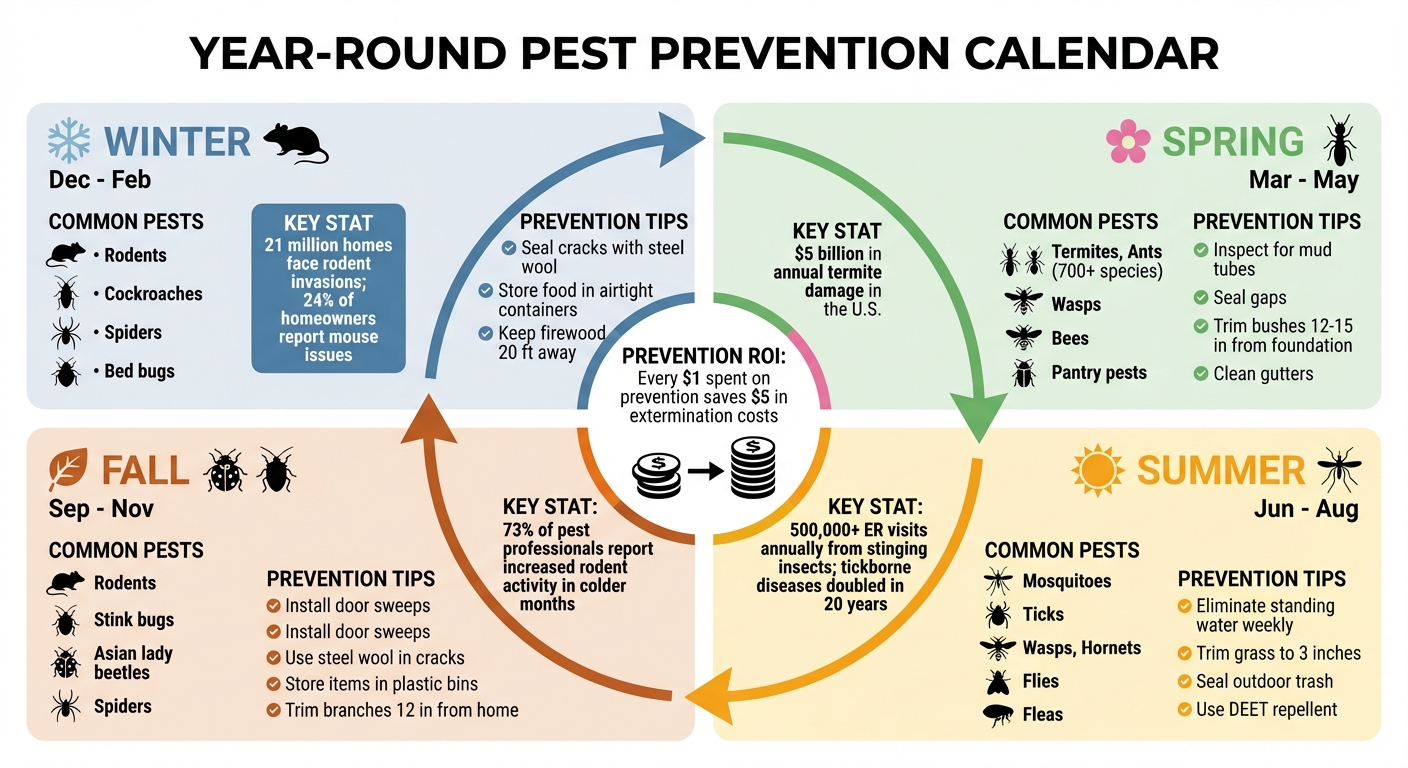
Seasonal Pest Calendar: Common Pests and Prevention Tips by Season
Winter (December to February): Indoor Pests and Rodents
Common Winter Pests
As the weather turns colder, pests seek refuge indoors, making winter a prime season for infestations. Rodents, particularly mice and Norway rats, are among the most common culprits. Each winter, an estimated 21 million homes across the United States face rodent invasions, with about 24% of homeowners reporting mouse issues during these months.
But rodents aren’t the only problem. Other frequent winter pests include cockroaches (German, American, and Oriental species), spiders like the brown recluse and common house spiders, and bed bugs. Occasionally, you might also encounter silverfish, stink bugs, carpenter ants, earwigs, boxelder bugs, and even raccoons. Silverfish, for instance, are particularly troublesome - females can lay up to 1,000 eggs, leading to rapid infestations that can damage books, insulation, and clothing.
These pests are drawn indoors by warmth, moisture, and food. They exploit even the smallest openings - mice can squeeze through gaps as tiny as a dime, while rats only need a quarter-sized (about ½ inch) opening to get inside. Cracks around pipes, drafty windows, torn screens, and foundation gaps are all common entry points.
Understanding these invaders helps you take the right steps to keep them out.
Prevention and Control Methods
The key to keeping pests out during winter is sealing up their entry points. Use silicone caulk and steel wool to block exterior cracks - materials that rodents can’t chew through.
Dr. Jim Fredericks, a Board-Certified Entomologist with the National Pest Management Association, emphasizes how easily pests can find their way inside:
"Mice can squeeze through gaps the size of a dime, and insects can take advantage of drafty window frames, torn screens, or gaps around pipes and wires coming into your house."
Additional steps include installing mesh covers over chimneys and vents to keep out rodents and raccoons. Store firewood at least 20 feet from your home and on a raised platform to prevent pests like mice, ants, and spiders from nesting nearby.
Moisture control is also crucial. Use dehumidifiers in basements and crawl spaces, repair any leaky pipes, and store food in airtight metal or thick plastic containers. Keeping counters free of crumbs and avoiding overnight pet food bowls can also deter pests.
For storage areas, replace cardboard boxes with airtight plastic bins and keep them off the ground to eliminate potential nesting spots. Inspect grocery bags and delivery boxes for cockroaches before bringing them indoors.
To help homeowners tackle these challenges, Remedy offers tailored DIY pest control kits for winter pests like rodents and cockroaches. These kits include professional-grade products that are safe for both pets and children, along with clear instructions. While professional pest control services can cost $200–$600, Remedy’s kits are an affordable alternative, ranging from $10–$100.
Spring (March to May): Emerging Pests
Common Spring Pests
As spring arrives and temperatures climb, pests make their comeback. This season is prime time for many insects to mate, lay eggs, and establish colonies that will thrive through the summer months. Blooming plants provide the nutrients pests need, while spring rains create the standing water and humidity that help them flourish.
Termites are particularly active in spring, swarming near foundations and windows to set up new colonies. These pests are responsible for an estimated $5 billion in property damage annually in the U.S.. Homeowners often confuse termites with flying ants, but here’s how to tell them apart: termites have straight antennae and wings of equal length, whereas ants have elbowed antennae and wings of different lengths.
Ants also ramp up their activity during spring, scavenging for food and water. With over 700 species in the U.S., ants are among the most common springtime invaders. Carpenter ants, for instance, are a telltale sign of trouble if you notice small piles of sawdust (known as frass) near wooden structures, as they tunnel through wood to create nests.
Other spring pests to watch for include pantry invaders, moisture-seeking cockroaches, and stinging insects like wasps and bees, which begin constructing their nests during this time. Recent weather patterns have only made these issues worse. Dr. Jim Fredericks, Senior Vice President of Public Affairs at the National Pest Management Association, observed:
"Spring and summer are already peak pest seasons, so we know the bugs are coming. But this year's irregular weather patterns are accelerating pest activity, leading to earlier and more frequent encounters."
Warm, wet conditions are causing pests to emerge earlier than usual. For example, ticks are appearing ahead of schedule in the Northeast, Midwest, and Northwest, while the Southeast is already seeing surges of mosquitoes and termites. These early emergences highlight the importance of taking action before infestations grow.
Prevention and Control Methods
Catching pest problems early makes them much easier to manage. As Shannon Harlow-Ellis, Associate Certified Entomologist at Mosquito Joe, points out:
"Pest problems are easier to control in their early stages."
Start by inspecting for signs of termites, such as pencil-thin mud tubes, discarded wings, and hollow-sounding wood. Address moisture issues by fixing leaks, cleaning gutters, and improving ventilation.
To keep pests from entering your home, seal any gaps or cracks. Use caulk or weather stripping around windows, doors, and foundation cracks, install door sweeps, and repair torn screens. Inside, store food (including pet food) in airtight containers and clean up crumbs from cabinets and behind appliances.
Outside, maintain a clear perimeter around your home. Trim bushes to create a 12–15-inch gap, keep mulch at least 15 inches away from the foundation, and remove rotting stumps or debris. Firewood should be stored at least 20 feet from your home.
If you’re tackling spring pests on your own, consider our DIY kits tailored for ants, termites, and other seasonal invaders. These kits feature professional-grade products that are safe for pets and children, along with easy-to-follow instructions. Prices range from around $8.35 for cockroach baits to approximately $129.98 for termite treatments.
Summer (June to August): Peak Pest Season
Common Summer Pests
As the heat of summer rolls in, so does the height of pest activity. Warm and humid weather creates the perfect conditions for pests to breed and thrive. Mosquitoes, for instance, need only a tiny amount of water - less than half an inch - to reproduce. Even something as small as a bottle cap can serve as a breeding site, producing hundreds of mosquitoes in just a few days . In 2011, the CDC reported over 700 cases of West Nile virus in the U.S., with 43 fatalities tied to mosquito-borne infections.
Ticks also pose a growing threat during the summer months. Over the past two decades, cases of tickborne diseases in the U.S. have more than doubled. These pests lurk in tall grass, wooded areas, and piles of leaves, waiting for the opportunity to latch onto people or pets. Meanwhile, stinging insects like wasps, hornets, and yellow jackets become more aggressive as late summer approaches. Their search for food to sustain their hives through winter often leads to over 500,000 emergency room visits annually .
Other common summer pests include ants drawn to moisture, flies attracted to trash, spiders clustering near light sources, cockroaches hiding in dark spaces, and fleas hitching rides on pets . Recognizing these patterns is key to staying ahead of infestations.
Prevention and Control Methods
The first step to managing summer pests is removing the things that attract them. Mosquitoes, for example, thrive in standing water, so it’s critical to drain items like flower pots, birdbaths, kiddie pools, and clogged gutters on a weekly basis . Even one neglected container can lead to a mosquito explosion. When spending time outdoors, use insect repellents containing DEET, picaridin, or oil of lemon eucalyptus, and repair any torn window or door screens to keep mosquitoes out.
Ticks and fleas are best managed by maintaining your yard. Keep grass trimmed to 3 inches or less and clear away leaf piles or wood debris where they may hide . If you’re venturing into wooded or grassy areas, wear light-colored, long-sleeved clothing to spot ticks more easily. For pets, consult your veterinarian about flea and tick prevention, and regularly vacuum carpets and wash pet bedding to control any infestations.
For stinging insects, food is a major attractant. Keep outdoor trash cans sealed and clean, and avoid wearing sweet-smelling perfumes or bright floral patterns during outdoor activities. If you come across a large wasp or hornet nest, don’t attempt to remove it yourself - call a professional to handle it safely.
To keep pests from invading your home, maintain at least a 12-inch gap between shrubs or branches and your home’s foundation. Seal any gaps around utility pipes, door frames, and cracks in the foundation using caulk or steel wool .
For those who prefer DIY solutions, there are effective options available. Perimeter barrier treatments can protect your home for 30–60 days. Ant control products range from $10.97 to $128.20, while mosquito yard treatments are priced between $55.00 and $210.00. When used as directed, these treatments are safe for both pets and children, making them a practical choice for summer pest control.
Fall (September to November): Rodents and Overwintering Pests
Common Fall Pests
As the weather cools, pests begin what experts call the "Great Indoor Migration". Rodents and insects aren't just looking for shelter - they're on the hunt for the essentials: warmth, food, and moisture. Each fall, countless homes become targets for these invaders, as pests find their way inside through tiny gaps around pipes, door frames, and cracks in the foundation.
"A warm, wet fall lets disease-carrying pests like ticks and mosquitoes remain active and breeding much longer than we'd typically expect and just a few cold nights can result in a significant uptick in rodent sightings in homes."
- Dr. Jim Fredericks, Senior Vice President of Public Affairs, National Pest Management Association
Beyond rodents, overwintering insects like brown marmorated stink bugs and Asian lady beetles also cause problems. These pests tend to gather on sunny, south- or west-facing walls of homes before slipping inside through cracks, attic vents, or window screens. Once indoors, they settle into wall crevices and attics, staying hidden until spring. Spiders, too, are common fall intruders. They seek out warmth and prey, often hiding in closets, cardboard boxes, and dark corners. Recognizing these risks is the first step toward protecting your home.
Prevention and Control Methods
To keep pests out, it's crucial to seal your home before the first cold snap. Silicone-based caulk and steel wool are great tools for filling cracks and holes - especially around utility pipes, electrical outlets, and door frames. Since steel wool is tough for rodents to chew through, it acts as an effective barrier.
"Over the next few weeks, it is critical to ensure your home is properly sealed to avoid insect roommates this fall."
- Emily Althoff, Urban Entomologist, University of Missouri Extension
Install door sweeps on exterior doors; if you can see light coming through underneath, there’s a gap pests can use. Cover chimneys and vents with mesh, fix any damaged screens, and trim tree branches to keep them at least 12 inches away from your home.
Inside, swap out cardboard boxes for sealed plastic bins in basements and attics - this denies rodents and spiders potential nesting spots. Store food items, including pet food, in airtight containers, and fix any leaky pipes to eliminate moisture that pests thrive on. Firewood should be kept at least 20 feet from your home and off the ground.
If you spot signs of pests - like droppings (a single mouse can leave 50 to 75 droppings a day), gnawed food packaging, or shredded material in storage areas - act fast. Snap traps or professional bait stations can help stop an infestation before it grows. For those tackling the problem themselves, pest control kits are available with professional-grade, pet- and child-safe products, along with virtual support for pest identification and treatment.
sbb-itb-0bbb908
Summer Pest Control Tips | DoMyOwn.com
Year-Round Prevention Methods
Pest control isn’t a one-and-done task - it’s an ongoing process that keeps your home protected over time. The key to avoiding infestations is cutting off the essentials pests rely on: food, water, and shelter. While it’s important to adjust your approach with the seasons, the real backbone of pest management lies in consistent daily habits and quarterly check-ins.
"The difference between proactive and reactive pest control is simple: proactive homeowners prevent infestations through seasonal preparation, while reactive homeowners call exterminators after pests have already moved in."
- Beau, Fieldworkhq
Here’s a compelling reason to stay ahead: every dollar spent on prevention saves you five in future extermination costs. By being proactive, you create a growing barrier that makes it harder for pests to invade. For example, as your home expands and contracts with temperature changes, small gaps can form, offering pests a way in. Regular inspections and sealing these gaps stop them from becoming entry points. Even small steps like wiping down counters, fixing leaks, and storing food in airtight containers can make a big difference in keeping roaches and ants at bay.
DIY Pest Control Kits for Every Season
Once you’ve tackled seasonal pest challenges, it’s time to think about year-round solutions. Combining seasonal strategies with consistent maintenance is the best way to stay pest-free. That’s where customized pest control kits come in. These kits take the guesswork out of prevention by providing exactly what you need, when you need it. Instead of scrambling for supplies after spotting an infestation, you’ll have tools on hand tailored to the pests most active each season. Plus, they’re designed to be safe for pets and kids, so you can protect your home without worrying about harmful chemicals .
Timing is everything. Applying these kits in March, June, September, and December ensures your defenses are refreshed just as new pest threats arise . For example:
- Spring kits include granular ant barriers and gutter-cleaning tools.
- Summer kits focus on long-lasting perimeter sprays and water-management supplies.
- Fall kits come with exclusion materials like expanding foam and steel wool.
- Winter kits emphasize indoor sanitation and moisture control.
To make things even easier, we offer ongoing shipments of these kits, along with virtual support for pest identification and treatment advice. That way, you’re never left to deal with pests on your own.
Seasonal Pest Reference Table
These kits are designed to complement seasonal efforts by delivering the right tools at the right time.
| Season | Common Pests | Recommended Prevention Methods |
|---|---|---|
| Winter | Rodents, Cockroaches, Spiders, Pantry Moths | Seal gaps; store food in airtight containers; control moisture |
| Spring | Ants, Termites, Mosquitoes, Carpenter Bees | Apply granular barriers; clean gutters; trim vegetation |
| Summer | Mosquitoes, Ticks, Wasps, Flies, Roaches | Eliminate standing water; maintain the yard; use perimeter sprays |
| Fall | Rodents, Stink Bugs, Spiders, Boxelder Bugs | Seal entry points; use exclusion tools |
Conclusion
Recognizing how pests behave with the seasons can make all the difference in controlling them. For instance, warmer spring temperatures often trigger insect breeding, while cooler fall weather drives pests indoors. Knowing these patterns helps you time treatments effectively and with less impact on the environment.
Here’s a compelling reason to act early: every $1 spent on prevention can save you about $5 in extermination costs down the line. Similarly, dedicating just one hour to home maintenance could save you ten hours of dealing with a full-blown infestation. And with over 73% of pest professionals reporting an increase in rodent activity during colder months, proactive measures are clearly worth it.
DIY pest control offers a practical way to stay ahead. Instead of reacting to emergencies or paying steep prices after pests have already caused damage, you can take control with safe, professional-grade products. These tackle the core issues - food, water, and shelter - while keeping your family and pets safe. Whether it’s sealing cracks in March, removing standing water in July, or installing door sweeps in October, each step strengthens your home’s defenses.
At Remedy, we’ve designed pest control kits to simplify this process. With quarterly shipments in March, June, September, and December, you’ll always have the right tools at the right time. Plus, our virtual support helps identify pests and offers treatment advice, making protection both reliable and affordable. These resources align perfectly with seasonal strategies, giving you year-round peace of mind.
Think of pest management as an ongoing investment tied to nature’s rhythms. By aligning your efforts with these cycles and staying consistent, you’ll create a home where pests simply can’t settle.
FAQs
How can I recognize which pests are active during each season?
Understanding how pests behave throughout the year can help you stay ahead of infestations. Each season brings its own set of challenges:
- Spring: This is when swarming termites and winged ants become active. You might also notice the early movements of wasps, bees, and spiders.
- Summer: Warm, humid conditions attract mosquitoes to standing water, while cockroaches and fire ants thrive in the heat.
- Fall: As temperatures drop, pests like rodents, stink bugs, and cockroaches begin moving indoors to find shelter.
- Winter: Rodents, spiders, and cockroaches are drawn to warm spaces, making your home a prime target.
To spot pests more effectively, pay attention to their activity patterns, physical traits, and favorite hiding spots, such as cracks, vents, or gaps in walls. Using seasonal pest calendars can also give you a clearer picture of when and where certain pests are likely to appear, helping you take steps to keep them out of your home.
What are the best DIY pest control tips for each season?
Effective pest control isn’t a one-size-fits-all approach - it changes with the seasons because different pests become active at different times of the year. Here’s how to adjust your strategy:
In spring, take steps to block entry points by sealing cracks, fixing window screens, and clearing debris from around your home’s foundation. These actions help keep ants and termites from sneaking in. When summer arrives, focus on reducing mosquito breeding grounds by eliminating standing water, trimming overgrown grass, and storing firewood away from your house. Fall is prime time for pests looking for a warm place to stay, so seal gaps, clean out gutters, and remove leaf piles to make your home less inviting to rodents and insects. During winter, inspect for leaks, seal interior cracks, and maintain a clean living space to discourage pests like cockroaches and rodents from settling in.
No matter the season, good sanitation is key. Store food in airtight containers, clean up regularly, and fix any leaks to remove the conditions pests thrive on. For more tailored solutions, DIY pest control kits, like those from Remedy, offer safe, professional-grade products that address specific pest problems and adapt to your home’s unique needs. By staying proactive and adjusting your efforts throughout the year, you can manage pests effectively without over-relying on chemical treatments.
What are the best ways to keep pests out of my home as the seasons change?
To keep pests at bay as the seasons change, focus on sealing up your home and staying on top of maintenance. Start by inspecting and sealing any cracks, gaps around windows and doors, or utility openings. These small fixes can stop pests like ants, mice, and cockroaches from sneaking inside. Don’t forget to repair torn window screens and check that door seals are in good shape - these simple steps can make a big difference.
You can also make your home less appealing to pests by storing food in airtight containers, cleaning up crumbs, and addressing moisture issues. Fix any leaks, get rid of standing water, and ensure proper drainage to keep pests like mosquitoes and rodents away. When it’s colder outside, reducing indoor clutter is key - it eliminates hiding spots for pests like mice. With regular upkeep and attention, you can keep your home protected all year long.