


Integrated Pest Management (IPM) is a smarter way to handle pests in your home. Unlike conventional methods that rely heavily on chemicals, IPM focuses on long-term solutions by preventing pests, monitoring their activity, and using safer control methods only when needed. Here's what you need to know:
- Prevention First: Seal cracks, fix leaks, store food properly, and declutter to keep pests out.
- Monitor Activity: Use traps and inspect regularly to identify pests and their entry points.
- Set Action Thresholds: Only act when pests threaten health or property to avoid unnecessary treatments.
- Targeted Control: Start with non-chemical methods like traps or biological predators. Use pesticides as a last resort and apply them carefully.
IPM not only reduces pests but also minimizes risks to your family, pets, and the environment. By addressing root causes, it saves money and effort in the long run. Whether you're dealing with ants, rodents, or cockroaches, this approach ensures effective, safe pest management.
Keeping Pests out of Your Home. IPM with Diego #3
Learn how to implement these strategies with the best DIY pest control kit for your home.
sbb-itb-0bbb908
Core Principles of IPM
IPM (Integrated Pest Management) is built on three key principles: prevention, monitoring, and action thresholds. These elements work together to safeguard your home, health, and finances. Let’s take a closer look at how these principles come into play.
Prevention as the First Line of Defense
The best way to manage pests is to stop them from becoming a problem in the first place. Prevention focuses on exclusion, sanitation, and habitat changes. Start by sealing cracks around windows and doors with caulk, installing door sweeps, and repairing any torn screens to block pests from sneaking in. Store all food, including pet food, in airtight containers, and fix leaky faucets to cut off water sources. Use garbage cans with tight-fitting lids and get rid of clutter like cardboard stacks or paper piles that can double as hiding spots. Regular vacuuming can also help eliminate crumbs and potential pest eggs. As MSU Extension wisely states:
"A crumb to you can be a feast for pests".
Monitoring and Identifying Pests
Keeping an eye on pest activity is just as important as prevention. Conduct regular inspections and use pesticide-free sticky traps in hidden areas like under sinks or behind toilets to monitor pest presence. If you spot a pest, proper identification is crucial before taking action. Misidentifying pests often leads to ineffective treatments. For tiny pests, a 10× hand lens can be helpful, and your local Cooperative Extension Office can assist with expert identification. Look for telltale signs such as droppings, tracks, or damage patterns to determine the best course of action.
Setting Action Thresholds
Not every pest sighting requires immediate action. An action threshold helps you decide when a pest problem becomes serious enough to address. This threshold is the point where a pest population threatens health, property, or comfort, signaling the need for intervention. According to the National Cooperative Extension, not every insect sighting justifies a response. For example, a single cockroach or mouse may call for immediate action due to their potential to spread diseases like Salmonella or trigger asthma attacks. On the other hand, a few boxelder bugs are unlikely to pose any real risk. This approach minimizes unnecessary pesticide use and ensures your efforts are directed where they are most needed.
Step-by-Step IPM Implementation for Homeowners
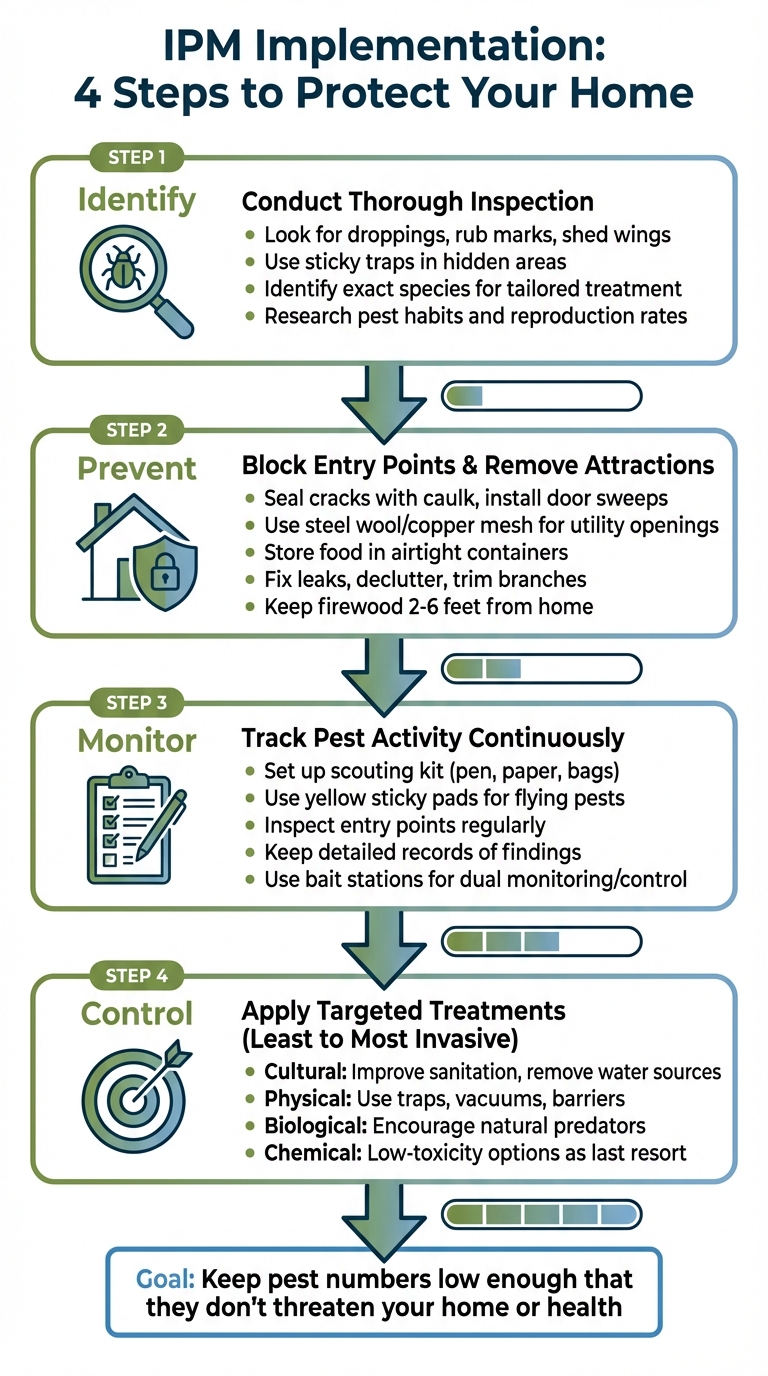
4-Step IPM Implementation Process for Homeowners
Using the core principles of prevention, monitoring, and action thresholds, let’s break down how to safeguard your home effectively. This process involves identifying pests, preventing their access, and keeping track of their activity. Each step builds on the last to create a thorough Integrated Pest Management (IPM) plan.
Identifying Common Household Pests
The first step is to accurately identify the pests in your home. As the National Cooperative Extension states:
"The hallmark of an IPM technician is their ability to thoroughly and completely inspect a home for a pest infestation".
Start with a detailed inspection of your home. This isn’t just about spotting live pests - look for droppings, rub marks, shed wings, or other signs of activity. For example, dark, oily rub marks along walls might indicate rodent paths. These observations provide a baseline for future control efforts.
Identifying the exact species is critical because each pest behaves differently and requires tailored treatment. For instance, outdoor roaches need a different approach than indoor ones. Once you know what you’re dealing with, research their habits, food preferences, and reproduction rates. Discuss findings with your household to pinpoint access points, and use sticky traps in hidden areas to monitor activity without pesticides.
| Pest Evidence | What to Look For |
|---|---|
| Mouse Droppings | Small, pointed ends, about the size of a grain of rice |
| Rat Droppings | Larger, blunt ends, similar to a small raisin |
| Rodent Paths | Dark, oily rub marks along walls or baseboards |
| Insect Signs | Shed exoskeletons, discarded wings, or fecal spotting |
| Entry Points | Cracks near windows, doors, or around piping |
Preventive Measures to Keep Pests Out
Once you’ve identified the pests, focus on keeping them out. Blocking their entry points is a critical step in pest management. Use materials like silicone or acrylic latex caulk to seal cracks around windows, doors, and fascia boards. If light seeps under your exterior doors, install door sweeps or thresholds to close the gaps. For utility openings around pipes or wires, use steel wool, copper mesh, cement, or expandable foam. Cover attic, roof, and crawl space vents with 1/4-inch wire mesh to prevent critters from sneaking in.
Beyond sealing entry points, take steps to make your home less inviting to pests:
- Store food in airtight containers.
- Use garbage cans with tight-fitting lids and empty them regularly.
- Fix leaky plumbing and avoid letting water collect under houseplants or in refrigerator trays.
- Declutter your home - stacks of newspapers, magazines, and cardboard boxes can become hiding spots for pests.
- Trim tree branches, clean gutters, and store firewood at least 2 to 6 feet away from your home to minimize external access points.
- Inspect furniture, clothing, and packages for pests like bed bugs or cockroaches before bringing them inside. Running items through a dryer on high heat can kill eggs and larvae.
Keeping your living spaces clean is another essential step. Vacuum carpets regularly to remove crumbs and hidden pest eggs. A clean home not only reduces pest activity but also makes it easier to detect early signs of infestations.
Monitoring and Using Tools Effectively
Monitoring is key to knowing when and how to adjust your pest control methods. As MGK emphasizes:
"How do you know that your methods are working unless you are continuously monitoring the pest population?".
Set up a simple scouting kit with essentials like a pen, paper, pruners, and zip-top bags for collecting samples. For small insects, gently brush houseplant leaves over a white sheet to spot them. Yellow sticky pads near windows or indoor gardens can help detect flying pests.
Regularly inspect common entry points like windows, doors, and piping for new cracks or damage. For larger pests, camera traps can provide insights into their activity patterns. Bait stations serve a dual purpose: they monitor pest activity and offer targeted control for ants, cockroaches, and rodents. Keep detailed records of inspection locations, schedules, and findings to track progress over time.
Routine vacuuming and decluttering not only prevent infestations but also make it easier to spot signs like eggs, larvae, or droppings. Remember, the goal isn’t to eradicate every pest - it’s about keeping their numbers low enough that they don’t pose a threat to your home or health. With these monitoring tools in place, you can confidently decide on the next steps for targeted pest control.
IPM Control Methods for Home Use
After laying the groundwork with prevention and monitoring, it’s time to dive into control methods for managing any pests that slip through the cracks. Integrated Pest Management (IPM) offers four main strategies: cultural, physical/mechanical, biological, and chemical controls. The Environmental Protection Agency (EPA) describes IPM as:
"an effective and environmentally sensitive approach to pest management that relies on a combination of common-sense practices".
The key here is to start with the least invasive methods and gradually escalate to more targeted treatments if necessary. This way, you can protect your home while limiting exposure to harmful chemicals.
Cultural Controls
Cultural controls focus on changing habits and tweaking your environment to make it less appealing to pests. The goal is to create a space where pests don’t want to stick around. A major factor here is sanitation. Store food in sealed containers, rinse recyclables with soapy water to remove food residues, and use garbage cans with tight-fitting lids. Leaky faucets should be fixed immediately, as standing water is a magnet for pests like cockroaches and rodents.
For those with gardens or indoor plants, opt for pest-resistant varieties or native plants that thrive in your local conditions. Healthy plants are naturally better at fending off pests than stressed ones. Stick to proper watering and fertilizing schedules, and clean up plant debris to eliminate hiding spots for insects.
Physical and Mechanical Controls
These methods involve physically blocking pests or removing them from your space. Use tools like traps and vacuums to deal with pests directly. Snap traps are effective for rodents, while sticky traps can handle roaches and flies without the need for chemicals. For garden pests such as aphids, a strong blast of water from a garden hose can knock them off plants.
Vacuuming is an underrated but highly effective method. It removes visible pests, as well as eggs and larvae hidden in carpets. Keep in mind that mice can squeeze through gaps as small as 1/4 inch. Seal these entry points with knitted copper mesh or steel wool - rodents can chew through softer materials like spray foam.
Biological Controls
Biological controls harness nature’s own pest management system by encouraging predators, parasites, and pathogens that naturally keep pests in check. Lady beetles, spiders, and parasitic wasps are some of the allies already at work in your home and garden. To support them, plant nectar-producing flowers and avoid using broad-spectrum pesticides that harm beneficial insects along with pests.
The University of California IPM Program highlights:
"When nonchemical methods are used first, pesticides are often not needed".
If necessary, you can purchase beneficial insects like parasitic wasps to target specific pests, but often, simply conserving the natural predators already present is enough.
Chemical Controls
Chemical controls should be your last resort and used sparingly. Opt for low-toxicity options like insecticidal soaps, horticultural oils, or boric acid, and apply them only to problem areas. Enclosed "child-resistant" traps or baits are safer alternatives to aerosols or foggers, which can release harmful chemicals into the air. Studies have found measurable levels of multiple pesticides in indoor air, even in homes that haven’t been recently treated, making targeted application essential for protecting your household.
Pay close attention to the signal words on pesticide labels, which indicate toxicity levels:
- "CAUTION": Low toxicity (lethal dose is more than an ounce)
- "WARNING": Moderate toxicity (lethal dose is between a teaspoon and a tablespoon)
- "DANGER": High toxicity (lethal dose is as little as a drop to a teaspoon).
Here’s a quick comparison of riskier versus safer pest control products:
| More Risky Products | Less Risky Products |
|---|---|
| Aerosols, foggers, or "bug bombs" | Enclosed "child-resistant" traps or baits |
| Concentrated liquids requiring mixing | Sticky traps for roaches or flies |
| Mothballs or "pill" baits that resemble candy | Boric acid or diatomaceous earth (when used correctly) |
| Illegal pesticides without EPA registration | Insect Growth Regulators (IGRs) |
The Pennsylvania IPM Program sums it up well: "This approach solves pest problems rather than just treating the symptoms". By combining these layered strategies, you can effectively manage pests while prioritizing safety and sustainability in your home.
How Remedy Kits Fit into Your IPM Plan

Implementing Integrated Pest Management (IPM) doesn’t have to be complicated. Remedy kits are designed to make it easier by combining professional-grade results with the practicality of a DIY solution. Each kit is tailored to your specific pest issue and location, targeting pests like ants, spiders, cockroaches, scorpions, and crickets. While traditional sprays can cost $30–$60 per treatment, Remedy kits start at under $30 and come with everything you need: professional tools, supplies, and easy-to-follow instructions. This approach aligns perfectly with IPM principles, offering a personalized solution for effective pest control.
Customizing Your Kit for Specific Pests
Our virtual support system helps you identify your pest problem and provides an EPA-approved treatment that’s safe for both pets and children. This eliminates the guesswork and ensures you’re using the right product for your situation. By focusing on targeted treatments rather than broad-spectrum pesticide sprays, this method adheres to the core principles of IPM.
Using Remedy Kits Safely and Effectively
Applying the products is quick and straightforward. Concentrate on creating a protective barrier around your home’s foundation and entry points such as windows and doors - key preventive measures emphasized in IPM. Keep children and pets out of the treated areas until the spray has fully dried. For any leftover product, you can use it for spot treatments in cracks and crevices where pests tend to hide. Afterward, clean up any residue with a soapy, damp cloth while wearing gloves.
As one customer, Jen Y., shared:
"Our ant, bug & spider problem have been out of control this summer. We've tried several products from the store with no success. This took care of it".
With the initial application complete, the next step is ensuring your plan remains effective long-term.
Support and Maintenance
Ongoing monitoring and maintenance are critical to a successful IPM strategy, but they’re often overlooked by busy homeowners. Remedy simplifies this process by sending reminders when it’s time to reapply treatments and offering regular shipments to maintain your protective barrier. This automated system aligns with the control and monitoring phases of IPM, eliminating the need for professional appointments or the hassle of remembering to reorder. You can also adjust your plan by skipping, pausing, or canceling shipments as pest activity changes with the seasons.
With free shipping and promotions like “FREEKIT” for your first order, Remedy helps you build a comprehensive pest management plan for a fraction of the $500+ annual cost of professional services.
Benefits of IPM for Homeowners and the Environment
Integrated Pest Management (IPM) can save you money over time. While it may require more effort at the start, it’s designed to tackle the root causes of pest problems rather than just addressing the symptoms. This approach often leads to lower long-term costs. The U.S. EPA highlights this by stating, "IPM is a safer and usually less costly option for effective pest management". These financial benefits are just the beginning, as IPM also brings notable advantages for the environment and personal well-being.
One of IPM's standout features is its environmentally friendly approach. Instead of relying on widespread chemical spraying, IPM focuses on targeted solutions like bait stations. This reduces the amount of chemicals released into your yard, soil, and air. As a result, beneficial insects such as ladybugs and pollinators, along with natural pest predators like birds and spiders, are better protected. The University of California IPM Program explains:
"Pest control materials are selected and applied in a manner that minimizes risks to human health, beneficial and nontarget organisms, and the environment".
IPM also enhances home safety, especially for families with children and pets. It’s worth noting that more than 53 million children and 6 million adults in the U.S. spend considerable time in schools where IPM is recommended to limit pesticide exposure. By reducing reliance on synthetic chemicals, IPM fosters a healthier living environment for everyone in the household.
On a practical level, IPM helps avoid unnecessary expenses and overuse of treatments. By setting clear action thresholds and sealing cracks or gaps in your home, it not only keeps pests out but also improves energy efficiency and can even increase property value. These proactive measures make your home less appealing to pests while boosting comfort and reducing wasteful spending.
Conclusion
Integrated Pest Management (IPM) offers a smarter way to protect your home by addressing the root causes of pest problems rather than just reacting to them. As the U.S. Environmental Protection Agency explains:
"IPM is not a single pest control method but, rather, a series of pest management evaluations, decisions and controls".
This guide has outlined the core principles of IPM: prevention, monitoring, and targeted control methods. By sealing entry points, eliminating food and water sources, and keeping an eye on potential issues with tools like sticky traps, you can tackle pest problems early and effectively.
Simple actions - like repairing leaks, sealing cracks, and storing food properly - go a long way in making your home less inviting to pests. And when control measures are necessary, using safe, targeted solutions ensures effective results without unnecessary chemical exposure. For example, Remedy kits are designed to fit seamlessly into your IPM plan, offering professional-grade tools with clear instructions. These kits focus on targeted baits and traps rather than broad-spectrum sprays, and they come with virtual support to help you identify pests and apply treatments correctly.
The University of California IPM Program highlights the value of this approach:
"Successful IPM combines several methods to prevent and manage pest problems without harming you, your family, or the environment".
FAQs
How do I figure out what pests are in my home?
Spotting pests in your home starts with paying close attention to their appearance and behavior. Take note of physical features like size, color, and shape, and observe their activity patterns - where they tend to show up and the times they’re most active. Using sticky traps or conducting regular visual checks can also help you figure out what kind of pest you’re dealing with and where they’re most active.
Getting the identification right is crucial because each pest needs a specific approach. Understanding their habits, habitats, and life cycles will help you pick an effective management strategy. If you’re uncertain, don’t hesitate to contact local pest control professionals or extension services for expert advice.
What are some effective ways to control pests without using chemicals?
Controlling pests without relying on chemicals is a central principle of Integrated Pest Management (IPM). A good starting point is to block pests from entering your home by sealing cracks, gaps, and other openings with caulk or weatherstripping. Adding physical barriers, like window screens or landscape fabric, can also help keep infestations at bay.
For pests that have already made their way in, physical removal works well. This might mean pruning affected plants, washing pests off with water, or setting up traps - like snap traps for rodents or sticky traps for insects. Another natural approach is to attract beneficial predators, such as ladybugs, spiders, or parasitic wasps, to help keep pest populations under control. These methods are safe for the environment, pose minimal risk to health, and reduce the need for chemical solutions.
When should I use chemical controls in my IPM strategy?
Chemical controls should be part of your Integrated Pest Management (IPM) plan only as a last resort. This means turning to chemicals when pests reach a level that could cause serious harm or when other methods - like physical barriers or biological solutions - aren’t enough to handle the issue. The aim is to use these products responsibly to protect your home while reducing risks to the environment and helpful species.
For best results, apply pesticides carefully and at the right time, focusing on the specific pest and the exact area of concern. Always stick to the safety guidelines and instructions provided with the product to ensure proper application. This method helps control pest populations effectively while minimizing unnecessary pesticide exposure, keeping your home safer and more balanced.