


When pests invade your home, they seek out hidden, undisturbed spaces to nest and breed - often places you wouldn’t think to check. Common hiding spots include wall voids, attics, crawl spaces, behind appliances, and storage areas. These areas provide pests with warmth, moisture, and access to food, allowing infestations to grow unnoticed. Here’s what you need to know:
- Wall Voids: Rodents, termites, and ants thrive here, causing structural damage and spreading diseases. Look for scratching noises or grease marks along baseboards.
- Attics & Crawl Spaces: Rodents, bats, and spiders often nest in these areas. Signs include droppings, chewed insulation, and scratching sounds.
- Behind Appliances: Cockroaches and drain flies love the warmth and food debris around refrigerators, dishwashers, and ovens.
- Storage Areas: Cardboard boxes and unused furniture attract mice, moths, and beetles. Replace cardboard with plastic bins and declutter regularly.
- Utility Areas: Laundry rooms, water heaters, and HVAC systems attract ants, silverfish, and cockroaches due to moisture and warmth.
Prevention Tips:
- Seal gaps and cracks with steel wool or silicone caulk.
- Reduce moisture using dehumidifiers and fix leaks promptly.
- Clean and inspect hidden spaces regularly.
- Use airtight containers for storage and avoid leaving food or water out.
If pests are already present, targeted treatments like professional insecticide kits can help eliminate them safely and effectively. Regular inspections and preventative measures are key to keeping your home pest-free.
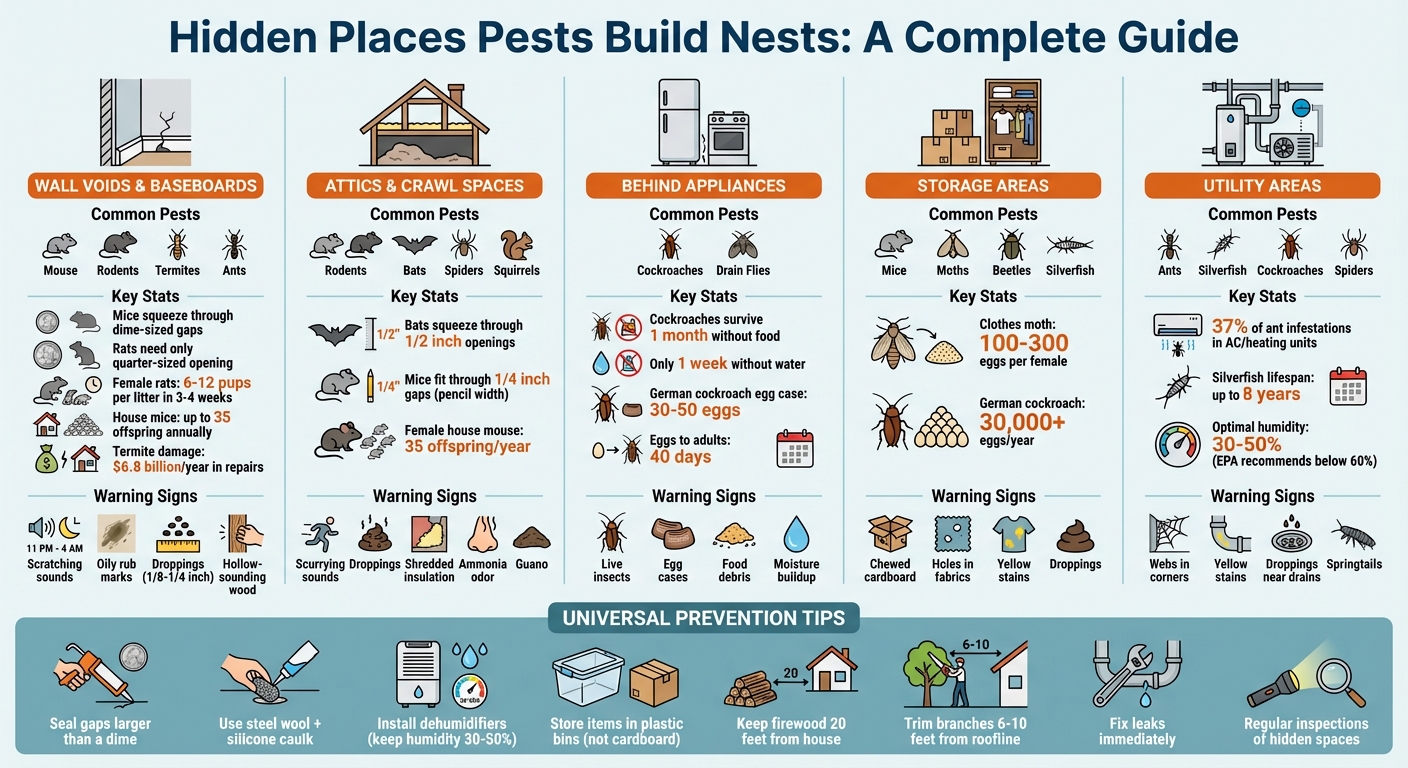
Common Pest Hiding Spots in Homes: Signs, Risks, and Prevention Guide
How to Kill Wasps Nests in Walls and Roof Spaces
Wall Voids and Baseboards
Wall cavities are a prime hiding spot for pests. These hollow spaces between drywall and studs offer a cozy environment - warm in winter, cool in summer, and shielded from extreme weather. For pests like rodents, ants, and termites, these areas provide not only shelter but also nesting materials like insulation and paper backing. On top of that, the interconnected nature of wall voids creates hidden pathways, giving pests easy, concealed access to food and water sources in kitchens and bathrooms. This environment allows pest populations to grow quickly, increasing the risk of infestations going unnoticed.
Mice can squeeze through gaps as small as a dime, while rats only need an opening the size of a quarter. Once inside, rats can establish a nest in just two to three days, and female rats can have their first litter of six to 12 pups within three to four weeks. House mice are even more prolific, with females capable of producing up to 35 offspring annually - about six babies every three weeks. Termites and carpenter ants take it a step further by feeding on the wood framing inside your walls, causing structural damage. Termite-related repairs cost homeowners over $6.8 billion each year.
Signs of Infestation in Walls
Spotting the signs of pests early can save you from costly damage. At night, listen for scratching, scurrying, or gnawing sounds - rodents are most active between 11 PM and 4 AM. During the day, you might hear faint rustling or tapping noises from insects behind the walls. Check baseboards for oily rub marks where rodents brush against the surface, and inspect for rod-shaped droppings about 1/8 to 1/4 inch long.
Termites leave their own set of signs. Tap your baseboards with a screwdriver; if the wood sounds hollow or crumbles easily, termites may be to blame. Look for small pinholes in drywall, bubbling or peeling paint, and tiny piles of wood-colored pellets (frass) that resemble sawdust or coffee grounds. You might also notice discarded termite wings near windowsills, which look like delicate fish scales. Another red flag: brown, pencil-thin mud tubes climbing your foundation. If you break one and it’s rebuilt within a few days, the termite colony is still active.
"Mice and rats can spread dangerous diseases, contaminate food, trigger allergy symptoms, and even bring fleas, ticks and lice into homes. Rodents are also known to damage properties by chewing through drywall insulation, electrical wires, and even car wiring."
– Cindy Mannes, Vice President of Public Affairs, NPMA
Prevention Strategies
To keep pests out, seal every gap larger than a dime and any crack wider than a pencil. Small holes can be filled with steel wool and sealed with silicone caulk. For larger openings, use materials like metal sheeting, hardware cloth, or concrete. Pay extra attention to areas where utility lines - such as electrical, water, gas, and sewer - enter your home, as these are common entry points for pests.
Install door sweeps on exterior doors and repair damaged window or vent screens. Seal the seams where floors meet walls to block entry for ants and spiders. Outside, store firewood at least 20 feet from your house and trim back shrubs and plants near the foundation. Address any leaks or standing water immediately since moisture attracts ants and termites to wall voids.
For infestations already hidden within wall cavities, we provide specialized pest control kits. These kits include professional-grade insecticide dusts, aerosols, and foams that are safe for pets and children, designed to target hard-to-reach areas. Each kit comes with detailed instructions and virtual support to help you correctly identify and treat the issue at its source. Next, we’ll explore how to handle pests in attics and crawl spaces.
Attics and Crawl Spaces
Attics and crawl spaces are a magnet for pests, offering warmth, shelter, and materials for nesting. These tucked-away areas are rarely disturbed, making them ideal for rodents, bats, spiders, and other unwanted guests. During colder months, attics become a haven for pests seeking a warm place to overwinter. Meanwhile, crawl spaces - with their damp conditions and higher humidity - attract bugs like camel crickets, cockroaches, and spiders.
The design of many homes makes it easy for pests to sneak in. For instance, bats can squeeze through openings as small as 1/2 inch, and house mice can slip through gaps as narrow as 1/4 inch (about the width of a pencil) [11, 23]. Once inside, pests often use stored materials like cardboard, paper, and insulation to build their nests. These vulnerabilities make attics and crawl spaces prime spots for early pest detection.
"Crawl spaces are the perfect place to store items that you don't need to access often. However, these spaces also make the perfect home for pests seeking a secluded, dark and often damp area to nest and breed."
– PestWorld
Common Pests Found in Attics
Attics, much like wall voids, provide hidden pathways for pests to move around and multiply. Roof rats and house mice are particularly common invaders, drawn to the warmth and insulation in these spaces. A single female house mouse can give birth to as many as 35 offspring in a year, turning a small problem into a full-blown infestation in no time. These rodents are notorious for chewing on electrical wiring, which can create a serious fire hazard.
Bats are another frequent visitor, favoring the dark, "cave-like" areas of attics, such as rafters. They typically enter through gaps in roof vents, soffits, or fascia boards. Their droppings, known as guano, can pose health risks, including respiratory issues like histoplasmosis. Squirrels may also find their way into attics by jumping from nearby tree branches, using insulation to build nests for their young. Meanwhile, crawl spaces often host spiders, which thrive in moist, dark conditions and feed on other insects drawn to the damp environment.
Signs of pest activity include nocturnal scurrying or scratching noises, rod-shaped droppings (1/8 to 1/4 inch in size), oily rub marks along beams, shredded insulation, or chewed cardboard. Additionally, a strong ammonia-like odor may point to rodent or bat urine.
Prevention and Maintenance
To keep pests out, seal all potential entry points with silicone-based caulk and steel wool, especially around vents, chimneys, and rooflines [11, 25]. For larger gaps, opt for materials like 19-gauge hardware cloth, metal sheeting, or cement. Install caps on chimneys and cover vents with rust-proof, 1/4-inch metal screening to block access.
Managing moisture is also key. Use vapor barriers and dehumidifiers to reduce humidity levels, and ensure your attic is properly ventilated. Outside, make sure the ground slopes away from your foundation to prevent water from pooling. Trim tree branches so they’re at least 6 to 10 feet away from your roofline, making it harder for rodents and squirrels to leap onto your home.
For storage, swap out cardboard boxes for airtight plastic bins to eliminate potential nesting materials. Move woodpiles at least 20 feet away from your house and elevate them at least one foot off the ground.
If you’re already dealing with an infestation, our specialized kits include professional-grade insecticide dusts and foams tailored for attics and crawl spaces. These products are pet- and child-safe, and each kit comes with detailed instructions and virtual support to help you correctly identify pests and apply the treatments.
Next, we’ll take a closer look at how spaces behind and beneath appliances can also attract pests.
Behind and Under Appliances
It might not be the first place you think of, but your kitchen appliances are prime real estate for pests like cockroaches and drain flies. Why? These spots combine warmth from motors and compressors, moisture from leaks or condensation, and food debris - all the things pests love. Experts even call these areas a "gold mine" for infestations. German cockroaches, for instance, are especially drawn to the humid conditions near plumbing fixtures and the heat radiating from refrigerator compressors or dishwasher motors.
Behind your oven, under the fridge, and beneath the dishwasher, crumbs, grease, and sugary residues build up, creating perfect nesting grounds. Add in the condensation pans under refrigerators and damp seals on dishwashers, and pests have everything they need. While cockroaches can survive up to a month without food, they can only last a week without water. That access to moisture is what keeps them sticking around.
Why Appliances Attract Pests
The small, tight spaces between appliances and walls are like luxury suites for pests. These dark, undisturbed spots feel safe and cozy, with surfaces pressing against their bodies - a feature pests instinctively seek. Since these areas are rarely cleaned, they become breeding grounds. For example, a single German cockroach egg case can hold 30 to 50 eggs, and those eggs can turn into fully grown pests in as little as 40 days. What starts as a tiny issue can quickly spiral into a full-blown infestation.
Each appliance has its own way of attracting pests. Refrigerators provide heat from their compressors and moisture from drip pans. Dishwashers offer high humidity, food particles in the filters, and damp door gaskets. Ovens and stoves collect grease and crumbs, often hidden behind control panels or under the range. Even smaller gadgets like microwaves can trap food residue in vents or door seals.
"Cockroaches are simple creatures who love warm, dark, and food-adjacent spaces. This makes ovens, fridges, dishwashers, and small countertop gadgets perfect hiding spots for them."
– 911 Service Today
Steps to Prevent Infestations
To keep pests out of these inviting spaces, you’ll need a proactive approach. Start with the 3-2-1 Rule: spend 3 minutes every night wiping down counters and stoves, use 2 types of sealed barriers (like airtight food containers and trash cans with tight lids), and make sure your sink is completely dry before bed. This simple routine eliminates key pest attractants.
On a regular basis, pull out larger appliances and vacuum the coils, floor, and back panels using a crevice tool. This helps remove visible pests, egg cases, and debris. Be sure to dispose of the vacuum bag immediately to avoid re-infestation.
To tackle moisture, clean refrigerator drip pans with hot, soapy water and dry them thoroughly. Pay attention to dishwasher gaskets and filters, and fix any leaky pipes or faucets as soon as possible. Degreasing the outer surfaces of appliances and surrounding cabinets removes food traces and the pheromones that attract pests. Don’t forget to seal any gaps around utility or wiring entry points behind appliances using silicone caulk or steel wool.
If you’re already dealing with pests, specialized kits are available to help. These include professional-grade gel baits and insect growth regulators designed for use around appliances. The products are safe for homes with pets and children, and they come with detailed instructions for proper application - typically along travel paths behind appliances and near cord entry points. Plus, you’ll get virtual support to help identify the specific pests and ensure the treatments are used effectively.
sbb-itb-0bbb908
Furniture and Storage Areas
Closets, stacked boxes, and unused furniture are prime hangouts for pests. Rodents, spiders, carpet beetles, and clothes moths gravitate toward these spots because they’re dark, quiet, and rarely disturbed - perfect for nesting. Cardboard boxes are especially problematic: mice chew through them for nesting material, silverfish and cockroaches snack on the cardboard itself, and clothes moths and carpet beetles go after stored wool, fur, and cashmere. A single female clothes moth can lay anywhere from 100 to 300 eggs in a storage area, and their larvae can silently wreak havoc on textiles over time. Next, let’s dive into how clutter can make these issues even worse.
How Clutter Enables Pest Infestations
Cluttered storage spaces - whether it’s a pile of old newspapers, a stack of cardboard boxes, or unused clothing - create the perfect environment for pests. These items not only provide secluded nesting spots but also double as food sources. For example, silverfish and cockroaches munch on paper and cardboard, while carpet beetle larvae feed on keratin found in wool, fur, and feathers. Even soiled synthetic fabrics can attract pests. To put it into perspective, a single female German cockroach can lay over 30,000 eggs in a year.
Basements and attics, common storage areas, often have poor ventilation and higher humidity levels, which attract moisture-loving pests. The longer items sit untouched, the more likely pests are to settle in and thrive - sometimes going unnoticed until you finally unpack that box of winter clothes.
"Piles of paper, clothing, cardboard, or unused boxes give pests secluded, undisturbed places to nest and breed. These protected spots make detection and cleanup more difficult, giving infestations time to grow unnoticed." – Joshua Candau, Sparkle & Shine LA
Decluttering and Treatment Methods
The first step to keeping pests out of your storage areas is reducing clutter. Swap out cardboard boxes for heavy-duty plastic bins with locking lids. Unlike cardboard, plastic bins create a barrier that pests can’t easily penetrate. Plus, clear bins let you see what’s inside without having to open them.
Before stowing anything away, make sure it’s clean. Avoid storing soiled clothes - body oils, perspiration, and food stains can attract moths and beetles. Wash or dry clean items in water heated to at least 130°F to kill any eggs or larvae. For items that can’t be washed, take them outside and brush them to remove hidden pests.
Vacuum storage spaces regularly, paying special attention to corners, baseboards, and the areas under furniture. This helps clear out lint, hair, and other debris that pests might use as food. Elevate storage bins on shelves or pallets to keep them off the ground, reducing exposure to moisture and limiting pest access. Seal cracks and gaps in closets and utility spaces with silicone caulk or steel wool to block entry points.
If you’re already dealing with an infestation, our specialized kits can help. Designed for furniture and closet protection, these kits include professional-grade treatments that are safe for homes with pets and children. They come with clear instructions for tackling tight spaces, like behind dressers or inside storage bins. Plus, we offer virtual support to help you identify pests and ensure the treatment is effective. With these tools, you can safeguard your storage areas and keep pests at bay for the long run.
Ceiling Fixtures and Utility Areas
Let’s dive into another set of sneaky pest hideouts: ceiling fixtures and utility areas. Spots like laundry rooms, water heaters, and even air conditioning units often attract pests. Why? These places mix warmth from appliances, moisture from leaks or condensation, and low visibility - all the things pests love. Ants, spiders, silverfish, and cockroaches are common culprits here. For instance, 37% of ant infestations occur in air conditioning and heating units. Silverfish, known to live up to 8 years, thrive in the humid environments of laundry rooms and near water heaters. Spiders, on the other hand, are drawn to these areas to hunt smaller insects that gather around moisture. Just like other tucked-away spots in your home, these utility zones require regular inspections to keep pests at bay.
"Thanks to their warm, moist conditions, bathrooms and laundry rooms are beloved by bugs of all types, including cockroaches." – Ortho
Identifying Pests in Utility Areas
Knowing what to look for is crucial when checking these hidden zones. Silverfish often leave yellow stains on walls and fabrics and chew small holes in natural-fiber clothing. Spiders spin webs in dark corners, particularly near vents, ducts, and registers. Cockroaches like to hide under or behind washers and dryers, leaving droppings and signs of activity near floor drains. If you notice tiny jumping insects near water sources, those are likely springtails, which often indicate hidden leaks or moisture buildup. Mice, which can squeeze through openings as small as a dime, leave rod-shaped droppings about 1/8 to 1/4 inch long. Spotting these signs early can help you address infestations before they spread.
"The primary places bathroom insects like to hide are under sinks and toilets, underneath and behind washers and dryers, behind picture frames and wall decorations, and in and around vents, ducts, and registers." – Ortho
Inspection and Control Tips
Routine inspections are key to keeping these areas pest-free. Check behind washers, dryers, and water heaters for webs, droppings, or other signs of activity. Watch for condensation on pipes - this often happens when cold-water pipes run through warm spaces - and insulate them to prevent moisture buildup. Fix any leaks near water heaters or utility pipes right away. To manage humidity, keep indoor levels between 30–50% using a dehumidifier; the EPA advises staying below 60%. Seal cracks around vents, ducts, and where utility pipes enter walls with silicone-based caulk or spray foam. And don’t leave damp clothes lying around in laundry rooms - this creates a perfect shelter for cockroaches and silverfish.
If pests have already moved into these hard-to-reach spots, consider using our specialized kits designed for utility areas. These kits include professional-grade treatments that are safe for homes with pets and children. They come with clear instructions for treating tricky spaces like behind water heaters or inside wall voids. Plus, we offer virtual support to help you identify pests and apply treatments effectively. With the right tools and consistent upkeep, you can keep these hidden zones pest-free year-round, adding another layer of protection to your home.
Conclusion
Pests often settle in the hidden corners of your home - inside wall voids, utility spaces, and other tucked-away areas where warmth, moisture, and shelter allow them to thrive unnoticed. These concealed infestations can lead to serious problems, from structural damage to health risks caused by disease-carrying pests. That’s why regular inspections and preventative actions are so important.
To minimize these risks, it's essential to make pest-proofing a routine part of home maintenance. Simple steps like sealing cracks around baseboards and pipes, using dehumidifiers to manage moisture, and swapping out cardboard storage boxes for sealed plastic containers can go a long way in keeping pests out.
"Pest proofing the forgotten rooms of a house should be viewed as a year-round commitment to protecting one's property and health from the threats associated with pest damage and disease." – PestWorld
If pests have already made their way into those hard-to-reach spaces, our DIY pest control kits are designed to help you handle the problem safely and effectively. These kits include products that are safe for both pets and children, clear instructions, and virtual support to guide you through identifying and treating infestations. Whether it’s rodents in the attic, cockroaches behind the fridge, or spiders in the crawl space, our kits make it easier to address hidden infestations head-on. By combining regular inspections with the right treatments, you can protect your home, maintain a healthy environment, and keep pests at bay.
FAQs
What are the signs of pests nesting in hidden areas of your home?
Pests often leave behind subtle signs that can reveal their presence, even in hidden spots. Look out for things like droppings, shed skins, or even musty odors - these can signal unwanted visitors such as rodents or insects. You might also come across gnawed packaging, damaged wood or drywall, or spider webs in places you wouldn’t normally expect, like behind appliances, inside cabinets, or tucked away in attics and basements.
Keep an ear out for unusual noises, too. Scratching or scurrying sounds coming from walls, ceilings, or attic spaces can be a dead giveaway. Catching these signs early can make all the difference in addressing the issue before it gets out of hand.
What’s the best way to seal gaps and cracks to keep pests out?
To keep pests out of your home, start by sealing even the tiniest gaps and cracks. Use sturdy materials like steel wool or fine mesh to cover openings around pipes, vents, and building joints. For cracks in walls or foundations, apply a high-quality sealant to ensure a watertight barrier.
Before sealing, double-check that no animals are trapped inside. Regularly inspect these areas to make sure the seals stay intact. Pay extra attention to spots around cables, plumbing, or utility lines - these are often the easiest entry points for pests. Following these steps will help you build a solid line of defense against infestations.
What are the best ways to store items and prevent pests?
To keep pests at bay, make sure to store food and other items in airtight containers made from sturdy plastic or glass. This helps block pests from getting to or contaminating your supplies. Also, clear out any expired or unsealed food from storage spaces, as these can act like magnets for insects and rodents.
It's a good idea to regularly check stored items for signs of pests, like droppings or damage. Keep storage areas clean and free of clutter - piles of stuff create perfect hiding and breeding spots for pests. Staying organized and tidy makes the space far less appealing to unwanted critters, helping to safeguard your home or storage areas from infestations.