


Your bedroom should be a place of rest, not a haven for pests. Yet, many homes face issues with bed bugs, dust mites, fleas, mosquitoes, and cockroaches. These pests are drawn to warmth, carbon dioxide, and clutter, and they can cause health problems ranging from allergies to serious infections. Here's what you need to know to keep your sleeping space pest-free:
- Why Pests Love Bedrooms: Warmth, human scent, and hiding spots like mattresses and furniture attract pests.
- Health Risks: Bed bugs cause itchy welts; fleas spread diseases; dust mites trigger allergies; cockroaches worsen asthma.
-
Prevention Tips:
- Wash bedding in hot water (122°F or higher).
- Vacuum weekly, focusing on seams and crevices.
- Use mattress encasements and interceptor traps.
- Declutter and seal entry points like cracks and gaps.
- DIY Pest Control: Use tools like steam cleaners, diatomaceous earth, and traps for non-chemical solutions.
- Long-Term Solutions: Maintain cleanliness, inspect regularly, and use barriers like caulk and mesh to block entry points.
A clean, organized room combined with routine checks and targeted treatments can help you avoid costly infestations and health risks. Start with simple daily habits like vacuuming and decluttering to create an unwelcoming environment for pests.
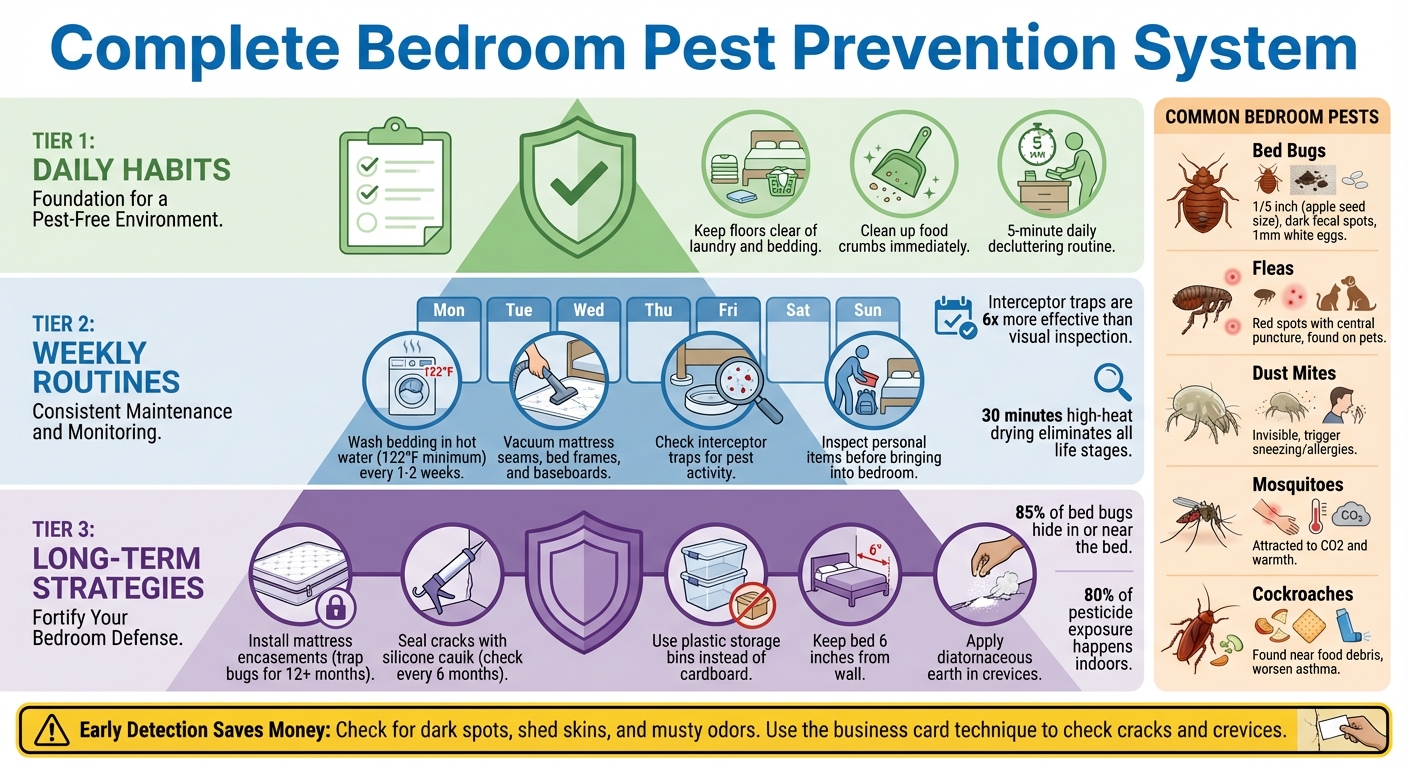
Complete Bedroom Pest Prevention System: Daily, Weekly, and Long-Term Actions
DIY Bed Bug Removal Guide What Works and What Doesn't in 2025
How to Spot Pests Early
Catching pests early can make all the difference in preventing a full-blown infestation. Most pests leave behind noticeable clues, and knowing where to look can help you address the problem before it spirals out of control. By combining these early warning signs with proactive prevention methods, you can stay one step ahead.
Signs of Pests by Type
Bed bugs leave behind several telltale signs, such as dark fecal spots that smear when touched, reddish-brown stains, pale yellow shed skins (about 1/20 inch), and tiny white eggs (around 1 mm). Adult bed bugs are roughly the size of an apple seed (about 1/5 inch). In severe cases, you might notice a sweet, musty odor, and bites often show up in rows or zigzag patterns on exposed skin like the face, neck, and hands.
"The most common issue is the development of an itchy, red rash that usually appears in a line or a cluster." – María Escarcia, DO, Emergency Medicine Physician, Baptist Health South Florida
For pet owners, it’s important to check your animal’s fur for fleas or "flea dirt." Flea bites often appear as small red spots with a central puncture, usually around the ankles. Dust mites, while invisible to the naked eye, can trigger allergic reactions like sneezing or watery eyes. Spiders often reveal their presence with webs in corners, while cockroaches and ants are commonly found near food debris or garbage. Spotting these signs highlights the importance of maintaining daily pest prevention habits.
Bedroom Inspection Checklist
If you notice signs of pests, a thorough inspection can help confirm their presence. Research shows that about 85% of bed bugs tend to hide in or near the bed, with the remaining 15% lurking in furniture, baseboards, or behind wall hangings. To inspect effectively, grab a high-powered flashlight, a magnifying glass for spotting tiny eggs, and a thin card (like a credit card) to check tight spaces.
Start by stripping your bed and examining mattress seams, tufts, tags, and piping for any signs of pests. Flip the mattress to check underneath, then inspect the box spring - remove the dust cover to look at the wooden frame and springs. Use the "business card technique" by sliding the card into cracks along the bed frame or baseboards to dislodge hidden insects.
"Bed bugs are more likely to harbor in or on materials made of wood, paper, or fabric as compared to those made of metal or plastic." – UC IPM
Don’t stop at the bed. Check nightstands, dresser drawers, and screw holes for evidence of pests. Look behind picture frames, under loose wallpaper, and around electrical outlets. Upholstered furniture, especially between cushions and in fabric folds, can also be a hiding spot. Even electronics like alarm clocks and remote controls might harbor pests.
For ongoing monitoring, try placing interceptor traps under your bed’s legs. These traps can catch pests as they travel to and from the bed, and studies show they’re up to six times more effective than visual inspections alone. You can also make your own traps using plastic containers: coat the outside with masking tape for grip and the inside with talcum powder to keep pests from escaping.
"The only way you can really confirm bed bugs as the cause [of bites] is to find the bugs or their signs in your bed or bedroom." – UC IPM
Daily and Weekly Prevention Habits
Keeping your bedroom free of pests starts with consistent, straightforward habits. Daily and weekly routines, like washing your bedding in hot water and keeping the floor clutter-free, can go a long way in creating an environment pests find uninviting. These habits don’t require any special tools - just a bit of dedication to staying ahead of potential issues.
Cleaning and Laundry Routines
Hot water is a powerful ally. Make it a habit to wash your bedding every one to two weeks in water that’s at least 122°F. This temperature is lethal to bed bugs and their eggs. After washing, toss everything into a high-heat dryer for at least 30 minutes to ensure any lingering pests or eggs are eliminated.
"The heat from a hot clothes dryer will kill all bed bugs and their eggs." – Molly Stedfast and Dini M. Miller, Entomology, Virginia Tech
Vacuuming is a must. Make it part of your weekly routine to vacuum your bedroom, focusing on areas like mattress seams, bed frames, baseboards, and the space under your bed. Use a hose attachment to get into tight corners and crevices. Afterward, seal the vacuum bag or canister contents and dispose of them in an outdoor trash bin to prevent pests from escaping.
Keep food out of the bedroom. If you do eat in your room, clean up crumbs immediately. Pests are always on the lookout for food sources. Also, inspect personal items like gym bags or purses before bringing them into your bedroom to avoid any unwanted hitchhikers.
Finally, reduce clutter to eliminate potential hiding spots for pests.
Decluttering and Storage Tips
A clean and organized room doesn’t just look better - it’s also less inviting to pests. Clutter provides pests with the perfect hideouts. Stacks of books, piles of clothing, and unused cardboard boxes create undisturbed spaces where pests like spiders, cockroaches, and rodents can thrive.
"Clutter creates spaces where pests like cockroaches, mice, and bed bugs can flourish." – Elevate
Ditch the cardboard boxes. Cardboard can harbor bed bugs in its corrugation and even serve as nesting material for rodents. Instead, use clear plastic bins with tight-fitting lids. Store these bins on shelves, not directly on the floor, to improve airflow and make inspections easier. For seasonal items like clothing and bedding, opt for sealed plastic totes or bags instead of leaving them in open piles.
Daily floor maintenance is key. Keep laundry, blankets, and bedspreads off the floor. A tidy room not only makes vacuuming more effective but also helps you spot early warning signs of pests, like droppings or shed skins. Just five minutes a day spent clearing your floors can make a noticeable difference.
Furniture and Bed Placement
Create a barrier around your bed. Move your bed at least six inches away from the wall and make sure no bedding touches the floor. This simple adjustment can prevent crawling pests from reaching your mattress.
Use bed bug interceptors. These small plastic traps, placed under each bed leg, can catch pests trying to climb up or down. Check them weekly for signs of activity so you can address any issues early.
| Habit | Frequency | Benefit |
|---|---|---|
| Washing Bedding | Every 1–2 Weeks | Kills dust mites and bed bug eggs |
| Vacuuming | Weekly | Removes food particles, hair, and debris |
| Decluttering Floors | Daily | Reduces hiding spots for pests |
| Inspecting Interceptors | Weekly | Detects early signs of bed bug activity |
Seal up the cracks. Use silicone caulk to fill gaps along baseboards, around electrical outlets, and in molding where pests might hide. This step not only blocks entry points but also reduces the number of places pests can settle. For closets, avoid overstuffing to allow for good airflow, which helps deter pests like moths. Adding cedar blocks or lavender sachets can also act as natural repellents.
sbb-itb-0bbb908
DIY Pest Control Tools and Safe Treatments
Adding to your daily habits, these tools can help strengthen your defense against pests in the bedroom. They work hand-in-hand with routine upkeep to tackle hidden infestations effectively.
Non-Chemical and Low-Toxicity Options
Vacuuming is a powerful first step. Using a vacuum with a hose, you can remove pests, eggs, and debris from seams, bed frames, and baseboards. Make sure to seal the vacuum bag and dispose of it outdoors to prevent re-infestation.
Heat treatments are highly effective. Bed bugs die almost instantly when exposed to temperatures of 122°F or higher. A steam cleaner that reaches at least 130°F can penetrate deep into fabrics and crevices, killing bugs and their eggs on contact. Just be cautious with airflow to avoid spreading the pests.
Cold treatments work for delicate items. For items like shoes, books, or fabrics that can’t handle heat, placing them in a freezer set to 0°F for three to four days will eliminate pests.
Diatomaceous earth provides long-term results. This natural powder damages the outer layers of insects, causing them to dry out. Use only EPA-registered pesticide-grade diatomaceous earth, not pool or food-grade versions. Apply a light dusting to cracks, baseboards, and outlets, but note that it can take months to fully eliminate an infestation.
"Desiccants (chemicals that dry things out) can be particularly effective in some situations since they work by drying out the bug (which means the bed bugs can't develop resistance)." – EPA
Interceptor traps monitor pest activity. These traps, placed under bed legs, use slippery surfaces or talcum powder to trap pests trying to climb up or escape. Check them weekly for signs of activity. You can even DIY your own traps using two nested plastic containers - wrap the outer one with masking tape for grip and sprinkle talcum powder inside to keep bugs from climbing out.
| Tool | How It Works | Best For |
|---|---|---|
| Vacuum | Removes pests, eggs, and debris | Quick population reduction |
| Steam Cleaner | Delivers lethal heat (130°F+) into fabrics | Killing pests and eggs on contact |
| Diatomaceous Earth | Dehydrates insects by damaging their outer layer | Long-term control in cracks |
| Interceptor Traps | Traps pests moving between the floor and bed | Monitoring and early detection |
Safe Use of Insecticides in Bedrooms
Sometimes, insecticides are necessary, but they must be used with care. Always choose products labeled for indoor use - using outdoor or garden pesticides indoors can pose serious health risks. Studies show that 80% of an average person's pesticide exposure happens indoors.
Keep children and pets out of the room during treatment. Ensure proper ventilation by opening windows and using fans. Allow the product to dry completely before anyone re-enters the space. When treating mattresses, focus only on tufts, seams, and edges - never the flat sleeping surface.
Direct applications work best. Use the crack-and-crevice setting on sprayers to target hidden areas rather than broadly spraying. To minimize exposure, wear gloves, long sleeves, and eye protection during application.
Take extra precautions with pets. Remove pets and birds from the room, and if you have a fish tank, cover it with plastic and turn off the air filter during treatment. Avoid products with tea tree oil, pennyroyal, or high concentrations of clove oil around cats, as these can be harmful.
Botanical oils offer a natural alternative. Unlike synthetic pyrethroids like Permethrin, which many bed bugs resist, botanical oils such as cedarwood and geraniol remain effective. For instance, EcoVenger, a natural product, has been highly rated in university studies and by nearly 20,000 reviewers.
Custom DIY Pest Control Kits
For a more tailored approach, consider our DIY pest control kits. These kits are designed to address specific pests and fit your home’s layout, offering professional-grade products that are safe for both pets and children. Each kit includes clear instructions, so you’ll know exactly where and how much product to apply. Plus, we provide virtual support to help identify pests and answer any questions.
Our kits are ideal for prevention or managing light infestations. For more severe bed bug problems, combining these products with non-chemical methods like steam cleaning and interceptor traps can yield better results. You might also consider mattress encasements, which range from $21.95 to $90.95 depending on size. These encasements trap existing pests while preventing new ones from nesting.
Long-Term Prevention Strategies
Once you've tackled an immediate infestation, the next step is to focus on long-term solutions. These measures create barriers that can keep pests at bay for months or even years with minimal maintenance.
Mattress and Pillow Encasements
Using mattress encasements can trap existing bed bugs while preventing new ones from settling in. Over time, any trapped bugs will die off due to starvation. The light-colored material of these encasements also makes it easier to spot signs of infestation, like fecal spots, shed skins, or clusters of bugs. Aside from pest prevention, encasements offer added protection against allergens, dust mites, mold, and bacteria.
It's important to choose the right encasement. Standard mattress protectors often fail to block bed bugs, as thin fabrics and regular zippers leave vulnerabilities. For reliable protection, opt for a six-sided encasement made from bite-resistant fabric and equipped with an escape-proof zipper. To maximize coverage, encase your mattress, box spring, and pillows. Prices range from $15 for basic models to over $75 for high-grade options, with pillow encasements averaging $12.99 per set.
Once installed, keep the encasement on permanently and cover it with a fitted sheet to prevent staining. Before putting it on, inspect your bed frame for sharp edges or protrusions that could tear the fabric. If needed, apply felt covers or padding to protect the encasement.
Beyond securing your bed, sealing entry points adds another layer of defense.
Sealing Entry Points and Installing Barriers
Even the smallest gaps can invite pests into your home. Cracks as tiny as 1/16 inch can let in insects, a 1/4-inch gap (about the size of a pencil) can admit mice, and openings as small as 1/2 inch can allow rats inside.
"One of the best ways to limit unwanted intrusions by insects, rodents, birds, squirrels and other pests is to deny them entry - a procedure known as pest proofing."
– Michael F. Potter, Extension Entomologist, University of Kentucky
Start with doors and windows. Install door sweeps on all exterior doors and use silicone or acrylic latex caulk to seal cracks around window frames and door casings. Repair any tears in window or door screens to block flying insects like mosquitoes, flies, and gnats.
Next, tackle utility openings. Seal gaps around pipes, wires, and cables with copper mesh or steel wool, then secure these areas with foam or caulk. Remove outlet and switch covers to check for signs of pests and seal any gaps with tape or caulk.
For baseboards and walls, caulk along cracks and repair damaged wallboard or peeling wallpaper where pests might hide. To keep rodents, bats, and birds out of attic and crawl space vents, install 1/4-inch wire mesh (hardware cloth).
| Sealing Material | Best Use |
|---|---|
| Silicone Caulk | Flexible and durable for windows and doors |
| Acrylic Latex Caulk | Easy to clean and paint; great for baseboards |
| Hardware Cloth (1/4") | Ideal for attic, roof, and crawl space vents |
| Copper Mesh / Steel Wool | Effective for utility openings around pipes |
| Door Sweeps | Blocks gaps under exterior doors |
To further protect your bed, move it at least 6 inches away from the wall and ensure that bedding doesn’t touch the floor. You can also apply a 2-inch band of petroleum jelly around bed legs or use commercial interceptor cups to stop pests from climbing onto your bed.
For a quick check, use the light test: lie on the floor and see if any light filters under doors. If you spot light, there’s a gap large enough for pests. Caulking guns with built-in features like back-off triggers and seal puncturing tools are available for under $10.
By combining these barriers with proper pet care and fabric maintenance, you can build a comprehensive prevention strategy.
Pet and Fabric Hygiene
Pets can bring pests indoors, so inspect them for fleas after they’ve been outside. Wash pet bedding in hot water (at least 122°F) to kill any pests.
Store fabrics in airtight plastic totes or zippered bags instead of cardboard boxes, as pests can hide in the corrugation of cardboard. For seasonal clothing or extra linens, seal them in bags and store them away from your bedroom.
Regular maintenance is key. Check mattress and pillow encasements monthly for tears or zipper issues. Clean interceptor cups weekly to remove debris and pests, and reapply talcum powder as needed to keep them effective. Every six months, inspect silicone caulk around baseboards, windows, and light sockets, as seals can degrade over time.
| Maintenance Task | Frequency | Purpose |
|---|---|---|
| Inspect Encasements | Monthly | Look for tears or zipper gaps |
| Clean Interceptors | Weekly | Remove debris and pests |
| Reapply Talcum Powder | Weekly | Maintain trap effectiveness |
| Vacuum Baseboards | Weekly | Eliminate pests and eggs |
| Inspect Caulk/Seals | Bi-annually | Ensure barriers remain intact |
| Wash Bedding (Hot) | Weekly | Kill any potential pests |
If you’ve recently traveled, take extra precautions. Use a garment steamer on your luggage to kill any bugs or eggs before storing it. Bed bugs are notorious for hitchhiking, and surveys show that 93% of homeowners worry about finding insects in their homes.
Conclusion
Keeping pests out of your bedroom involves a mix of consistent cleaning, focused treatments, and preventative measures. Start by vacuuming weekly and washing bedding in hot water to remove pests and catch early signs of activity. These habits are your first line of defense against infestations.
After establishing a cleaning routine, targeted treatments can eliminate any active pests. For instance, drying items on high heat for 30 minutes effectively kills pests at all life stages. Applying EPA-registered desiccants like diatomaceous earth in cracks and crevices dehydrates insects, making it a reliable option since pests can’t develop resistance. You can also place interceptor traps under furniture legs and check them weekly to monitor for new intrusions.
"Integrated pest management (IPM) techniques may reduce the number of bed bugs and limit your contact with pesticides." – EPA
To maintain a pest-free space long-term, focus on exclusion strategies. Use bite-proof mattress and box spring encasements, keeping them on for at least a year to ensure any trapped bugs die off. Seal cracks in baseboards, furniture joints, and around outlets with silicone caulk to block potential entry points.
Because bed bugs multiply quickly, persistence is key. If DIY methods fall short, professional heat treatments or specialized insecticides might be necessary. For ongoing challenges, consider using our customized DIY kits, designed to be safe for pets and children, paired with virtual support to help you achieve and maintain a pest-free home.
FAQs
What’s the best way to use diatomaceous earth for long-term pest control in the bedroom?
To tackle bedroom pests with diatomaceous earth (DE), start by selecting food-grade DE. This type is harmless to people and pets but highly effective against pests. Begin by decluttering and thoroughly vacuuming your bedroom, paying extra attention to the mattress, bed frame, and any floor crevices. Once done, immediately seal and dispose of the vacuum bag or contents in an outdoor trash bag to stop pests from returning.
Next, apply a thin layer of DE to key hiding spots like mattress seams, cracks in the bed frame, baseboards, and any small gaps where pests might lurk. Always wear a dust mask while applying DE to avoid breathing in the fine particles. For even better results, consider using mattress and box-spring encasements and keep the room dry - moisture can weaken DE's effectiveness. Reapply every 2–3 weeks over a two-month period to ensure you target any newly hatched pests.
To maintain a pest-free space, vacuum regularly, wash bedding in hot water (at least 130°F), and keep clutter to a minimum. Combining these habits with a high-quality DE treatment creates a strong and lasting defense against pests like bed bugs, fleas, and ants.
What’s the best way to seal off entry points and keep pests out of my bedroom?
Sealing entry points is a smart and effective way to keep pests out of your bedroom. Start by carefully inspecting the room for any cracks, gaps, or holes in the walls, baseboards, window frames, and around pipes or vents. For small cracks, use silicone or acrylic caulk to seal them up. For larger gaps - anything over 1/4 inch - fill the space with steel wool or copper mesh first, then apply expanding foam to block pests that might try to chew their way in.
Check that your doors and windows have snug-fitting weather stripping, and add door sweeps to close off any gaps at the bottom. Replace torn or damaged window screens and vent covers with fine mesh material (1/4 inch or smaller) to keep bugs and other pests out. For trickier areas like exhaust fans, chimney flues, or spots around electrical wiring, use fire-rated caulk or foam sealant to ensure a secure seal. Don’t overlook hidden spaces like closets or the area under your bed - seal any gaps you find there, too.
If you’re looking for a simple solution, consider using one of our DIY pest control kits. They come with safe, professional-grade sealants and easy-to-follow instructions to help you seal your bedroom quickly and effectively.
What should I look for in a mattress encasement to protect against bed bugs?
To pick the best mattress encasement for bed bug protection, start by ensuring it completely covers both the mattress and box spring. Look for one made from tough, tear-resistant fabric with a light-colored surface - this makes spotting any pests much easier. A secure, high-quality zipper that fully seals the encasement is a must, and don’t forget to inspect it regularly for any signs of wear or damage.
Accurate measurements are key. Carefully measure your mattress's length, width, and depth to find an encasement that fits snugly. You might also want to consider additional features like waterproofing or antimicrobial treatments for added cleanliness and protection.
For ongoing pest prevention, consider combining your encasement with Remedy’s DIY pest control kits, which offer personalized solutions to keep your bedroom pest-free.