


Monsoon season, spanning June to September, often brings a surge in pest activity due to heavy rains, humidity, and warm temperatures. Pests like mosquitoes, scorpions, ants, termites, and cockroaches are displaced from their habitats, frequently invading homes. Recognizing early signs of infestations - such as mud tubes from termites, itchy mosquito bites, or visible ant trails - can prevent larger problems. Quick actions, like eliminating standing water, sealing cracks, and using pest control kits, can help protect your home. Here's a breakdown of common monsoon pests and how to spot them:
- Mosquitoes: Breed in stagnant water; itchy bites appear 10–11 days after rains.
- Scorpions: Seek dry indoor spaces; glow under UV light.
- Ants: Visible trails indoors; carpenter ants damage wood.
- Cockroaches: Emerge from drains and cracks; leave musty odors.
- Termites: Mud tubes, hollow wood, and discarded wings signal activity.
Early detection and prevention are key to managing these pests effectively.
5 things you need to know about monsoon bugs
sbb-itb-0bbb908
How to Identify Common Monsoon Pests
Monsoon rains often bring a surge of pest activity. Recognizing these pests and their behaviors can help you take action before they become a bigger problem. Let’s dive into some of the most common pests that thrive during this season.
Mosquitoes
Mosquitoes are slender insects with long legs and needlelike mouthparts. They breed in stagnant water - think gutters, planters, buckets, or birdbaths - making them especially active after heavy rains. If you notice itchy bites and an increase in flying insects about 10 to 11 days after a storm, it’s likely mosquito larvae have matured. These pests thrive in the warm, humid air that follows a monsoon, posing both a nuisance and a health risk. To keep their numbers in check, drain standing water within 48 hours of a storm, clean out gutters, and ensure window screens are intact.
Scorpions
Monsoon rains often drive scorpions out of their hiding spots. The Arizona bark scorpion, known for being venomous, is a common sight during this time. These scorpions are 2–3 inches long with translucent yellowish bodies and are adept climbers, capable of scaling stucco, brick, and even glass.
"Bark scorpions are excellent climbers and can scale rough surfaces, including stucco walls, brick, and even glass." - Arizona Pest Control
Their flat bodies allow them to squeeze through gaps as thin as a credit card. When rain floods their outdoor shelters, they seek higher, drier areas - sometimes entering homes. You might spot them in damp indoor areas like sinks, bathtubs, or laundry rooms. To stay safe, always shake out shoes and clothing before wearing them during monsoon months.
Ants
Ants, including fire ants, carpenter ants, and Argentine ants, often become more noticeable during the rainy season. These pests range in size from 1/8 inch to 1 inch and can be red, black, or a mix of both. They’re drawn indoors in search of food and water, leaving visible trails along walls or countertops.
Fire ants are notorious for their painful stings and tend to build active mounds after rain. Carpenter ants, which are larger and typically black or red, can damage structures by tunneling into wet or decayed wood. To manage ant activity, keep woodpiles and debris away from your home’s foundation and fix any leaky faucets to eliminate moisture.
Cockroaches
American and Oriental cockroaches are common during monsoon season. These reddish-brown to dark insects thrive in moist environments like basements, drains, and crawl spaces. Heavy rains often flush them out of sewers and outdoor hiding spots, driving them indoors through cracks and drains. In humid conditions, American cockroaches may even take short flights. Sealing foundation cracks and adding door sweeps can help keep them out.
Termites
Monsoon rains can disturb termite colonies, triggering activity in both subterranean and drywood termites. One telltale sign of an infestation is the appearance of flying "swarmers" in the evenings after heavy rain. These reproductive termites are drawn to light and may be seen near windows or fixtures.
"If you start seeing flying swarmers near windows or lights or notice small mud tubes on the foundation, that could be a sign that termites are actively trying to establish a new colony in or near your home." - Spark Pest Control
Termites can be distinguished from ants by their straight antennae, thick waists, and wings of equal length. Swarmers shed their wings after mating, so piles of uniform wings near windowsills can indicate their presence. Subterranean termites also build pencil-sized mud tubes on foundation walls. To reduce termite activity, keep gutters clear, repair leaks, and store woodpiles away from your home’s foundation.
Additional Monsoon Pests
The monsoon season brings a variety of insects, some of which are less familiar but still worth noting.
Palo Verde Beetles
If you spot a massive beetle near your porch light, it’s likely a Palo Verde beetle. These beetles are among the largest in North America, typically measuring 3 to 4 inches, with some growing up to 5 inches long. Their dark brown or black, hard-shelled bodies are paired with long, segmented antennae and spines on their thorax.
"This is a very large beetle. One of the largest beetles in North America when it's an adult, and just for that reason people see it and are aware of it."
– Richard Hofstetter, Professor of Forest Entomology, Northern Arizona University
These beetles emerge from the ground during Arizona’s monsoon season, which spans from June 15 to September 30, with their activity often triggered by summer rains. They are nocturnal and drawn to bright lights, flying awkwardly or crawling on surfaces. Despite their intimidating size, they are harmless to humans. However, their larvae, which live underground for 2 to 3 years, feed on the roots of trees like Palo Verde, citrus, and other desert species. Once the adults emerge, they focus solely on mating, living for less than a month without feeding. To minimize their presence around your home, consider turning off porch lights or switching to yellow bulbs during monsoon nights. Other beetles, like blister beetles, also bring unique challenges during this season.
Blister Beetles
Blister beetles are smaller insects with elongated bodies that come in various colors, including black, gray, and even bright shades of orange and yellow. They often gather in clusters on flowering plants during the warm monsoon months. These beetles produce cantharidin, a toxin known to cause painful skin blisters. For horses, ingesting even a small amount of this toxin can be fatal.
Handling blister beetles requires caution. Crushing them can release the toxin, so it’s crucial to wear gloves when removing them from your garden. Avoid direct contact to prevent skin irritation. During their active feeding season, these beetles pose risks to both humans and livestock.
Pest Identification Comparison Chart
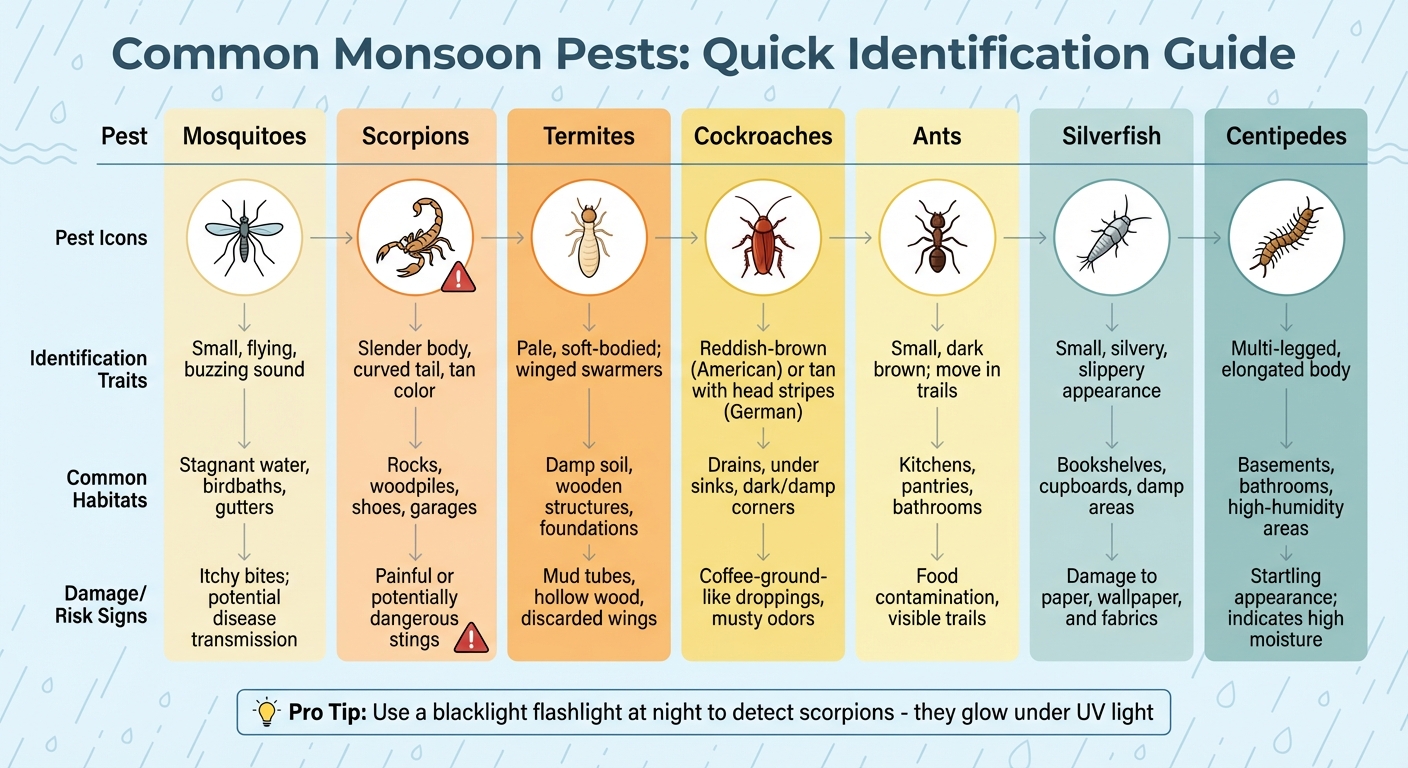
Common Monsoon Pests Identification Guide: Key Traits and Warning Signs
Monsoon season often brings a surge in pest activity, with multiple species appearing at once. Quickly identifying these pests can help you choose the right control methods. Here's a handy chart outlining their key traits, habitats, and warning signs:
| Pest | Identification Traits | Common Habitats | Damage/Risk Signs |
|---|---|---|---|
| Mosquitoes | Small, flying, buzzing sound | Stagnant water, birdbaths, gutters | Itchy bites; potential disease transmission |
| Scorpions | Slender body, curved tail, tan color | Rocks, woodpiles, shoes, garages | Painful or potentially dangerous stings |
| Termites | Pale, soft-bodied; winged swarmers | Damp soil, wooden structures, foundations | Mud tubes, hollow wood, discarded wings |
| Cockroaches | Reddish-brown (American) or tan with head stripes (German) | Drains, under sinks, dark/damp corners | Coffee-ground-like droppings, musty odors |
| Ants | Small, dark brown; move in trails | Kitchens, pantries, bathrooms | Food contamination, visible trails |
| Silverfish | Small, silvery, slippery appearance | Bookshelves, cupboards, damp areas | Damage to paper, wallpaper, and fabrics |
| Centipedes | Multi-legged, elongated body | Basements, bathrooms, high-humidity areas | Startling appearance; indicates high moisture |
Did you know a single female German cockroach can lay thousands of eggs within a month? This makes early detection critical. For scorpions, using a blacklight flashlight at night can reveal their glow under UV light. Additionally, signs like mud tubes on walls, hollow wood, or coffee-ground-like droppings near drains can confirm termite or cockroach activity. Identifying these pests allows you to take precise action with DIY pest control solutions.
Using DIY Pest Control Kits for Monsoon Pests
Monsoon season often drives pests like scorpions, ants, and cockroaches indoors within just 24–48 hours. To help you tackle these quick infestations, our DIY kits provide a practical solution that puts you in control.
Designed specifically for Arizona and Nevada, our kits feature EPA-approved, professional-grade formulas commonly used by pest control experts. These products are effective against over 100 different types of pests and are safe for pets and children once fully dried.
"Remedy provides the same products and knowledge that your local pest control company [uses]. This allows you to have the same pest protection without having to deal with strangers in your home." – Remedy
Each kit includes weather-resistant barrier treatments and straightforward instructions for sealing entry points - essential for keeping pests like bark scorpions, which can slip through tiny gaps, out of your home. Additionally, our virtual support service helps you accurately identify pests, whether it’s a harmless Palo Verde beetle or a venomous bark scorpion.
Affordability is another key feature of our kits. Starting at under $30 per kit, our quarterly subscription model provides continued protection for about $26.50 per shipment. Plus, new customers can get their first kit free using the code "FREEKIT".
Conclusion
Monsoon rains often bring an unwelcome spike in pest activity, with insects like mosquitoes, cockroaches, and termites making their way indoors. These pests don’t just vanish on their own - they stick around until dealt with effectively.
Catching infestations early is crucial to keeping them under control. As HiCare advises, "The key to a pest-free monsoon is early action and consistent prevention". Addressing pest activity at the first signs can stop a manageable issue from escalating into a full-blown problem.
The risks go beyond just inconvenience. Mosquitoes and cockroaches are notorious for spreading diseases such as dengue, malaria, and typhoid. Meanwhile, termites are responsible for staggering losses, causing $40 billion in property damage globally each year. Left unchecked, infestations can result in costly structural repairs.
To tackle this, focus on sealing cracks, removing standing water, and maintaining dry interiors. For added convenience, our DIY pest control kits provide professional-grade solutions that are safe for pets and children, paired with clear, step-by-step instructions. Take action now to shield your home from monsoon pests and safeguard your family’s health and property.
FAQs
How can I tell termites from ants?
To tell termites apart from ants, pay attention to their physical traits. Termites have straight, bead-like antennae, a thick waist, and wings of the same length that extend beyond their bodies. Ants, on the other hand, feature bent or elbowed antennae, a narrow waist, and wings of different sizes, with the front pair being larger than the back. Examining these details closely will help you identify the pest correctly.
Why do pests invade right after heavy rain?
After heavy rain, pests often invade homes because their natural habitats are disrupted by flooding and waterlogged soil. This forces them to look for dry, safe spaces - like your home. Common culprits include cockroaches, ants, termites, and rodents, which can sneak in through cracks, vents, or even plumbing systems to escape the damp.
The rain doesn’t just drive them out of their habitats; it also increases moisture and humidity, which can wake up dormant insects and send them searching for food and shelter indoors. This mix of habitat disruption and ideal indoor conditions explains why pest activity spikes after a storm.
When should I call for help instead of DIY?
When pests become overwhelming, threaten health or safety, or cause major damage, it's time to call in the pros. Situations like dealing with termites, scorpions, bed bugs, or sprawling ant colonies often require expert attention. If infestations are severe, keep coming back, or need specialized methods, professional pest control ensures the problem is handled safely and effectively.