


When winter hits, pests like mice, cockroaches, and spiders seek shelter indoors. Your warm, food-filled home becomes their ideal escape from the cold. The risks? Contaminated food, asthma triggers, property damage, and even fire hazards from chewed wires. Here's how to protect your home:
- Seal entry points: Use caulk, steel wool, and door sweeps to block gaps as small as 1/16 inch. Inspect foundations, windows, and utility pipes.
- Control moisture: Fix leaks, use dehumidifiers, and keep bathrooms and basements dry.
- Keep food secure: Store food in airtight containers and clean up spills immediately.
- Declutter: Remove hiding spots by organizing storage and reducing clutter.
- Maintain the yard: Trim vegetation, clear debris, and store firewood at least 20 feet from your home.
Regular inspections are key. Look for droppings, chew marks, or unusual odors to catch infestations early. By staying vigilant and taking these steps, you can keep pests out all winter long.
How to keep pests out of your home this winter
Winter Pest Behavior and Risks
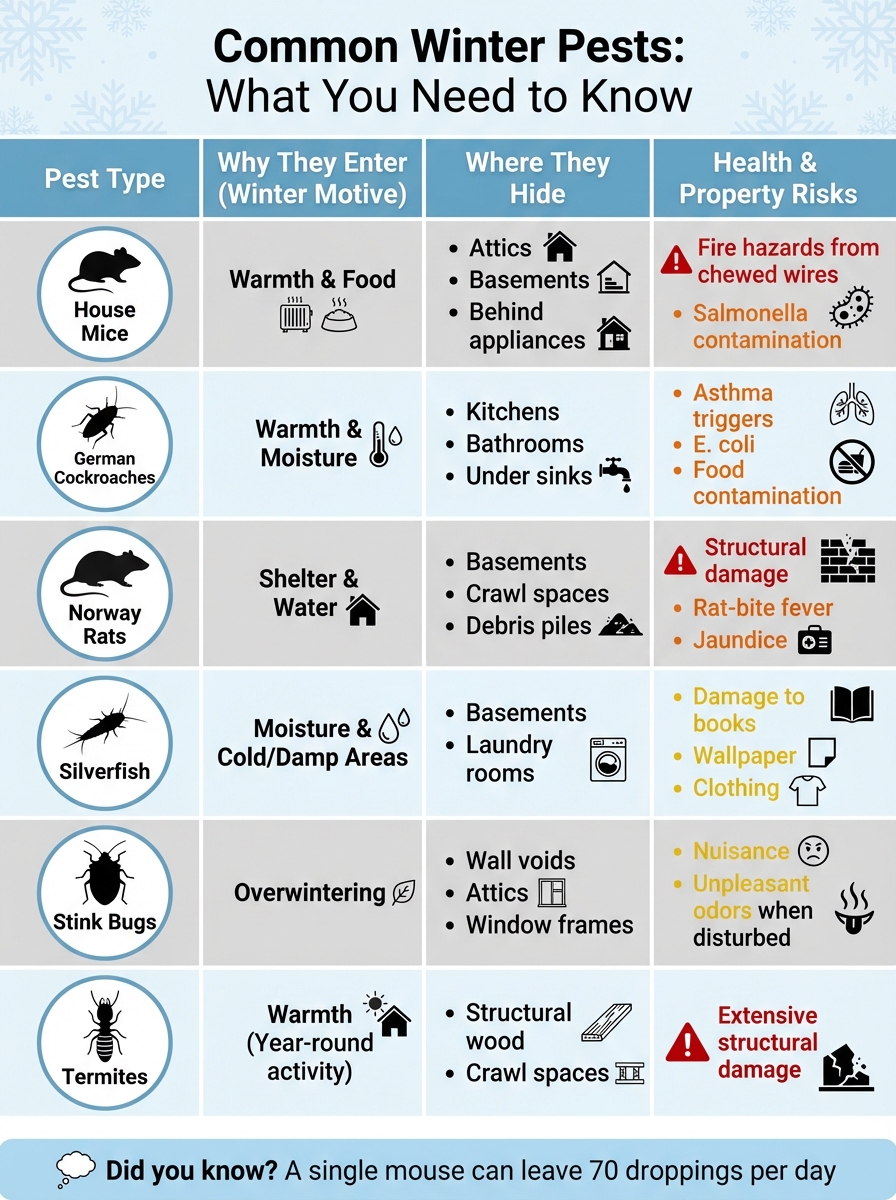
Common Winter Pests: Behavior, Hiding Spots, and Health Risks
Let’s dive deeper into how common winter pests behave and the risks they bring to your home during the colder months.
Common Winter Pests
During winter, rodents like house mice, Norway rats, and squirrels often find their way indoors. Other pests, such as German cockroaches, silverfish, termites, carpenter ants, and pantry invaders like moths and beetles, also seek shelter inside. Meanwhile, overwintering insects - stink bugs, boxelder bugs, ladybugs, and western conifer seed bugs - hibernate in attics and wall voids.
Spiders, including the brown recluse and black widow, may also appear as temperatures drop. Even larger wildlife, like raccoons, can turn your attic or chimney into their winter den. Some pests, like silverfish, reproduce quickly - females can lay up to 1,000 eggs, leading to significant infestations that damage items like books, wallpaper, and clothing.
Knowing which pests are active during winter helps us understand why they target our homes.
Why Pests Enter Homes in Winter
As outdoor temperatures drop, pests are drawn to the warmth, food, and moisture found inside homes, often made more inviting by central heating. With natural food sources buried under snow, pests turn to accessible alternatives like crumbs, pet food, and pantry supplies.
Moisture-loving pests, such as cockroaches and silverfish, are especially drawn to damp areas like basements, kitchens, and bathrooms. Scot Hodges, Vice President of Professional Development at Arrow Exterminators, explains:
"Because cockroaches can't survive in colder weather, these bugs will infiltrate homes looking for warm, damp spots to overwinter".
While these survival tactics help pests endure the winter, they can lead to serious consequences for homeowners.
Health and Property Risks
Pests bring a variety of health and property concerns. Rodents, for example, can contaminate food with pathogens like Salmonella and Hantavirus, while also spreading diseases such as rat-bite fever and tapeworms. A single mouse can leave behind about 70 droppings a day, amounting to thousands over the course of a year. Cockroaches are known to carry E. coli and can exacerbate asthma and allergies, particularly in children.
The damage to property can be just as severe. Rodents chew through electrical wiring, creating fire hazards, and can even gnaw through plastic or lead pipes. Termites and carpenter ants, on the other hand, quietly destroy structural wood as they burrow deeper into homes for warmth. Trent Frazer, Lead Entomologist at Aptive Pest Control, highlights the risks:
"Mice and rats tend to gnaw on wires and wood, causing structural damage and even house fires".
Here’s a quick overview of common pests, their winter habits, and the risks they pose:
| Pest Type | Winter Motive | Common Indoor Hiding Spots | Key Risks |
|---|---|---|---|
| House Mice | Warmth, Food | Attics, basements, behind appliances | Fire hazards from chewed wires, Salmonella |
| German Cockroaches | Warmth, Moisture | Kitchens, bathrooms, under sinks | Asthma triggers, E. coli, food contamination |
| Norway Rats | Shelter, Water | Basements, crawl spaces, debris piles | Structural damage, rat-bite fever, jaundice |
| Silverfish | Moisture, Cold/Damp | Basements, laundry rooms | Damage to books, wallpaper, and clothing |
| Stink Bugs | Overwintering | Wall voids, attics, window frames | Nuisance, unpleasant odors when disturbed |
| Termites | Warmth (Year-round activity) | Structural wood, crawl spaces | Extensive structural damage |
Understanding these risks is critical for taking steps to protect your home from winter pests.
Sealing Entry Points
Stopping pests from entering your home starts with blocking their access points. Mice can squeeze through openings as small as a dime (about 1/4 inch), while rats need at least 1/2 inch, and insects and spiders can slip through gaps as tiny as 1/16 inch. Even the smallest crack or a worn weatherstrip can become an open door for unwanted guests.
Inspecting Foundations, Doors, and Windows
Start your inspection at ground level. Walk around your home’s exterior, checking for cracks in the foundation, gaps where siding meets the ground, and holes near utility connections. Pay close attention to areas around outdoor faucets, electrical outlets, and dryer vents - these are common entry points.
For doors and windows, use the light test: lie down near exterior doors and see if any daylight shines through underneath. If light gets in, pests likely can too. Another trick is the pencil test - if a standard pencil (about 1/4 inch thick) fits through a gap, so can a mouse. Don’t forget to inspect window screens for damage, drafty frames, and gaps under sliding glass doors. Garage doors are another trouble spot - worn seals can create large openings.
While inspecting, look for signs of pest activity, such as chew marks, droppings, or small piles of sawdust (frass) near potential entry points.
Best Sealing Materials
Different entry points call for different sealing solutions. For small cracks around windows and doors, silicone caulk works well because it stays flexible and is tough enough to resist rodents once it cures. Acrylic latex caulk is easier to clean and paint, but silicone provides better rodent resistance.
For larger gaps, use a combination of steel wool or copper mesh and expanding foam or caulk. This two-step approach is crucial - foam alone won’t stop determined rodents. As Mariah Baggio-Deibler, an entomologist at PestMaster, explains:
"Do not use foam as exclusion material since rodents can still chew through it, and it can be a bacterial growth media, posing a risk for indoor residents' health."
Install door sweeps and rubber thresholds to seal gaps under exterior doors. For garage doors, opt for rubber over vinyl, as rubber holds up better in cold weather. For attic vents, crawl spaces, and roof openings, cover them with 1/4-inch wire hardware cloth. This allows airflow while keeping out rodents, bats, and squirrels.
Here’s a quick guide to materials and their uses:
| Entry Point | Recommended Material | Target Pests |
|---|---|---|
| Foundation Cracks | Silicone caulk, cement, foam gap-filler | Ants, spiders, rodents |
| Utility Pipes/Wires | Steel wool + expanding foam or copper mesh | Mice, rats, yellowjackets |
| Attic/Roof Vents | 1/4-inch wire mesh (hardware cloth) | Birds, squirrels, bats |
| Door Bases | Door sweeps or rubber thresholds | Spiders, crickets, mice |
| Windows | Weatherstripping and repaired screens | Flies, mosquitoes, stink bugs |
| Chimneys | Chimney caps | Raccoons, birds, squirrels |
These materials are affordable and easy to find. For example, a caulking gun costs under $10, expanding foam runs about $7.29 per can, and silicone sealant ranges from $5.08 to $6.35. Keep in mind that most exterior sealants should not be applied when temperatures are below 40°F, so plan your project for a milder winter day.
Other Entry Points to Check
Don’t overlook roof vents, attic openings, and fascia boards. Overhanging branches can act as bridges for squirrels, birds, and bats to access these areas. Trim any branches that touch or come close to your roofline.
Chimneys are another popular spot for pests like raccoons and birds. Since standard mesh or plastic materials can degrade from heat and exhaust, install a professional chimney cap made from heat-resistant materials.
Utility penetrations - where pipes, cables, and lines enter your home - are also common entryways for pests. As Darren Backhouse from MJ Backhouse Pest Control advises:
"Be sure to check the areas where utilities and pipes enter the building as rodents can often enter through drains."
Seal these gaps using the steel wool and foam technique. First, pack the gap with stainless steel wool or copper mesh (which rodents can’t chew through), then seal it with expanding foam or caulk.
Finally, cover crawl space vents and dryer vents with 1/4-inch or 1/8-inch wire hardware cloth, securing it with screws or weather-resistant adhesive. Be cautious when working with hardware cloth - the edges can be sharp, so wear heavy gloves.
Properly sealing your home not only keeps pests out but can also improve insulation and reduce utility bills. Since winter’s freeze-thaw cycles can create new cracks, check your seals periodically during the season.
With the exterior sealed, it’s time to focus on indoor pest prevention measures.
Indoor Pest Prevention: Moisture and Sanitation
After sealing the exterior of your home, the next step is to make the inside less attractive to pests. During winter, bugs and rodents are drawn indoors not just for warmth but also for moisture and food. By managing these factors, you can create an environment that pests won’t find appealing.
Controlling Moisture
Excess humidity is like a welcome mat for pests. For example, German cockroaches thrive in environments with humidity levels between 70% and 80%. The EPA suggests keeping indoor relative humidity between 30% and 50%, with 30% to 40% being ideal during winter to prevent window condensation.
Start by fixing any plumbing leaks and installing exhaust fans in kitchens and bathrooms to direct moisture outside. Bathroom fans should run for about 20–30 minutes after showers; you can test their effectiveness by holding a piece of toilet tissue near the grille to see if it’s drawing air.
For damp areas like basements or crawl spaces, use a dehumidifier. In basements with dirt floors, laying a vapor barrier and applying moisture-sealing paint to concrete walls can help. If you notice condensation on windows, adjust your humidistat or briefly open a window to exchange moist air with drier outdoor air.
Other small steps can make a big difference. Insulate cold-water pipes to prevent condensation, regularly clean and empty refrigerator drip pans, and ensure dryer vents stay lint-free. Even simple habits like covering pots while boiling water can help reduce indoor humidity.
Pay attention to warning signs of moisture problems. Pests like springtails, centipedes, or silverfish often signal hidden leaks or damp conditions. Tyler Lantrip, HVAC Manager at The Meridian Company, offers this insight:
"For most homes, aiming for 35% to 50% is the sweet spot. It's comfortable for people, inhospitable to allergens, and safe for your home's structure and finishes."
Once moisture is under control, the next priority is reducing clutter.
Decluttering and Cleaning
A clean and organized home is less inviting to pests. Clutter provides hiding spots for rodents and cockroaches, while food debris can sustain them. Regular vacuuming, cleaning behind appliances, and keeping storage areas elevated off the floor can eliminate pest-friendly spaces.
Wipe down pantry shelves weekly and consider emptying the pantry entirely once a month to sanitize surfaces and check for signs of pests. Avoid leaving dirty dishes in the sink overnight, and clean up spills immediately. Use trash cans with tight-fitting lids and take out the garbage regularly.
Storing Food Properly
Proper food storage is one of the easiest ways to cut off a major food source for pests. Use airtight containers made of glass, metal, or heavy-duty plastic to store food.
Dr. Jim Fredericks, a Board-Certified Entomologist with the National Pest Management Association, explains:
"Pests consider pantries an all-you-can-eat buffet since you're most likely storing grains like cereal, flour, and pasta... Beyond the food, pantries offer other perks for pests: they're typically dark, warm, and undisturbed."
Inspect groceries before bringing them inside, checking for tiny holes, webbing, or other signs of infestation. To be extra cautious, freeze dry goods like flour, grains, and seeds for three to seven days after purchase to kill any hidden eggs or larvae.
Pet food and birdseed should be stored in sturdy, tightly sealed metal containers. Avoid leaving pet food or water bowls out overnight, and keep dishes clean to remove leftover food. Using a "First-In, First-Out" (FIFO) system for food rotation ensures older items are used first, and buying only what you can consume within two months helps prevent stockpiling that might attract pests.
sbb-itb-0bbb908
Outdoor Preparation: Yard and Perimeter
Keeping the exterior of your home in check is just as important as managing the indoors. Many winter pests start their invasion from the yard, using vegetation, woodpiles, and debris as launch pads before sneaking inside. A tidy and well-maintained perimeter serves as a barrier, helping to keep rodents and insects at a distance. These outdoor efforts work hand-in-hand with indoor measures to reduce nearby pest shelters.
Managing Firewood and Vegetation
Firewood storage can be a major oversight for many homeowners. To avoid creating a direct path for pests, make sure to stack firewood at least 20 feet away from your house and keep it elevated off the ground. Pests like mice, ants, termites, and beetles love nesting in woodpiles, so proper storage is essential.
Vegetation, like overgrown tree branches and shrubs, can pose similar risks. Dr. Kevin Frank from Michigan State University recommends trimming vegetation carefully:
"You should cut cool-season grasses one-half inch below your standard grass height for the last mow of the season. This slightly lower mowing height helps clean up the turf and plant debris and discourages rodents from setting up camp in your lawn".
For trees and bushes, maintain a 6-foot clearance from your roofline to prevent pests from using them as "highways" into your attic. When trimming branches, cut them at a 45-degree angle to prevent water pooling and rot.
As for your lawn, the final mow of the season is an important step. Cut grass to about 2 to 2.5 inches to prevent issues like matting and snow mold, which can develop when temperatures dip below 45°F. This shorter height also removes potential hiding spots for rodents looking for a winter home.
Maintaining Gutters and Yards
Proper upkeep of your gutters and yard is another key to keeping pests at bay. Clogged gutters can become a haven for pests. Leaves and debris create damp spots perfect for spiders and box elder bugs, while standing water can attract mosquitoes even in cooler weather. Clean out your gutters before the first snowfall and make sure downspouts direct water away from your home’s foundation.
Raking leaves and clearing away dead plants are also crucial. These materials provide insulation for overwintering insects. Outdoor trash cans should have tight-fitting lids, and trash bags should be securely tied - open garbage is an easy food source for rodents and other pests during the winter months. Lastly, inspect any holiday greenery, like wreaths or garlands, outdoors to remove spider egg sacs and ticks before bringing them inside. A quick shake can save you from unwanted guests!
Monitoring and Early Detection
After fortifying your home's defenses, the next step is staying vigilant. Monitoring and early detection are crucial in preventing a minor pest issue from spiraling into a larger problem. By knowing the signs and regularly inspecting key areas, you can stop pests in their tracks before they cause significant damage.
Signs of Pest Activity
Pests leave behind telltale signs that can help you identify an infestation early. For example, rodents often leave droppings - mouse droppings resemble small, rice-sized pellets, while rat droppings are larger. You may also notice greasy rub marks along baseboards or gnaw marks on wood, wires, or food packaging.
Noises are another clue. Listen for scurrying, scratching, or thumping sounds in walls, ceilings, and attics, particularly at night when rodents are most active. Insects have their own signs too. Look for small, pepper-like droppings from cockroaches, shed skins, or an oily, musty odor. Termites often leave mud tubes on foundations or piles of sawdust-like material (called frass) near wooden structures. Joel Ward, Operations Manager at The Bugman Pest Control, shares this advice:
"For mice, he recommends looking for evidence like chew marks on wooden furniture, holes in upholstery, and black, rice-sized droppings along the walls."
Visual inspection can also reveal pests like stink bugs or boxelder bugs, which tend to gather on sunny, west-facing walls or windows during warm winter days. In attics or crawl spaces, watch for torn insulation, chewed wires, or piles of paper and fabric - these are signs of nesting activity from wildlife like raccoons or squirrels. Even spotting a single cockroach or silverfish could indicate a hidden infestation. Recognizing these signs ensures you focus your inspections on the right areas.
Regular Inspections
Perform monthly inspections of your home, paying close attention to common pest hiding spots. Attics, basements, crawl spaces, and storage areas are prime locations for pests seeking warmth and shelter. Moisture-prone areas like kitchens, bathrooms, and laundry rooms are particularly attractive to cockroaches and silverfish, so check these spaces thoroughly.
Inspect entry points around your home, including the foundation, window frames, door sweeps, and places where utility lines penetrate walls. Sticky traps can be helpful for spotting early signs of activity - place them in dark corners, under sinks, or in pantry areas. You can also try the "light test": lie on the floor by an exterior door and see if light seeps through underneath. If it does, you likely have a gap that pests can exploit.
Unusual smells can also be a red flag. For instance, bats produce an ammonia-like odor, while bed bugs and cockroaches give off musty or oily scents. After heavy winter rains, conduct an extra inspection to check for new activity. These regular checks work hand-in-hand with your other preventative measures.
Using Remedy Kits for Protection
For a hands-on, professional-grade solution, consider using customized pest control kits. These kits are tailored to address the specific pest issues in your home and region. Designed to be both safe and easy to use, they include child- and pet-friendly products, clear instructions, and ongoing support. With regular shipments and virtual assistance for pest identification, these kits give you the tools and confidence to handle infestations effectively - without needing to invite a professional into your home.
Conclusion
Keeping pests out during winter doesn’t have to be complicated. Start by sealing any gaps or cracks - remember, even a gap the size of a dime can let mice in. Control moisture levels, maintain good sanitation, and inspect your home regularly. Simple steps like storing firewood away from your house and keeping food in airtight containers can go a long way in preventing infestations.
Rodents invade an estimated 21 million homes in the U.S. every winter, so staying prepared is crucial. Regular inspections and monitoring allow you to catch issues early, stopping a small problem before it grows into a major infestation.
For added peace of mind, consider our professional-grade pest control kits. These kits are designed to address your home’s specific pest challenges and include pet- and child-safe products with easy-to-follow instructions. Plus, with ongoing support and regular shipments, you’ll stay protected all winter long.
Preparation, vigilance, and the right tools are your best allies for a pest-free winter. Take action today to ensure your home stays pest-free throughout the season.
FAQs
What are the early signs of a pest infestation in my home?
Spotting the early signs of a pest problem can make all the difference in keeping your home under control. Be on the lookout for small droppings - mouse droppings, for example, often resemble tiny grains of rice and tend to show up in places like the kitchen, pantry, or garage. Unusual odors, such as musty or foul smells, can also hint at the presence of pests like cockroaches or rodents. Another clue? Gnaw marks on food packaging or even parts of your home, as well as greasy track marks that rodents tend to leave behind.
Winter months often drive pests like mice and cockroaches indoors in search of warmth. You might also notice fine soil or debris near cracks in concrete, which could point to tunneling insects like pavement ants. By catching these warning signs early, you can act quickly and keep your home pest-free during the colder months.
What materials work best for sealing gaps and cracks to keep pests out in winter?
To keep pests at bay during the winter months, it's crucial to seal up any gaps or cracks around your home using materials like caulk, weatherstripping, door sweeps, and outdoor-rated sealants. For smaller cracks and gaps - particularly those larger than 1/4 inch - caulk works well around windows, doors, and foundations.
Weatherstripping and door sweeps are perfect for closing gaps under doors and around windows, forming a tight seal that pests will find hard to penetrate. For larger openings, durable exterior sealants are your best bet to block rodents and insects trying to sneak in for warmth. Taking these steps to seal your home can make a big difference in keeping unwanted critters out during the colder months.
Why is controlling indoor moisture important for preventing winter pests?
Moisture control plays a key role in keeping winter pests out of your home. Many pests, such as rodents and cockroaches, are drawn to damp spaces because they provide water and the perfect environment for them to breed. If your home has excess moisture, it becomes far more appealing to these unwelcome visitors.
Tackling issues like leaks, poor ventilation, or improper drainage can significantly lower humidity levels in your home. This not only makes it less attractive to pests but also helps prevent mold growth and potential structural damage. By keeping your home dry, you're taking a simple yet highly effective step toward protecting your living space and ensuring it stays comfortable and healthy throughout the winter.