


Pests thrive in different seasons, and timing your pest control efforts can save you money, time, and effort. Here's the key takeaway: Plan pest control by season with a DIY pest control kit to stop infestations before they start.
- Spring: Treat ants, termites, and mosquitoes early when temperatures hit 50°F. Early action reduces chemical use by 60% and improves results by 80%. Focus on sealing gaps, clearing vegetation, and eliminating standing water.
- Summer: High heat accelerates pest activity. Maintain perimeter barriers and treat mosquitoes and ticks every 21–30 days. Prevent ants, flies, and stinging insects by trimming grass and shrubs and securing trash.
- Fall: Rodents and spiders seek warmth indoors. Seal cracks, clear gutters, and store firewood away from your home. Apply barriers between September and November to block entry points.
- Winter: Indoor pests like mice, cockroaches, and silverfish become active. Inspect your home for gaps, declutter, and store food securely. Use winter as a prep phase for spring treatments.
Fact: Every $1 spent on prevention saves $5 in elimination costs. Early treatments and seasonal preparation keep pests under control year-round.
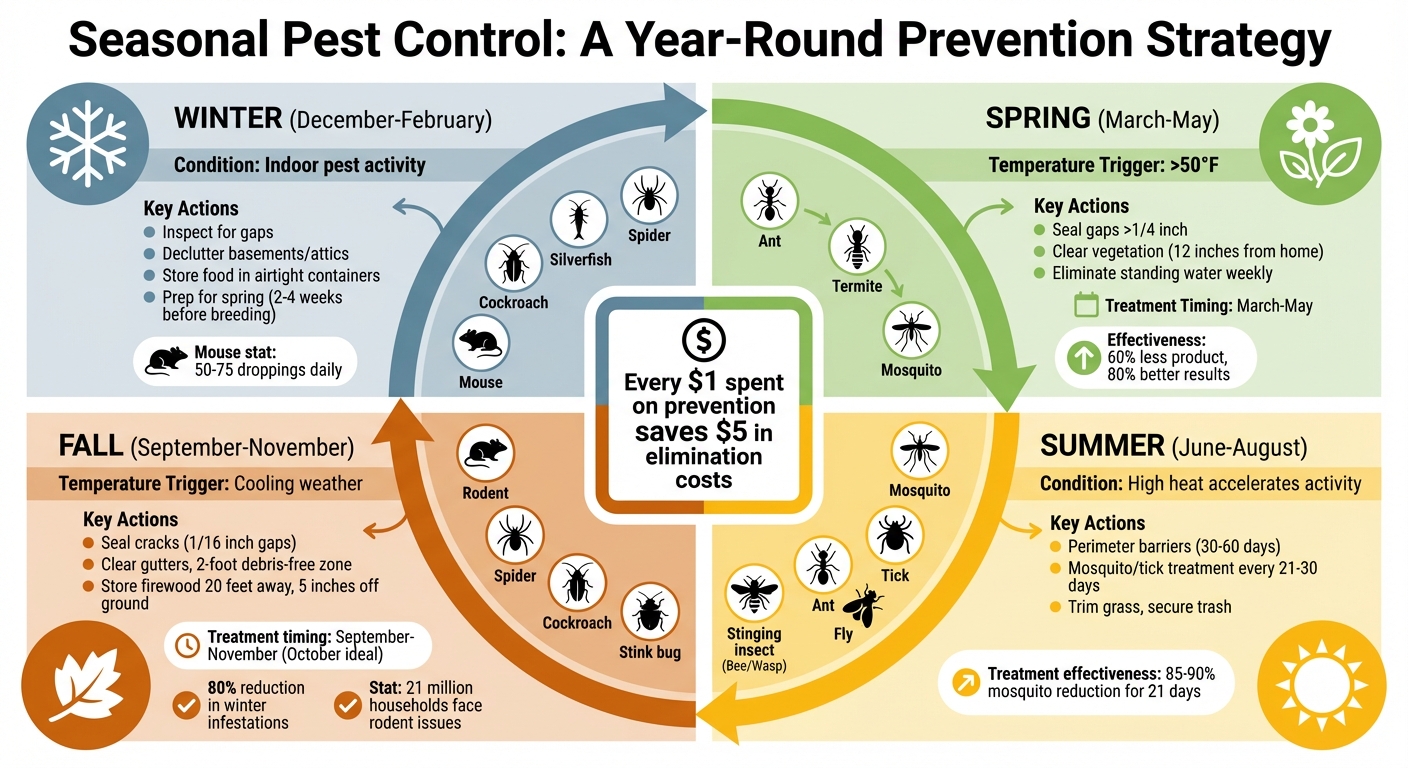
Seasonal Pest Control Guide: What to Treat Each Season
Why You Need Pest Control Every 3 Months (And When to Schedule It!)
sbb-itb-0bbb908
Spring Pest Control: Preventing Infestations Early
Spring is the perfect time to get ahead of pest problems. Once temperatures hit 50°F, pests like ants, termites, and mosquitoes wake from their winter slumber, searching for food and places to settle. Without early intervention, their populations can explode by summer - ant colonies, for instance, can grow 5 to 10 times larger within months.
Tackling pests during their early swarming phase is not only more effective but also more efficient. It uses 60% less product and achieves 80% better results. For termites, which are responsible for $5 billion in annual home damage in the U.S., spring barrier treatments can provide up to 8 years of protection while reducing costs by 20–30%. Starting early makes a big difference in maintaining pest control throughout the year.
Common Spring Pests to Target
Spring brings a variety of pests out of hiding. Ants are among the first to appear, often scouting kitchens and bathrooms for food. Carpenter ants leave behind "frass", a sawdust-like material, near wood structures. Termites are also active from March to May during their swarming season - look for signs like winged insects near your foundation, discarded wings, or mud tubes on walls. Mosquitoes, fueled by spring rains, start breeding in standing water, completing their lifecycle in just 7 to 10 days once temperatures rise.
Other pests to watch for include wasps and carpenter bees. Wasps build small, paper-like nests under eaves, while carpenter bees drill round holes into wood. Spiders may start spinning webs, and fleas often become a nuisance for pets as the weather warms up.
Prevention Methods and Treatments
A few targeted actions can go a long way in keeping pests at bay:
- Seal entry points: Close gaps larger than 1/4 inch around pipes, doors, and foundations.
- Clear vegetation: Trim shrubs and branches to maintain at least 12 inches of space from your home, cutting off easy access for pests.
- Eliminate standing water: Empty water from flower pot saucers, birdbaths, and gutters weekly to disrupt mosquito breeding.
For ants, bait stations placed in March or April can effectively target colonies before they expand. To combat termites, professional-grade barrier treatments around your foundation during their swarming season are highly effective. Address damp or rotting wood and treat exposed surfaces to deter both carpenter ants and termites. Also, deep clean behind appliances and store pantry items in airtight containers to remove food sources that attract ants.
When to Apply Spring Treatments
Timing is everything when it comes to spring pest control. Begin treatments once temperatures consistently exceed 50°F. In southern areas, this can be as early as February to March. Western states like California, Arizona, and New Mexico may see activity in February, while other regions in the West and Central U.S. typically start in March or April. In the Northeast, pest activity usually begins in April or May.
For optimal results, apply treatments on cool, dry mornings, avoiding rainy days that can wash away insecticides. Start treating mosquito breeding grounds in early spring, before warm weather accelerates their lifecycle. The best time to disrupt ant and termite colonies is between March and April. Acting early not only prevents larger infestations but also reduces treatment expenses, aligning with a year-round pest management approach.
Our spring kits are designed to help you get ahead of pests. They include barrier treatments, baiting systems, and larvicides, all made with professional-grade products that are safe for pets and children. With clear instructions, these kits make it easy to take control before pests become a summer headache.
Summer Pest Control: Managing High Activity Levels
Summer is prime time for pests. The heat and humidity create perfect conditions for pests to breed and stay active. By now, pests that started to emerge in spring are thriving, and their populations can skyrocket in just weeks. For instance, a single mosquito can produce hundreds of offspring during the summer. That’s why sticking to regular treatments and follow-ups is crucial to keeping infestations at bay. Summer pest control methods work hand-in-hand with the proactive measures taken in spring to tackle these challenges effectively.
Common Summer Pests and Their Behavior
Mosquitoes
Mosquitoes only need about 0.5 inches of water to breed - about what you'd find in a bottle cap. In humid conditions, they can complete their lifecycle in just 7–10 days. This makes it critical to eliminate even the smallest amounts of standing water every week.
Ticks and Fleas
Ticks and fleas thrive in tall grass and dense vegetation. Over the past 20 years, tickborne disease cases in the U.S. have more than doubled. Fleas, on the other hand, reproduce rapidly in summer heat and often hitch a ride indoors on pets.
Stinging Insects
By midsummer, colonies of wasps, hornets, and yellow jackets are well-established. These insects become more aggressive and territorial in high heat, making outdoor activities riskier.
Ants
Hot, dry weather often drives ants indoors as they search for food and water.
Flies
Flies multiply quickly around trash and organic matter. Biting flies, like deer and horse flies, are especially common in outdoor spaces during summer.
"Summer weather can impact pest populations in different ways. Warm, moist conditions create ideal breeding grounds for ticks and mosquitoes, while hot, dry spells can drive pests like ants indoors in search of food and water."
– Dr. Jim Fredericks, Senior Vice President of Public Affairs, National Pest Management Association
Summer Treatment Methods
Maintaining your yard and home exterior is key during summer months. Perimeter barrier treatments around your home’s foundation can last 30 to 60 days and help keep pests out. For mosquitoes and ticks, treatments every 21 to 30 days are recommended. Professional mosquito treatments, for example, can reduce populations by 85–90% for up to 21 days per application.
To minimize pest activity, keep grass trimmed short and ensure at least 12 inches of space between shrubs and your home. Store outdoor trash in sealed containers and clean them regularly to avoid attracting flies, stinging insects, and rodents. Removing standing water around your property is another must.
For ants and cockroaches, alternating chemical groups every three cycles prevents resistance. Refresh bait stations monthly, especially since cockroach reproduction can increase by 40% when temperatures exceed 85°F.
Timing treatments with favorable weather conditions can make them even more effective.
Weather Factors for Summer Applications
Weather plays a big role in how well pest treatments work. Avoid applying liquid treatments if heavy rain is expected within 12 to 24 hours, as rainfall can wash away the residue and reduce effectiveness. Similarly, high winds can cause treatments to drift, limiting coverage where it’s needed most.
UV rays and extreme heat also break down active ingredients in pest control products. For example, outdoor pyrethroid treatments can remain over 80% effective for 60 to 90 days in dry conditions, but their effectiveness drops to about 42 days when rainfall exceeds 18 inches. Applying treatments during calm, dry weather - ideally in the early morning or late evening - can help maximize their impact.
Our summer pest control kits include barrier treatments, mosquito control products, and baiting systems designed to tackle the season’s toughest pests. With professional-grade formulas that are safe for pets and children, we make it easy to maintain protection all summer long without the hassle of guesswork.
Fall Pest Control: Preparing for Cooler Weather
As temperatures drop, fall becomes the last chance to defend your home against pests seeking shelter. Rodents, spiders, and cockroaches are especially active during this time, looking for warmth, moisture, and safe spaces to overwinter. Each winter, about 21 million U.S. households deal with rodent infestations. Homes with large southern or western exposures, which retain more heat, are particularly attractive to these pests. Think of fall as your opportunity to secure your home before these unwelcome guests settle in for the season.
Common Fall Pests to Watch For
Rodents top the list of fall pests. Mice can squeeze through openings as small as a dime, and a single mouse can leave behind 50 to 75 droppings daily. Once inside, they can chew through wiring, insulation, and wood, potentially causing extensive damage. Spiders often follow their prey indoors, seeking quiet, warm spaces, while cockroaches are drawn to humidity and food sources as the weather cools. Stink bugs and boxelder bugs are also common, clustering on sunny walls before sneaking inside through chimneys, utility lines, or attic vents.
To keep these pests at bay, seal openings and maintain a clean exterior to eliminate potential entry points.
Sealing and Cleaning to Block Entry Points
Even the smallest gaps - just 1/16 inch - can let insects and spiders into your home. Inspect your home's exterior for cracks or openings that could allow pests or cold drafts inside. For small gaps, use caulk or weatherstripping. Larger openings around pipes or utility cables should be filled with steel wool or expandable foam since rodents can't chew through steel wool. Installing door sweeps on all exterior doors is also essential; if you can see light beneath a door, it’s likely a potential entry point.
"The goal is to keep as many pests out as possible while making your home as inhospitable to the few that find their way in."
– Roosevelt Robinson, Alabama Cooperative Extension System
Cleaning is just as important as sealing. Clear gutters and create a 2-foot debris-free zone around your home's foundation to reduce moisture that attracts pests. Trim bushes and tree branches so they don’t touch the house - these can act as bridges for pests. Firewood should be stored at least 20 feet from your home and raised 5 inches off the ground to discourage termites and rodents.
When to Apply Fall Treatments
Once you’ve sealed and cleaned, timing your pest control treatments is key. The best time to apply fall treatments is between September and November, with October being the ideal month for final barrier treatments. Waiting too long increases the chance of winter infestations. Use a liquid barrier treatment around your home’s foundation during this time to intercept pests as they attempt to migrate indoors.
For added convenience, consider fall pest control kits that include professional-grade sealing materials, barrier treatments, and rodent control products. These kits are designed to be safe for both pets and children, giving you peace of mind while protecting your home.
Winter Pest Control: Indoor Protection and Spring Preparation
When winter arrives, outdoor pest activity may slow down, but that doesn’t mean your home is off the hook. House mice, Norway rats, cockroaches, silverfish, and spiders often seek refuge indoors, drawn by warmth and food sources. Meanwhile, termites and carpenter ants remain active year-round, quietly causing damage within walls. Even pests like stink bugs, boxelder bugs, and ladybugs hibernate in wall voids or attics, reappearing when indoor temperatures fluctuate. Winter offers a prime chance to safeguard your home and get ready for the inevitable pest surge in spring.
Indoor Pests Active in Winter
House mice are the most common winter intruders. These tiny rodents can squeeze through openings as small as a dime (about 1/4 inch) and leave behind 50 to 75 droppings daily - adding up to around 25,000 pellets annually. Their droppings can trigger allergies and spread diseases like hantavirus and salmonella. Norway rats are another threat, requiring only a gap the size of a quarter (approximately 1/2 inch) to sneak in.
German cockroaches tend to invade kitchens and bathrooms, leaving pepper-like droppings with an oily smell. Silverfish thrive in damp spaces, and a single female can lay up to 1,000 eggs, potentially damaging books, wallpaper, and clothes. Spiders, including dangerous species like brown recluses and black widows, may also move indoors, posing health risks.
"Because cockroaches can't survive in colder weather, these bugs will infiltrate homes looking for warm, damp spots to overwinter."
– Scot Hodges, Vice President of Professional Development, Arrow Exterminators
To prevent these pests from taking over, take proactive steps. Store food in airtight containers and clean behind appliances where crumbs and grease tend to collect. A dehumidifier can help reduce moisture in basements, making the environment less appealing for cockroaches and silverfish. Also, inspect live greenery like Christmas trees and wreaths before bringing them inside to avoid introducing hidden pests.
Winter Inspection and Maintenance Tasks
Thorough inspections and simple maintenance can make a big difference in keeping pests out. Check your home’s exterior for cracks in the foundation, gaps around utility pipes, and openings near siding, roof eaves, or vents. Even tiny gaps can be a problem - spaces as small as 1/16 inch can let insects in, while holes the diameter of a pencil (about 1/4 inch) are big enough for mice. Seal small cracks with silicone-based caulk and fill larger gaps with steel wool and spray foam to block rodents. Adding door sweeps and weather stripping to windows and doors also helps create a solid barrier.
For attic, roof, and crawl space vents, use 1/4-inch hardware cloth to prevent unwelcome guests like birds, raccoons, and squirrels. Chimney caps are another effective measure.
Winter is also a great time to declutter. Pests love undisturbed areas like basements and attics, especially if they’re full of cardboard boxes or piles of paper. Check behind appliances for signs of pest activity, such as droppings or gnaw marks. Fix any leaky faucets and clear clogged gutters, as moisture attracts pests like cockroaches, termites, and silverfish. And don’t forget about firewood - store it at least 20 feet from your home and keep it off the ground to stop carpenter ants and spiders from hitching a ride indoors.
Planning for Spring Pest Control
Think of winter as your planning phase for spring pest control. Timing is key - schedule treatments 2 to 4 weeks before pests begin their spring breeding cycles. Many pests start reproducing as soon as the weather warms, so early action can help you stay ahead.
Prepare a pest control toolkit with essentials like caulk, foam sealers, copper mesh, and sticky traps. Having these items on hand ensures you’re ready to act as soon as temperatures rise. Winter weather can also create new entry points by damaging structures, so inspect your home thoroughly to seal any cracks or gaps before spring pests exploit them.
For added convenience, consider investing in customized pest control kits. These kits are designed for year-round protection and come with professional-grade, pet- and child-safe products, easy-to-follow instructions, and virtual support for identifying pests. Stocking up now means you’ll be fully prepared to tackle infestations before they even start.
Building a Year-Round Pest Control Schedule
Creating a pest control schedule starts with understanding your local climate and the behavior of pests in your area. Most homes benefit from quarterly treatments, but in warmer regions or areas with high pest activity, monthly treatments might be necessary. Across much of the U.S., pest activity spikes between March and October. Early spring (March–April) is a crucial time to act, as treatments during this period can reduce product use by 60% and improve control by 80% compared to addressing established infestations later in the season.
In southern states, pests like termites can be a year-round concern, while northern states often deal with summer insect surges followed by rodent problems in fall and winter. In arid areas with monsoon seasons, such as Arizona, the rainy months from June to September can lead to increased pest activity due to higher humidity. Below, we break down seasonal treatment plans to help you stay ahead of pest problems.
Monthly and Bi-Monthly Treatment Plans
Treatment schedules should adapt to seasonal changes. During spring (March–May), focus on monthly exterior treatments to create barriers as pests become active. Pre-emergent applications for ants and termites are especially effective during this time. In summer (June–August), shorten treatment intervals to every 21–30 days. High temperatures can cause pest control chemicals to break down faster - up to 60% quicker than in cooler months. Refresh outdoor bait stations monthly and check for standing water weekly to disrupt breeding cycles.
In fall (September–November), prioritize sealing all gaps larger than 1/4 inch before temperatures drop below 55°F. This step, often called "fortress defense", can cut winter infestations by up to 80%. During winter (December–February), shift your focus indoors with monthly inspections. Check attics and basements for rodents, pantry areas for stored-product pests, and use thermal imaging to detect dormant colonies in wall voids. Nearly half of all rodent infestations occur during the colder months.
"Every dollar spent on prevention saves five dollars in elimination costs."
– Beau, Author, Fieldworkhq
Once your treatments are scheduled, regular monitoring ensures that your plan stays effective.
Tracking Pest Activity to Adjust Frequency
Keeping an eye on pest activity helps you adjust your schedule based on actual conditions instead of relying on estimates. During peak pest seasons, conduct weekly property inspections. In slower periods, monthly checks are usually sufficient. Pay special attention to foundations and areas prone to moisture. Sticky traps in basements and attics can help you monitor activity, and keeping a pest log with dates, locations, and photos will reveal patterns over time.
Set clear thresholds to determine when to increase treatments - such as finding more than five German cockroaches on a monitor. Weather also plays a big role. For instance, heavy rainfall (over 465 mm) can shorten the effectiveness of treatments from 60–90 days to just 42 days. If trap counts rise above your thresholds or unusual weather (like early warm spells or delayed freezes) occurs, adjust your treatment schedule immediately.
"Pests come in all seasons. Just because it's wintertime and there's snow on the ground doesn't mean that it's going to be thirty degrees next week; it could be sixty degrees next week. That's going to affect the biology of the insect."
– Ronnie Wright, Pest Pro Leader
Using Customized Pest Control Kits
Managing a year-round pest control schedule is much easier with customized kits tailored to your location and specific pest challenges. These kits include professional-grade products that are safe for pets and children, along with clear instructions for seasonal use. By integrating these kits into your routine, you can maintain consistent protection without the guesswork of DIY treatments.
Having season-specific products ready ensures you can act quickly when pest activity spikes. This proactive approach is far more cost-effective than waiting for infestations to require emergency extermination services. Stocking up now means you'll be prepared to handle pests whenever they appear, keeping your home protected all year long.
Conclusion
Timing your pest control efforts with the seasons is a smarter way to protect your home. Addressing pests during their most vulnerable stages can cut product use by 60% and boost effectiveness by 80% compared to reactive treatments. Think about it - tackling ants in the spring before they establish colonies is far more efficient than dealing with a full-blown infestation in the summer.
Spending just $1 on prevention can save you around $5 in elimination and repair costs. For example, sealing gaps in the fall can reduce winter infestations by up to 80%. These proactive measures not only save money but also lower the chances of dealing with major pest problems.
"Timing makes all the difference between preventing problems and chasing expensive damage."
– George Schulz, Registered Technician, Better Termite and Pest Control
By using seasonal strategies, you create a stronger, more effective pest defense over time. Spring treatments disrupt breeding cycles, summer applications handle peak activity, fall preparations block entry points before temperatures drop below 45°F, and winter monitoring helps catch potential issues early. Each season builds on the last, forming a complete, ongoing defense.
To simplify this process, we offer customized pest control kits tailored to your location and specific pest concerns. These kits include professional-grade, pet- and child-safe products, along with clear, step-by-step instructions. With our kits, protecting your home year-round is straightforward and effective, giving you peace of mind no matter the season.
FAQs
How do I adjust the seasonal schedule for my region’s climate?
To fine-tune your pest control schedule, think about how your local climate impacts pest behavior. For example, in warmer areas, pests may be active earlier in the year and require more frequent treatments. In colder regions, pests often seek shelter indoors during winter, which might call for different strategies. Tailor your approach to the seasons - like addressing mosquitoes during humid summers or sealing up entry points to keep rodents out as temperatures drop. This ensures effective protection no matter the time of year.
What should I do if it rains right after I apply a treatment?
Most modern pest control treatments are designed to withstand light rain, which typically doesn't reduce their effectiveness. In some cases, rain can even help the treatment seep into hard-to-reach areas like cracks and crevices. However, heavy rain right after application might dilute or wash away the product, potentially reducing its impact. Always check the product label for specific instructions about rainfast periods, which indicate how long the treatment needs to set before rain. If heavy rain occurs shortly after application, you may need to reapply to ensure the treatment works as intended.
When should I call a professional instead of DIY pest control?
If you're dealing with a severe or persistent infestation, or tricky pests like termites, rodents, or bed bugs, it’s best to call in a professional. They have the skills and specialized tools to tackle hidden or extensive problems effectively. Plus, when pests pose health risks or require careful chemical treatments, professionals ensure safety and complete removal - especially in hard-to-reach spots like walls, attics, or crawlspaces where DIY methods might not be enough.