


Bees are essential pollinators, supporting over 50 major crops in the U.S. and maintaining biodiversity. However, many pest control methods unintentionally harm bees, leading to colony collapse and reduced agricultural productivity. This article explores how to manage pests effectively without compromising bee health.
Key Takeaways:
- Pesticides and Bees: Many pesticides harm bees through direct toxicity or long-term effects like memory loss and reduced reproduction. Neonicotinoids and pyrethroids are particularly harmful.
- Timing Matters: Apply pesticides in the evening or early morning when bees aren’t foraging. Always check labels for bee safety instructions.
- Integrated Pest Management (IPM): Focus on non-chemical methods like crop rotation, physical barriers, and natural predators to control pests.
- Bee-Safe Products: Use options like insecticidal soaps, horticultural oils, neem oil, or Bacillus thuringiensis (BT), which are safe for bees once dry.
- Attract Beneficial Insects: Encourage natural pest control by planting diverse flowers and providing water and shelter for insects like ladybugs and lacewings.
By adopting these practices, you can protect pollinators while keeping pests under control, ensuring a thriving garden and ecosystem.
Organocide Bee Safe 3-in-1 Garden Spray Pesticide Review and How to Use
sbb-itb-0bbb908
How Bee-Safe Pest Control Works
Bee-safe pest control focuses on methods that protect bees while effectively managing pests. The key lies in selective targeting, which involves using products and techniques that eliminate pests without endangering bees. This means carefully considering how, when, and where treatments are applied.
At the heart of pollinator-safe pest control is Integrated Pest and Pollinator Management (IPPM). This approach emphasizes non-chemical strategies like crop rotation, physical barriers, and increasing habitat diversity. These methods help control pests while supporting beneficial insects, including bees. IPPM starts with identifying the pest and understanding its lifecycle, then choosing the least harmful intervention. A deep understanding of how pesticides impact bees is essential to ensure safe application methods.
How Pesticides Harm Bees
Pesticides can harm bees in two main ways: direct, lethal effects and sublethal effects that weaken colonies over time. Sublethal effects might include impaired navigation, shorter lifespans, reduced learning abilities, and lower reproduction rates. Over time, these issues can significantly weaken a bee colony.
Systemic insecticides, like neonicotinoids, are particularly dangerous. These chemicals are absorbed by plants and spread to all tissues, including nectar and pollen, where they can remain toxic for weeks or even months. Studies show that over 90% of pollen samples from bee hives in agricultural areas contain at least one pesticide. Neonicotinoids can disrupt bee foraging, with up to 40% of trips failing - leaving bees unable to return to the hive or bring back enough food.
The danger increases when pesticides are mixed. For instance, combining a fungicide with an insecticide can create a "synergistic" effect, making the mixture far more toxic than either product alone. Pyrethroids, another class of pesticides, are so toxic that they can kill foraging bees instantly, with an LD50 as low as 0.01 micrograms per bee.
When and How to Apply Pest Control Products
Timing is critical to protecting bees. Pesticides should be applied between sunset and midnight when bees are not actively foraging. This timing allows the product to dry or break down before bees start their activities in the morning. If evening application isn’t possible, early morning - before sunrise - is the next best option, though evening remains safer.
Always check pesticide labels for bee-safety instructions. Labels that say, "do not apply if bees are actively foraging", usually indicate the product is toxic for less than eight hours and should be used in the evening. However, if the label states, "do not apply if bees are foraging" without specifying "actively", it means the product remains toxic for more than eight hours and should never be applied to flowering plants. Look for the "Protection of Pollinators" advisory box and the Environmental Hazards section for detailed guidance.
Application methods also matter. Spot treatments - targeting specific plants or areas - are better than blanket spraying. If treating a lawn or orchard floor, mow first to remove flowering weeds like clover or dandelions, which might attract bees. Granular formulations or liquid sprays are safer options compared to dusts or microencapsulated products, which bees could mistake for pollen and carry back to their hive. To minimize drift and evaporation, spray under calm conditions when wind speeds are between 3 and 9 mph and temperatures are below 85°F. These practices help protect pollinators while keeping pest control effective.
Using Integrated Pest Management (IPM)
Integrated Pest Management (IPM) is a thoughtful approach to pest control that prioritizes reducing chemical use while managing pests effectively. By combining biological, cultural, mechanical, and chemical methods, IPM focuses on keeping pest populations at manageable levels instead of eradicating them entirely.
"The goal of IPM is not to eliminate pests, but to keep pest populations low enough that they do not cause significant damage." – Clemson University Home & Garden Information Center
One of IPM's standout features is its reliance on action thresholds. These thresholds act as indicators, signaling when pest populations or environmental factors reach a point where intervention is necessary. This approach avoids unnecessary pesticide use by prioritizing non-chemical methods and reserving targeted, less-toxic pesticides for when they're absolutely needed.
With the basics of IPM in place, the next step is understanding how to monitor and identify pests accurately to put these strategies into action.
How to Monitor and Identify Pests
Regular monitoring is at the heart of IPM. Check your plants weekly for signs of pests, such as insect droppings (frass), fine webbing, skeletonized leaves, or holes. Use tools like a hand lens or your smartphone to examine the undersides of leaves, where pests often hide.
For proper identification, take clear photos and reach out to your local university Cooperative Extension office or Master Gardener hotline. These resources are invaluable for identifying pests in your region and suggesting tailored solutions. Online platforms like BugGuide.net or Reddit's r/whatsthisbug are also helpful for quick identification.
Keeping detailed records is another crucial step. Track when pest issues arise, the symptoms you notice, and pest population levels. For example, you might decide to act only if you find five aphids per leaf. Weather data can also help you anticipate pest outbreaks and plan interventions accordingly.
In one example from 2020, Emily May of the Xerces Society successfully managed pest outbreaks in her garden. She identified horsemint caterpillars in bee balm and sunflower moth caterpillars in purple coneflowers by spotting dark webbing and frass in flower heads. Instead of widespread pesticide use, she clipped and bagged only the affected flowers, allowing the rest of the plants to thrive.
Combining Biological, Cultural, and Mechanical Methods
Once you've identified the pests, it's time to act. Start with non-chemical methods or a best DIY pest control kit to create an environment that's less hospitable to pests while protecting beneficial insects like bees.
- Cultural controls involve altering your gardening practices. Rotate crops every 3–4 years to disrupt pest life cycles, and choose native or pest-resistant plants like butternut squash or yaupon holly. Proper irrigation, such as drip systems that keep foliage dry, can reduce fungal problems by up to 60%.
- Mechanical controls focus on physically removing pests or blocking their access. Handpick pests in small gardens, use cardboard or foil collars to protect seedlings from cutworms, and install row covers to keep out egg-laying insects. Sticky traps can catch pests like whiteflies, and a strong spray of water can knock aphids off plants, reducing their numbers by up to 70%.
- Biological controls leverage natural predators to keep pests in check. Attract beneficial insects like ladybugs or parasitic wasps by planting flowers such as dill, fennel, or yarrow, which bloom throughout the growing season. You can also purchase beneficial insects - 1,000 ladybugs or 5,000 Trichogramma wasps cost around $15. For caterpillars, Bacillus thuringiensis (Bt) is a bee-safe microbial option.
| Method Category | Specific Examples | Primary Benefit to Bees |
|---|---|---|
| Biological | Ladybugs, lacewings, parasitic wasps, Bt | Reduces reliance on broad-spectrum toxins |
| Cultural | Crop rotation, companion planting, drip irrigation | Prevents pest outbreaks naturally |
| Mechanical | Row covers, handpicking, sticky traps, water sprays | Minimizes chemical exposure for pollinators |
| Sanitation | Removing fallen fruit, cleaning garden debris | Reduces pest nesting sites without sprays |
Natural Pest Control Options That Protect Bees
Natural pest control methods can be a great addition to integrated pest management strategies, offering solutions that are safe for bees once they’ve dried. These methods work by smothering pests, disrupting their growth, or repelling them, providing an effective way to manage pests without harming pollinators.
Horticultural oils and insecticidal soaps are especially useful against soft-bodied pests like aphids, mealybugs, and thrips. These sprays work by either suffocating the pests or damaging their cell membranes. Once dried, they leave no harmful residue, making them safe for bees and other beneficial insects.
Neem oil is another option, known for interfering with the hormonal systems of pests such as whiteflies and beetles. It prevents them from feeding, growing, or reproducing. To create a neem oil spray, mix 1 tablespoon of cold-pressed neem oil with 1 teaspoon of mild liquid soap in 1 quart of warm water. Spray this mixture directly on affected plants, keeping the concentration below 2% to avoid harming your plants.
"By using these oils, you can deliver those benefits directly where you need them, whether the plants will grow there or not. This is a more precise method than companion planting, and it is often more effective." – Melissa Strauss, Beekeeper and Author
For a simple, cost-effective repellent, try a garlic-chili mix. Blend one bulb of garlic with one tablespoon of cayenne pepper and one quart of water. Let it sit overnight, strain the mixture, and add a teaspoon of mild liquid soap. Spray it every 4–7 days or after rain. This mixture works well against beetles, caterpillars, and even small mammals while keeping beneficial insects safe.
Essential Oils and Plant-Based Sprays
Essential oils are another option for targeted pest control with minimal risk to bees. Oils like peppermint and thyme are particularly effective. Peppermint oil can repel aphids, beetles, and spiders, while thyme oil is known to combat whiteflies and varroa mites in bee hives without harming the bees. However, essential oils tend to have a short-lived effect, so they might need frequent reapplication.
For a longer-lasting solution, plant-based sprays like neem or garlic-chili mixes are better suited. To make a custom essential oil spray, combine 10–15 drops of your chosen oil with 1 teaspoon of mild soap in 1 quart of warm water. This allows you to tailor the spray to specific pest problems.
| Solution | Advantages | Disadvantages | Best for Pests Like |
|---|---|---|---|
| Neem Oil | Natural, biodegradable, disrupts pest life cycles | Can harm plants in high concentrations or direct sun | Aphids, whiteflies, beetles |
| Garlic-Chili Mix | Budget-friendly, repels multiple pests, easy to make | Strong odor, requires frequent reapplication | Beetles, caterpillars, aphids |
| Essential Oils | Targeted repellent action, pleasant scent, pet-safe | Short residual effect, may irritate sensitive foliage | Spiders, ants, mosquitoes |
| Insecticidal Soaps | Fast-acting on contact, no harmful residue once dry | Must directly contact pests to work | Aphids, thrips, mealybugs |
| Horticultural Oils | Smothers soft-bodied pests, usable year-round | Can damage sensitive tree species | Mites, scale, aphids |
Before applying any new spray, test it on a small area of the plant and wait 48–72 hours to ensure it doesn’t cause damage. Also, make fresh batches for each use, as stored solutions can spoil or grow mold over time. These natural approaches are a great addition to a bee-safe pest management plan.
How to Choose and Use Bee-Friendly Pesticides
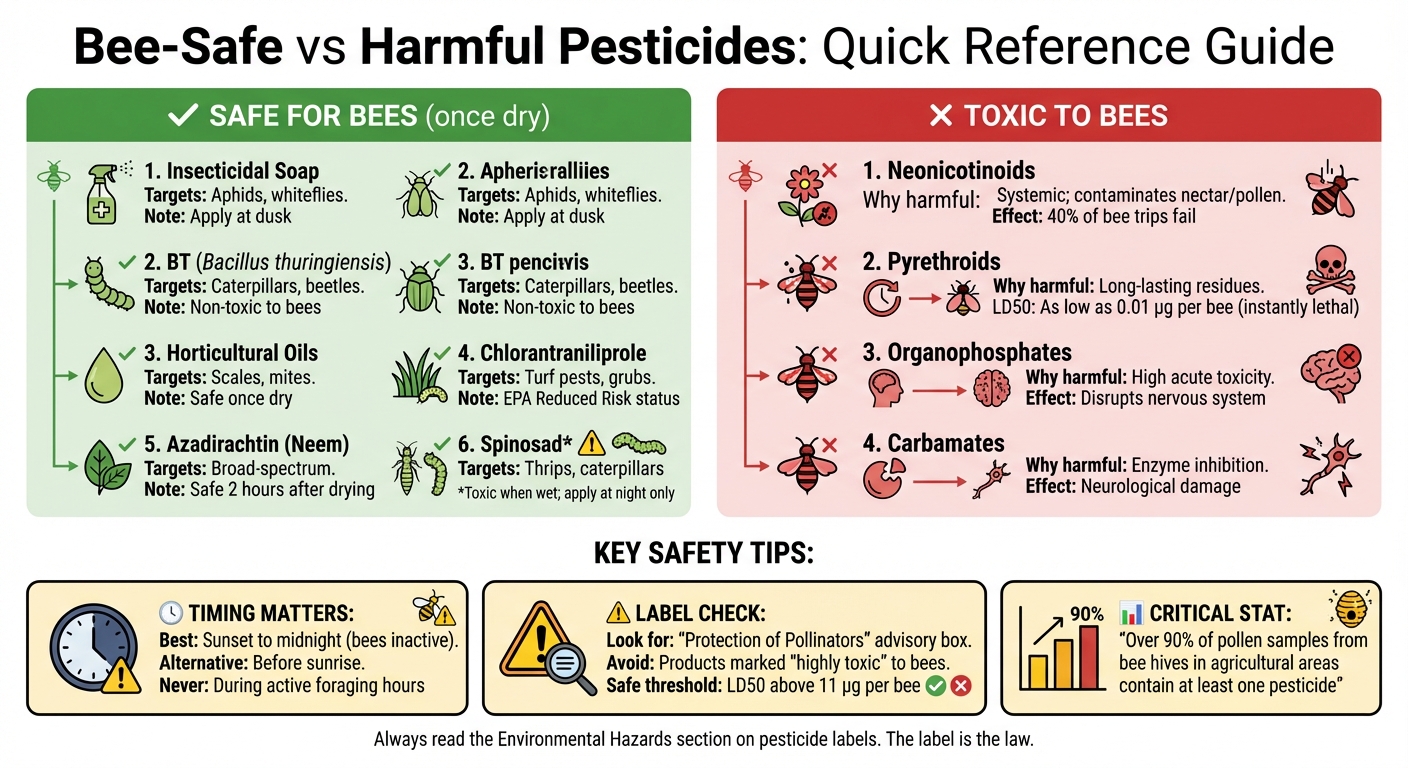
Bee-Safe vs Harmful Pesticides: Quick Reference Guide for Gardeners
When natural pest control methods fall short, selecting the right pesticide kit while protecting bees becomes crucial. The key is to focus on products that target specific pests without causing harm to pollinators. Look for pesticides with high selectivity and short residual activity - these break down quickly and are only harmful when wet. Examples include insecticidal soaps and horticultural oils.
For safer options, check for active ingredients approved under the EPA's Reduced Risk Program. These are designed to minimize toxicity to non-target organisms, including bees. Additionally, examine the LD50 values: pesticides with an LD50 above 11 µg per bee are typically safer, while those below 2 µg are highly toxic.
The formulation of the pesticide also matters. Granular formulations are less risky since they're applied to the soil and can't be carried by bees. On the other hand, dust or microencapsulated formulations can stick to bee hairs and be transported back to the hive.
"The label is the law - it must be followed." – UF/IFAS
Always review the "Environmental Hazards" section on the label. Avoid products marked as "highly toxic" or "toxic" when applying them to blooming plants. Timing is also critical - apply pesticides in the late evening or early morning when bees are not foraging. If necessary, mow blooming weeds in the area before treatment to reduce exposure. The University of California's IPM bee precaution ratings can further guide you in assessing the impact of specific active ingredients on pollinators.
Bee-Safe Pesticide Options
Here are some effective and bee-friendly pesticides:
- Insecticidal Soap: Targets soft-bodied pests like aphids and whiteflies. Leaves no harmful residue once dry, so it's best applied at dusk for maximum safety.
- BT (Bacillus thuringiensis): A bacterium that specifically targets caterpillars and beetle larvae without affecting bees.
- Horticultural Oils: Smothers pests like scales and mites on contact and becomes safe for pollinators once dry.
- Chlorantraniliprole: A modern pesticide with EPA Reduced Risk status. It shows negligible toxicity to bees and is effective against turf pests and grubs.
- Azadirachtin (Neem): Breaks down quickly and becomes safe for bees about two hours after drying.
- Spinosad: Highly toxic to bees when wet but safe after it dries - typically within three hours to a day. Apply only at night when bees are inactive.
It's also important to consider how pesticide combinations can increase toxicity. For example, mixing the fungicide fenbuconazole with the insecticide acetamiprid can amplify harm to bees by up to five times.
Pesticides That Harm Bees
Certain pesticides are highly detrimental to bee health and behavior. These include neonicotinoids, pyrethroids, organophosphates, and carbamates:
- Neonicotinoids: These systemic insecticides are absorbed by plants, contaminating nectar and pollen.
- Pyrethroids: They leave long-lasting residues on plant surfaces and act as irritants to bees.
- Organophosphates and Carbamates: These chemicals have high acute toxicity, interfering with enzymes critical to the bee's nervous system.
"Pesticides known to be harmful when exposed to bees are described as 'highly toxic' or 'toxic' to bees in the Environmental Hazards section of the pesticide label." – Ana Heck, Michigan State University Extension
Even some organic options, like pyrethrins and the fungus Beauveria bassiana, can pose risks to pollinators.
| Pesticide Type | Safe for Bees? | Common Uses | Notes |
|---|---|---|---|
| Insecticidal Soap | Yes (once dry) | Aphids, whiteflies | Safe once dry; apply at dusk |
| BT (B. thuringiensis) | Yes | Caterpillars, beetles | Non-toxic to bees |
| Horticultural Oils | Yes (once dry) | Scales, mites | Works on contact; safe once dry |
| Chlorantraniliprole | Yes | Turf pests, grubs | Negligible toxicity to bees |
| Azadirachtin (Neem) | Yes (once dry) | Broad-spectrum | Safe about 2 hours after drying |
| Spinosad | No (when wet) | Thrips, caterpillars | Highly toxic when wet; safe after drying |
| Neonicotinoids | No | Systemic pests | Toxic; contaminates nectar/pollen |
| Pyrethroids | No | Broad-spectrum | Harmful to beneficial insects |
| Organophosphates | No | Various pests | High acute toxicity |
| Carbamates | No | Various pests | Inhibits essential enzymes |
Attracting Helpful Insects for Natural Pest Control
Transform your yard into a natural defense system by welcoming insects that help control pests. Ladybugs, lacewings, and parasitic wasps are excellent allies in keeping pests at bay, while bees focus on pollination. Since these insects fill different roles in the ecosystem, they rarely compete for resources. To attract these helpers, you’ll need to provide the essentials: food, water, and shelter. This strategy aligns perfectly with bee-friendly practices discussed earlier.
A diverse range of plants is the cornerstone of this approach. By planting a variety of flowering species that bloom at different times, you can support a wide array of beneficial insects. While bees are drawn to tubular flowers, other insects like parasitic wasps and beetles prefer small, flat-topped flowers such as dill, fennel, and yarrow. To keep these insects fed year-round, aim for blooms that span the seasons - from early spring flowers like crocus and willow to late fall blooms like goldenrod and asters.
The impact of these beneficial insects is impressive. They contribute about $13.60 billion annually to pest control services. For example, a single hoverfly larva can devour up to 400 aphids in a day, and a ladybug can clear an entire tomato plant of aphids within 24 hours. These hardworking insects don’t charge a dime - all they need is a welcoming environment.
To make your yard more inviting, go beyond just planting flowers. Provide water by placing shallow dishes filled with pebbles or gravel, allowing small insects to drink safely without the risk of drowning. Leave some garden debris, such as hollow stems, leaf litter, and seed heads, to create overwintering sites for these insects.
Another effective tactic is to let edible crops like cilantro, dill, and basil go to seed and bloom. Their small flowers are irresistible to beneficial insects. You can also plant "insectary strips" of sweet alyssum, marigolds, or cosmos among your vegetables to attract pest predators right where you need them. And here’s a surprising tip: allow a small number of pests to remain in your garden. This ensures a steady food supply for your insect allies, keeping them active and nearby.
Creating Bee-Friendly Spaces While Controlling Pests
Designing a garden that welcomes bees while keeping pests in check starts with plant diversity. Gardens featuring 8–10 different plant species not only help regulate pests but also provide a rich buffet of food options for bees. Including native plants in your garden is a smart move since they’re naturally suited to local conditions. This mix of plants sets the stage for creating a thriving habitat.
The plants you choose can do double duty - repelling pests while attracting pollinators. For example, lavender is a magnet for bees and butterflies but keeps unwanted insects at bay. French marigolds are another great choice; their roots release thiophenes, which suppress harmful soil nematodes for up to a year. If you’re planting sunflowers, consider the "Lemon Queen" variety, which draws up to five times more native bees than other sunflower types. Herbs like rosemary, thyme, basil, and oregano are not only flavorful additions to your kitchen but also help deter pests while offering nectar to pollinators.
To create a complete bee-friendly environment, it’s essential to go beyond plants. Providing nesting sites and water sources can make a big difference. Most native bees in North America forage within just a few hundred yards of their nests. For the 70% of bees that nest underground, leave small patches of bare soil. For overwintering shelter, keep some areas "wild" with features like fallen leaves, hollow stems, or rock piles. Be cautious with organic mulch - it can block ground-nesting bees from reaching the soil if applied too heavily.
Don’t forget water! Place shallow dishes filled with pebbles so bees can drink safely, and refresh the water every few days to avoid mosquito breeding. Deborah Seiler from the Xerces Society highlights the importance of water for bees:
"Providing a shallow source of unpolluted water for bees and wasps can improve their overall chances of nesting successfully by reducing the time they need to forage, as well as their risk of exposure to pesticides".
Some digger bees, for instance, may make up to 80 trips a day just to collect water while building their nests.
When buying plants, it’s worth asking nurseries if their stock has been treated with systemic insecticides like neonicotinoids. These chemicals can linger in plant tissues for long periods, posing risks to pollinators. As Liz Robertson of the Xerces Society points out:
"A home garden truly can thrive without pesticides, and this is one of the most important ways to protect pollinators and beneficial insects in your garden".
Conclusion
Balancing pest control with pollinator protection is crucial for maintaining a healthy ecosystem. Pollinators, including bees, play a massive role in agriculture, contributing around $15 billion annually to U.S. crop production. They also ensure the pollination of more than 80% of fruits, vegetables, and native plants. By adopting bee-safe pest control practices, you're not only protecting these vital species but also supporting the broader food supply and biodiversity.
The key lies in using a combination of strategies. This includes applying treatments when bees are least active, choosing selective and targeted products, and emphasizing non-chemical methods. As Amber Aguilera from the U.S. Fish and Wildlife Service points out:
"Neonicotinoids can be found in garden pest control sprays. While they are designed to target specific pests, they can also be lethal to pollinators".
Integrated Pest Management (IPM) offers a sustainable solution, potentially cutting pesticide use by 50–70% while keeping gardens thriving. This approach involves monitoring pests, setting action thresholds, and encouraging beneficial insects to naturally manage pests. By creating a self-regulating system, you can significantly reduce chemical dependency while protecting pollinators.
At Remedy, we embrace these principles in our DIY pest control kits. Each kit is thoughtfully designed to address your pest concerns while prioritizing bee safety. Our professional-grade products are safe for pets and children, and we provide step-by-step instructions along with virtual support for pest identification. With our help, you can safeguard your home and the pollinators that keep our ecosystems flourishing.
Get Customized Bee-Safe Pest Kits from Remedy

Dealing with pests doesn’t have to come at the cost of harming bees. Remedy has designed kits that address your pest problems while keeping pollinators safe. These kits are customized based on your ZIP code, home size, and specific pest concerns - whether you’re dealing with ants, spiders, scorpions, or any of the 100+ pests our products are designed to manage.
Our approach prioritizes targeted pest control. Instead of widespread chemical spraying, we focus on creating a protective barrier around your home’s foundation, doors, and windows. This method keeps pests out while minimizing exposure to flowering plants, which are vital to bees. Plus, we use products that are not only effective but also safe for pets and children once dry.
"The products we use are of the highest quality and are pet- and child-friendly, and are specifically chosen for the pests you are dealing with." - Remedy
Each kit comes with everything you need: a battery-powered sprayer, gloves, easy-to-follow instructions, and access to our experts for pest identification and application guidance. This ensures you’re applying the right amount of product in the right areas, helping protect beneficial insects while keeping pests at bay.
With over 30 years of pest control expertise, Remedy combines professional-grade protection with a commitment to pollinator safety. Subscribing is simple and flexible. Use code "FREEKIT" to get your first kit free. After that, subscription kits start at under $30, with free shipping on quarterly or bi-monthly plans. There are no contracts - pause, skip, or cancel anytime. This service is designed to protect your home, family, and local pollinators while staying true to our bee-safe principles.
FAQs
How do I know which pests I actually have?
To keep your plants healthy, make it a habit to inspect them often. Look closely at the leaves, stems, and soil for telltale signs like holes, unusual deformities, or even the presence of insects. It's also important to know the difference between pests that harm your plants and beneficial insects, such as pollinators or natural predators that help keep pests in check. By understanding how pests behave and their life cycles, you can time any necessary actions wisely. This way, you can protect your plants without disrupting pollinators or upsetting the natural balance.
What should I do before using any pesticide?
Before reaching for pesticides, it's important to take measures that safeguard pollinators like bees. Start by planting pest-resistant varieties and exploring non-chemical methods such as integrated pest management (IPM). Keep an eye on your plants regularly to catch pest issues early. Learning about the pest’s life cycle and setting acceptable damage levels can help you avoid using pesticides unnecessarily. Also, create habitats for beneficial insects - they can naturally manage pests while reducing risks to pollinators.
How can I treat pests without exposing bees?
To safeguard bees while dealing with pests, turn to integrated pest management (IPM) techniques. These include using biological controls like ladybugs and opting for bee-friendly pesticides. Steer clear of harmful chemicals such as neonicotinoids, and time any pesticide applications for periods when bees are less active - early mornings or late evenings work best. Keep a close eye on pest levels to reduce the need for pesticides, and always select products specifically labeled as safe for pollinators. This way, you can manage pests effectively without putting bees at risk.