


Pests thrive in overlooked areas of your home, taking advantage of warmth, moisture, food, and shelter. Here’s a quick guide to the most common hiding spots and what to watch for:
- Basements: High humidity attracts cockroaches, silverfish, spiders, and rodents. Look for droppings, gnaw marks, and musty odors.
- Attics: Warmth and insulation lure rodents, ants, and termites. Check for scratching noises, droppings, and chewed wires.
- Kitchen Cabinets & Pantry: Food crumbs and moisture invite ants, cockroaches, and pantry pests. Signs include damaged packaging and droppings.
- Behind Appliances: Heat and food debris attract cockroaches and rodents. Watch for grease marks and egg casings.
- Closets: Dark spaces and natural fibers draw moths, silverfish, and crickets. Look for fabric holes and droppings.
- Beds & Sofas: Bed bugs, fleas, and mites hide in seams. Check for bites, shed skins, and stains.
- Bathrooms & Laundry Rooms: Moisture attracts silverfish, cockroaches, and drain flies. Key signs include insects near drains and damaged paper products.
- Cardboard Boxes: Starch and dark spaces attract silverfish, cockroaches, and rodents. Look for chewed edges and shredded material.
- Garages: Food, warmth, and clutter bring in rodents, spiders, and crickets. Check for droppings, nests, and gnawed items.
- Houseplants: Damp soil and decaying matter invite gnats, aphids, and mites. Look for sticky residue and yellowing leaves.
Prevention Tips:
- Seal cracks and gaps around windows, doors, and pipes.
- Replace cardboard boxes with plastic bins.
- Keep food in airtight containers.
- Fix leaks and reduce moisture in humid areas.
- Inspect and clean hidden spots regularly.
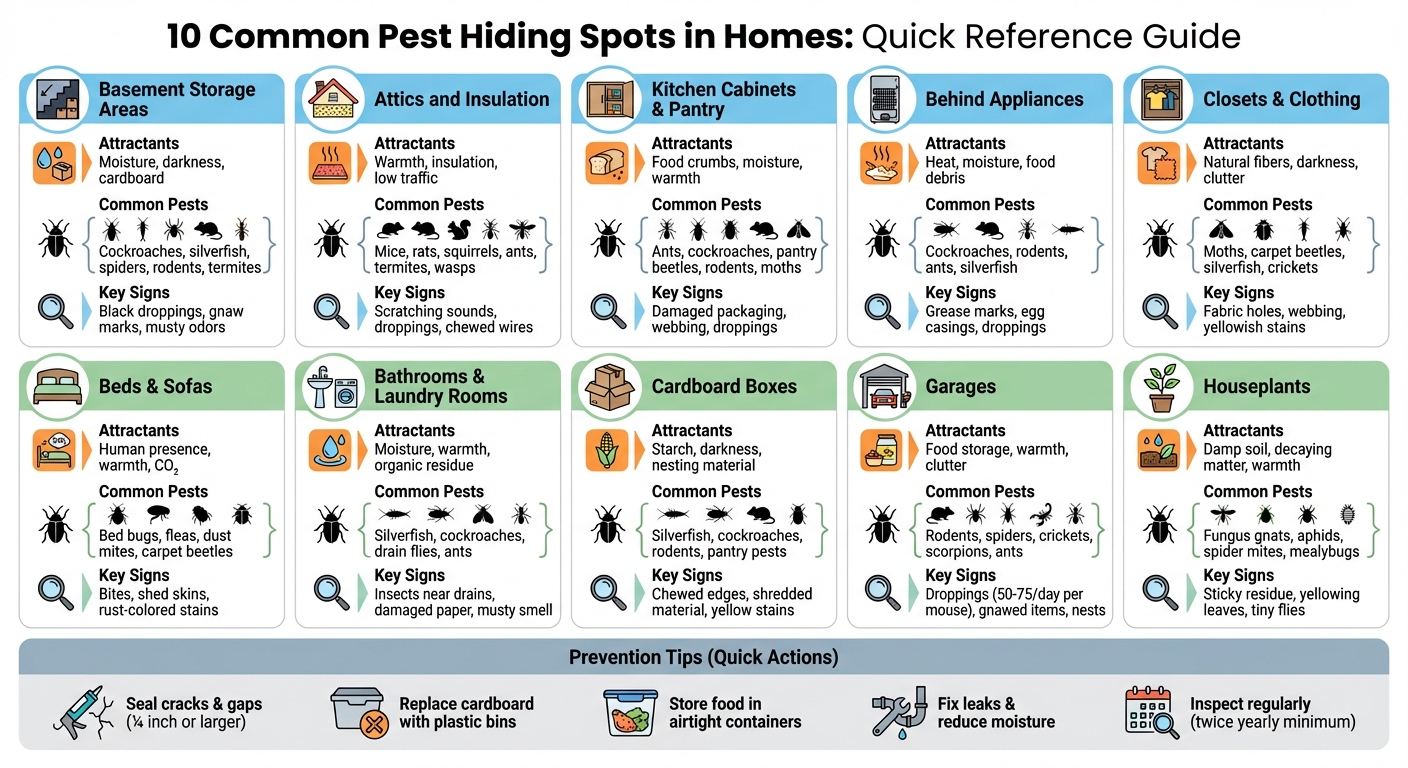
10 Common Pest Hiding Spots in Homes: Quick Reference Guide
Pest Control Secrets: Find & Eliminate Hidden Pests!
sbb-itb-0bbb908
1. Basement Storage Areas
Basements are often a magnet for pests due to their high humidity, darkness, low foot traffic, and abundance of hiding spots. Sitting at or below ground level, basements are prone to moisture issues like condensation on utility pipes, foundation seepage, and dampness around floor drains. These conditions create the perfect environment for pests to thrive.
Common Pests Found
Some of the most common pests lurking in basements include:
- Cockroaches (Oriental and American): Often found near sump pumps and floor drains.
- Silverfish: Typically hiding in cardboard boxes.
- Camel crickets: Preferring spaces behind stored furniture.
- Cellar spiders: Spotted in high corners.
- Mice and Norway rats: Known to nest in insulation or drop ceilings.
- Subterranean termites: Accessing wood through cracks in support beams.
- House centipedes, millipedes, sowbugs, and black widows: Found in various damp, dark areas.
Being familiar with these pests can help you identify early signs of an infestation before it becomes a larger problem.
Key Signs of Pest Activity
Keep an eye out for these telltale signs of pests:
- Black droppings along baseboards
- Gnaw marks on boxes, wiring, or fabrics
- Holes in stored items
- Greasy rodent trails
- Spider webs, shed skins, and egg casings
- Mud tubes on foundation walls
- Musty odors or nocturnal chirping and scratching noises
Spotting these signs early can prevent serious damage and make pest control easier.
Inspection Tips
Conduct thorough inspections to catch pests before they multiply:
- Use a flashlight to check dark corners, wall voids, and behind appliances.
- Look for nesting signs in drop ceilings and utility chases.
- Examine foundation walls for cracks or mud tubes.
- Pay attention to moisture-prone areas like floor drains.
To minimize pest activity, replace cardboard boxes with sealed plastic bins, as cardboard attracts pests and retains moisture. Elevate stored items off the floor and leave some space between boxes and walls to improve airflow and make inspections easier. Small preventive steps like these can go a long way in keeping your basement pest-free.
2. Attics and Insulation
Attics tend to be a magnet for pests. They’re dark, warm, and rarely disturbed - basically the perfect hideout. Plus, insulation offers excellent nesting material, allowing rodents and insects to burrow, breed, and stay hidden [19,22].
Why Pests Are Drawn to Attics
Several factors make attics irresistible to pests. Their seclusion is a big draw since most homeowners only venture up there a few times a year. The consistent temperature provides warmth during winter and shields pests from summer heat. On top of that, moisture from roof leaks or poor ventilation creates a haven for insects like silverfish and cockroaches [19,22,23]. Add in stored cardboard boxes and fabrics, and you’ve got plenty of nesting material and even food sources [21,23].
Common Pests You Might Find
Attics can become home to a variety of pests. Rodents like mice, roof rats, and squirrels are frequent visitors. Insects such as ants, cockroaches, silverfish, termites, and even wasps may move in [16,20,21,22]. Occasionally, larger animals like bats, raccoons, birds, or even snakes might find their way inside. Squirrels, for instance, are active during the day and might stash acorns in the insulation. Meanwhile, rats are nocturnal and can often be heard making "thudding" noises between 10 PM and 4 AM.
Signs Your Attic Has Pests
Keep an ear out for scratching or scurrying sounds at night - this usually points to rodents. A musty or ammonia-like smell could indicate waste buildup, especially from bats [19,20]. Damage to insulation, like shredding, flattening, or discoloration, is another red flag [19,22,23]. Look for dark, spindle-shaped droppings (about ½ inch long for rats), chewed wires, and greasy rub marks along rafters, all of which signal an infestation [19,23].
How to Inspect Your Attic
Spotting these signs means it’s time for a closer look. Inspect your attic at least twice a year - spring and fall are ideal - with a strong flashlight or use a Quarterly Pest Remedy Kit for year-round protection [19,20]. Turn off the lights to check for gaps where daylight seeps in, as these could be entry points. Mice can fit through openings as small as a dime (½ inch), and bats need just ⅜ of an inch [20,21,23]. Seal gaps with steel wool, metal flashing, or hardware cloth - avoid relying solely on expanding foam, which pests can chew through [20,23]. Trim tree branches to keep them 8 to 10 feet away from your roofline, cutting off easy access for squirrels and rats. Swap out cardboard boxes for sealed plastic bins to limit nesting materials. Always wear gloves and a mask during inspections to protect yourself from airborne contaminants [20,23].
3. Kitchen Cabinets and Pantry
Your kitchen is a haven for pests, offering food, warmth, moisture, and dark hiding spots. Dr. Jim Fredericks, a board-certified entomologist, emphasizes this point: "Finding a kitchen pantry is like hitting the jackpot for pests. Not only is there ample food, but the warm, dark conditions offer the perfect hiding spot". Here's what you need to know about why pests are attracted to your kitchen, the types of pests you might encounter, signs of their presence, and how to inspect effectively.
Attractants
Kitchens are incredibly inviting to pests due to the combination of accessible food and moisture. Grains like flour, cereal, pasta, and rice are prime targets, along with spices, pet food, and sugary snacks. Add in moisture from plumbing and warmth from appliances, and you've got the perfect pest paradise.
Common Pests Found
Stored product pests are the main culprits in pantries. Indian meal moths are particularly troublesome - a single female can lay up to 200 eggs in just one week. Other offenders include sawtoothed grain beetles, which can slip into sealed packages, along with flour beetles, weevils, and cigarette beetles that often target spices like paprika and chili powder. Beyond these, general household pests like ants, cockroaches, and rodents frequently make an appearance. Mice and rats are especially sneaky, needing only a dime- or quarter-sized gap to gain entry.
Key Signs of Pest Activity
Certain signs can clue you in to a pest problem. Look out for silken webbing or clumps in dry goods - classic indicators of Indian meal moths. Tiny holes in packaging are another red flag. For rodents, dark, pellet-like droppings about ¼ inch long are a clear sign. You might also spot live insects on shelves, moths near lights, or hear scratching noises at night. If there's a musty or oily smell, it could point to cockroaches or rodent waste.
Inspection Tips
Regular kitchen inspections are essential to keeping pests at bay. Start by checking grocery packaging for damage, webbing, or small holes before bringing items home. Use a flashlight to examine dark corners, the backs of cabinets, and spaces under the sink. Empty cupboards periodically to clean shelves with soap and water and vacuum up crumbs or flour dust. To prevent infestations, transfer dry goods into airtight containers made of glass, metal, or heavy-duty plastic. For items like birdseed or bulk grains, freezing them for five to seven days after purchase can kill any hidden eggs. Finally, seal gaps larger than ¼ inch around baseboards, pipes, or utility lines using silicone caulk or steel wool to block pest entry points.
4. Behind and Under Appliances
The spaces behind and beneath large appliances like refrigerators, dishwashers, ovens, and washing machines often go unnoticed - even though they’re prime hiding spots for pests. As Tranquility Pest Control puts it, "Behind that fridge could be a dark little pocket where crumbs, condensation, and silence draw in cockroaches like magnets". These areas combine warmth, moisture, and food debris, creating an ideal environment for unwanted visitors. Regular inspections and using a DIY pest control kit are just as important as those in basements or attics.
Attractants
These hidden zones provide everything pests need to thrive: heat, moisture, and food. Refrigerators and dishwashers often have condensation trays or leaks that create damp conditions. Add to that grease splatters behind stoves, crumbs beneath refrigerators, and food residue near dishwashers, and it’s easy to see why pests are drawn to these spots.
Common Pests Found
Some of the usual suspects include cockroaches (especially German and brown-banded varieties), rodents that chew on wires and nest in small spaces, and ants foraging for food. Silverfish may show up in damp areas, while fruit flies can breed in organic residue. Spiders also tend to spin webs in undisturbed corners.
Key Signs of Pest Activity
Keep an eye out for telltale signs like pellet droppings, egg casings, shed skins, and grease marks. Gnawed wiring or insulation is another red flag, as rodents often chew on electrical cords, which can even lead to fire hazards. You might also find nesting materials such as shredded paper or fabric tucked into motor compartments or insulation.
Inspection Tips
Move large appliances away from the wall at least once a month to vacuum up crumbs and debris. Use a high-powered flashlight to check dark corners thoroughly. Inspect refrigerator condensation trays and dishwasher hose connections for leaks or standing water. For smaller appliances, shake out crumbs and use canned air to clean tight spaces. Seal any gaps around utility pipes or electrical lines with caulk or foam to block pest entry points. Evening inspections can be especially effective since nocturnal pests like cockroaches and crickets are more active then.
5. Closets and Clothing Piles
Closets often become prime hiding spots for pests. Their dark, undisturbed spaces, combined with the presence of organic materials, create an inviting environment for fabric-eating insects and moisture-loving pests. As Dr. Thomas Orbert, PhD in Entomology, explains:
"Identifying the pest is critical to closet bug control. Regular inspection and maintenance are vital for preventing bugs in the closet."
To keep pests at bay, closets need regular care and attention.
Attractants
Closets provide the perfect conditions for pests to thrive. Many are drawn to keratin, a protein found in animal fibers like wool, silk, and fur. Clothing with perspiration, body oils, food stains, or even dead skin cells makes an even more appealing target. Humidity is another factor - silverfish and firebrats, for instance, prefer temperatures above 70°F. Add clutter and cardboard boxes to the mix, and you’ve created extra hiding spots and food sources for these unwanted visitors.
Common Pests Found
The most common culprits behind fabric damage are clothes moths and carpet beetles. Their larvae produce enzymes that break down keratin, enabling them to feed on natural fibers. Adult carpet beetles can lay as many as 100 eggs in their short lifespan. Silverfish, on the other hand, feast on starches and adhesives and can live for two to eight years. Other pests, like cockroaches and crickets, often seek shelter in dark corners, while mice may use closets for nesting, shredding fabrics to create cozy spots for their young.
Key Signs of Pest Activity
Watch for irregular holes in natural fabrics and silky webbing on walls or ceilings - these are telltale signs of carpet beetle or clothes moth infestations. Small cases attached to walls or ceilings often indicate a webbing clothes moth issue. Carpet beetles may leave behind shed skins and tiny droppings about the size of salt grains . Silverfish can stain items with yellowish marks, while cockroaches emit a musty odor and leave droppings resembling coffee grounds. Dead adult beetles or moths near windowsills, especially in spring, can also indicate an infestation.
Inspection Tips
Start by completely emptying your closet to access hidden areas. Use a strong flashlight to inspect wall-floor junctions, behind shelves, and along baseboards. Pay close attention to rarely used items, like seasonal or heirloom clothing, as these are more likely to attract pests. When examining garments, check under collars, along seams, and inside folds. Always wash worn clothes before storing them - laundering removes the sweat and oils that attract pests. Vacuum the floors and corners thoroughly, and dispose of the vacuum contents outside to prevent reinfestation. For added protection, store seasonal clothing in airtight containers.
6. Beds, Sofas, and Upholstered Furniture
These cozy spots in your home might seem harmless, but they provide pests with warmth, CO₂, and dark hiding places. As Adrian Nita from Pest Gnome puts it:
"Bed bugs are masters of hide and seek that can turn your sweet dreams into full-on nightmares quicker than you can say 'Goodnight!'"
Attractants
Beds, sofas, and upholstered furniture create the perfect environment for pests. Bed bugs and fleas are drawn to human blood, while dust mites thrive on the CO₂ you exhale and the dead skin cells you shed. Carpet beetles and crickets are attracted to natural fibers like wool, cotton, and silk. Even the heat from nearby electronics, such as TVs and gaming systems, can lure pests to your furniture.
Common Pests Found
Bed bugs are infamous for invading these areas. A single adult female can lay between 200 and 500 eggs in her lifetime. Fleas, often brought in by pets, settle into mattress seams and cushions. Carpet beetles burrow into furniture padding to feed on natural fibers, while dust mites thrive in mattresses and pillows where dander builds up. Crickets, which can live for up to 90 days, may also find a home in your furniture. Recognizing these pests is the first step in addressing the problem.
Key Signs of Pest Activity
Evidence of pests includes reddish-brown fecal spots or rust-colored stains on linens, which are telltale signs of bed bugs. Shed skins, pale eggs, or live insects hiding in seams are also common indicators. Fleas leave small black specks in pet bedding, and pets may scratch excessively or lose hair. Carpet beetles often leave irregular holes in fabric, while crickets leave small, black, ball-shaped droppings and may chirp at night. A strong, musty odor could signal a serious bed bug infestation. Spotting these signs early can help you take action before the problem worsens.
Inspection Tips
To inspect your furniture thoroughly, use a bright flashlight to check mattress seams, box spring corners, headboards, and the undersides of couch cushions. Slide a credit card through tight crevices to dislodge hidden pests or eggs . Remove plastic corner protectors from box springs, as they are common hiding spots. A hair dryer on low heat can help coax bed bugs out of crevices. Early morning, about an hour before dawn, is the best time to check, as bed bugs are most active then. If you’re purchasing secondhand furniture, always steam-clean it thoroughly before bringing it inside to avoid bringing pests into your home .
7. Bathrooms and Laundry Rooms
Bathrooms and laundry rooms might seem like the cleanest areas in your home, but they can be magnets for pests. These spaces provide the essentials insects need: water, warmth, and unexpected food sources. As Erin Richardson, Owner/CEO of All-American Pest Control, puts it:
"Bathrooms are basically bug paradise. Warm, humid, full of moisture, and often with plenty of dark little hiding spots, they check all the boxes pests are looking for."
Why These Areas Attract Pests
Both bathrooms and laundry rooms offer an abundance of moisture. Leaky faucets, steamy showers, and damp tubs create an ideal humid environment. Laundry rooms add warmth from dryers and washing machines, plus lint that can trap organic debris.
Pests also feed on unexpected residues like toothpaste, soap scum, shampoo, hair, and skin oils that build up on surfaces and drains. Silverfish, for instance, are drawn to the starch in toilet paper rolls and wallpaper, while drain flies thrive on the organic buildup inside pipes.
Common Pests You’ll Find
- Cockroaches: These pests love warm, moist spaces and hide in cracks, under sinks, and around tiles. They can survive a month without food but only a week without water.
- Silverfish and firebrats: High humidity is their playground. Their presence often signals long-term moisture issues.
- Drain flies: These tiny, fuzzy, moth-like insects breed in the slimy buildup inside pipes and often hover near sinks or tubs.
- Ants: Pharaoh and Carpenter ants are drawn to damp wood and leaky plumbing areas.
- House centipedes and spiders: These predators hunt smaller insects in bathrooms and laundry rooms.
- Crickets: Attracted to warmth and moisture, they can live up to 90 days.
Telltale Signs of Pest Activity
Here’s a quick guide to identifying pests in these areas:
| Pest | Attractants | Signs of Activity |
|---|---|---|
| Silverfish | Humidity, toothpaste, damp paper | Metallic-colored insects, silvery scales, damage to wallpaper or linens |
| Drain Flies | Organic buildup in pipes | Tiny, fuzzy insects near sinks or tubs; powdery smudges when crushed |
| Cockroaches | Standing water, soap scum, warmth | Sightings near drains, egg casings, droppings in dark corners |
| Crickets | Warmth, moisture, fabrics | Chirping at night, small black droppings, fabric damage |
| Springtails | High humidity, organic debris | Tiny insects that jump when disturbed, often found in tubs or near sinks |
Spotting even one cockroach during the day could signal a hidden infestation. Look for holes in paper products left by silverfish or listen for the chirping of crickets at night. Bubbling paint or hollow wood trim might also point to termite damage in damp areas.
How to Inspect and Prevent Problems
Use a flashlight to check behind toilets, under sinks, around washing machines, and near floor drains for signs of dampness, musty smells, or organic buildup. Don’t forget to inspect dryer vents; lint and heat can attract pests. Sticky traps placed behind toilets or inside cabinets can help monitor activity, or you can use a Bi-Monthly Pest Remedy Kit for ongoing protection.
To keep pests at bay:
- Run exhaust fans for 20–30 minutes after showers to lower humidity.
- Scrub drains regularly with a sturdy brush and flush with boiling water or a mix of baking soda and vinegar to clear buildup.
- Wipe down sinks, tubs, and showers after each use to eliminate standing water.
- Avoid leaving damp towels or dirty laundry on the floor, as they provide hiding spots for pests like silverfish and roaches.
Regular cleaning and maintenance are your best defenses against pests in these humid spaces. Stay on top of upkeep, and you’ll make these rooms far less inviting for unwanted visitors.
8. Cardboard Boxes and Paper Clutter
Attractants
Cardboard boxes aren't just storage solutions - they're also a magnet for pests. The corrugated layers in cardboard contain starch-based glue, paper cellulose, and even nutrients from printer ink. As Jennifer Gillett-Kaufman from the University of Florida points out:
"Silverfish typically feed on items high in protein, sugar, or starch, such as paper with glue or clothing with starch".
Cardboard doesn’t just serve as a food source; it also offers pests an ideal breeding environment. Jeffrey Chase Wallace, the owner of Paragon Pest Control, explains:
"They [German cockroaches] love tight, dark spaces, and cardboard provides exactly that - like a perfect nursery".
A single female German cockroach can lay 30 to 40 eggs in the safety of these corrugated folds. Stacked boxes trap moisture and odors, creating the humid conditions pests crave. Rodents, meanwhile, often shred cardboard to build soft, insulated nests for their offspring .
Common Pests Found
Cardboard storage areas can attract a range of pests, including silverfish, cockroaches (German, American, and Oriental varieties), crickets, termites, booklice, ants, and even mice . Pantry pests, such as Indian meal moths, sawtoothed grain beetles, cigarette beetles, and warehouse beetles, are notorious for chewing through cardboard food packaging. Spiders may also lurk between boxes, using the gaps as hunting grounds for other insects .
Key Signs of Pest Activity
Certain clues can indicate pest infestations in cardboard or paper storage areas. Look out for:
- Irregular holes in paper or chewed edges on cardboard
- Small, black droppings (a sign of crickets)
- Yellow stains or silvery scales left by silverfish
- Silky webbing inside boxes, which could point to pantry pests
- Shredded paper piles that resemble loose nests, signaling rodent activity
You might also spot tiny, silvery insects darting away when the lights are turned on, another telltale sign of silverfish.
Inspection Tips
To check for pests, grab a flashlight and carefully inspect the seams and corners of cardboard boxes, focusing on areas where glue is concentrated. Move boxes away from walls to uncover hidden nests, droppings, or entry points . Pay special attention to low-traffic spaces like basements, attics, or the back of closets, where boxes often sit undisturbed. When you shift a stack, watch for insects scurrying to hide and look for gnaw marks, yellow stains, or translucent scales - indicators of pests like silverfish .
For long-term storage, swap cardboard boxes for sealed plastic containers. This eliminates both food sources and hiding spots for pests . To prevent new infestations, unpack delivery boxes outside or in your garage and recycle them immediately to stop pests from hitching a ride into your home .
9. Garages and Entry Gaps
Attractants
Garages are more than just a home for your car - they often become a haven for pests too. As PestWorld.org puts it:
"The garage is meant to give shelter to your car... It also shelters various bugs and rodents".
Food sources like bird seed, pet food, and trash left in garages can lure in rodents and ants. Add moisture from leaky pipes or condensation, and you’ve got the perfect setup for silverfish, crickets, and sowbugs. When temperatures drop, the warmth from water heaters, car engines, or furnaces becomes irresistible - mice are even known to nest in engine compartments for heat. On top of that, clutter like cardboard boxes, old furniture, or seasonal decorations provides dark, undisturbed places where pests thrive.
Common Pests Found
Garages are a magnet for all kinds of pests. Rodents like deer mice and rats are frequent visitors, while insects such as silverfish, camel crickets, carpenter ants, cockroaches, ground beetles, flies, and termites are also common. Spiders - including wolf spiders, cellar spiders, brown recluses, and black widows - may settle in, and scorpions could show up in certain areas. Occasionally, snakes might follow rodents into the garage, and pill bugs (sowbugs) often cluster in damp spots.
Bob Vila offers a warning:
"If you find a pill bug in your garage, take heed. The pill bug's presence might alert you to rotting framework near the foundation".
Key Signs of Pest Activity
Spotting pest activity in a garage isn’t too difficult. Droppings are a telltale sign - a single mouse can leave behind 50 to 75 droppings a day. Look for damage like gnawed wires, chewed insulation, or holes in cardboard. Wooden framing with "Swiss cheese" patterns is another clue. You might also hear squeaking or scurrying at night, or crickets chirping loudly (sometimes over 100 decibels). Nesting materials like shredded paper, spider webs, or termite mud tunnels are additional red flags.
Inspection Tips
Start by checking garage door thresholds, pipe penetrations, and vent gaps - remember, mice can squeeze through openings as small as 1/4 inch. Walk around the garage’s perimeter and look for any gaps where daylight shines through siding or door thresholds. Since many pests, like crickets and scorpions, are more active at night, it’s worth inspecting the space after dark. Tap on wooden framing to listen for hollow sounds, which might indicate termite damage. To keep pests out, seal gaps with materials like steel wool, copper mesh, or silicone-based caulk, and install snug-fitting garage door sweeps.
10. Houseplants and Indoor Plants
Even our beloved houseplants can turn into unexpected havens for pests. Without regular care, they may invite unwanted guests.
Why Pests Are Drawn to Houseplants
Indoor plants create an appealing environment for pests because of factors like damp soil, decaying potting mix, and the warm, moist air inside our homes . Interestingly, while most pests love moisture, spider mites thrive in dry, warm conditions, especially when leaves are dusty . Kelley Hamby, an Entomology Professor at the University of Maryland, notes:
"Fungus gnats are often a symptom of overwatering".
Common Culprits in Indoor Plants
The usual suspects include aphids, fungus gnats, mealybugs, spider mites, scale insects, thrips, and whiteflies . Spider mites and thrips are tiny, typically measuring less than 1 millimeter . Aphids, on the other hand, reproduce quickly - completing their life cycle in just two to three weeks, which can lead to rapid infestations. Less frequent invaders like springtails, leaf miners, ants, slugs, and snails may also make an appearance .
Clues That Pests Are Present
Certain signs can alert you to pest activity. Sticky residue (honeydew) and black sooty mold on leaves often indicate aphids, scale insects, mealybugs, or whiteflies . Yellowing, curling, or distorted leaves can point to an issue, as can stippling or silvery speckling . Other red flags include fine webbing from spider mites, cottony white fluff from mealybugs, waxy bumps on stems from scale insects, tiny black flies near the soil signaling fungus gnats, or silvery streaks caused by thrips .
How to Inspect Your Plants
A quick 5-minute weekly check can help you spot problems early . Pay close attention to the undersides of leaves, leaf axils (where the leaf meets the stem), and the soil surface . Paris Lalicata, Head of Plant Education and Community at The Sill, offers this advice:
"Only bringing in plants that are pest free will help to reduce transmission to other plants, as well as ensure you're choosing one that is happy and healthy from the start".
To prevent spreading pests, quarantine new plants for 1–2 weeks before introducing them to your collection . Use tools like a magnifying glass to spot tiny pests like mites, and a flashlight to inspect dark corners . Let the topsoil dry between waterings and wipe leaves weekly to remove dust and pests before they become a bigger issue .
If you find pests, Remedy offers specialized kits that are safe for both pets and children, designed to handle indoor infestations effectively. Learn more at Remedy.
Comparison Table
Here's a quick reference table summarizing the common pest hiding spots, what attracts them, the pests you might find, signs of their presence, and suggested treatments.
| Hiding Spot | Attractants | Common Pests | Key Signs | Suggested Remedy Treatment |
|---|---|---|---|---|
| Basement Storage Areas | Moisture, dark corners, cardboard boxes | Rodents, spiders, termites, cockroaches | Droppings, shredded paper/boxes, musty odors | Use perimeter spray around the foundation and interior baseboards |
| Attics and Insulation | Warmth, nesting material, low traffic | Rodents, spiders, silverfish | Scurrying noises at night, gnawed wires, droppings | Spray around eaves and entry points |
| Kitchen Cabinets and Pantry | Food crumbs, spills, moisture under sinks | Ants, cockroaches, pantry beetles, rodents | Damaged food packaging, "coffee ground" droppings | Apply spray along baseboards, under-cabinet gaps, and around plumbing penetrations |
| Behind and Under Appliances | Warmth from motors, grease, condensation | German cockroaches, ants, rodents | Egg casings, grease streaks, droppings | Spray gaps behind refrigerators, ovens, and dishwashers |
| Closets and Clothing Piles | Natural fibers (wool, silk), dark shelter | Moths, silverfish, crickets, spiders | Holes in fabric, ragged edges, small black pellet droppings | Spray closet baseboards and corners |
| Beds, Sofas, and Upholstered Furniture | Human/pet presence, crumbs, tight gaps | Bed bugs, fleas, spiders, cockroaches | Bites, shed skins, egg cases in furniture joints | Treat floor-level gaps and furniture joints with spray |
| Bathrooms and Laundry Rooms | High moisture, floor drains, warmth | Cockroaches, silverfish, drain flies, ants | Scurrying near drains, sightings in sinks/tubs | Spray around plumbing lines and baseboards; avoid spraying directly into drains |
| Cardboard Boxes and Paper Clutter | Starch/glue, nesting material | Silverfish, cockroaches, rodents | Shredded material, yellow stains, droppings | Apply perimeter spray and treat storage area perimeters |
| Garages and Entry Gaps | Pet food, warmth, outdoor access | Rodents, spiders, crickets, scorpions | Grease marks on walls, gnaw marks on door seals | Heavy perimeter spray at garage door thresholds and foundation |
| Houseplants and Indoor Plants | Moisture, organic soil matter | Ants, gnats, spiders | Visible insects on leaves or soil | Spray around plant bases and nearby entry points; avoid spraying directly on plants |
Our pest control kits are tailored to your zip code, considering factors like local climate and pest activity. We also adjust for your home’s square footage to ensure you receive the right amount of product. Each treatment typically lasts up to 60 days, though weather conditions can affect this. Fun fact: cockroaches can live a month without food but only a week without water, so targeting moisture-prone areas is crucial for disrupting their life cycle.
Conclusion
Keeping an eye on basements, attics, behind appliances, and other often-overlooked spots is your best defense against pests that can quickly become a major problem. As PestNation puts it:
"Pests succeed not because homes are unclean, but because they exploit spaces homeowners rarely think to check".
These hidden spaces can become safe havens for pests that may lead to serious health concerns and costly damage. Detecting infestations early can stop cockroaches from spreading harmful bacteria like E. coli and Salmonella, and prevent rodents and termites from wreaking havoc on wiring and wooden structures. Allison Pest Control drives home the importance of vigilance:
"Early detection is crucial when dealing with pests. Regular inspections help identify signs of an infestation before things escalate".
For a proactive approach, our DIY kits provide professional-grade, pet- and child-safe solutions at a fraction of the cost. Designed to suit your zip code and specific pest challenges, these kits create a protective barrier around your home that lasts up to 60 days, depending on weather conditions. Plus, new customers can try a free kit by using the code "FREEKIT" at checkout.
To stay ahead of pest problems, focus on these key steps:
- Fix leaky pipes to remove moisture sources
- Replace cardboard storage boxes with sealed plastic bins
- Seal cracks around windows, doors, and baseboards
- Reapply treatments every 60 days to maintain protection
FAQs
How often should I inspect these hiding spots?
You should check typical pest hiding spots in your home every 3 to 6 months. This routine helps you spot early signs of infestations and stops pests from making themselves at home. If you've dealt with pest problems before or live in a high-risk area, it’s a good idea to inspect even more often - about every 3 to 4 months. Staying consistent with these checks is key to keeping your home pest-free and tackling any issues quickly.
What’s the fastest way to find where pests are getting in?
To identify where pests might be sneaking in or hiding, start by inspecting common entry points and hidden areas. These include cracks, gaps, attics, basements, and the spaces behind appliances or furniture. Keep an eye out for telltale signs like droppings, gnawed wires, or webbing. Don't forget to check less obvious spots like utility line openings, vents, and wall cavities.
Once you’ve identified potential entry points, seal them up using steel wool or caulk to block access. Also, pay attention to any scratching or scurrying noises - they can often lead you straight to the problem areas.
When should I handle it myself vs call a pro?
Deciding whether to tackle pest control yourself or call in the pros depends on the situation. For smaller problems, like the occasional ant trail or a spider here and there, DIY methods can work well. Think along the lines of traps, sprays, or sealing up cracks and entry points.
On the flip side, bigger infestations - like termites eating away at your home, rodents nesting in your walls, or bed bugs taking over - are a whole different story. These situations often call for professional intervention. Experts have the tools and know-how to handle these pests safely and thoroughly, especially when there’s a risk to your health or potential property damage on the line.