


In arid regions, managing pests can be challenging, especially when water is limited. The solution? Plants that repel pests and thrive in dry conditions. These drought-tolerant options save water, reduce the need for traditional chemicals by using a DIY pest control kit, and make your garden easier to maintain. Here are the top picks:
- Lavender: Repels mosquitoes, flies, and moths with its fragrant oils. Needs full sun and minimal water.
- Rosemary: Deters cabbage moths and carrot flies. Works well as a hedge in sunny, dry areas.
- Citronella Grass: Fights mosquitoes and ticks. Ideal for pots in warm zones.
- Petunias: Traps pests like aphids and hornworms. Adds color and thrives with low water.
- Marigolds: Repels nematodes and whiteflies. Great near vegetables.
- Catnip: Keeps mosquitoes and roaches away. Grows easily in containers.
- Nasturtium: Acts as a trap crop, attracting pests away from veggies.
- Chrysanthemums: Contains natural insecticides, repelling ants and fleas.
- Basil: Protects against flies and aphids. Thrives with moderate watering.
- Garlic Chives: Masks crop scents to deter pests like Japanese beetles.
These plants are low-maintenance once established, conserve water, and naturally repel pests. For best results, choose varieties suited to your USDA Hardiness Zone and follow proper planting and watering techniques.
7 Natural Repellent Perennials That Keep Pests OUT, Year After Year! 🌿🚫
sbb-itb-0bbb908
Best Pest-Repelling Plants for Dry Climates
Let’s look at some plants that not only thrive in dry climates but also help keep pests at bay with minimal watering.
Lavender
Lavender is a standout option for dry landscapes. Its secret weapon is linalool, a compound that keeps pests away while filling the air with its soothing aroma. Studies have shown that linalool can repel mosquitoes by 93% indoors and 58% outdoors.
"Lavender produces a fragrance that is calming to humans and unpleasant to pests like mosquitoes, flies, fleas, and moths." - Carrie Spoonemore, Co-creator, Park Seed's From Seed to Spoon app
This hardy perennial (USDA zones 5–9) thrives in full sun and well-drained soil, needing little water once established. Planting lavender near patios or doorways creates a natural barrier against pests like mosquitoes, flies, moths, and fleas with a quarterly pest remedy kit, making it a must-have for arid gardens.
Rosemary
Rosemary pulls double duty as a kitchen staple and a pest deterrent. Its aromatic oils fend off mosquitoes, cabbage moths, and carrot flies.
"Rosemary has aromatic foliage filled with long-lasting oils that can be noticed from quite a distance." - Chuck Pavlich, Director of New Product Development, Terra Nova Nurseries
This drought-tolerant shrub is perfect for xeriscaping. Hardy in USDA zones 8–10, rosemary thrives in full sun and well-drained soil, forming fragrant hedges or borders. In cooler regions, it grows well in containers that can be moved indoors during winter.
Citronella Grass (Lemongrass)
Known for the citronella oil used in mosquito repellents, citronella grass provides continuous protection when planted near outdoor seating areas. While citronella candles reduce insect bites by 42.3%, the live plant offers ongoing benefits.
This sun-loving grass fits well into low-water gardens but may need extra watering in extreme heat. It’s frost-sensitive (USDA zones 10–11), so gardeners in cooler areas should grow it in pots for easy relocation indoors. Besides mosquitoes, citronella grass can also deter ticks, fleas, and some rodents.
Petunias
Petunias take a different approach to pest control. Their sticky hairs trap insects like aphids, tomato hornworms, squash bugs, leafhoppers, and asparagus beetles. These vibrant flowers are heat and drought-tolerant, thriving in USDA zones 2–11.
Whether planted in the ground or containers, petunias add color and functionality to patios, balconies, and garden borders. They’re especially effective near vegetables like tomatoes and peppers, offering a natural shield against common pests.
Marigolds
Marigolds are a gardener’s ally, thanks to their strong scent that repels aphids, whiteflies, mosquitoes, and even harmful nematodes in the soil. Their pest-fighting abilities work above and below ground, protecting nearby plants.
These drought-tolerant flowers bloom throughout the season and require little maintenance. Suitable for USDA zones 2–11, marigolds are great for vegetable gardens or as natural barriers near entryways, keeping pests at bay with their distinctive fragrance. For year-round protection, consider a bi-monthly pest remedy kit to complement your garden's natural defenses.
More Drought-Tolerant Options
If you're looking to expand your garden with plants that can handle dry conditions while keeping pests at bay, here are some excellent choices.
Catnip
Catnip isn't just for cats - it’s a powerful pest deterrent. According to research from Iowa State University, catnip is 10 times more effective at repelling mosquitoes than DEET. It also wards off cockroaches, ants, flea beetles, aphids, Japanese beetles, and squash bugs.
"Most mints [including catnip] are very high in oily aromatics that are easily extracted from the leaves." - Chuck Pavlich, Director of New Product Development, Terra Nova Nurseries
This perennial thrives in USDA zones 3–9, preferring full sun to partial shade and well-drained soil. To control its aggressive spread, grow it in containers. Crushing the leaves can enhance its pest-repelling properties.
Nasturtium
Nasturtiums take a different approach to pest control by acting as a "trap crop." They attract pests like aphids, squash bugs, whiteflies, and cucumber beetles, keeping these nuisances away from your vegetables. Their sticky stamens trap the pests, offering protection to nearby plants like tomatoes and cucumbers.
These flowers grow well in USDA zones 2–11, thriving in full sun with some afternoon shade. They can tolerate poor, well-drained soil. Deadheading spent blooms encourages continuous flowering.
Chrysanthemums
Chrysanthemums are a natural powerhouse against pests, thanks to pyrethrum, a compound commonly used in insecticides. They repel ants, ticks, silverfish, lice, Japanese beetles, and fleas, both above and below ground.
"Chrysanthemums contain pyrethrum, a natural insect repellent commonly used in insecticides." - Carrie Spoonemore, Co-creator, Park Seed's From Seed to Spoon app
Hardy in USDA zones 3–9, these fall bloomers thrive in full sun and well-drained soil. Water them when the soil feels dry, ensuring they stay hydrated without becoming waterlogged.
Basil
Basil does double duty as a culinary herb and a pest repellent. Its strong scent keeps flies, mosquitoes, aphids, and tomato hornworms away. Plant it near doors and windows for added protection.
This herb thrives in USDA zones 4–10, needing 6 to 8 hours of full sun daily. While it tolerates moderate drought once established, basil grows best in moist, well-drained soil. Pinching off flowers promotes more flavorful leaf growth.
Garlic Chives
Garlic chives protect your crops by masking their scent with their strong aroma, effectively deterring Japanese beetles, aphids, and carrot flies. As a member of the onion family, they adapt well to dry conditions.
These hardy plants grow in USDA zones 3–9, preferring full sun but tolerating some shade during hot summers. They require fertile, well-drained soil and minimal care once established, making them an easy addition to any garden.
Plant Comparison Table
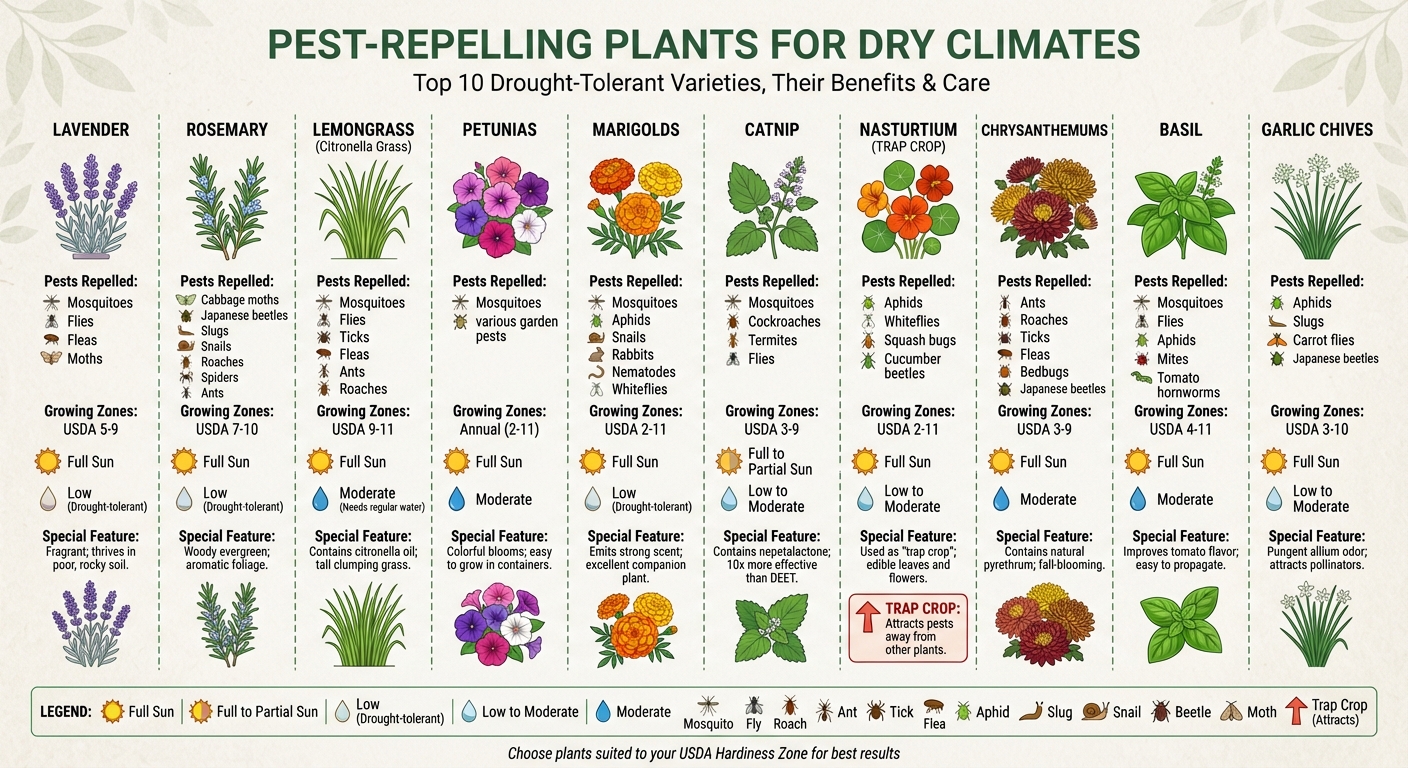
Best Pest-Repelling Plants for Dry Climates: Complete Comparison Guide
Here's a breakdown of pest-repelling plants suited for dry climates. Each plant offers unique benefits, along with specific growing requirements.
| Plant | Pests Repelled | Growing Zones | Sun Requirements | Water Needs | Special Characteristics |
|---|---|---|---|---|---|
| Lavender | Mosquitoes, flies, fleas, moths | 5–9 | Full Sun | Low (Drought-tolerant) | Fragrant; thrives in poor, rocky soil |
| Rosemary | Cabbage moths, Japanese beetles, slugs, snails, roaches, spiders, ants | 7–10 | Full Sun | Low (Drought-tolerant) | Woody evergreen; aromatic foliage |
| Lemongrass | Mosquitoes, flies, ticks, fleas, ants, roaches | 9–11 | Full Sun | Moderate (Needs regular water) | Contains citronella oil; tall clumping grass |
| Petunias | Mosquitoes, various garden pests | Annual | Full Sun | Moderate | Colorful blooms; easy to grow in containers |
| Marigolds | Mosquitoes, aphids, snails, rabbits, nematodes, whiteflies | 2–11 | Full Sun | Low (Drought-tolerant) | Emits strong scent; excellent companion plant |
| Catnip | Mosquitoes, cockroaches, termites, flies | 3–9 | Full to Partial Sun | Low to Moderate | Contains nepetalactone; more effective than some DEET |
| Nasturtium | Aphids, whiteflies, squash bugs, cucumber beetles | 2–11 | Full Sun | Low to Moderate | Used as a "trap crop"; edible leaves and flowers |
| Chrysanthemums | Ants, roaches, ticks, fleas, bedbugs, Japanese beetles | 3–9 | Full Sun | Moderate | Contains natural pyrethrum; fall-blooming |
| Basil | Mosquitoes, flies, aphids, mites, tomato hornworms | 4–11 | Full Sun | Moderate | Improves tomato flavor; easy to propagate |
| Garlic Chives | Aphids, slugs, carrot flies, Japanese beetles | 3–10 | Full Sun | Low to Moderate | Pungent allium odor; attracts pollinators |
One standout on this list is nasturtium, which doesn't repel pests like the others. Instead, it functions as a "trap crop", luring pests away from your vegetables. This makes it a smart choice for planting near tomatoes or cucumbers.
These details set the stage for the next section on growing these plants effectively in dry climates.
Growing Tips for Dry Climates
Start with the right soil foundation. Drought-tolerant plants like lavender and rosemary thrive in well-drained, lean soil, which prevents root rot and keeps them healthy. According to the UC Master Gardeners of Butte County:
"There is generally no need to amend garden soil with compost for drought-tolerant plants".
If you’re using mulch, opt for inorganic materials like gravel or crushed stone. These improve drainage and avoid adding organic matter that can attract pests. Once your soil is set, focus on proper watering techniques to help plants establish.
Water strategically during establishment. Even plants known for surviving drought need consistent watering when first planted. This helps them develop deep root systems. Once established, switch to occasional deep watering instead of frequent, shallow sprinkling. Deep watering encourages roots to grow downward, making plants more resilient. A useful trick is to bury an empty nursery pot about 10 inches from the plant’s stem and water directly into it. This keeps the crown dry while delivering moisture to the roots, reducing the risk of rot. Water early in the morning or late in the evening to minimize evaporation.
Group plants by their water needs. Known as "hydrozoning", this technique ensures drought-tolerant plants don’t get overwatered, while thirstier plants receive adequate moisture. UC Master Gardeners caution:
"Most drought-tolerant and dry-loving plants do not like water on their stems or crowns. Wet conditions can trigger crown rot".
To avoid this, keep mulch away from plant stems and use drip irrigation with emitters placed slightly off-center from the plant’s base.
Space plants for maximum effectiveness. Planting slightly closer together can shade the soil and reduce evaporation. However, leave enough room for air to circulate and prevent disease. Dense plantings can boost pest-repelling scents, but balance is key. For trap crops like nasturtiums, plant them 8 to 12 feet away from the vegetables they’re protecting. Clustering plants in groups of three to five works better than scattering them randomly.
Plant Maintenance. Regular maintenance ensures your garden stays healthy and pest-resistant. For example, prune lavender after blooming in late summer or fall, but avoid cutting into the hardwood. Cut back Russian sage in late winter or early spring to prevent floppy stems. Deadheading flowering perennials extends their bloom time and keeps their pest-repelling properties strong. Divide perennials like chives every few years to prevent overcrowding and encourage fresh growth. For shrubs, maintain at least 12 to 18 inches of clearance from your home’s exterior to stop pests from using them as a bridge into your house. Consistent upkeep not only keeps pests at bay but also supports a thriving garden.
Conclusion
This guide highlights how drought-tolerant, pest-repelling plants can transform arid landscapes into thriving, low-maintenance gardens. These plants offer three key advantages: conserving water, naturally deterring pests, and requiring little upkeep once established. By selecting species like lavender, rosemary, and marigolds - plants already suited to dry climates - you’re working in harmony with your environment instead of battling against it.
Replacing just 1,000 square feet of traditional lawn with water-efficient plants can save around 55,000 gallons of water every year. Beyond water savings, these plants reduce pesticide use and promote pollinator activity - up to 85% of these perennials can enhance local biodiversity by as much as 40%. Landscape designer Jesse Laguna emphasizes this point:
"Incorporating pest-repelling plants into your landscape design is a smart way to reduce pesticide use, attract beneficial pollinators, and create a healthier outdoor environment."
For the best results, choose plants suited to your local conditions. Check your USDA Hardiness Zone before buying, and look for traits like silvery or waxy leaves, which indicate natural drought resistance. Locally adapted varieties often produce stronger pest-repelling essential oils, enhancing their effectiveness.
Whether you’re starting fresh or upgrading an existing garden, these resilient plants help your landscape withstand shifting weather patterns and prolonged dry spells. With thoughtful soil preparation and strategic watering early on, you’ll enjoy years of low-maintenance gardening, free from harsh chemicals, while supporting both your garden and the surrounding ecosystem.
FAQs
How fast do pest-repelling plants start working?
Pest-repelling plants typically start showing their effects anywhere from a few hours to a couple of days after being planted. The exact timeframe can vary based on the specific plant species and factors such as temperature, soil quality, and overall environmental conditions.
Are these plants safe for kids and pets?
Many plants known for repelling pests - like citronella, lemon balm, lavender, marigolds, and mint - are typically safe for children and pets. That said, some of these plants could cause mild irritation or trigger allergic reactions in certain cases. To be on the safe side, always research the safety profile of each plant before adding it to your home or garden.
Can I combine these plants with DIY pest control if pests persist?
Yes, you can pair drought-tolerant, pest-repelling plants with DIY pest control methods if pests remain an issue. These plants naturally help keep pests at bay and complement personalized pest control solutions. This combination offers a more efficient and environmentally friendly way to handle pests in arid conditions.