


Improper food waste disposal is one of the leading reasons pests like flies, cockroaches, and rodents invade homes. Overflowing bins, flimsy trash bags, and unsealed food scraps create a buffet for unwanted visitors. Worse, pests bring health risks, spreading bacteria like E. coli and Salmonella or diseases like hantavirus.
Here’s the good news: avoiding just five common mistakes can drastically reduce pest problems.
Key Takeaways:
- Don’t overfill trash bins. Keep lids sealed and empty them daily.
- Use strong, sealed bags. Thin bags tear easily, releasing odors that attract pests.
- Clean bins regularly. Food residue and liquids left behind invite pests to breed.
- Store food waste in sealed containers. Open scraps release odors that pests detect quickly.
- Place bins strategically. Keep them away from walls, vegetation, or entry points to your home.
Fixing these habits eliminates the food, moisture, and shelter pests look for - protecting your home with a DIY pest control kit.
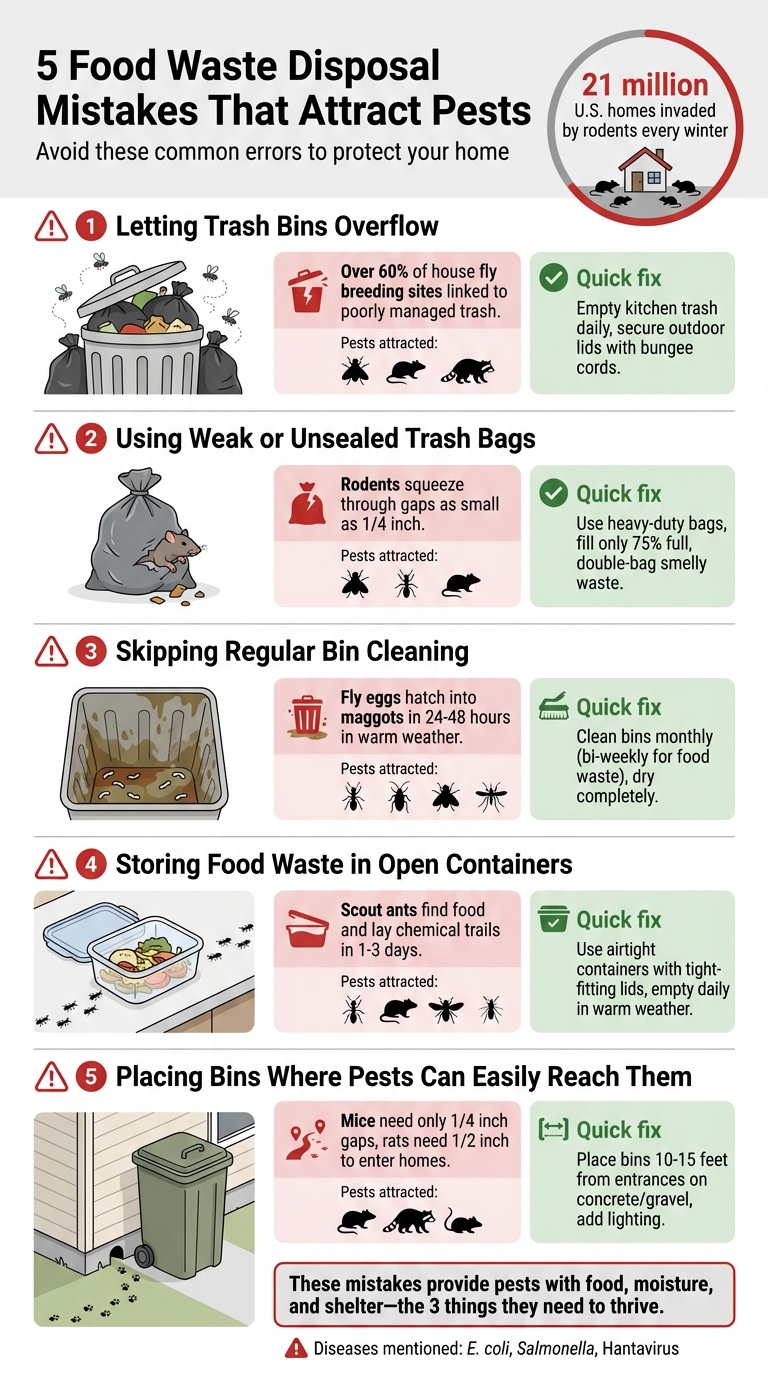
5 Food Waste Disposal Mistakes That Attract Pests
1. Letting Trash Bins Overflow
Overflowing trash bins are like open invitations for pests. When garbage piles up beyond the rim, the lid can’t close properly, allowing odors from decomposing food to escape and making it easy for pests to access your trash.
This situation doesn’t just break the lid’s seal - it also amplifies the spread of foul smells. Decomposition odors can travel surprisingly far, attracting rats and raccoons that can detect the chemical signals from fermenting organic waste. Once they find your bin, they’re drawn to the food, moisture, and shelter it provides. Research shows that over 60% of house fly breeding sites in suburban areas are linked to poorly managed trash. Using a bi-monthly pest remedy kit can help manage these recurring infestations. Flies, for instance, can locate garbage and lay eggs that hatch into larvae in just 24 hours.
"One pile of organic waste can quickly turn into a breeding ground, with larvae developing right inside your trash before spreading out." – Rita Cangialosi, Westshore Pest Control
The solution is simple: empty your kitchen trash daily, even if it’s not completely full. For outdoor bins, make sure they have tight-fitting lids. You can use bungee cords or locking mechanisms to secure the lid, especially against wildlife like raccoons. To minimize odors, double-bag meat scraps and dairy products, or store food scraps in a sealed container in your freezer until trash day. This halts decomposition and keeps pests from catching a whiff of your garbage.
sbb-itb-0bbb908
2. Using Weak or Unsealed Trash Bags
Thin, flimsy trash bags are no match for sharp objects like bones or broken eggshells. They tear easily, releasing odors that act like a dinner bell for pests such as flies, ants, and rodents. Even worse, liquid waste can seep out of poorly sealed bags, creating trails that attract ants and cockroaches. Rodents, in particular, can chew through standard plastic bags in seconds and squeeze through gaps as small as a quarter-inch to get to food scraps.
"Thin, flimsy bags are more likely to tear, especially if they are overfilled or hold sharp objects. When a bag rips, it releases odors that attract pests like flies and rodents." – GSGD Team
This highlights the importance of using stronger bags and sealing them properly. Weak bags not only invite pests but also make managing waste more challenging.
To avoid these problems, opt for heavy-duty or contractor-grade trash bags. These are designed to handle sharp edges and heavier loads without tearing. Stick to the "three-quarters rule" - fill bags only up to 75% of their capacity. This leaves enough space to tie a secure, tight knot without stressing the plastic. For particularly smelly waste, like meat or fish, double-bagging adds an extra layer of protection against odors and pests. Use twist ties or rubber bands to ensure the bag is sealed completely.
Another helpful tip: wrap smelly scraps in newspaper to absorb moisture and contain odors. Alternatively, store them in a sealed bag in your freezer until trash day arrives. This simple step can make a big difference in keeping pests at bay. For long-term protection, consider using a Quarterly Pest Remedy Kit to maintain a pest-free home.
3. Skipping Regular Bin Cleaning
Neglecting to clean your bins regularly can lead to more than just unpleasant smells - it creates a magnet for pests. Even if you consistently remove trash, leftover food residue and liquids can linger, attracting ants, cockroaches, and other unwelcome visitors. Invisible traces like soda film, grease, or peanut butter streaks are enough to draw pests into your bins. On top of that, liquids from rotting food tend to pool at the bottom, creating damp, humid conditions perfect for cockroaches and mosquitoes to thrive. Flies, too, can locate your garbage quickly, and in warm weather, their eggs can hatch into maggots within just 24 to 48 hours.
To avoid turning your bins into a pest hotspot, aim to clean them on a monthly basis - or every two weeks if you frequently dispose of food waste. For outdoor bins, use a pressure washer to thoroughly clean corners and crevices where residue can hide. After washing, make sure to dry the bins completely, preferably in the sun, as this helps deter pests.
To tackle odors and residues, try sprinkling baking soda at the bottom of the bin, laying down newspaper to absorb moisture, or spraying a vinegar-water solution. If you spot fly maggots or pupae, scrape them off the sides and lids during cleaning. Additionally, store your bins in shaded areas whenever possible - cooler temperatures slow down decomposition and help reduce the odors that attract pests.
4. Storing Food Waste in Open Containers
Leaving food scraps exposed is like sending an open invitation to pests. These scraps release strong odors and chemical signals that pests can detect from far away. Open containers provide everything pests need - food, moisture, and even shelter. When warm, humid air spreads these scents, an uncovered bin becomes a beacon for insects and wildlife. This mistake only increases the risk of pest problems outlined earlier.
Pests don’t waste time. Scout ants can discover food and lay chemical trails for their colony in as little as one to three days. Rodents, too, are quick to act, often finding new food sources within a few days. If they catch a whiff of something tempting, they might even chew through thin bags to get to it.
To avoid these issues, always use airtight containers with tight-fitting lids for food waste - even if it’s just for short-term storage. If freezing isn’t an option, double-bagging wet or smelly scraps can help block odors. Emptying your kitchen bins daily, especially in warm weather when decomposition speeds up, can also minimize the chemical signals that attract pests.
For countertop compost bins, opt for models with built-in charcoal filters to help neutralize odors that draw fruit flies and gnats. Durable containers like metal tins or glass jars with rubber gaskets are excellent choices because they trap odors effectively and resist pest breaches. On the other hand, cardboard boxes and thin plastic bags should be avoided, as pests like cockroaches, mice, and silverfish can easily chew through these materials. Securing your food waste in airtight containers strengthens the pest-prevention strategies covered earlier.
"An uncovered outdoor container can become a dinner bell for pests looking for food, shelter, or even nesting materials." - Rita Cangialosi
5. Placing Bins Where Pests Can Easily Reach Them
Keeping pests away isn’t just about sealing and cleaning bins - it’s also about where you place them.
Bins placed in the wrong spots - like against walls, behind thick bushes, or in dark, hidden corners - are practically an open invitation for pests. Dark and damp areas are especially appealing to nocturnal creatures like rats and raccoons, offering both safety and privacy from human activity.
Positioning bins near foundations, doors, or open windows creates easy access for pests to move from the trash straight into your home. For example, mice can squeeze through openings as tiny as 1/4 inch, and rats only need a 1/2 inch gap to slip inside. If bins are placed near other food sources, like bird feeders, fruit trees, or vegetable gardens, pests already drawn to those areas will naturally head for the bins too.
"Rats don't like open spaces. Keep compost bins away from a fixed wall or fence." - Jessica Bombar, Solana Center
To minimize pest activity, place bins on concrete or gravel surfaces at least 10–15 feet away from garden beds and entrances. Trim nearby vegetation and add lighting to remove hiding spots and deter pests. Using hard surfaces like concrete also prevents burrowing pests from tunneling underneath the bins.
If possible, store bins in a secure garage or shed to keep wildlife out. When storing them outdoors, choose open and exposed areas rather than secluded spots near walls or fences. Just like sealing and cleaning, proper placement is a key step in reducing pest activity around your home.
Conclusion
Mistakes in food waste disposal - like overflowing bins, flimsy bags, neglecting cleaning, leaving containers open, or placing bins poorly - create the perfect conditions for pests by providing them with food, moisture, and shelter.
Fortunately, small, consistent changes can make a big difference. Empty bins before they overflow, opt for heavy-duty bags with secure seals, clean containers weekly, store food scraps in sealed containers, and place bins on flat, stable surfaces away from your home. These simple habits eliminate the key attractants that allow pests to settle near your property.
Here’s a startling fact: rodents invade about 21 million U.S. homes every winter, making a winter pest prevention checklist essential. Tackling food disposal mistakes at their source helps prevent pests from establishing a foothold and spreading throughout your home. If you’ve already made these adjustments but still deal with pest issues, professional resources might be the next step.
For those persistent problems, Remedy DIY Pest Control offers a solution. Their customized kits include professional-grade, pet- and child-safe products tailored to your pest concerns and home location. With easy-to-follow instructions and virtual support, you can protect your home without inviting strangers inside. Visit Remedy DIY Pest Control to learn more about maintaining long-term pest control.
Proper food waste management isn’t just about keeping things tidy - it’s about creating a space where pests can’t thrive. By cutting off their access to food, water, and shelter, you’re taking charge of pest prevention and setting your home up for lasting protection.
FAQs
How can I tell if pests are coming from my trash?
Pests like flies, rodents, or cockroaches are often drawn to trash. You might notice more activity around garbage cans, especially if they contain food scraps, moisture, or strong odors. To keep pests at bay, make sure your trash is sealed tightly, cleaned often, and kept as dry as possible.
What’s the best way to store smelly food scraps between trash days?
The most effective way to store smelly food scraps is by using an airtight container or a sealed bag. For even better odor control and to keep pests at bay, try placing the container in the freezer. You can also wrap the scraps in paper or use compostable bags to help minimize any unpleasant smells. Freezing food waste until trash day is hands-down the best way to completely avoid odors and pests.
How far should outdoor bins be from my house to reduce pests?
To reduce the risk of pests, make sure your outdoor bins are positioned at least 10–15 feet away from your house. Some experts recommend going even further - keeping them 20 feet or more away - to provide extra protection. This spacing makes it harder for pests to find their way into your home.