


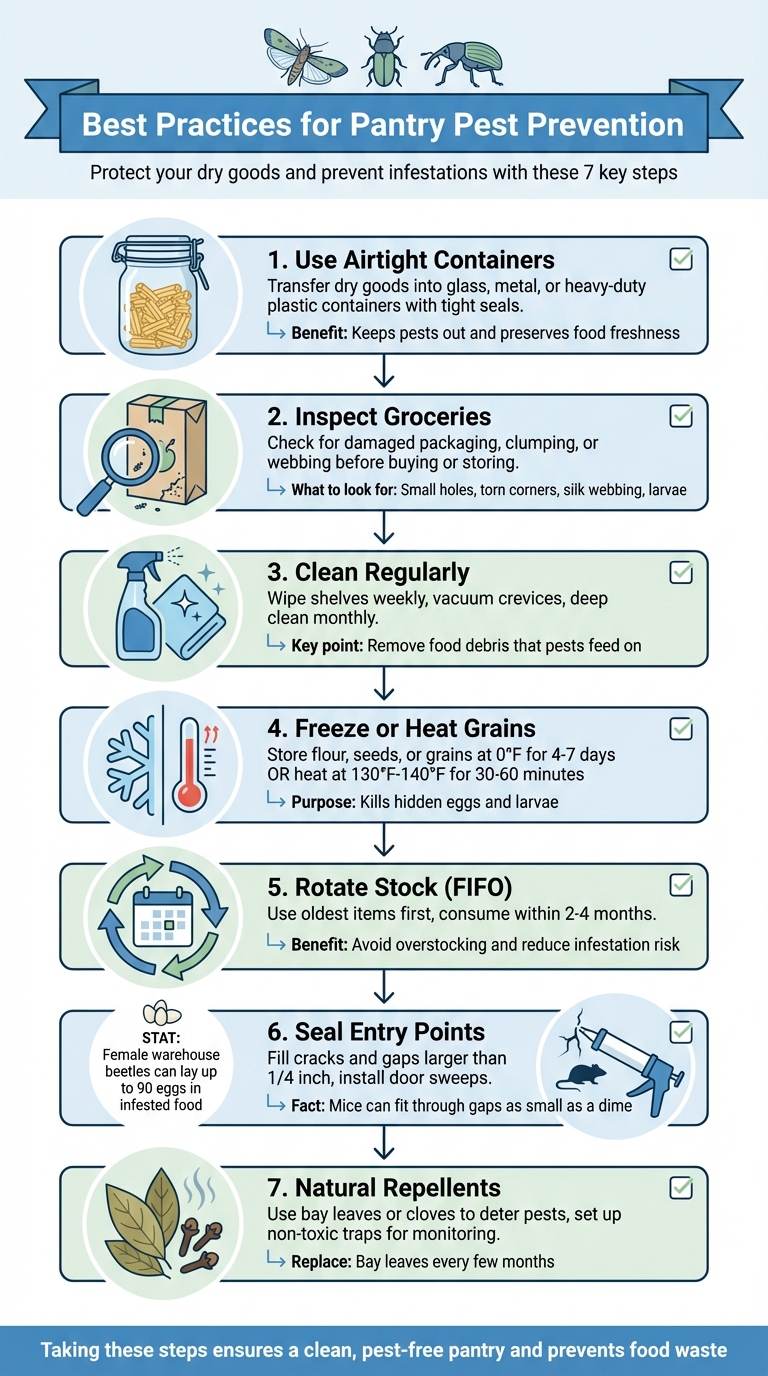
Pantry pests - like Indianmeal moths, flour beetles, and weevils - can ruin your dry goods and cost you money. These pests often sneak into homes through infested groceries, thriving in warm, unsealed environments. Preventing them is key to protecting your food and health. Here’s how:
- Use airtight containers: Transfer dry goods into glass, metal, or heavy-duty plastic containers with tight seals. This keeps pests out and preserves food.
- Inspect groceries: Check for damaged packaging, clumping, or webbing before buying or storing items.
- Clean regularly: Wipe shelves, vacuum crevices, and deep clean monthly to remove food debris pests feed on.
- Freeze or heat grains: Store flour, seeds, or grains at 0°F for 4–7 days or heat at 130°F–140°F to kill hidden eggs and larvae.
- Rotate stock: Use the oldest items first and avoid overstocking to reduce the chance of infestation.
- Seal entry points: Fill cracks, gaps, and install door sweeps to block pests from entering your pantry.
- Natural repellents: Use bay leaves or cloves to deter pests, and consider non-toxic traps for monitoring.
Taking these steps ensures a clean, pest-free pantry and prevents food waste. If pests persist, consider professional-grade solutions like Remedy kits for added protection.
7 Essential Steps for Pantry Pest Prevention
Food Storage Strategies
Store Food in Airtight Containers
To protect your dry goods from pests, transfer them into airtight containers made of glass, metal, or heavy-duty plastic as soon as possible. Packaging like cardboard boxes, paper bags, and thin plastic does little to keep out pantry pests. As Isabella Flores, Cleaning Expert at Sparkly Maid San Diego, explains:
"Insects such as weevils and moths will easily destroy cardboard and paper packaging to get to the inside of your dry goods, such as flour and rice".
Choose containers with rubber gaskets or screw-top lids for a tight seal. These barriers not only lock in freshness but also block microscopic eggs or larvae from entering. Glass and metal containers are especially effective against rodents, which can squeeze through openings as small as a dime and chew through thinner plastic. For bulk items like pet food or birdseed, heavy-duty screw-top bins, such as Vittles Vaults, are ideal for containing odors that might attract pests.
For specialty flours, seeds, or grains, freezing them at 0°F for 4-7 days can kill any hidden pests. To stay organized, label each container with the food name, purchase date, and expiration date. This simple step makes it easier to manage your pantry and ensures freshness over time.
Rotate Your Pantry Stock
Using the first-in, first-out (FIFO) method is an effective way to keep your pantry organized and pest-free. When adding new items, place them at the back and move older products to the front so they’re used first. This practice reduces the chance of older items sitting untouched for months, which is a common cause of pest infestations.
Only buy what you can consume within 2-4 months, and plan meals around ingredients that are nearing their expiration date. For added protection, store items like whole-wheat flour, nuts, and dried fruits in the refrigerator or freezer. Don’t overlook pet food and birdseed - transfer them into sealed bins and rotate them regularly to keep them fresh and less attractive to pests. Consistent rotation not only prevents stagnation but also reduces the risk of infestations.
Check Groceries Before Storing
Carefully inspect groceries before purchasing and again when you bring them home. Look for signs of damage like small holes, torn corners, or chewed edges on packaging. Check inside for insects, larvae, silk webbing, or clumping in products like flour or cereal. Dr. Jim Fredericks from the National Pest Management Association highlights the importance of vigilance:
"Stored product pests like sawtoothed grain beetles, Indian meal moths, and weevils are what we call the 'sneaky hitchhikers' of the pest world. They usually arrive to your house as microscopic eggs or larvae... You won't know they're there until they've hatched and multiplied".
Pay special attention to items like flour, rice, cereal, baking mixes, nuts, dried fruit, chocolate, and pet food. Ensure factory seals are intact with no gaps where pests could enter. Avoid purchasing items from dusty or poorly maintained shelves, and always check freshness dates - older products are more likely to be infested. By taking these precautions, you can stop pests before they invade your pantry. For ongoing protection, consider using a DIY pest control kit to maintain a barrier around your home.
sbb-itb-0bbb908
Cleaning and Maintenance Tips
Clean Your Pantry Regularly
Keeping your pantry clean is one of the best ways to prevent pest infestations. Wipe down shelves weekly to remove flour dust and crumbs that pests can live off of. Dr. Jim Fredericks, Senior Vice President of Public Affairs at the National Pest Management Association, emphasizes:
"Even a few crumbs or a dusting of flour can sustain an infestation, so staying on top of cleanliness is your first line of defense."
Every month, take time to deep clean. Empty out your pantry completely, vacuum all corners and crevices, and then wipe surfaces with warm, soapy water or a mix of water and vinegar (50/50). Make sure to empty the vacuum immediately to avoid reintroducing pests. However, the University of Minnesota Extension notes:
"Washing areas with detergents, ammonia, or bleach will not prevent insect infestation."
Consider using smooth shelf liners instead of textured ones, as crumbs can get trapped in textured liners and provide hiding spots for pests. Clean up any spills right away, and empty your pantry trash frequently. Don’t forget to clean the trash bin itself with soap and vinegar to eliminate any food residue that might attract pests.
Throw Out Expired or Infested Food
Getting rid of expired or infested food promptly can stop pests from spreading. Keep an eye out for signs of infestation, such as silk webbing (a common sign of Indianmeal moths), small holes in packaging, clumping in flour or cereal, or even a musty smell. If you notice any of these, act fast.
When disposing of infested food, seal it in plastic bags - double-bagging is even better to fully contain the issue. Place the bags in an outdoor trash bin instead of leaving them inside your kitchen. For items you suspect might be infested, freezing them at 0°F for 4–7 days can kill hidden eggs and larvae. Alternatively, heating them in the oven at 130°F–140°F for 30–60 minutes works as well.
Regularly check expiration dates and discard anything past its shelf life. This is more than just a freshness issue - female warehouse beetles can lay up to 90 eggs in infested food, and some pests can survive for weeks without a direct food source. By removing expired food, you eliminate potential breeding grounds before pests have a chance to settle in.
Once you’ve dealt with any compromised items, take steps to secure your pantry by addressing potential entry points.
Seal Cracks and Gaps
Pests can sneak into your pantry through surprisingly small spaces. For instance, mice can fit through gaps as small as a dime (about 1/4 inch), while rats only need a quarter-sized hole. Inspect your pantry carefully, focusing on baseboards, wall-floor joints, and areas around pipes. Start by vacuuming these areas, then seal any gaps larger than 1/4 inch with silicone caulk. For bigger holes, use steel wool before caulking to make it harder for pests to get through.
Don’t forget to check your pantry door. If you can see light coming through the bottom when it’s closed, install weatherstripping and a door sweep to block access. Scot Hodges, Vice President of Professional Development and Technical Services at Arrow Exterminators, warns:
"Larvae can chew through boxes, plastic bags, foil packaging, seed hulls, nutshells and more."
Pantry Pests Prevention
Natural Pest Prevention Methods
Keeping your pantry pest-free requires more than just cleaning and proper storage. Adding natural pest deterrents to your routine can provide an extra layer of protection.
Use Bay Leaves and Cloves
Bay leaves and cloves are natural pest repellents thanks to their strong scents. Insects like pantry moths, weevils, and ants dislike these aromas, which makes them less likely to invade your food supplies. To use bay leaves, place one inside containers of flour, rice, or pasta, or tape them under pantry shelves. Cloves can be just as effective - tie a few in a cheesecloth sachet and place them near entry points.
Zachary Smith, Founder of PestDude.com, explains:
"The smell of the bay leaves repels many pantry pests and can keep a full-blown infestation from forming. One leaf per package should be adequate."
Bay leaves lose their potency over time, so replace them every few months. While these natural methods are helpful, they work best when paired with airtight containers and regular cleaning.
Set Up Non-Toxic Traps
Sticky and pheromone traps are excellent tools for monitoring and controlling pantry pests like moths and beetles. Pheromone traps work by mimicking insect pheromones, luring pests onto a sticky surface. UV light traps are another safe alternative, attracting flying insects like gnats and moths to a sticky board using soft UV light, all without harmful chemicals. Chris Deziel highlights their safety:
"A light trap does much the same thing, but it actually attracts bugs with a soft UV light when you plug it into a wall outlet. Neither type uses insecticides, and both are safe to use around food."
Most pheromone traps remain effective for about three months before needing a lure replacement. Be sure to check traps weekly, and dispose of captured pests in a double-bagged trash bag placed in an outdoor bin.
Control Humidity Levels
Humidity is a magnet for pests, as it softens packaging and speeds up food spoilage. Ahmed Harhara, PhD, Founder of Houston Home Tools, stresses the importance of moisture control:
"Most people focus on cleaning, but the real trigger is moisture - it softens packaging and accelerates food spoilage, which attracts insects fast."
To combat this, use dehumidifiers or moisture absorbers and ensure your pantry is well-ventilated after cleaning. Pay special attention to areas prone to dampness, like corners near exterior walls or spots around plumbing. Keeping your pantry dry not only deters pests but also helps preserve your food for longer.
How Remedy Can Help You Stay Pest-Free

Sometimes, natural remedies and careful food storage aren’t enough to tackle stubborn pests. That’s where Remedy steps in. Designed to offer the same quality products used by professional exterminators, Remedy gives you a powerful, cost-effective solution - without the hassle of scheduling appointments. It’s the perfect balance between natural methods and professional-grade pest control for lasting results.
Custom Kits for Pantry Pests
Remedy offers customized kits tailored to your specific pest problems and location. Each kit comes with everything you need to protect your home, including:
- A battery-powered sprayer
- An application bag
- A pesticide bottle
- Gloves
- Clear, step-by-step instructions
The system works by creating a protective barrier around your home’s foundation while targeting pests indoors. Remedy’s EPA-approved formulas are effective against more than 100 types of pests, making it a versatile addition to your pest-prevention efforts.
Safe for Families and Pets
Your family’s safety is a top priority. Remedy uses Alpine WSG for indoor treatments - this formula includes Dinotefuran, an ingredient that targets insects but is safe for humans and pets. For outdoor treatments, Fendona CS is used. Its micro-encapsulation technology ensures minimal exposure while effectively controlling pests. You can rest easy knowing your loved ones are protected.
Expert Support and Convenient Shipments
When you subscribe to Remedy, you gain access to professional pest identification and expert advice via chat or email. Whether you’re dealing with a specific infestation or need guidance, help is always available. Regular shipments - arriving monthly or every other month based on your climate and pest activity - keep your home consistently protected.
Kits start at less than $30 per shipment, and your first kit is free with the code "FREEKIT." Plus, shipping is always free, and subscriptions are flexible to fit your needs.
Conclusion
Key Points Recap
Keeping pantry pests at bay boils down to three main strategies: storing food properly, maintaining a clean space, and taking preventive measures. Use airtight containers to shield your dry goods from unwanted invaders. Regular deep cleaning - like vacuuming cracks and crevices and rotating older food to the front - helps disrupt pest activity. And don’t forget the freezer trick: placing new bags of grains or flour in the freezer at 0°F for four to seven days eliminates any hidden eggs or larvae.
Natural deterrents, such as bay leaves and cloves, can make your pantry less inviting to pests. Sealing gaps with caulk and managing humidity levels with a dehumidifier are also effective ways to keep insects out. These simple actions can break the pest life cycle and protect your food from contamination.
Take Action Today
Start by inspecting your pantry this week. If you spot any signs of pests, double-bag the affected food and dispose of it in an outdoor trash bin.
For ongoing issues or added peace of mind, consider using our customized pest remedy kits. They include professional-grade products that are safe for both pets and kids, along with regular shipments to ensure consistent protection. By pairing these tools with natural prevention techniques, you can enjoy a pest-free pantry all year long.
FAQs
Which pantry items are most likely to bring pests home?
Pantry pests tend to gravitate toward foods like flour, cereal, rice, grains, dried fruit, nuts, spices, pet food, and even dried flowers. These items offer the nourishment pests need to thrive. To keep them at bay, make sure to store these foods in tightly sealed containers and maintain proper storage practices.
What should I do first if I find moths or beetles in my pantry?
To tackle a pest problem, the first step is to get rid of any infested food. This prevents the issue from spreading further. Next, clean your shelves and storage containers using a mixture of vinegar and water - this helps remove lingering odors and food debris that might attract pests. To keep pests from coming back, store all dry foods in airtight containers. For added protection, freezing dried foods can effectively kill any eggs or larvae. Following these steps can help eliminate pests and minimize the chances of future problems.
How can I stop pantry pests if they keep coming back?
To put an end to recurring pantry pests, start by inspecting your food supplies. Toss out anything that’s infested, as keeping it will only worsen the problem. Next, give your storage areas a thorough cleaning - vacuum shelves, corners, and cracks to remove any lingering pests or debris. For extra precaution, store your dry goods in airtight containers to keep pests out.
Here’s a tip: Freezing dried foods for a few days can eliminate any eggs or larvae that might be hiding. To prevent these pests from coming back, seal up any cracks around your pantry and maintain a clean, clutter-free space. A little effort now can save you a big headache later!