


Bugs love storage spaces, but you don’t need harsh chemicals to keep them out when using a DIY pest control kit. Here are seven natural methods that are safe, effective, and easy to implement:
- Peppermint & Eucalyptus Oils: Overwhelm pests’ senses with these strong-smelling oils. Use soaked cotton balls or sprays, but reapply frequently as scents fade.
- Diatomaceous Earth (DE): A physical barrier that dehydrates crawling insects. Apply thin layers in dry areas for long-lasting results.
- Lavender & Bay Leaves: Repel pests with their scents. Place sachets or crushed leaves in storage containers and refresh regularly.
- Cedar Blocks & Chips: Naturally repel moths and silverfish. Sand or refresh with cedar oil every 6–12 months.
- Neem Oil Sprays: Disrupt pests’ growth and reproduction. Mix neem oil with water and soap for a safe spray option.
- Citronella & Lemongrass: Effective against moths and cockroaches. Use sprays or sachets, but avoid areas with cats.
- Mint Plants & Herbs: Repel ants, spiders, and moths. Use mint oil on cotton balls or add fresh herbs to storage areas.
Quick Tips:
- Use airtight containers (plastic or glass) to block pests.
- Avoid cardboard boxes, which attract bugs.
- Keep storage areas clean, dry, and sealed.
By combining these methods, you can protect your belongings safely and naturally while avoiding toxic chemicals.
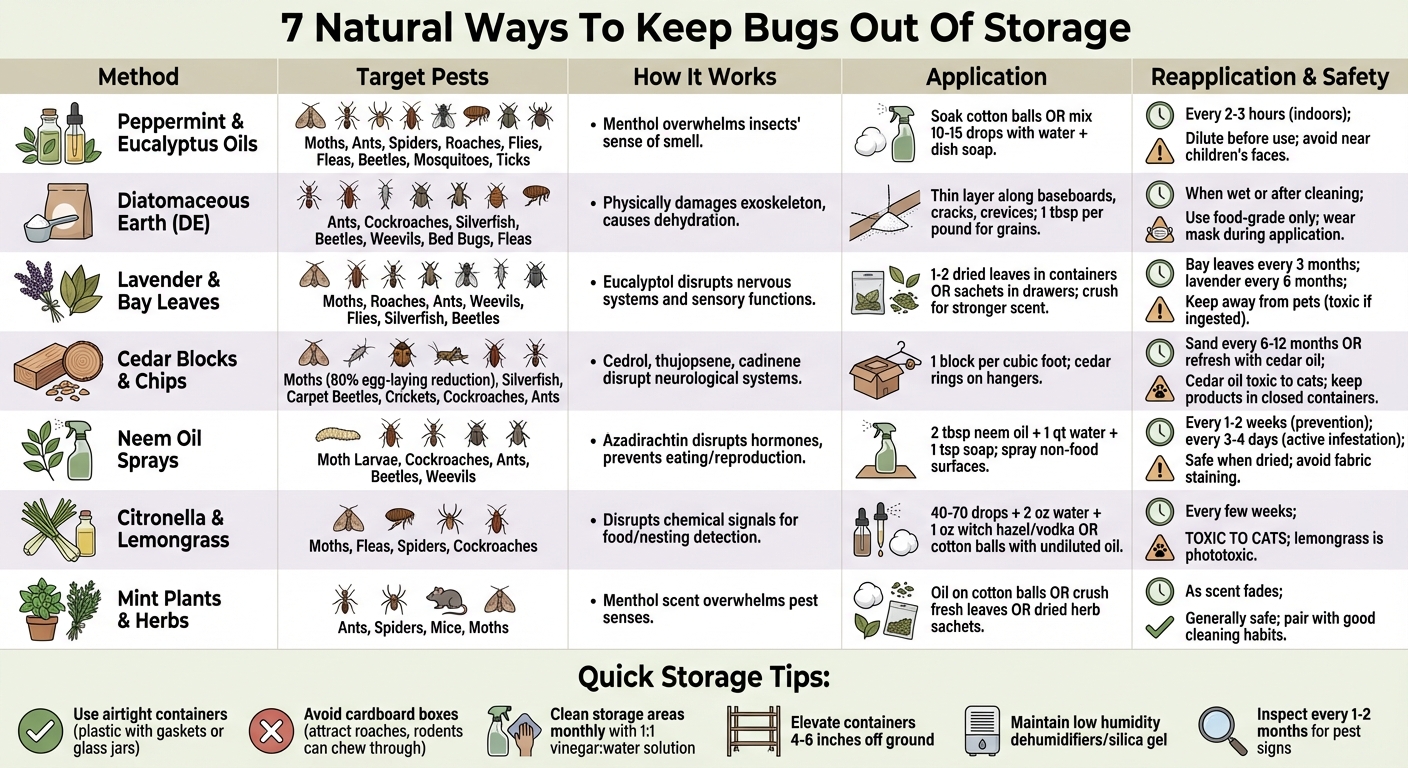
7 Natural Bug Repellents for Storage Spaces: Methods, Effectiveness & Application Guide
How to Repel Bugs and Mice in Storage! Easy, Inexpensive and WORKS!
sbb-itb-0bbb908
1. Peppermint and Eucalyptus Essential Oils
Essential oils can be a natural way to keep bugs out of your storage areas, offering both immediate results and ongoing protection through a monthly remedy kit.
How They Work Against Bugs
Peppermint oil is a versatile bug repellent, effective against pests like moths, ants, spiders, roaches, flies, fleas, and beetles. Its menthol content overwhelms an insect's sense of smell, making it hard for them to navigate. Eucalyptus oil, on the other hand, works particularly well against spiders and moths and is even recommended by the CDC for keeping mosquitoes and ticks at bay.
These oils don’t kill insects but create an environment that bugs find unpleasant, encouraging them to stay away. Kait Chapman, an Extension Educator of Urban Entomology at the University of Nebraska-Lincoln, notes:
"It's important to take into consideration many things that influence its effectiveness, including the formulation, concentration, how it's applied, and what specific insects or arthropods you're hoping it repels."
One downside is that these oils are highly volatile, meaning they evaporate quickly. For instance, peppermint oil typically loses its effectiveness after 2 to 3 hours. While indoor use helps shield the oils from UV rays and heat, you’ll still need to reapply them every few days or when the scent fades. This regular upkeep aligns well with their environmentally friendly nature.
A Greener Alternative
Unlike chemical repellents, peppermint and eucalyptus oils are plant-based and biodegradable, leaving no harmful residues behind. They don’t contaminate water sources and are kinder to the environment.
Simple to Use
Using these oils is straightforward. You can soak cotton balls with pure essential oil and place them in problem areas, or mix 10–15 drops with water and a bit of dish soap to create a sprayable solution. For active ant trails, applying a few drops of undiluted peppermint oil directly on the path can disrupt their pheromone signals.
Safety Considerations
Always dilute essential oils before use, especially around children and pets. Avoid applying them near children’s faces or pets’ sensitive areas, and consult a veterinarian for specific advice. According to the National Center for Complementary and Integrative Health, concentrated menthol vapors can cause respiratory issues in infants and young children. Be sure to store these oils securely, out of reach of both kids and pets.
2. Diatomaceous Earth Barriers
Diatomaceous earth (DE) takes a different approach to pest control compared to essential oils. Instead of relying on scent, DE physically stops pests in their tracks. This natural, non-toxic option works by damaging the outer shells of insects - a purely mechanical method. Trent Frazer, Lead Entomologist at Aptive, explains:
"Diatomaceous earth stands out because it works mechanically, not chemically. Most conventional pest control products rely on chemical ingredients that affect an insect's nervous system... Diatomaceous earth, on the other hand, physically damages the insect's outer shell".
How It Works Against Bugs
DE is made up of tiny, sharp-edged particles from fossilized diatoms. These microscopic edges pierce an insect's exoskeleton, causing it to dehydrate and die [22, 23]. This makes DE especially effective against crawling pests like ants, cockroaches, silverfish, beetles, weevils, bed bugs, and fleas. Since DE works by physical abrasion rather than chemicals, insects can't build up resistance to it. Unsurprisingly, over 160 pest control products on the market include DE as an active ingredient.
However, DE has one crucial limitation: it must stay dry to work. If it gets wet or if the area is thoroughly cleaned, you'll need to reapply it to maintain effectiveness [8, 23]. This dry application requirement highlights its natural and eco-conscious profile while ensuring pests are dealt with efficiently.
A Natural, Chemical-Free Option
Food-grade DE is free of synthetic or chemical active ingredients, making it ideal for use in sensitive areas like pantries and food storage spaces. It’s derived from the fossilized remains of diatoms, tiny aquatic organisms, and is rich in silica [22, 23]. This natural composition makes it a safer alternative to traditional pest control products.
Simple to Apply
Using DE is straightforward, but a light touch is key. A thin, even layer works best, as thick coatings may deter pests from crossing it. Frazer advises applying a barely visible dusting along areas where pests are likely to travel - baseboards, cracks, crevices, under sinks, behind appliances, and around pantry shelves [22, 23]. For stored grains or dried beans, you can mix 1 tablespoon of food-grade DE per pound of produce directly into the container.
For easy application, consider products like a 4-pound bag of Harris Food Grade Diatomaceous Earth, which includes a powder duster and costs around $17.85.
Pet and Child Safety
Always choose food-grade DE for use in homes and storage areas. Avoid pool-grade or industrial versions, as these are heat-treated and can harm both skin and lungs [8, 22, 23]. Shannon Harlow-Ellis, Associate Certified Entomologist, emphasizes:
"Industrial-grade diatomaceous earth is harmful if inhaled".
While food-grade DE is safe to touch or ingest, its fine particles can irritate the respiratory system. Wear gloves and a dust mask when applying it, and keep children and pets out of the area until the dust has settled. For pets with asthma or respiratory issues, it’s best to avoid using DE around them entirely. When cleaning up, use a vacuum designed for fine powders or a damp cloth to prevent dust from spreading [22, 23].
3. Lavender and Bay Leaves
Lavender and bay leaves bring a fragrant twist to pest control, particularly in storage spaces. Unlike diatomaceous earth, these natural remedies rely on their scent to deter pests. Bay leaves, for instance, contain eucalyptol (1,8-cineole), a compound that interferes with insects' nervous systems and sensory functions [24, 27]. Tony King, Founder of The Pied Piper Pest Control, highlights lavender's effectiveness:
"Lavender is one of the most commonly used natural moth repellents. It contains chemical compounds that deter moths from coming in and laying eggs."
Here’s a closer look at how these botanicals keep pests at bay.
Effectiveness in Repelling Bugs
Lavender and bay leaves are effective against a variety of storage pests. Bay leaves, in particular, repel roaches, moths, ants, weevils, flies, silverfish, and beetles [24, 28]. They disrupt ant pheromone trails, making it harder for ants to navigate and establish colonies in storage areas. Additionally, the cineole in bay leaves has been shown to increase mortality rates in certain pests. Kaylee Vaughn, Founder of Rooted Revival, explains:
"The peppery smell of bay leaves deters roaches. The scent disrupts their sensory receptors and discourages them from entering areas with bay leaves."
These natural repellents are most effective as preventive measures or for tackling mild infestations. For severe pest problems, they may not be sufficient on their own. It’s worth noting that the U.S. Environmental Protection Agency recognizes lavender as a safe alternative to toxic mothballs.
Ease of Application
Using lavender and bay leaves is simple and cost-effective. Here are some quick tips:
- Place one or two dried bay leaves in food containers or small mesh sachets among stored items [24, 26, 27].
- Crush dried bay leaves to release more of their aroma for added effectiveness.
- Fill breathable sachets with dried lavender and tuck them between folded clothes in drawers.
- For a DIY spray, simmer bay leaves in water for 20 minutes, let the liquid cool, and then spray it on baseboards or cabinet corners [26, 28].
To maintain their effectiveness, replace bay leaves every three months and refresh lavender sachets or treated cotton balls every six months [24, 16].
Safety for Pets and Children
These botanicals are a safer, eco-friendly alternative to chemical pesticides like mothballs containing naphthalene. However, bay leaves should be kept out of reach of pets, as they can be harmful if ingested [24, 28]. They also pose a choking hazard for small children [28, 30]. Used responsibly, lavender and bay leaves are excellent additions to an organic pest control strategy for storage areas.
4. Cedar Blocks and Chips
Cedar offers a natural, aromatic solution for protecting storage spaces. Much like peppermint oil or diatomaceous earth, cedar contains compounds that work against pests in an eco-friendly way. Red cedar (Juniperus virginiana) produces substances like cedrol, thujopsene, and cadinene, which interfere with insect neurological systems and disrupt their behavior. These compounds mask pheromone signals used by moths for breeding, emit odors that repel pests, and even kill eggs and larvae.
Effectiveness in Repelling Bugs
Cedar has been shown to reduce pantry moth egg-laying by 80% and cut larval survival rates by nearly 99%. A study from 1962 revealed that chests lined with 1/2" of cedar provided complete protection from clothes moth larvae. Cedar chips also shorten the lifespan of adult moths by 50%. Beyond moths, cedar is effective against silverfish, carpet beetles, crickets, firebrats, cockroaches, and ants. Its strong scent even masks the smell of fabrics that silverfish typically target.
Cedrol, which makes up about 15% of cedarwood essential oil, is toxic to clothes moth larvae at concentrations as low as 4%. Cedar oil can also eliminate nearly 100% of flea larvae within 24 hours, while thujopsene vapors can repel biting insects by up to 96%.
Natural and Eco-Friendly Properties
Cedar is a renewable, biodegradable material that decomposes naturally without contaminating water sources. Recognized by the EPA as a minimum-risk pesticide since 1960, cedarwood oil is also classified as "Generally Recognized as Safe" (GRAS) by the FDA for use as a food additive. Dora Decora, a Biophilic Interior Design Specialist at Home Chroma, highlights cedar's dual role:
"Cedarwood drawer inserts represent more than just pest control - they're a commitment to safer, more sustainable home management."
Unlike synthetic options, pests don't develop resistance to cedar's complex properties. Red cedar also contains up to 10 times more essential oil than pine or fir, making it especially effective.
Ease of Application
Using cedar is simple. Cedar rings can be placed over hangers to protect delicate fabrics like wool and silk, while sachets work well in drawers or storage bins for folded garments. For best results, use cedar in airtight containers to concentrate its pest-repelling vapors. A general guideline is to use one standard-sized cedar block per cubic foot of storage space.
To keep cedar effective, sand the blocks every 6 to 12 months with 220-grit sandpaper, following the wood grain to release fresh oils. Alternatively, a few drops of pure cedarwood oil can refresh older pieces. Mary Marlowe Leverette, a Housekeeping and Fabric Care Expert, advises:
"Cedar that is more than three years old is likely no longer effective. Cedar chests used for pest control must be sanded, and oils refreshed at least that often."
To avoid fabric stains, wrap items in acid-free tissue paper or use cotton sachets to separate cedar from clothing. Always store clean garments, as pests are drawn to body oils and stains.
Safety for Pets and Children
Cedar offers a safer alternative to traditional mothballs, which release harmful fumes from chemicals like naphthalene or paradichlorobenzene. While cedar blocks and chips are safe for general home use, cedar essential oils can be toxic to cats and should not be applied directly to them. To ensure safety, keep cedar products in drawers or containers out of reach of pets. Cedar is just one of several natural methods for creating a safer, pest-free storage environment.
5. Neem Oil Sprays
Neem oil is a natural solution that has proven to be effective in managing storage pests. Extracted from the neem tree, this oil contains azadirachtin, a compound that interferes with the hormonal systems of pests. It hinders their ability to eat, grow, reproduce, and lay eggs, making it a powerful tool against pests like moth larvae, cockroaches, ants, beetles, and weevils.
Effectiveness in Repelling Bugs
Neem oil works in several ways. It prevents the development of moth larvae, disrupts ant trails and colony growth, and reduces cockroach feeding and reproduction. Its distinct smell also acts as a deterrent to pests. For dealing with severe infestations, experts recommend mixing 3 tablespoons of neem oil per quart of water. This versatility makes neem oil an excellent addition to any pest control routine for storage areas.
Natural and Eco-Friendly Properties
David Beaulieu, a Landscaping Expert at The Spruce, highlights its advantages:
"Neem oil spray is an organic solution used as a pesticide against insects, mites, or fungi... Organic gardeners love that the oil is safe to use, and it will not harm humans or animals".
Unlike chemical pesticides, neem oil is biodegradable and breaks down quickly when exposed to light and microbes. It leaves no harmful residue, making it a safer choice for indoor use and a more environmentally friendly option.
Ease of Application
Creating a neem oil spray is simple. Combine 2 tablespoons of pure, cold-pressed neem oil with 1 quart of water and 1 teaspoon of mild liquid soap to act as an emulsifier. Pour the mixture into a spray bottle and apply it to non-food surfaces like shelves, walls, baseboards, and the outside of storage containers. For prevention, use the spray every 1–2 weeks, and for active infestations, reapply every 3–4 days. Avoid spraying on fabrics to prevent staining, and use the solution within 3–4 weeks of preparation. A 16-oz bottle of neem oil spray typically costs about $15.19.
Safety for Pets and Children
Neem oil is generally safe for use around children and pets when applied correctly. While accidental ingestion may cause mild stomach upset, it is far safer than mothballs containing toxic naphthalene. To ensure safety, store both concentrated and diluted neem oil out of reach and limit direct contact until the spray has dried. Additionally, neem oil does not harm beneficial insects like bees and ladybugs when used as directed.
6. Citronella and Lemongrass
This method taps into the natural power of essential oils, specifically citronella and lemongrass, to make storage spaces less inviting to pests. These oils offer a biodegradable alternative to synthetic repellents, disrupting pests' senses and driving them away. Research highlights citronella's ability to repel moths and cockroaches in enclosed areas like closets and kitchens, while lemongrass is effective against moths, fleas, and other insects that damage fabrics. This approach pairs well with other natural strategies discussed earlier.
Effectiveness in Repelling Bugs
Lemongrass oil stands out as a natural deterrent for moths, interfering with the chemical signals insects use to locate food and nesting spots. Its citrusy scent also helps keep spiders at bay. As noted by Wood-Blocks.com:
"Natural repellents are made from plants, essential oils, and other organic materials. These ingredients disrupt pests' senses, making your home less attractive to them."
Natural and Eco-Friendly Properties
Unlike chemical mothballs, which release toxic fumes and pose ingestion risks, citronella and lemongrass are non-toxic and leave no harmful residues. The American College of Healthcare Sciences emphasizes:
"Essential oils are an eco-friendly way to repel insects naturally without using harmful sprays or pesticides."
That said, natural repellents may need more frequent reapplication compared to synthetic ones, as their potency diminishes faster.
Ease of Application
Creating your own repellent is straightforward. Combine 40–70 drops of essential oil with 2 oz of distilled water and 1 oz of witch hazel or vodka in a dark spray bottle. Shake well before each use. Alternatively, you can place a few drops of undiluted oil on cotton balls and position them in corners or use citronella-infused sachets in storage areas. Be sure to clean containers thoroughly beforehand, as food residues and dirt attract pests. Reapply every few weeks to maintain effectiveness.
Safety for Pets and Children
While these oils are effective and easy to use, safety is key. Many essential oils, including citronella and lemongrass, are toxic to cats, so avoid using them in areas where cats may come into contact. For households with young children, consider using a milder hydrosol (floral water) version of lemongrass, which still offers several hours of protection. Keep mixtures at a 10–15% concentration, and note that lemongrass is phototoxic - if it comes into contact with your skin, avoid UV exposure to prevent irritation.
7. Mint Plants and Other Deterrents
Mint plants and their oils are incredibly effective at keeping storage pests at bay. Their strong scent is a natural repellent for ants, spiders, mice, and moths. When used in storage areas, mint creates a protective barrier, helping to ward off these common pests. Other herbs, like basil and rosemary, also play a role with their similarly repelling aromas.
Here’s how these natural solutions work to combat storage pests.
Effectiveness in Repelling Bugs
The ability of mint to repel pests is backed by solid evidence. Its intense menthol scent drives away ants, spiders, and mice. Additionally, botanical extracts, such as Dysphania ambrosioides (commonly known as Mexican tea), have shown remarkable results in scientific studies. For example, trials revealed that this extract suppressed 98.26% of the Angoumois grain moth population in stored wheat. The results also highlighted minimal grain weight loss (0.69%) and a low percentage of insect-damaged grains (3.00%). Ahmed M A Salman from the Department of Plant Protection at Sohag University emphasized:
"This study demonstrated that plant extracts, particularly D. ambrosioides, N. oleander, and A. nilotica, exhibit strong bioefficacy against S. cerealella, substantially reducing moth development and grain damage."
This evidence underscores the effectiveness of plant-based solutions for safe and reliable pest control.
Natural and Eco-Friendly Properties
Mint and similar plant-based deterrents work by disrupting pests' ability to detect food or nesting spots, thanks to their overpowering scents. Unlike synthetic pesticides, these natural options break down easily and don’t harm water supplies or the environment. Housekeeping expert Mary Marlowe Leverette explains:
"Organic, natural treatments are typically safer around children and pets and can be effective with attentive sanitation and repeat treatments."
This makes plant-based deterrents a smart, eco-conscious alternative to chemical pesticides.
Ease of Application and Use
Using mint as a pest repellent couldn’t be simpler. Apply a few drops of peppermint oil onto cotton balls and place them in storage corners or drawers. For immediate protection, crush fresh mint leaves and spread them along windowsills or door gaps. You can also hang small cloth bags filled with dried mint or basil in storage spaces for long-lasting effects. Pair these methods with good cleaning habits, like vacuuming debris and using airtight containers, to maximize their effectiveness.
More Tips for Pest-Free Storage
Choosing the right containers is critical when it comes to keeping pests out. Hard plastic bins with locking lids are a reliable option - they form a solid barrier against rodents and insects. For an airtight seal, go for contractor-grade bins with silicone gaskets. Pantry staples like flour, rice, and spices are best stored in glass jars with gaskets. Since pests can’t chew through glass, these jars provide excellent protection. If rodents are a recurring problem, metal tins and canisters are your safest bet. As U.Santini Moving & Storage emphasizes:
"Your container choice is the single most important factor in pest prevention. The wrong containers essentially invite bugs to feast on your belongings."
Say no to cardboard boxes. Roaches are drawn to the glue in cardboard, and rodents can easily chew through it to create nests. For clothing and linens, vacuum-sealed bags are a smart choice. They not only save space but also shield your fabrics from clothes moths and carpet beetles. Before storing, wash fabrics in hot water (120°F for 20–30 minutes) to eliminate any pest eggs.
Once you’ve got your containers sorted, maintaining a clean storage area is the next step. Vacuum regularly to get rid of crumbs, dust, and pet hair - common food sources for pests like carpet beetles. Clean shelves monthly using a mix of white vinegar and water (1:1 ratio). This solution helps destroy pest eggs and disrupts their scent trails. To keep crawling pests at bay, elevate your containers 4–6 inches off the ground using metal shelving or pallets.
Sealing up entry points is another essential measure. Use caulk to close cracks in walls and floors, and apply weatherstripping around doors and windows. For small gaps around pipes, steel wool works wonders - mice can’t chew through it. Keep moisture levels in check with dehumidifiers or silica gel packets, as damp conditions attract pests like silverfish and weevils. Make it a habit to inspect your storage every 1–2 months for signs of trouble, such as droppings, chewed materials, or strange odors.
For a comprehensive pest prevention solution, consider our Remedy kits. These kits include professional-grade products that are safe for both pets and children. They’re tailored to your specific pest concerns and come with clear instructions and ongoing virtual support. With these eco-friendly tools, you can maintain a pest-free storage space without needing outside help. Our Remedy kits bring all these strategies together into one convenient package.
Conclusion
Keeping bugs out of storage doesn’t have to mean resorting to harsh chemicals. The seven natural methods we've covered provide safe, chemical-free ways to protect your belongings while aligning with a healthier, more natural lifestyle.
Unlike chemical mothballs, these eco-friendly alternatives rely on aromatic deterrence and physical barriers to keep pests at bay. Plus, they avoid the risk of pests developing resistance over time.
The real strength lies in combining these methods into a multi-layered defense. For instance, you could sprinkle diatomaceous earth around storage areas, place cedar blocks inside containers, and refresh essential oils every two weeks to maintain their potency. As the Farmstand App advises:
"Combine multiple methods like bay leaves with essential oils or diatomaceous earth with proper containers for maximum effectiveness".
This layered approach not only deters pests but also improves the overall safety and freshness of your storage spaces. These natural solutions come with additional perks - they’re biodegradable, help maintain the quality of stored food, and leave behind pleasant scents instead of the chemical odor associated with traditional treatments. On top of that, they’re budget-friendly. For example, food-grade diatomaceous earth and peppermint oil are much more affordable than conventional chemical options.
FAQs
Which method works best for my specific storage pest?
When it comes to pest control, the approach you take should match the pest you're dealing with. For insects like weevils or moths, natural repellents can be a great solution - bay leaves or food-grade diatomaceous earth are particularly effective. If you're tackling rodents like mice, consider using cedar chips or peppermint oil to keep them at bay. For flying insects, simple vinegar traps combined with proper sanitation can do wonders. The most effective strategy often involves pairing sealed storage containers with these natural repellents to keep pests out for good.
How often should I reapply natural repellents?
For natural repellents to work effectively, they usually need to be reapplied every two to three hours. Since their potency diminishes over time, frequent reapplication is key to maintaining consistent protection.
What’s the safest option if I have pets or kids?
When it comes to pest control, the safest route is to use pet-friendly DIY methods that focus on both safety and effectiveness. These options include:
- Natural repellents: Ingredients like vinegar, essential oils (like peppermint or citrus), and herbs can deter pests without harming pets.
- Diatomaceous earth: A natural powder that’s safe for pets but lethal to insects like ants and fleas.
- Sealing entry points: Simple fixes like caulking cracks or using weather stripping to block pests from sneaking inside.
- DIY traps: Homemade solutions like non-toxic sticky traps or bait stations.
- Pet-safe products: Look for pest control items specifically labeled as safe for homes with pets.
These methods help you manage pests effectively while ensuring the safety of your furry friends and family.