


Discovering pests in your closet can be frustrating, but natural repellents offer a safer way to protect your clothes. Instead of relying on chemical mothballs, which can leave toxic residues and pose health risks, you can use options like cedar, lavender, or peppermint. These natural solutions not only help repel pests like moths, carpet beetles, and silverfish but also leave your closet smelling pleasant.
Key Takeaways:
- Common Closet Pests: Moths, carpet beetles, and silverfish target natural fibers like wool, silk, and cotton.
- Natural Repellents: Essential oils (cedar, lavender, peppermint) and herbs (cloves, rosemary, bay leaves) deter pests effectively.
- DIY Options: Herb sachets, cedar blocks, and homemade sprays provide non-toxic alternatives.
- Maintenance: Refresh repellents regularly (e.g., sand cedar every 6 months or replace sachets every 3-4 months) for continued effectiveness.
Natural repellents are safe for families and pets, but they require regular upkeep. For convenience, consider pest control kits that combine natural solutions with expert guidance to simplify the process.
Natural Moth Repellent | Robert Mahar | Kin Community

Common Closet Pests and How to Identify Them
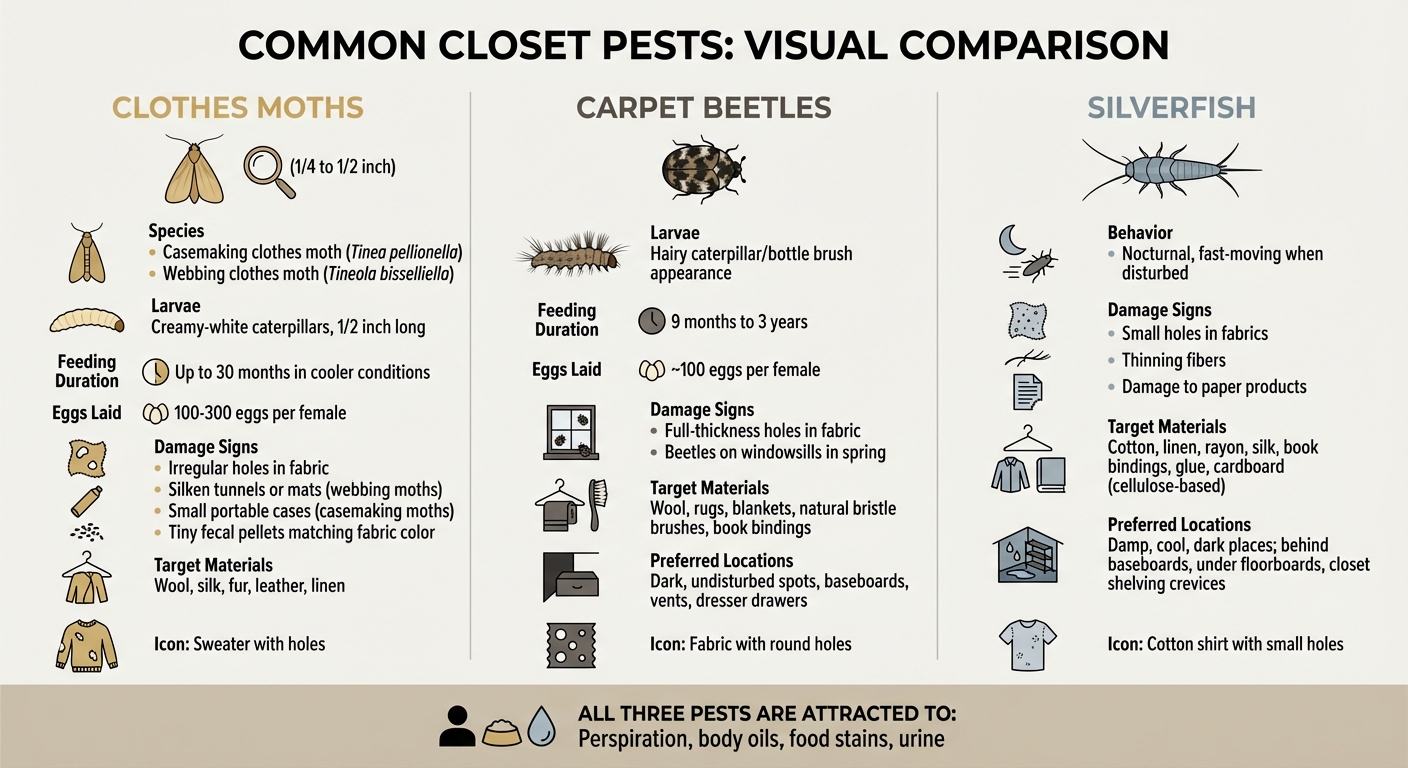
Common Closet Pests Identification Guide: Moths, Carpet Beetles, and Silverfish
Before you can protect your closet, you need to know what you're up against. The three most common pests - clothes moths, carpet beetles, and silverfish - each leave unique signs of their presence. Understanding these differences can help you choose the right approach to tackle them effectively.
Moths
Two types of moths are notorious for invading closets: the casemaking clothes moth (Tinea pellionella) and the webbing clothes moth (Tineola bisselliella). These adult moths are small, measuring only 1/4 to 1/2 inch long, with a buff or golden color. They're weak fliers and prefer to hide in dark, undisturbed corners or within folds of fabric, avoiding light.
"Adult moths don't feed on clothes, but their larvae do. They eat natural fibers, like wool, leather, and linen." - Allan Bossel, Licensed Exterminator
The larvae, which are creamy-white caterpillars about 1/2 inch long, are the real culprits. They can feed for up to 30 months in cooler conditions. Watch for irregular holes in wool sweaters, silk scarves, or fur coats. Webbing moths leave behind silken tunnels or mats on infested fabric, while casemaking moths create small, portable cases that often blend in with the fabric they’re eating. You might also spot tiny fecal pellets that match the fabric color. Since a single female moth can lay 100–300 eggs near a food source, catching the problem early is crucial.
Carpet Beetles
Carpet beetles are another common closet pest, though it's their larvae - not the adult beetles - that cause damage. The larvae resemble tiny, hairy caterpillars or "bottle brushes" and thrive in dark, undisturbed spots like baseboards, vents, and dresser drawers.
Unlike moth larvae, which often graze the surface of fabrics, carpet beetle larvae tend to create full-thickness holes. They don’t just stop at clothes - they can also damage rugs, blankets, natural bristle brushes, and even book bindings. Female beetles typically lay around 100 eggs near a food source, and the larvae can feed anywhere from nine months to three years before pupating. A common sign of an infestation is spotting small, mottled, or black beetles on windowsills in spring, as adult beetles attempt to move outdoors.
Silverfish
Silverfish are wingless, carrot-shaped insects that thrive in damp, cool, and dark places. They’re nocturnal and move quickly when disturbed, often hiding behind baseboards, under floorboards, or in closet shelving crevices where moisture collects. Unlike moths and carpet beetles, which target animal-based fibers, silverfish prefer cellulose-based materials like cotton, linen, rayon, and even starches found in book bindings and glue.
Silverfish damage appears as small holes in fabrics like silk, cotton, and linen, along with thinning fibers. They also attack paper products and cardboard. If you see these quick-moving insects darting away when you open a closet door, it’s likely you have a silverfish problem.
All three pests are drawn to items with perspiration, body oils, food stains, or urine, as these provide essential nutrients. For ongoing protection, a bi-monthly pest remedy kit offers a consistent defense against recurring issues. Spotting these signs early can help you prevent a full-blown infestation.
Essential Oils for Closet Pest Control
If you're looking for a natural way to keep pests out of your closet, essential oils are a great alternative to mothballs. These plant-based concentrates work by interfering with the sensory systems of pests like moths, carpet beetles, and silverfish, making your closet far less inviting to them. Plus, their pleasant scents can mask the natural odors that typically attract these unwelcome visitors.
"Cedarwood's aromatic compounds deter moths, while lavender and peppermint disrupt their sensory receptors."
- Pests & Diseases
However, you need to apply these oils carefully. Never use them directly on fabrics, as they can leave permanent stains. Instead, opt for methods like cotton balls, breathable sachets, or diluted sprays that don't come into direct contact with your clothes. Keep in mind that these oils evaporate over time, so you'll need to refresh your applications every few weeks. Below, we’ll explore how specific oils can help protect your closet from pests.
Peppermint Oil
The menthol-rich scent of peppermint oil is highly effective at repelling moths and even spiders. Since pests often sense their surroundings through their legs, the strong compounds in peppermint oil can be particularly off-putting. To use it, add 8–10 drops of peppermint oil to cotton balls and place them in closet corners or on shelves, ensuring they don't touch your clothing. You can also create a simple spray by mixing 5 drops of peppermint oil with 16 ounces of water and a small amount of dish soap. Spray this mixture along door frames and around the edges of your closet every few days for continued protection.
Lavender Oil
Lavender oil is a favorite for closets because it not only repels pests but also leaves behind a pleasant floral aroma. Its chemical compounds discourage moths from laying eggs and help keep silverfish at bay. However, lavender’s scent tends to fade quickly, so you’ll need to refresh it often. Tony King, a pest control expert and founder of The Pied Piper Pest Control, advises:
"Place some dried lavender sachets or cotton balls infused with essential oils in closets and drawers to guard against them".
For an even more effective solution, combine lavender oil with cedarwood oil in your sachets or cotton balls.
Clove and Eucalyptus Oil Blends
Clove oil, with its strong and spicy aroma, is another excellent option for keeping pests away. Ed Dolshun, VP of Business Development and Technical Director at Catchmaster, notes:
"The pungent aroma [of cloves] is unpleasant to the insects and deters them from laying eggs".
Eucalyptus oil works in a similar way, acting as a strong aromatic deterrent. When blended with clove oil, its effectiveness increases. To make a repellent spray, mix 1 cup of water with 10 drops each of cedarwood and eucalyptus oils. Alternatively, combine 2 teaspoons of eucalyptus oil with 1 cup of water and a few drops of liquid detergent to help disperse the oil. Shake the mixture well before spraying it around closet perimeters, steering clear of direct contact with fabrics.
While essential oils rely on their strong scents to deter pests, you can also explore natural herbs and sachets for similar results. These simple, non-toxic solutions can help keep your closet pest-free and smelling fresh.
Herbs and Natural Sachets
For a simple, low-maintenance way to protect your closet, consider using dried herbs in breathable sachets. These sachets release strong, natural aromas that discourage pests like moths, carpet beetles, and silverfish. By disrupting pest behavior, they strengthen your overall pest control efforts without the risk of staining your clothes.
These herb sachets are incredibly flexible. You can tuck them into drawers, hang them on clothing rods, or place them on shelves. Use breathable materials like muslin, cotton, or cheesecloth to allow the scent to circulate effectively. As wood‑blocks.com notes, "By tucking these little scent pouches among clothes, blankets, or linens, you create a gentle, pleasant barrier against pests - an eco‑friendly alternative to mothballs and pesticides." When paired with essential oils, these herbs provide a seamless, natural defense that blends effortlessly into your closet's environment.
Cedar Products
Cedar is one of the most trusted natural pest repellents. It contains volatile oils that act as both a deterrent and a mild insecticide, particularly effective against moths and carpet beetles. Cedar products come in various forms - blocks, rings, chips, and sachets - making it easy to integrate them into your closet.
To keep cedar effective, it needs regular upkeep. Pest control expert Lisa Jo Lupo explains:
"Cedar contains natural volatile oils that are repellant and potentially lethal to clothes moths. However, you would need high concentrations of these volatile oils to kill moths in a closet."
Over time, cedar loses its potency as the oils evaporate. If your cedar is more than three years old, it may no longer be effective unless refreshed. To revive it, lightly sand the surface every six months to expose fresh wood and release more oils. Alternatively, you can apply a few drops of cedar essential oil if sanding isn’t practical.
Be cautious about direct contact between cedar and clothing, as the oils can cause permanent stains. To avoid this, line storage areas with acid-free tissue paper or place cedar items so they don’t touch fabrics directly.
Cloves, Cinnamon, and Rosemary
Everyday kitchen spices like cloves, cinnamon, and rosemary are surprisingly effective at keeping pests at bay. Their strong, pungent scents create an unwelcoming environment for moths and beetles, discouraging them from laying eggs. Rosemary, with its pine-like aroma, provides additional protection, and thyme can be added for extra coverage.
To make your own sachets, combine equal parts of cloves, cinnamon, and rosemary in small muslin bags. Secure the bags with a ribbon and distribute them throughout your closet. For added protection, you can mix in thyme or tansy. To maintain their potency, gently squeeze the sachets every few weeks to release trapped oils. These sachets typically last three to four months. When the scent begins to fade, you can refresh them by adding a few drops of corresponding essential oils, like cinnamon or clove oil.
Bay leaves also work well as a natural deterrent and can be added to these sachets for broader pest control.
Bay Leaves
Bay leaves are a simple yet effective option for keeping pests out of your closet. Their natural compounds repel moths and silverfish, making them especially useful for seasonal storage or pantries.
Using bay leaves requires little effort. Place fresh or dried leaves directly on closet shelves or tuck them into herb sachets. Replace them every few months as their scent diminishes. Pairing bay leaves with regular closet cleaning enhances their effectiveness, ensuring a pest-free environment for your clothing.
sbb-itb-0bbb908
DIY Pest Repellent Recipes
Making your own pest repellents gives you control over the ingredients and can save you money. When working with essential oils, remember they need an emulsifier, like liquid castile soap, to mix properly with water.
Essential Oil Sprays
To create a clove oil spray for keeping moths and other closet pests at bay, gather the following:
- 30 drops of clove oil
- 10 drops of citronella oil
- 10 drops of lemon eucalyptus oil
- 2 tablespoons of unscented liquid castile soap
- 1 cup of distilled water
- An amber spray bottle
Start by combining the essential oils with the castile soap in a container. Mix until fully blended, or shake vigorously in the spray bottle for a few minutes. Use a funnel to pour the mixture into your spray bottle, then add the distilled water. Shake the bottle for about a minute before each use to keep everything well mixed.
A word of caution: Essential oils can be dangerous for pets. Master Herbalist Katy Willis emphasizes:
"Essential oils have the potency to kill cats and dogs or cause severe respiratory and neurological issues".
Oils like clove, citronella, and peppermint are particularly harmful to pets and can cause serious health problems. If you have pets, it’s best to avoid using these sprays.
For a pet-friendly option, try a neem oil spray. Mix 1/4 cup of neem oil with 1/2 gallon of water and add a small squirt of liquid castile soap. Transfer the mixture to a spray bottle and apply it to closet surfaces, such as shelves and walls. Be careful not to spray it directly on clothing, as neem oil can leave stains. Store all homemade sprays in amber glass bottles to protect the essential oils from heat and light, which can diminish their effectiveness.
Homemade Herb Sachets
Herb sachets are another great way to repel pests naturally. Combine the following ingredients:
- 2 ounces of dried rosemary
- 2 ounces of dried mint
- 1 ounce of dried ginseng
- 1 ounce of dried thyme
- 8 ounces of white cloves
Mix everything in a bowl, then fill small muslin or cotton bags with the blend. Using breathable fabric is important to allow the scent to circulate. For added strength, you can include a few drops of lavender or cedar essential oil before sealing the bags.
Place these sachets in drawers, on clothing rods, or inside storage bins. They typically remain effective for three to four months. Once the scent fades, you can either refill the sachets with fresh herbs or refresh them by adding a few drops of essential oil.
Maintaining Your Natural Repellents
Natural repellents lose their effectiveness over time, so it's important to refresh them regularly to keep your closet protected from pests. Staying on top of this upkeep ensures your DIY solutions remain just as effective as when you first applied them.
Reapplying Essential Oils
Essential oils are only effective as long as their scent lingers. As The Container Store explains:
"When you can't smell it, the pests can't either".
Once the aroma fades, the oil's effectiveness diminishes. To keep cedar blocks or rings working, sand their surface every six months to release fresh oils. You can also add a few drops of cedar essential oil to revitalize them. Keep in mind that cedar products need to be replaced every three years. For essential oils, use opened bottles within two years, and store them in cool, dark places with tightly sealed lids. Be cautious not to apply oils directly to clothing, as they can leave stains.
Proper care of essential oils is just as important as replacing herbal sachets to maintain a strong defense against pests.
Replacing Sachets
In addition to refreshing oils, replacing herbal sachets on time is key to sustaining your closet's protection. Plan to replace sachets every three to four months or as soon as the scent fades. You can give them a quick squeeze to release any remaining oils, but once the fragrance is gone, it's time for a new sachet.
To further reduce pest attractants, vacuum your closet weekly and rotate garments regularly. For off-season clothing, store items in airtight bins or vacuum-sealed bags. This not only safeguards your fabrics but also helps maintain the strength of your repellents' scent.
| Repellent Type | Action | Frequency |
|---|---|---|
| Herbal Sachets | Replace contents completely | Every 3–4 months |
| Cedar Blocks/Rings | Sand surface lightly | Every 6 months |
| Cedar Products | Replace or refresh with oil | Every 2–3 years |
| Essential Oil Cotton Balls | Reapply oil drops | When scent fades |
Why Choose Remedy for DIY Closet Pest Control

Keeping pests out of your closet can be frustrating with traditional DIY repellents, which often require constant attention. Remedy's kits simplify this process, offering a natural yet effective solution that’s safe for both kids and pets. Designed specifically for moths, carpet beetles, and silverfish, our approach combines the convenience of DIY methods with expert guidance.
Our kits use professional-grade products that steer clear of the toxic risks associated with mothballs. As pest control expert Lisa Jo Lupo explains, mothballs "are dangerous around children and pets. Therefore, most experts discourage the use of mothballs for clothes moth treatment". Remedy takes this concern seriously, providing a safer alternative that still delivers results.
We also include pheromone-baited traps, a tool trusted by professionals in the fashion and fur industries. These traps are designed to detect specific male moths, helping to confirm infestations before treatment begins. This precision means you won’t be left guessing about the source of the problem. Even better, our kits target the root issue by focusing on the larvae that actually damage your fabrics.
Traditional DIY methods can be time-consuming and risky for delicate garments. Remedy’s kits, on the other hand, come with clear instructions and provide ongoing protection through regular shipments. This means you’ll never have to worry about forgetting to refresh oils or replace sachets. Plus, we offer virtual support for pest identification and advice, all without the need to invite strangers into your home.
Conclusion
By using natural repellents and following regular maintenance routines, you can protect your closet from pests like moths, carpet beetles, and silverfish - without resorting to harmful chemicals. Options such as cedar, lavender, and essential oil blends provide a safer, eco-conscious way to keep your clothes safe, avoiding the risks linked to traditional mothballs.
Keeping up with maintenance is key. For example, cedar blocks need occasional sanding to refresh their oils, and herb sachets typically lose potency after 3 to 4 months, requiring regular replacement.
This guide has outlined how natural solutions like herbs, essential oils, and DIY recipes can interrupt pest life cycles and safeguard your closet. While these methods are effective, they do require consistent effort, which can sometimes be easy to overlook. That’s why we've created kits that simplify the process, combining high-quality natural products with scheduled shipments and virtual support. This way, you can enjoy the benefits of natural repellents without the hassle of constant upkeep. A pest-free closet starts with addressing the root causes early - whether it’s refreshing your cedar or choosing a more comprehensive solution. Take the first step toward a naturally protected closet today.
FAQs
How can I tell if pests like moths or carpet beetles are in my closet?
To detect a possible infestation, inspect your clothing and closet for signs like irregular holes, shredded fabrics, or silky webbing on materials such as wool, silk, or fur. Keep an eye out for small, creamy-white larvae, shed skins, tiny cocoons, or even adult moths lurking in dark, hidden spots. You might also spot tiny patterned beetles, which could indicate the presence of carpet beetles. If you notice any of these warning signs, it’s time to act quickly to safeguard your belongings.
What are the best natural ways to keep pests out of your closet?
To keep your closet naturally pest-free, aromatic woods, herbs, and essential oils can work wonders. Cedar is a standout choice. You can use cedar blocks, chips, or even cotton balls with a few drops of cedar oil to ward off moths and carpet beetles. Just remember to refresh the scent every few months to keep it effective. Another great option is lavender - try dried lavender sachets or add a few drops of lavender essential oil to a piece of breathable fabric. Not only does it repel pests, but it also leaves your closet smelling delightful. Eucalyptus, whether in oil form or dried leaves, is another solid pick, thanks to its strong, fresh scent.
For a simple DIY solution, combine dried rosemary, mint, and lavender in small fabric pouches. These make for a long-lasting, natural repellent. If you prefer a spray, mix a few drops of lavender, eucalyptus, and rosemary essential oils with water in a spray bottle. This is perfect for lightly misting shelves and drawers to keep pests at bay.
Beyond repellents, keeping your closet clean is just as important. Vacuum regularly, rotate your seasonal clothes, and store off-season items in airtight containers. For an easy, family-friendly option, check out our Remedy DIY Pest Control kits. They include cedar and lavender sachets that are safe for kids and pets, plus simple instructions for use. By combining these natural remedies with regular cleaning, you can protect your wardrobe without resorting to harsh chemicals like mothballs.
How often should I replace natural pest repellents in my closet?
You’ll want to replace or refresh natural pest repellents in your closet roughly every six months - or even sooner if their scent starts to weaken. These repellents, whether they’re made from essential oils or herbs, rely on their strong aroma to do the job. Since the scent fades over time, it’s a good idea to check them regularly and replenish as needed to keep those pests away.