


If mosquitoes are swarming your yard, the best way to stop them is to eliminate standing water. Mosquitoes need water to breed, and even a tiny puddle - like what you’d find in a bottle cap - can produce hundreds of mosquitoes in just a week. Here’s what you need to know:
- Why it works: Mosquitoes lay eggs in stagnant water. Removing water stops their life cycle before they become biting adults.
- What to do: Check your yard for water in flowerpots, gutters, toys, and other containers. Empty them, scrub surfaces to remove eggs, and keep them dry.
- For larger water sources: Use aerators, mosquito-eating fish, or safe larvicides like Bti to prevent breeding.
- Fix drainage issues: Fill low spots in your yard, clean gutters, and repair leaks to prevent future water buildup.
- Stay consistent: Weekly inspections and maintenance are key to keeping mosquitoes away.
Controlling Mosquito Larvae
For comprehensive protection, using a DIY pest control kit can help manage infestations beyond just standing water.
sbb-itb-0bbb908
How Mosquitoes Breed in Standing Water
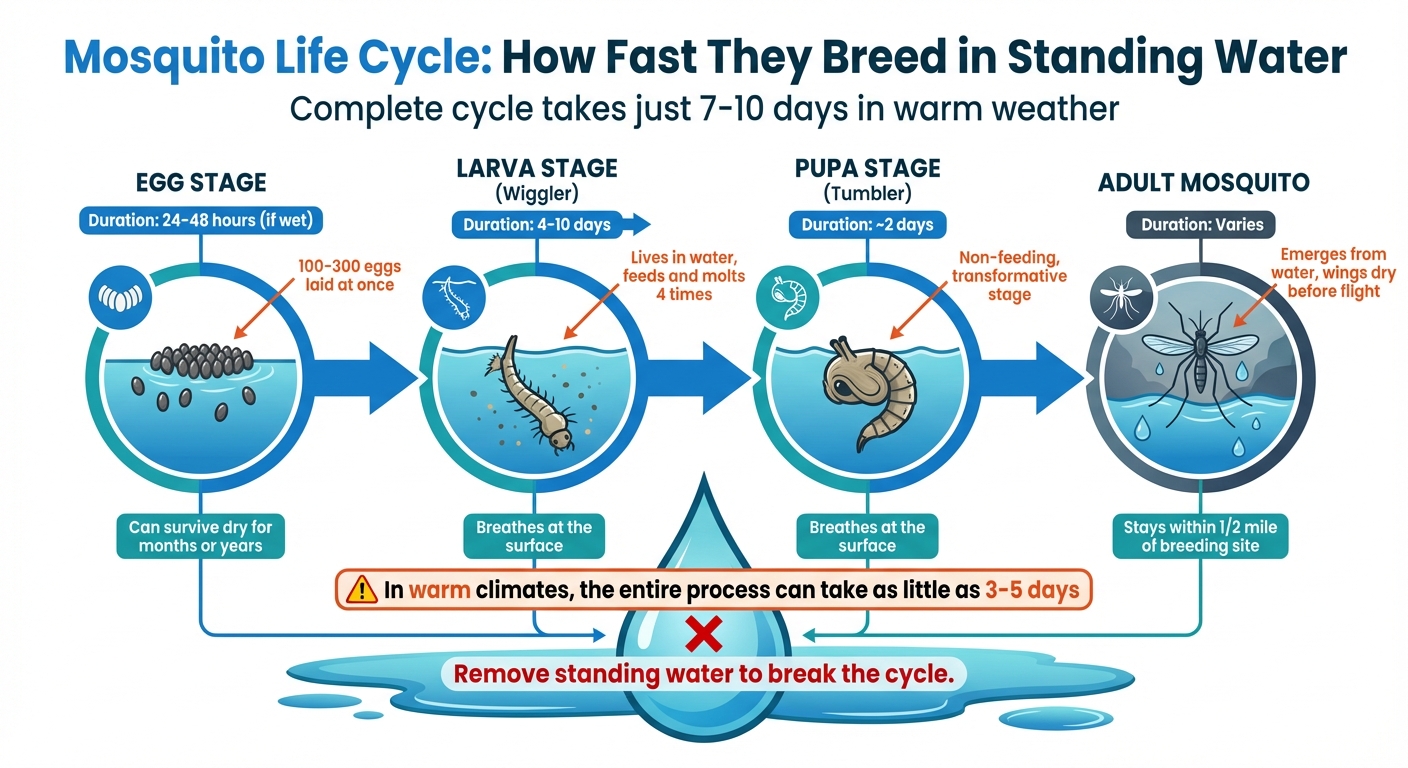
Mosquito Life Cycle Timeline: From Egg to Adult in 7-10 Days
Mosquitoes go through a water-dependent life cycle that includes egg, larva, and pupa stages before becoming adults.
Female mosquitoes lay between 100 and 300 eggs at a time after feeding on blood. These eggs are typically deposited on water surfaces or damp areas nearby. Within 24 to 48 hours, the eggs hatch into larvae, which spend 4 to 10 days feeding and growing before entering a roughly 2-day pupal phase.
| Life Cycle Stage | Duration | What Happens |
|---|---|---|
| Egg | 24–48 hours (if wet) | Laid in clusters; can survive dry conditions for years |
| Larva (Wiggler) | 4–10 days | Lives in water; feeds and molts four times |
| Pupa (Tumbler) | ~2 days | Non-feeding, transformative stage; breathes at the surface |
| Adult | Varies | Emerges from water; wings dry before flight |
In warm climates, the entire process can take as little as 3 to 5 days. Disrupting this cycle by removing standing water can halt mosquito breeding entirely. With such a rapid life cycle, even small amounts of stagnant water can quickly turn into mosquito hotspots.
Why Standing Water Attracts Mosquitoes
For mosquitoes, standing water isn't just appealing - it’s essential. Both larvae and pupae are aquatic and depend on still water to survive. They breathe at the surface, and flowing water disrupts their ability to feed and respire.
"Mosquito larvae require standing, stagnant water in which to feed and grow (mosquito larvae do not live in running water)." - Iowa State University Extension and Outreach
Even the smallest puddles or water-filled objects can support mosquito development. Think about places like flowerpot saucers, clogged gutters, or forgotten toys in your yard. These overlooked spots can sustain mosquito eggs, which can remain dormant for months or even years, waiting to hatch when rehydrated. Removing these water sources is a simple yet powerful way to interrupt mosquito reproduction.
How Removing Water Reduces Mosquito Numbers
Getting rid of standing water is one of the most effective ways to control mosquitoes. By eliminating breeding grounds, you stop mosquitoes from completing their 7- to 10-day life cycle and prevent them from maturing into adults. Since adult mosquitoes typically stay within half a mile of their breeding site, targeting water sources on your property can make a noticeable difference.
While sprays and foggers may temporarily reduce adult populations, they don’t address the root cause. Tackling the source - standing water - ensures long-term control.
Consistency is essential. Emptying and scrubbing containers weekly removes mosquito eggs that cling to surfaces. This simple habit can significantly cut down mosquito numbers around your home, reducing the need for chemical treatments.
Step 1: Find All Standing Water Sources on Your Property
The first step in controlling mosquitoes is identifying where they might be breeding. Mosquitoes don’t need much water to lay their eggs - just 1/4 to 1/2 inch is enough. This means even a small bottle cap or a fold in fabric could serve as a breeding ground.
"Backyards are the #1 source for mosquito production." - Marin/Sonoma Mosquito and Vector Control District
After a rainstorm, it’s crucial to inspect your property as soon as possible. Mosquitoes develop quickly, so standing water that lingers for about a week can lead to an infestation. Locating these water sources, big or small, is key to disrupting their life cycle. Below are some common and overlooked areas where water tends to collect.
Common Breeding Sites to Check
Start with the obvious spots. Look at bird baths, pet water bowls, and kiddie pools. Don’t forget flowerpot saucers, buckets, wheelbarrows, and outdoor toys. Rain barrels and ornamental ponds also need attention, especially if they lack proper screening or maintenance.
Roof gutters are another hotspot. Leaves and debris can trap water, creating ideal conditions for mosquito larvae. Discarded items like old tires, bins, and trash cans should be checked as well. Even decorative objects like vases or conch shells can hold enough water to support mosquito breeding.
Hidden Water Sources You Might Miss
Some breeding sites are less obvious. For instance, clogged gutters, cracks in septic tanks, and uncovered vent pipes can all hide stagnant water. If your home has a crawl space, check for sump pump issues or plumbing leaks that may leave water pooling underneath.
In your yard, inspect tree holes, hollow stumps, and any low-lying areas where rainwater collects. Thick vegetation around ponds can also provide cover for mosquito larvae, keeping them safe from natural predators. Other sneaky spots include the condensation tray under your air conditioner or folds in a boat cover - both can trap small amounts of water that mosquitoes love. Aedes mosquitoes, in particular, are known for using tiny, hard-to-spot places like bottle caps for breeding.
Inside the house, don’t forget to check flower vases, refrigerator drain pans, and any standing water in laundry rooms or under sinks. These areas can support mosquito development all year long.
Step 2: Remove or Treat Standing Water
Once you've pinpointed all water sources, the next step is to eliminate or treat them to disrupt the mosquito life cycle.
Getting rid of standing water is crucial, but simply dumping it out won’t cut it - mosquito eggs can cling to container walls and survive for months. To truly tackle the problem, containers need to be cleaned and properly maintained after being emptied.
Empty, Clean, and Cover Small Containers
For smaller items like flowerpot saucers, buckets, pet bowls, and outdoor toys, the "tip and toss" method works best: empty the water, then either discard the items or store them upside down. If you keep these containers, scrub the walls weekly to remove any mosquito eggs.
Birdbaths and pet dishes require a bit more attention - change the water at least twice a week to stop larvae from maturing. For containers that need to hold water, such as rain barrels or watering cans, use tight-fitting lids or cover them with wire mesh small enough to block adult mosquitoes. If you see larvae (often called "wrigglers") in a container, stir the water vigorously or use a fine mesh net to remove them before emptying.
Manage Larger Water Features
Once smaller containers are under control, shift your attention to larger water features for a more comprehensive approach.
Features like ponds, pools, and rain barrels require specific strategies. Keeping water in motion prevents mosquitoes from laying eggs, so consider adding fountains, waterfalls, or bubblers to maintain surface activity. For ornamental ponds, aim for a depth of over 2 feet with steep edges - mosquitoes prefer shallow water for breeding. Regularly remove excess vegetation, algae, and organic debris, as these provide food and shelter for larvae.
Stocking ponds with mosquito-eating fish, like minnows, can also be effective. These fish can consume their weight in mosquito eggs in less than a week. If draining or adding fish isn’t an option, Bti dunks (Bacillus thuringiensis israelensis) are a great alternative. These biological treatments specifically target mosquito larvae without harming pets, fish, or other beneficial insects. Bti dunks typically remain effective for about 30 days.
For swimming pools, maintain proper chemical levels even when the pool isn’t in use, and ensure water doesn’t collect on top of pool covers. By following these steps, you can significantly reduce mosquito breeding and enjoy a more comfortable outdoor environment.
Step 3: Fix Yard and Structural Problems That Cause Water Buildup
Once you've removed standing water, the next step is tackling yard and structural issues that lead to water buildup. While clearing water stops mosquitoes from breeding temporarily, fixing these problems ensures they don't find new places to thrive.
Start by addressing the root causes of water pooling. Compacted soil and thick layers of thatch can prevent water from soaking into the ground. To fix this, use a dethatching rake or machine to break up the thatch layer. Follow this with a core aerator to pull plugs of soil, allowing water to penetrate and reach plant roots instead of collecting on the surface.
If your yard has natural depressions or low spots, rainwater will accumulate there. Fill these areas with topsoil or a sand-compost mix to level them out. For more serious drainage problems, consider adding swales - grass-lined channels that guide water - or installing a French drain. A French drain uses a perforated pipe buried in a gravel trench to redirect water away from problem areas. Keep in mind, the ground should slope 2–3 inches for every 10 feet away from your home's foundation to ensure proper drainage.
Yard Maintenance to Prevent Water Pooling
Consistent yard maintenance is key to avoiding mosquito breeding sites. For example, tree holes can collect water, so fill them with sand or mortar (avoid using cement). Also, check landscape lighting fixtures to ensure they don’t trap water.
Fix irrigation leaks as soon as you spot them. Dripping valves, cracked pipes, or overwatering can create damp spots that mosquitoes love. In naturally wet areas, consider planting water-absorbing trees like Weeping Willows, Dawn Redwoods, or Swamp Maples. These trees can help soak up excess moisture and reduce standing water on your property.
Repair Structures That Hold Water
Structural issues, like clogged gutters, are another common source of mosquito problems. Clean your gutters at least once a year - more often if trees surround your home. Replace corrugated plastic drainage pipes with smooth PVC pipes, as the ridges in flexible pipes trap water, creating ideal mosquito breeding spots. Extend downspouts at least 10 feet from your home by using buried PVC pipes to prevent water from pooling near your foundation.
Another area to inspect is your septic system. Look for cracks or gaps in the walls or joints, and seal them with cement. Cover vent or plumbing pipes with wire mesh that has holes small enough to keep mosquitoes out. Even something as small as a dripping outdoor faucet can create a puddle where mosquitoes can complete their life cycle in just four days. Addressing these structural problems is essential for keeping your property mosquito-free.
Step 4: Keep Up with Regular Maintenance and Safe Treatments
Staying on top of regular maintenance is key to preventing mosquito problems from creeping back in. Even small lapses can give mosquitoes the chance to start breeding again.
Weekly Inspection and Cleanup Routine
Set aside time each week to check your property for standing water. Look for anything that can collect water - like tires, buckets, planters, toys, birdbaths, or saucers - and either empty, scrub, turn over, cover, or dispose of them. Scrubbing is especially important because mosquito eggs can cling to surfaces and survive for months, even in dry conditions.
Don’t stop there! Refresh water in birdbaths and pet dishes at least twice a week, clear out any clogs in rain gutters (especially after storms), and make sure rain barrel mesh covers are snug. Flowerpot saucers can also trap water, so drain those as well. Pay extra attention to hidden spots like flat roofs or hollow fence posts where water might collect unnoticed. If you have ornamental ponds or water gardens, keep an eye out for mosquito larvae near the surface and apply treatments as needed.
When it’s impossible to get rid of standing water completely, safe treatment options can help keep mosquitoes at bay.
Safe Mosquito Control Products
For water sources you can’t drain or cover - like ornamental ponds or large water features - biological larvicides with BTI (Bacillus thuringiensis israelensis) are a reliable solution. BTI is a naturally occurring bacterium that’s been used for mosquito control for over 30 years. It targets mosquito larvae specifically, without harming people, pets, fish, or birds. When used correctly, BTI effectively disrupts mosquito larvae while being safe for the environment.
BTI products often come in "dunk" or briquette form, providing continuous protection for up to 30 days. According to the EPA, these larvicides are safe when applied as directed: "When used according to product label instructions, larvicides do not harm people, pets, or the environment." Be sure to follow the label instructions carefully - using more than recommended won’t make them work better.
At Remedy, we offer professional-grade mosquito control products that are pet- and child-safe, with simple application guidelines. Our kits are customized for your property and come with ongoing support to help you maintain a mosquito-free yard all season long.
Conclusion
Mosquitoes can go from eggs to biting adults in just 5 to 7 days in warm weather. All it takes is a tiny bit of water - like what's in a bottle cap - for them to lay hundreds of eggs. Simply dumping out water isn't enough. You need to scrub containers to remove eggs that can cling to surfaces and survive for months.
Here’s a quick recap of the key steps for mosquito control. The guide’s four-step process sets you up for long-term success: identify water sources, remove or treat them, address structural issues, and maintain a regular routine. Weekly inspections - like the "tip and toss" routine from Step 2 - are essential. For water that can’t be drained, such as ponds or rain barrels, Bti larvicides provide a safe and effective solution that won’t harm your family, pets, or local wildlife.
Consistency is key. Missing even one week can give mosquitoes the chance to breed. For extra help, consider professional-grade mosquito control kits tailored to your property. These kits are pet- and child-safe and come with ongoing support to keep your yard mosquito-free all season. Stick to the routine, stay alert, and you’ll notice a real difference in reducing mosquito activity around your home.
FAQs
How long does it take mosquitoes to breed in standing water?
Mosquitoes can begin their development in standing water in just a matter of days. Their larval stage usually lasts between 5 and 14 days, influenced by factors such as temperature and surrounding conditions. To stop mosquitoes from breeding, it’s crucial to eliminate standing water as quickly as possible.
Do I need to scrub containers after dumping the water?
Yes, cleaning out containers after emptying them is crucial. This step ensures you remove any mosquito eggs or leftover organic material that might still allow mosquitoes to breed. Just pouring out the water won’t completely get rid of the problem.
What’s the safest way to treat water I can’t drain?
The safest way to tackle mosquito larvae is by using larvicides containing Bacillus thuringiensis israelensis (BTI). This natural bacteria targets and kills mosquito larvae but is harmless to pets, fish, birds, and people. You can apply BTI through mosquito dunks or bits directly into standing water.
Another option is to add a thin layer of oil or dish soap to the water's surface. This creates a barrier that cuts off the larvae's air supply. Just make sure to follow the product instructions carefully to ensure both safety and effectiveness.