


In desert climates, pests like ants, scorpions, and roaches are often drawn to moisture, dense plants, and poor yard maintenance. Overwatering and traditional lawns can worsen the problem by creating damp environments that attract these pests. The solution? A landscaping approach that reduces water use, eliminates pest hideouts, and incorporates pest-repellent plants.
Key Takeaways:
- Avoid Overwatering: Use drip irrigation and ensure no standing water to deter pests like mosquitoes and roaches.
- Choose Smart Plants: Opt for drought-tolerant species like desert willows, mesquite trees, and succulents. These thrive with minimal water and naturally repel pests.
- Strategic Plant Placement: Keep plants at least 2 feet away from your home and prune regularly to reduce pest access.
- Use Physical Barriers: Add gravel, polymeric sand, or steel edging to block pests like ants and scorpions.
- Maintain Your Yard: Remove fallen fruit, trim branches, and inspect irrigation systems to prevent pest-friendly conditions.
Pair these landscaping strategies with targeted pest control products for a yard that stays pest-free without heavy reliance on chemicals.
Best Desert Plants for Drought Tolerant & Heat Resistant Spring Planting
sbb-itb-0bbb908
Pest Challenges in Desert Climates
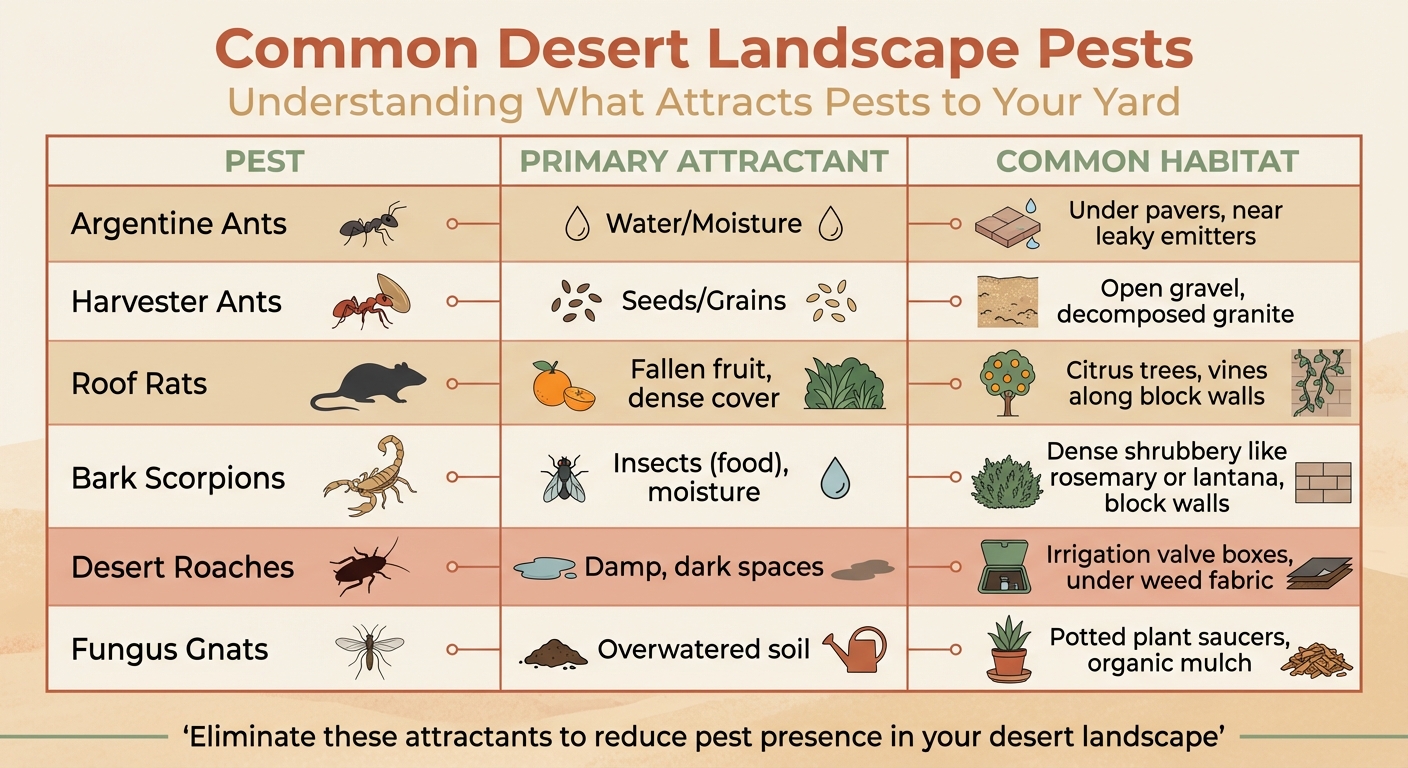
Common Desert Landscape Pests: Attractants and Habitats Guide
Common Desert Landscape Pests
Desert landscapes often face pest problems, especially when there are weaknesses in the yard's design or maintenance. For instance, Argentine ants invade homes seeking water during the sweltering late summer and reappear during monsoon rains. Meanwhile, harvester ants thrive in open, gravelly areas, scavenging seeds from decomposed granite - particularly near bird feeders or plants that have been over-seeded.
Roof rats are another challenge, using utility lines and walls to access dense foliage and fruit trees. They’re especially drawn to citrus, figs, and pomegranates. Desert roaches favor damp, dark spots like irrigation valve boxes for shelter, while bark scorpions are commonly found in natural washes and older neighborhoods, attracted by moisture, shade, and the availability of small insects for food. During humid monsoon periods, pests like fungus gnats and mosquitoes breed in overwatered plant saucers and clogged drip irrigation systems.
| Pest | Primary Attractant | Common Habitat in Yard |
|---|---|---|
| Argentine Ants | Water/Moisture | Under pavers, near leaky emitters |
| Harvester Ants | Seeds/Grains | Open gravel, decomposed granite |
| Roof Rats | Fallen fruit, dense cover | Citrus trees, vines along block walls |
| Bark Scorpions | Insects (food), moisture | Dense shrubbery like rosemary or lantana, block walls |
| Desert Roaches | Damp, dark spaces | Irrigation valve boxes, under weed fabric |
| Fungus Gnats | Overwatered soil | Potted plant saucers, organic mulch |
To effectively manage these pests, it’s important to understand how desert conditions influence their behavior.
How Desert Conditions Affect Pest Behavior
Desert climates, with their intense heat and long dry spells, push pests to seek out artificial sources of moisture in your yard. Since insects are cold-blooded, higher temperatures speed up their development. For instance, pests like sweet potato whiteflies and western flower thrips thrive at temperatures around 85–90°F, completing their life cycle in just two weeks. Making thoughtful changes to your yard’s design can help disrupt these rapid cycles.
As Dispatch Pest Control notes:
"In our climate, water is the first mover. A five-minute drip cycle that leaves a perpetual wet ring around a shrub is an invitation to root pests and ants."
Many desert pests are most active at night or during dawn and dusk to avoid the extreme daytime heat. Scorpions, for example, need three key elements to survive: cover, food, and a way to regulate their temperature. Eliminating one of these factors through smarter landscaping can drastically reduce their presence.
Monsoon winds and storms also play a role in spreading pests. For instance, whiteflies and aphids can travel several miles on wind currents to invade new areas. While heavy rains may wash away or kill some smaller pests, the resulting burst of desert vegetation creates a feast for aphids and false chinch bugs, leading to rapid population growth.
Design Principles for Pest-Resistant Landscaping
Thoughtful landscaping design can help keep pests at bay while conserving water - a win-win for homeowners in desert climates. By leveraging smart strategies, you can create physical barriers and environmental conditions that discourage common pests like scorpions, ants, roaches, and rodents.
Using Physical Barriers to Block Pests
Physical barriers are an effective way to disrupt the paths pests use to enter your yard. For example, steel edging placed between rock mulches and plant beds stops irrigation water from seeping into the sand beneath pavers, which can otherwise attract ants. Similarly, adding 3–4 inches of gravel beneath walls eliminates the damp soil that often draws roaches. A band of crushed, angular rock or a concrete mow strip, 3 to 6 inches wide, along wall bases creates unstable terrain that scorpions typically avoid.
Using polymeric sand in paver joints hardens these seams, making it harder for ants to nest. Meanwhile, sealing expansion joints where concrete slabs meet with caulk removes hiding spots for ants and roaches. For additional protection, elevate stored items and use weather stripping to seal valve boxes, reducing moisture traps.
| Physical Barrier | Target Pests | Primary Function |
|---|---|---|
| Steel Edging | Ants | Prevents moisture migration under hardscapes |
| 3–4″ Deep Gravel | Roaches | Eliminates damp soil at wall bases |
| Angular Rock Band | Scorpions | Creates unstable terrain |
| Polymeric Sand | Ants | Seals paver joints against nesting |
| Caulk/Sealant | Roaches, Ants | Closes entry points in slab expansion joints |
Now, let's look at how strategic plant placement can further reduce pest problems.
Plant Placement to Reduce Pest Access
Where you place plants in your yard matters just as much as what you plant. Keep at least 2 feet of space between mature plants and your home’s foundation to eliminate hiding spots and prevent foliage from creating a bridge to your house. Landscaping expert Zander Kim points out:
"If you plant [citrus or pomegranates] in pairs against a wall with vines and a utility line overhead, you have built a rat superhighway."
Tree branches should also be trimmed to stay at least 6 inches away from house fascias, as roof rats can jump up to 3 feet vertically and over 4 feet horizontally.
Additionally, designing plant clusters with 3-foot-wide service corridors behind hedges and along walls allows for easier inspection of irrigation systems and pest activity. Prune shrubs into a "V" shape - wider at the top and narrower at the bottom - and lift the lower branches of low-growing plants like lantana or rosemary. This improves airflow and visibility, making the area less appealing for pests to settle in.
Beyond placement, incorporating natural deterrents into your design can make a big difference.
Natural Pest Deterrents in Landscape Design
Integrating natural elements into your landscape can help reduce pest-friendly conditions while conserving water. Opt for inorganic hardscaping materials like gravel, decomposed granite, flagstone, and boulders. These materials not only enhance your yard’s appearance but also limit the environments pests thrive in. Keep rock mulch layers to about 2 inches thick, ensuring irrigation leaks are easy to spot and inspections aren’t hindered.
Switch to warm-spectrum LED lighting to minimize attraction for night-flying insects that often serve as prey for spiders and scorpions. Group plants based on their water needs and use drip irrigation to reduce surface moisture. Even small amounts of standing water, like what fits in a soda bottle cap, can become a mosquito breeding ground, so eliminate these wherever possible. Lastly, replace traditional grass lawns with drought-resistant ground covers such as crushed rock or creeping thyme to cut down on organic debris that pests might rely on.
Best Pest-Resistant Plants for Desert Landscapes
Selecting plants suited for desert conditions not only conserves water but also helps naturally ward off pests. Many desert-adapted species come with built-in defenses, making them a smart choice for low-maintenance landscaping. Below are some excellent plant options that combine pest resistance with water efficiency.
Shade Trees: Desert Willow and Mesquite
Shade trees in desert settings do more than provide relief from the sun - they also help manage pests. Two standout options are Desert Willow and Mesquite trees. Desert Willow offers filtered shade, avoiding the dense, dark areas that pests often prefer. Its fragrant flowers attract hummingbirds and other pollinators, creating a balanced ecosystem. Mesquite trees, on the other hand, have deep roots that combat soil erosion during harsh weather, while their open canopies promote airflow, reducing pest-friendly conditions.
When planting these trees, it’s important to position the trunk flare 1–2 inches above ground level to prevent root issues like rot. During their initial growth phase, water deeply - about 15 gallons per session, 2–3 times a week. Once established, these trees typically thrive with just natural rainfall, making them a practical choice for water conservation.
Succulents and Cacti for Pest Defense
Succulents and cacti are natural pest deterrents, thanks to their physical defenses and water-conserving properties. For instance, the Golden Barrel Cactus uses its dense, sharp spines to fend off rodents and other herbivores. Similarly, Agave "Blue Glow" has tough, fibrous leaves with terminal spines that discourage unwanted visitors. These plants are ideal for desert landscapes, as their water-storage abilities make them true drought survivors.
To maximize their pest-resistant qualities, arrange them in layers: taller varieties at the back, medium-height in the center, and low-growing types in the front. This improves airflow and prevents pests from finding hiding spots. Allow enough space for their growth over the next 3–5 years to maintain proper air circulation. During the first summer, water deeply every 7–10 days. Once established, they can rely on rainfall alone.
Native Flowers and Shrubs That Repel Pests
Many native plants rely on strong aromas to repel pests while thriving in dry conditions. Native Salvia, Lavender, and Mint are excellent examples. These plants produce compounds that confuse or repel insects, making them effective and low-maintenance choices. White Sage (Salvia apiana) and Cleveland Sage (Salvia clevelandii) are particularly hardy, needing minimal water once established. Mint, known for its intense aroma, can deter ants and aphids - though planting it in containers is recommended to prevent it from spreading too aggressively.
Marigolds are another great option, acting as natural barriers against soil pests like nematodes and repelling thrips and caterpillars. For slopes or challenging areas, California Buckwheat and Coyote Mint (Monardella villosa) are excellent choices. Both plants thrive in arid conditions, with Coyote Mint attracting butterflies and bees while deterring pests. To maintain their pest-repelling properties, keep these plants healthy, as stress can reduce their effectiveness.
Maintenance for Long-Term Pest Resistance
Keeping your garden pest-resistant over the long haul requires regular attention. Start with garden sanitation, which acts as your first line of defense. Make it a habit to clear out spent blossoms, fallen fruit, and decaying plant material every week. These leftovers can attract rodents and create breeding grounds for insect pests. Be especially vigilant about removing dried fruit (commonly called "mummies") as they not only lure rodents but can also harbor fungal spores.
Pruning is another key step in pest prevention. Trim branches to ensure they don’t touch buildings or other plants - these can act as bridges for pests to invade structures. If you’re using sticky bands on tree trunks to keep ants at bay, give the coating a stir every one to two weeks to keep it free of debris. For young trees, wrap the trunks with heavy paper or duct tape before applying sticky barriers to avoid damaging the bark.
Your irrigation system also plays a role in pest management. Check it monthly for leaks or clogs, as standing water can attract pests, while underwatered plants become more vulnerable to infestations. For container plants, let the soil surface dry out completely between waterings to disrupt the conditions fungus gnat larvae need to thrive. A seasonal inspection of your irrigation setup can help you catch and fix problems early.
Don’t overlook mulch management either. Maintain a 3- to 4-inch layer of mulch to suppress weeds and conserve soil moisture - this can cut watering needs by up to 50%. However, keep the mulch a few inches away from tree trunks to prevent fungal decay. Organic mulches should be replenished annually as they decompose, but if you’re looking for a low-maintenance option, inorganic mulches like gravel or river rock are great alternatives, especially for desert landscapes.
Finally, tackle weed growth as soon as it appears, particularly after rainfall. Weeds compete with your plants for limited water and nutrients while providing shelter for pests that could spread to your garden. For new plantings, use gopher baskets or line raised beds with hardware cloth to protect against underground pests. These proactive measures will help keep your garden thriving and pest-free.
Combining Landscaping with Remedy Pest Control Kits

Pest-resistant landscaping is a strong first line of defense, but it can't handle every desert pest on its own. That’s where our DIY pest control kits come in. When paired with your xeriscaping efforts, these kits fill in the gaps that landscaping alone might miss. Together, they form a comprehensive shield against some of the most persistent desert pests - like bark scorpions, roof rats, subterranean termites, and Argentine ants, which are often drawn to even tiny water sources near your home.
Each kit is tailored to address the specific pests in your area and tackle the unique challenges posed by desert environments. For example, if roof rats or moisture-seeking ants are a problem due to water-attracting features in your yard, our kits include baiting stations and perimeter treatments to create a strong barrier around your property. While a well-designed landscape reduces pest activity, it’s important to remember that pests are naturally drawn to places offering shelter, moisture, and warmth.
Our products are safe for both pets and children, so you can confidently protect your outdoor spaces without risking your family’s safety - or the health of your desert plants. Whether you’re applying perimeter sprays near your Golden Barrel Cactus or placing baiting stations around your mesquite trees, our solutions ensure effective pest control without disrupting the environment you’ve worked hard to maintain.
To make things even easier, every kit includes step-by-step instructions customized for your home’s layout and specific pest challenges. You won’t need any professional training - just follow the guide. Plus, if you’re unsure about identifying a pest or figuring out where to place treatments, we offer virtual support to guide you. With regular shipments, you’ll stay ahead of seasonal pest changes - scorpions are most active in summer, while rodents tend to move indoors as temperatures drop in the fall.
Conclusion
Creating a pest-resistant desert landscape involves thoughtful planning, choosing native plants, and routine care - like maintaining a 12–24 inch gravel buffer to deter pests and eliminate excess moisture. Native plants such as cacti, agave, and desert willow not only conserve water but also reduce debris and provide fewer hiding spots for pests like scorpions and rodents. Regular upkeep is key to eliminating the damp, shaded areas where pests thrive [22, 23]. While these landscaping practices greatly lower pest risks, combining them with a targeted pest control solution offers the best results.
To enhance these efforts, our DIY pest control kits deliver the precise protection your landscape needs. Desert homes often face ongoing challenges from pests like scorpions, roof rats, and subterranean termites, which are naturally drawn to moisture and shelter. Remedy’s approach pairs smart landscaping with our pest control kits to create a defense system that’s stronger than either solution alone.
Each kit is customized for the specific pests and conditions in your desert environment. They include professional-grade products that are safe for pets and children, along with step-by-step guides and virtual support for pest identification. Whether you’re applying perimeter treatments near your mesquite trees or setting bait stations around your succulents, our kits integrate seamlessly with your landscaping efforts, preserving the environment you’ve carefully cultivated.
FAQs
What’s the fastest landscaping change to reduce scorpions?
Replacing decorative rock landscaping with gravel or desert-friendly plants is an effective way to cut down on scorpions. These options reduce hiding spots, making your yard less inviting to them. This straightforward adjustment can greatly decrease their presence and help prevent them from finding ways into your home.
How do I fix drip irrigation so it doesn’t attract ants?
To keep ants away from your drip irrigation system, start by checking for leaks or standing water. Regularly inspect and fix any issues in the lines to prevent moisture buildup. Make sure the area around the system stays clean and dry by removing organic debris and excess moisture. You can also place ant baits nearby or try natural repellents like cinnamon or diatomaceous earth. If the problem continues, look into specialized pest control options such as Remedy.
Which desert plants repel pests without needing extra water?
Desert plants that are native to the region or well-suited to dry climates typically resist pests on their own and need very little watering. Ensuring these plants stay healthy and free from stress in harsh, arid environments is another way to keep pests at bay. While the specific plants that repel pests can differ depending on the area, choosing tough, drought-tolerant species is a smart approach to creating a landscape that's naturally resistant to pests.