


Fruit flies can be a frustrating problem, but you can manage them with simple, non-toxic traps made from everyday kitchen items. Here's how you can tackle these pests effectively:
- What Attracts Them: Fruit flies are drawn to overripe fruits, sugary liquids, and fermented smells like vinegar or wine. They also breed in damp areas like drains and garbage disposals.
- How Traps Work: Using apple cider vinegar, dish soap, and jars or bowls, you can lure and trap fruit flies. The soap breaks the liquid's surface tension, causing flies to sink and drown.
-
DIY Trap Recipes:
- Vinegar & Dish Soap Jar: Mix apple cider vinegar with dish soap in a jar, seal with plastic wrap, and poke holes for flies to enter.
- Plastic Wrap Bowl: Use a bowl with the same mixture, cover with plastic wrap, and secure with a rubber band.
- Wine or Fruit Bottle: Use wine or overripe fruit in a bottle with soap; add a paper funnel for better results.
- Placement Tips: Place traps near fruit bowls, sinks, or trash cans - the most active areas for fruit flies.
- Prevention: Store produce in the fridge, clean drains, take out trash daily, and repair window screens to keep flies out.
If traps don’t solve the issue, consider a professional-grade DIY pest control kit to address more persistent infestations.
Why Fruit Flies Invade Homes and How Non-Toxic Traps Work
What Attracts Fruit Flies
Fruit flies often hitch a ride into homes on infested produce from grocery stores or gardens. Once inside, they’re irresistibly drawn to overripe fruits like bananas, melons, tomatoes, and apples, as well as sugary or fermented liquids such as wine, beer, juice, or soda.
But it’s not just food that attracts them. Kitchen drains and garbage disposals can hold food remnants that serve as perfect breeding grounds. Damp household items like sponges, mops, and dish towels can also provide an ideal environment for these pests. Additionally, adult fruit flies can enter through open windows or doors, especially if screens are loose or damaged.
Knowing what attracts fruit flies is key to designing effective traps.
How Non-Toxic Traps Eliminate Fruit Flies
Non-toxic traps work by targeting the very things that attract fruit flies and using them as bait to lure and eliminate the pests.
A simple and effective method involves using apple cider vinegar or wine as bait. Adding a few drops of dish soap breaks the liquid’s surface tension, causing flies to sink and drown when they land. Another popular design uses a paper cone funnel or plastic wrap with small holes to guide flies into a container while preventing their escape.
These traps are not only effective but also safe. They rely on everyday pantry items like vinegar, honey, and dish soap, avoiding the need for harsh chemical pesticides. Plus, jars with tight-fitting lids and small holes ensure they’re safe to use around kids and pets, making them a practical solution for any household dealing with a fruit fly problem.
sbb-itb-0bbb908
Materials Needed to Make Non-Toxic Fruit Fly Traps
Required Materials
You can make effective fruit fly traps with items you likely already have in your kitchen. The star ingredient is apple cider vinegar, which mimics the smell of ripening fruit and is far more effective than regular white vinegar. If you're out of apple cider vinegar, you can substitute with red wine, beer, or even overripe fruit like bananas or peaches.
Dish soap is another essential. It breaks the surface tension of the liquid, preventing flies from escaping once they land. According to Good Housekeeping, dish soap plays a key role in trapping flies by breaking the liquid's surface tension. Any brand will work, though a fruity-scented soap might make the trap even more enticing.
For the traps themselves, Mason jars are a great choice, especially if you use their metal lids. In one test, a Mason jar with small holes punched into the lid caught nearly 50 fruit flies in just one week. If you don’t have Mason jars, you can use recycled sauce jars, wine bottles, soda bottles, or even small bowls.
You’ll also need plastic wrap and rubber bands if you’re using the covered bowl method, or parchment paper to make a funnel. To create entry holes, a toothpick, fork, or nail will come in handy. If you’re punching holes in a metal lid, use a nail and hammer, and protect your countertop with a piece of scrap wood.
Most trap recipes are simple, typically calling for 2 tablespoons of dish soap, 4 tablespoons of apple cider vinegar, and 6 tablespoons of water. It’s an inexpensive and practical solution, so you can get started without needing a special trip to the store. With your materials ready, you’re all set to move on to the step-by-step instructions for building these traps. For long-term protection against various household pests, consider a Quarterly Pest Remedy Kit.
EASY HOMEMADE FRUIT FLY TRAP
Step-by-Step DIY Non-Toxic Fruit Fly Trap Recipes
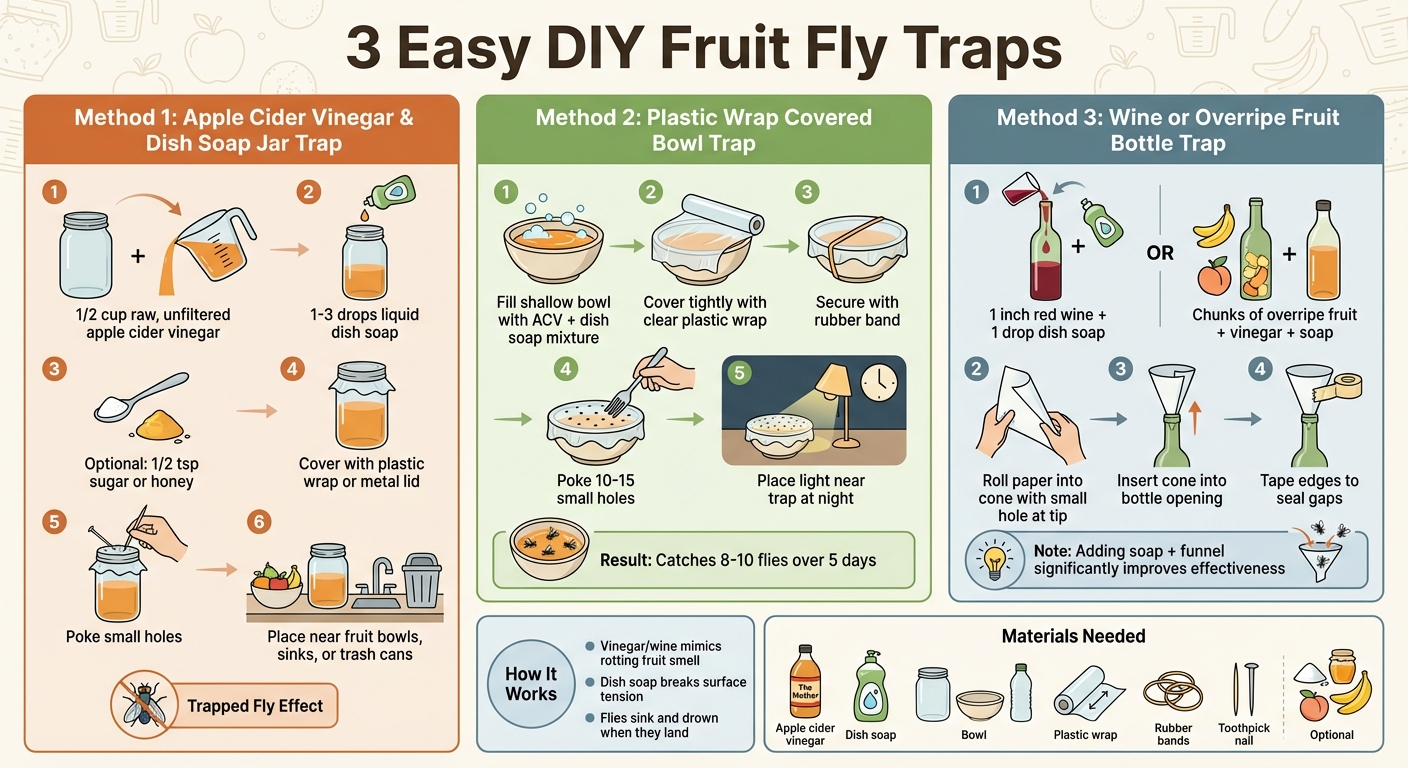
3 DIY Non-Toxic Fruit Fly Trap Methods with Step-by-Step Instructions
Apple Cider Vinegar and Dish Soap Jar Trap
Start with 1/2 cup of raw, unfiltered apple cider vinegar - the kind with "the mother" still intact. This type of vinegar has a strong fermented smell that fruit flies can’t resist, as it mimics rotting fruit. Add 1 to 3 drops of liquid dish soap to the vinegar; the soap breaks the surface tension, causing the flies to sink and drown. For an extra boost, mix in 1/2 teaspoon of sugar or honey to enhance the aroma.
Seal the jar with plastic wrap, securing it with a rubber band, or use a metal lid. Poke small holes in the cover using a toothpick or nail - just large enough for flies to crawl in but hard for them to escape. Place the trap near areas where fruit flies tend to gather, such as fruit bowls, sinks, or trash cans.
Plastic Wrap Covered Bowl Trap
This method uses a shallow bowl instead of a jar. Fill the bowl with the same apple cider vinegar and dish soap mixture. Cover it tightly with clear plastic wrap, securing it with a rubber band.
Poke 10 to 15 small holes in the plastic wrap, ensuring they’re big enough for flies to enter. This setup provides a larger surface area to attract flies but can be more prone to spills compared to jar traps. In tests, a plastic wrap–covered jar caught 8 to 10 fruit flies over five days. For better results, place a light near the trap at night to draw more flies. If you’re looking for another option, try the bottle trap.
Wine or Overripe Fruit Bottle Trap
Pour about 1 inch of red wine into a bottle and add a drop of dish soap. Red wine is especially effective because its strong fermentation scent is irresistible to fruit flies. The bottle’s narrow neck works as a natural funnel, letting flies enter easily but making escape difficult.
For a fruit-based alternative, add chunks of overripe banana or peach to the bottom of a jar or bottle. Then, pour in a small amount of vinegar and dish soap to ensure the flies drown once inside. To make it even more effective, roll a piece of paper into a cone with a small hole at the tip, insert it into the container, and tape the edges to seal any gaps. While simple wine bottle traps scored only 2 out of 10 in effectiveness, adding soap and a funnel significantly improves their success. These traps are safe for homes with kids and pets, and each method offers a practical way to deal with fruit flies using a DIY pest control kit. Choose the one that fits your space best!
Placement and Prevention Tips
Where to Place Your Traps
Set your traps in spots where fruit flies are most active. Ideal locations include kitchen counters near fruit bowls, around sinks, and next to trash cans. These areas tend to be moist and rich in food residue, which fruit flies love. Don’t forget spots like garbage disposals and damp cleaning tools, as these are also common hangouts [6, 10, 24, 31]. If you store recyclables indoors, place traps near empty wine, beer, or juice bottles - leftover sugary residues in these containers are a magnet for fruit flies [3, 24, 31].
If your home has windows or doors that let in light at night, consider placing traps nearby. Newly emerged adult fruit flies are naturally drawn to light, making these entry points prime trap locations [3, 30]. To ensure your traps work effectively, avoid placing them near competing attractants.
While strategic trap placement can handle the current infestation, lasting results depend on addressing the root causes that attract fruit flies in the first place.
How to Prevent Future Infestations
To keep fruit flies from coming back, it’s crucial to eliminate their breeding grounds. Beyond setting traps, maintaining a clean and organized environment is key.
Store all fruits and vegetables in the refrigerator or sealed containers to keep them out of reach - especially overripe produce [3, 8, 10]. Clean your kitchen drains and garbage disposals weekly. Use a bottle brush with a grease-cutting cleanser, or flush them with a mix of baking soda and vinegar followed by boiling water [3, 10, 31].
"There is no better control for fruit flies than good sanitation to remove breeding sites!"
- Jim McHale, CEO, JP McHale Pest Management
Take out the trash and empty compost bins daily, rinsing recyclable containers before disposal [3, 8, 31]. Wipe down counters immediately after meals to clear sugary spills and food crumbs [10, 24]. Be thorough - check for hidden trouble spots like rotting potatoes or onions in your pantry and spilled liquids under appliances [3, 33]. Regularly wash dish towels and ensure mops are fully dry after use [10, 24]. Finally, install or repair window and door screens using 16-mesh screening to keep outdoor flies from sneaking into your home [3, 10].
When to Consider Remedy DIY Pest Control Kits

DIY traps can work wonders for smaller fruit fly infestations, but they might not be enough for more stubborn problems. If you've been using vinegar traps and still see no significant improvement after a week, it might be time to step up your pest control game. Fruit flies can multiply quickly, often outpacing the effectiveness of basic home remedies.
Another warning sign is when your traps seem to work at first, but the flies keep reappearing. As pest control expert Emily Benda Gaylord explains, "If your fruit fly control efforts have little to no effect, there's either a fruit fly source that has gone undetected or the flies you see might not be fruit flies". Even if you've addressed the usual breeding spots, the issue might be that your baits aren't strong enough - or you could be dealing with a different pest altogether, like drain flies or fungus gnats. These situations call for a more advanced solution.
This is where our Remedy DIY Pest Control Kits come in. Designed to tackle persistent infestations, these kits are tailored to your home's specific needs and location. They feature professional-grade attractants that are far more effective than household vinegar, yet still completely safe for pets and children. Plus, the kits include simple instructions, so you can handle the application without needing any prior experience.
What makes our kits stand out is the added layer of support they provide. We offer virtual assistance to help you identify whether you're actually dealing with fruit flies or another pest that requires a different strategy. On top of that, our subscription-based shipments ensure you maintain consistent protection, breaking the fruit fly reproduction cycle and preventing future infestations. All of this means you can achieve professional-level results without the hassle of scheduling exterminator visits or having strangers in your home.
Conclusion
Homemade non-toxic traps - like the classic combination of vinegar, dish soap, and a jar - can be an effective and safe way to tackle fruit flies in just a few days. As Timothy Wong, Technical Director at M&M Pest Control, explains, "The soap breaks up the surface tension so any fruit fly that lands for a drink will fall into the liquid and won't be able to escape".
To get the best results, combine these traps with consistent prevention habits. Store produce in the refrigerator, flush drains with boiling water, and clean up surfaces immediately after use to eliminate potential breeding grounds.
If these basic steps aren't enough, it might be time to step things up. Persistent fruit flies after a week could call for a more thorough solution. Remedy DIY Pest Control Kits offer professional-grade attractants and ongoing support, including virtual assistance and regular shipments, to help you break the cycle. These kits let you handle the problem effectively without needing to schedule an exterminator.
FAQs
What are the best non-toxic ingredients to use in a homemade fruit fly trap?
The best way to trap fruit flies without using harsh chemicals is by using apple cider vinegar mixed with a few drops of dish soap. For an extra lure, you can add a bit of honey or sugar to the mixture. This combination is highly effective because the vinegar draws the flies in, while the dish soap breaks the liquid's surface tension, preventing them from escaping. It's a straightforward, safe, and hassle-free method to deal with these pesky insects at home.
What can I do to stop fruit flies from getting into my home?
To keep fruit flies at bay, start by eliminating what draws them in. Toss out any overripe fruit, store fresh produce in the fridge or sealed containers, and promptly clean up sugary spills or food crumbs from counters and appliances. Regularly take out the trash, scrub the inside of trash cans, and clear drains of any food residue, as fruit flies often lay eggs in the slimy buildup.
Block their entry by sealing windows and doors with mesh screens, and cover fruit bowls with breathable cloths or move them to the fridge. Ensure bottles of alcohol or vinegar-based cleaners are tightly sealed to avoid attracting flies. For an extra layer of protection, consider using a Remedy DIY pest-control kit, which contains pet- and child-safe products to deter fruit flies without the use of harsh chemicals. By combining thorough cleaning, smart food storage, and safe pest-control methods, you can keep your home free of these pesky invaders.
When should I switch to professional-grade solutions for fruit flies?
Homemade, non-toxic traps can be a helpful starting point when dealing with a small fruit fly problem. But here's the catch: a single fruit fly can lay up to 500 eggs, meaning things can spiral out of control fast if the root cause isn’t tackled. If you’ve tried DIY solutions like the banana-vinegar-soap trap or the jar-and-funnel method and still notice flies hanging around after a few days - or worse, if they’ve spread to other rooms - it might be time to step up your game.
Professional-grade options, such as our Remedy kits, are specifically designed to disrupt the fruit fly life cycle while being safe for both pets and kids. If those DIY traps haven’t done the trick after a week or more, or if the flies keep coming back, switching to a professional-grade solution can save you time and stop the problem from escalating further.