


Pesticides are everywhere - lawns, homes, and parks - but they can pose serious health risks to children and pets. Kids under five made up 45% of pesticide exposure calls in Minnesota in 2022, and pets are often exposed through their grooming habits or treated areas. The symptoms? They often look like common illnesses, making them easy to overlook. Early recognition is key to preventing severe health issues.
Key Points:
- Children's symptoms: Headaches, nausea, rashes, and behavioral changes. Severe cases can include seizures or breathing issues.
- Pets' symptoms: Drooling, vomiting, tremors, or difficulty breathing, which may escalate quickly.
- Immediate actions: Rinse skin or fur, move to fresh air, and contact Poison Control (1-800-222-1222) or a vet for guidance.
- Prevention tips: Use non-chemical pest control, keep kids and pets away from treated areas, and store pesticides securely.
Understanding the risks and acting fast can protect your loved ones from harm.
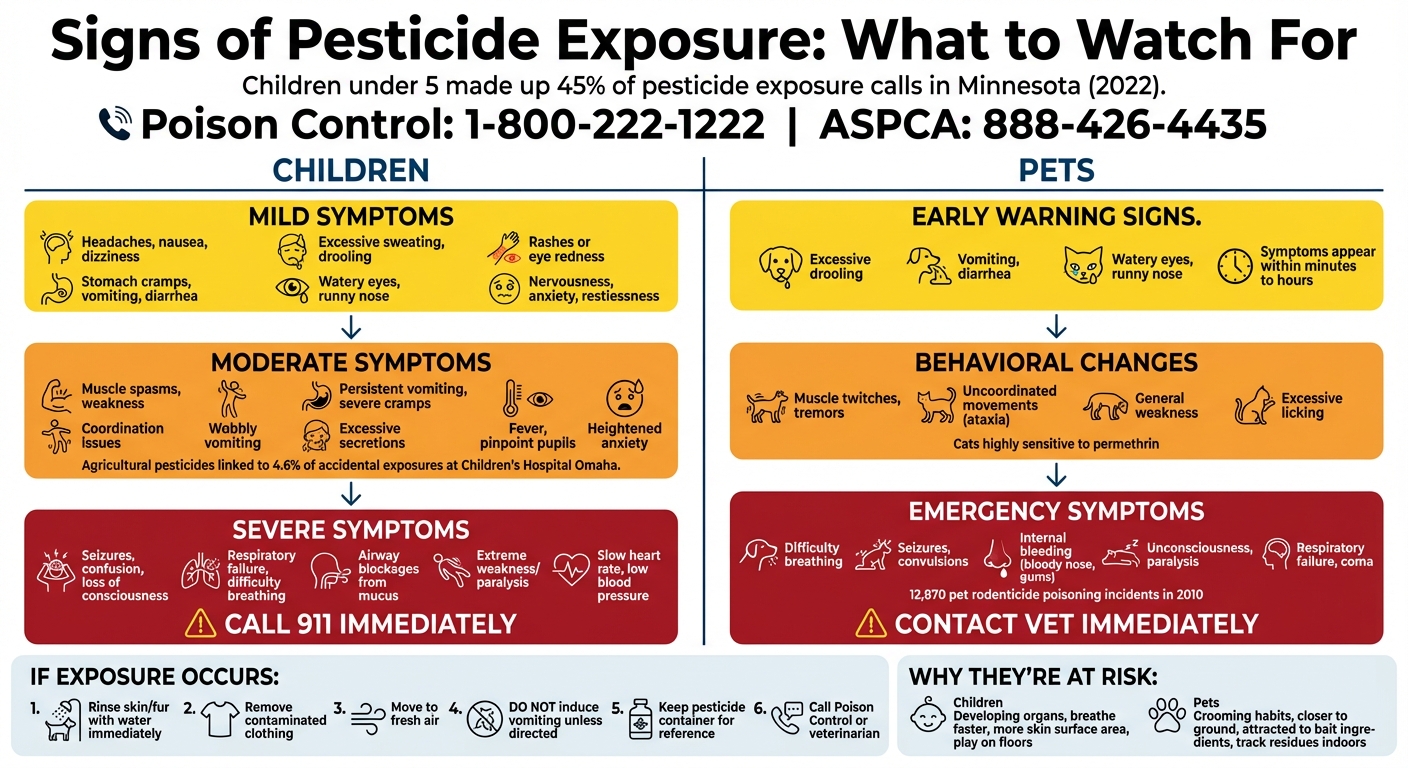
Pesticide Exposure Symptoms in Children and Pets by Severity Level
How do Pesticides Effect Kids and Pets?
Signs of Pesticide Exposure in Children
Recognizing the signs of pesticide exposure early can be crucial in preventing a mild situation from escalating into something more serious. Symptoms can vary depending on the level of exposure and how it occurred - whether through skin contact, inhalation, or ingestion.
Mild Symptoms
Early symptoms often resemble common illnesses like the flu, asthma, or heat exhaustion. These may include headaches, nausea, dizziness, and fatigue. Stomach cramps, diarrhea, or vomiting could also occur. Physical signs might include excessive sweating, drooling, watery eyes, or a runny nose. If the exposure involves skin contact, you might notice rashes or redness in the eyes. Behavioral changes such as nervousness, anxiety, restlessness, or mild tremors can also be warning signs.
"Pesticide poisoning is a commonly under-diagnosed illness. Health care providers generally receive a limited amount of training in occupational and environmental health, especially in pesticide-related illnesses."
- Frederick M. Fishel, Professor, University of Florida IFAS
Pay attention to when the symptoms start. If your child suddenly develops "flu-like" symptoms after being near areas recently treated with pesticides - like lawns, gardens, or indoor spaces - exposure could be the cause. If these signs worsen, they may progress to moderate symptoms.
Moderate Symptoms
As exposure becomes more serious, symptoms can intensify. Muscle spasms, weakness, and coordination issues may appear. Persistent vomiting, severe abdominal cramps, and diarrhea are strong indicators of a worsening condition. You might also notice an increase in bodily secretions, such as excessive sweating, salivation, tearing, or mucus production in the airways. Other signs include fever, pinpoint pupils (miosis), and heightened restlessness or anxiety. Alarmingly, agricultural pesticides have been linked to 4.6% of accidental exposures reported to the Poison Center at Children’s Hospital in Omaha.
"Progressive symptoms include muscle spasms, weakness, tremors, lack of coordination, vomiting, abdominal cramps, and diarrhea."
- Inez Feldhake, Marsland Companies
If you suspect pesticide exposure, contact the National Poison Center at 1-800-222-1222 for guidance. If symptoms continue to escalate, immediate medical attention is necessary.
Severe Symptoms Requiring Emergency Care
Severe cases of pesticide poisoning demand urgent medical intervention. Neurological symptoms such as seizures, confusion, loss of consciousness, or agitation may occur. Respiratory issues, including respiratory failure, difficulty breathing, or airway blockages due to excessive mucus, are critical warning signs. Other physical symptoms include pinpoint pupils, extreme weakness that could lead to paralysis, a slow heart rate (bradycardia), and low blood pressure.
If your child is unconscious or vomiting, place them in the left lateral position, with their head lower than their feet, to minimize the risk of aspiration.
"Serious poisonings should be managed with the guidance of a medical toxicologist and/or the regional Poison Center."
Call 1-800-222-1222 immediately or visit PoisonHelp.org for around-the-clock expert assistance. Keep the pesticide container nearby to provide details like the product name, EPA registration number, and active ingredients. While waiting for help, check your child’s airway, breathing, and circulation. If the exposure was through skin contact, wash them thoroughly with soap and water. For breathing difficulties, emergency responders may need to perform intubation or provide ventilation.
Signs of Pesticide Exposure in Pets
Pets can’t tell us when they’re in pain, so it’s crucial to recognize the signs of pesticide exposure quickly. Dogs and cats often react differently than children, and the severity of their symptoms can escalate rapidly depending on the type of pesticide and the amount they were exposed to.
Early Warning Signs
Initial symptoms like excessive drooling, vomiting, and diarrhea can show up within minutes to hours after exposure. You might also notice watery eyes or a runny nose. As these physical signs develop, keep an eye out for behavioral changes that could point to more serious toxicity.
Behavioral Changes in Pets
As exposure worsens, changes in behavior become more noticeable. Muscle twitches and tremors are red flags that the pesticide may be impacting your pet’s nervous system. Other signs include uncoordinated movements (ataxia) or general weakness, which can make it hard for your pet to stand or move properly.
"Because animals are unable to tell their owners that they aren't feeling well, they can't describe symptoms... Instead, the owner or vet must rely on signs, or observations of physical changes, seen in the cat's or dog's behavior."
- Erin C. Bauer, Entomology Lecturer, University of Nebraska–Lincoln
Excessive licking is another warning sign, often pointing to oral ingestion of pesticides. Cats are particularly sensitive to certain chemicals like permethrin, which can trigger immediate neurological symptoms such as tremors or seizures. Dogs, on the other hand, are less picky eaters and might consume toxic baits containing enticing ingredients like molasses or bran.
Emergency Symptoms
In severe cases, quick action is critical. Symptoms like difficulty breathing, seizures, convulsions, or internal bleeding require immediate veterinary care. If your pet loses consciousness, experiences muscle twitching, or shows signs of paralysis, don’t wait - seek help right away.
Rodenticide exposure is especially dangerous and can cause internal bleeding, which might show up as a bloody nose, bleeding gums, or blood in vomit or stool. In 2010 alone, rodenticides were linked to 12,870 reported pet poisoning incidents. Other severe symptoms can include respiratory failure and even coma.
"If your pet is having difficulty breathing, is bleeding, having tremors, seizures, convulsions, or is unconscious, contact a veterinarian or animal poison control center immediately."
If you suspect pesticide poisoning, contact the ASPCA Animal Poison Control Center at 888-426-4435 or the Pet Poison Helpline at 855-764-7661 immediately. Be prepared to provide the pesticide product name and EPA registration number to your veterinarian. If your pet isn’t breathing, they may need artificial respiration right away.
Why Children and Pets Are More at Risk
Children and pets aren't just smaller versions of adults; their growing bodies and unique habits make them more vulnerable to the harmful effects of pesticides. By understanding these differences, you can take steps to protect the most sensitive members of your household. Let’s break down why children and pets are particularly at risk.
Risk Factors for Children
Children’s bodies are in a constant state of growth. Their brains, nervous systems, and immune systems are still developing, making them especially sensitive to toxins. During this critical time, exposure to harmful chemicals can lead to lasting damage. For example, infants have underdeveloped livers and kidneys, which aren’t as effective at filtering out harmful substances.
"An infant's brain, nervous system, and organs are still developing after birth. When exposed, a baby's immature liver and kidneys cannot remove pesticides from the body as well as an adult's liver and kidneys."
- National Pesticide Information Center
Kids also breathe faster and consume more food and water relative to their body weight compared to adults, which increases their pesticide exposure. Plus, their skin has a larger surface area relative to their weight, making it easier for chemicals to be absorbed. Research shows that about 2% of a pesticide synergist (PBO) applied to human skin can be absorbed in just 30 minutes. Toddlers, who spend a lot of time crawling and playing on the floor, face additional risks from pesticide residues that settle on surfaces.
Risk Factors for Pets
Pets face similar physiological vulnerabilities, but their behaviors often put them at even greater risk. For instance, grooming is a natural habit for dogs and cats, but it can lead to accidental ingestion of pesticide residues from their fur or paws. These residues can come from treated floors, lawns, or even from other animals that have been treated.
"Pets are attracted to the food ingredients in these products and pets have been known to eat them after they have been applied, dig them up when placed underground and chew stored product containers to eat the product."
- National Pesticide Information Center
Because pets are closer to the ground, they’re more likely to inhale pesticide dust or absorb vapors through their skin. Some baits, like those for rodents or slugs, use food-based ingredients to attract pests, but these can also tempt pets to consume dangerous toxins. Puppies and kittens are especially at risk, and certain products safe for dogs can be harmful - or even lethal - for cats. Pets can also track pesticide residues indoors on their paws or fur, creating ongoing exposure. To minimize risks, keep pets out of treated areas for at least 24 hours so that pesticides can settle properly.
sbb-itb-0bbb908
What to Do After Pesticide Exposure
If a child or pet comes into contact with pesticides, quick action is essential. Start by wearing protective clothing to safeguard yourself, and secure the pesticide container - it contains vital first-aid instructions.
Removing the Pesticide
The priority is to dilute and remove the pesticide to prevent further absorption. For skin or fur exposure, immediately rinse the area with water, remove any contaminated clothing, and wash thoroughly with soap. Avoid scrubbing too harshly, as it can irritate the skin further.
"If pesticide splashes on the skin, drench area with water and remove contaminated clothing. Wash skin and hair thoroughly with soap and water." - US EPA
For eye exposure, hold the eyelid open and gently rinse with running water for at least 15 minutes. If contact lenses are worn, remove them after the first 5 minutes of rinsing. In cases of inhalation, move the affected person or animal to fresh air without delay, loosen tight clothing, and keep them warm and calm. If the pesticide has been swallowed, rinse the mouth thoroughly with water - but do NOT induce vomiting unless explicitly directed by the product label or emergency personnel.
If symptoms persist after these steps, take immediate further action.
When to Call for Help
Dial 911 right away if the child or pet is unconscious, having trouble breathing, or experiencing seizures. For human exposures, you can also contact Poison Control at 800-222-1222, while the National Pesticide Information Center at 800-858-7378 can provide advice on pesticide toxicity in non-emergency situations. Even if the symptoms seem minor, always consult a medical professional or veterinarian after any significant exposure. Make sure to bring the pesticide container or label with you for reference.
"First aid is only the first response and is not a substitute for professional medical help. It is very important to get the victim to a hospital without delay." - Frederick M. Fishel, Professor, University of Florida
Contaminated clothing: Discard clothing that is heavily soiled with pesticides. Wash lightly contaminated items separately in hot water using a heavy-duty detergent.
Preventing Exposure with Safe Pest Control
Protecting your home from pests doesn't have to mean exposing your family to harmful chemicals. The US EPA advises that "The most effective way to reduce risks posed by pesticides is to use non-chemical control methods to reduce or eliminate pest problems". Simple actions like removing food sources, fixing leaks, and sealing entry points can go a long way in keeping pests at bay. Let's take a closer look at some safe and effective solutions for minimizing exposure.
Using Remedy's Pet- and Child-Safe Kits
Our kits are designed with your family's safety in mind. By implementing Integrated Pest Management, we focus on non-chemical methods first and turn to low-toxicity options only when necessary. Each kit includes secure bait stations to keep chemicals safely out of reach, along with child-resistant packaging to reduce risks in case of accidental contact. Unlike traditional pest control methods that can spread chemicals throughout your home - where only 1% typically reaches the target pest, leaving the other 99% on surfaces and in the air - our targeted application methods help ensure your family isn't exposed to unnecessary chemicals.
Safe Application Tips
When using treatments, safety starts with preparation. Remove children, pets, and items like toys, bedding, or food bowls from the area before applying any product. Always read the label thoroughly to understand how long the treated space should remain off-limits. For liquid applications, this is usually about two hours, allowing time for the product to dry. For granular treatments that need to be watered into the soil, pets may need to stay away for 24 hours or longer. Once the application is complete, ventilate the room to ensure proper airflow.
The National Pesticide Information Center emphasizes that "Pet owners can minimize the chance of their pet having a problem by following label directions, selecting lower toxicity pesticides, and minimizing the amount of exposure their pet has to the pesticide during and after the application".
When applying treatments, wear protective gear like impermeable gloves, long pants, and long-sleeved shirts, and wash your hands and clothing immediately afterward. Place baits in areas that are out of reach for children and pets, such as behind appliances or inside child-proof cabinets. Always store products in their original containers in a secure location, and never transfer them to unmarked jars or food containers to avoid confusion. Lastly, check that your window and door screens are intact before you ventilate, so you can let fresh air in without inviting pests back inside.
Conclusion
Recognizing the signs of pesticide exposure early can make all the difference in protecting your kids and pets. Symptoms like headaches, nausea, dizziness, and excessive sweating might seem like the flu but could signal pesticide exposure, especially after contact. Eye exposure is particularly concerning since the eyes absorb pesticides faster than any other part of the body, causing potential damage within minutes.
If exposure occurs, act quickly. Call Poison Control at 1‑800‑222‑1222 and have the pesticide label handy. Remove any contaminated clothing, wash the skin and hair thoroughly with soap and water, and move to a well-ventilated area. For severe symptoms like convulsions, trouble breathing, or unconsciousness, call 911 immediately.
Prevention is your strongest defense. The EPA advises that the safest way to reduce pesticide risks is by using non-chemical methods to manage pests. Start by sealing cracks, eliminating food sources, and fixing leaks. If pesticides are necessary, opt for safer solutions. For example, our kits incorporate Integrated Pest Management techniques, using secure bait stations designed to protect children and pets.
Safe practices go hand-in-hand with quick action. Always follow label instructions, keep treated areas off-limits until they’re dry, and store pesticides in their original, locked containers. By staying alert and adopting responsible pest control methods, you can maintain a pest-free home while keeping your family safe.
FAQs
What should I do right away if my child or pet is exposed to pesticides?
If you think your child or pet has been exposed to pesticides, quick action is essential to keep them safe:
- Get help immediately. If they’re unconscious, struggling to breathe, or having seizures, call 911 right away. For less severe cases, reach out to the National Poison Control Center at 1-800-222-1222 for expert advice. Make sure to have details about the pesticide handy, like its name and active ingredients.
- Move them away from the source. Get your child or pet out of the treated area and into fresh air. Take off any contaminated clothing and rinse their skin or eyes with clean, running water for at least 15 minutes. Avoid inducing vomiting unless directed by a poison control expert or the product label.
- Seek professional care. Once you’ve administered first aid, head to the nearest emergency room or veterinary clinic. Bring the pesticide container or label with you for reference. To reduce future risks, consider switching to child- and pet-friendly alternatives like Remedy DIY Pest Control kits.
What are the best ways to prevent pesticide exposure for kids and pets at home?
Preventing pesticide exposure begins with proper storage and careful use. Always store pesticides in a locked cabinet that’s out of reach of children and pets. Use safety latches, and make sure all containers are tightly sealed. Before applying any pesticide, take the time to read the label thoroughly, follow the instructions step by step, and never mix different products - this can lead to dangerous misuse.
For indoor pest control, consider non-chemical approaches first. Sealing cracks, setting traps, and removing food sources can reduce the need for pesticides. If you need to use pesticides outdoors, pick a calm day to prevent the spray from drifting into areas where children or pets play. Want a safer, hassle-free option? Remedy DIY Pest Control kits provide professional-grade products that are safe for kids and pets. These kits are tailored to your home’s needs and come with easy-to-follow instructions, plus regular shipments to ensure pests stay under control.
By focusing on secure storage, following product labels, and opting for low-toxicity methods, you can protect your family and pets while managing pests effectively.
Why are kids and pets more sensitive to pesticide exposure than adults?
Children and pets are particularly vulnerable to pesticides because their bodies handle chemicals differently than adults. For kids, their developing organs - such as the brain and liver - aren’t fully capable of breaking down harmful substances. They also breathe faster, have a larger skin surface area relative to their body weight, and consume more food and water proportionally, all of which can heighten their exposure. On top of that, typical childhood behaviors, like playing on the floor or putting random objects in their mouths, increase the chances of coming into contact with pesticides.
Pets face similar dangers since they live in the same environment and can absorb pesticides through their skin, by inhaling them, or even by licking treated areas. Everyday activities - like lying on carpets that have been sprayed or grooming themselves after walking on treated surfaces - can lead to significant exposure. Given their smaller size and faster metabolism, even tiny amounts of pesticides can have serious effects. Choosing pet- and child-safe pest control options, such as those offered by Remedy, is a smart way to protect your loved ones while keeping your home pest-free.