


Storing pest control products properly is essential to ensure safety for your family, pets, and the environment. Improper storage can lead to accidents, reduced product effectiveness, and contamination risks. Here’s a quick summary to help you store pesticides the right way:
- Location Matters: Keep products in locked, secure areas, away from children, pets, and water sources. Use dry, ventilated spaces with non-absorbent flooring.
- Temperature Control: Store between 40–90°F, avoid direct sunlight, and follow label instructions for specific temperature needs.
- Original Containers Only: Never transfer pesticides to food or drink containers. Keep labels intact for safety and usage information.
- Organize Smartly: Separate products by type (e.g., herbicides, insecticides) and keep dry formulations above liquids to prevent contamination.
- Regular Inspections: Check for leaks, damage, or expired products and address issues immediately.
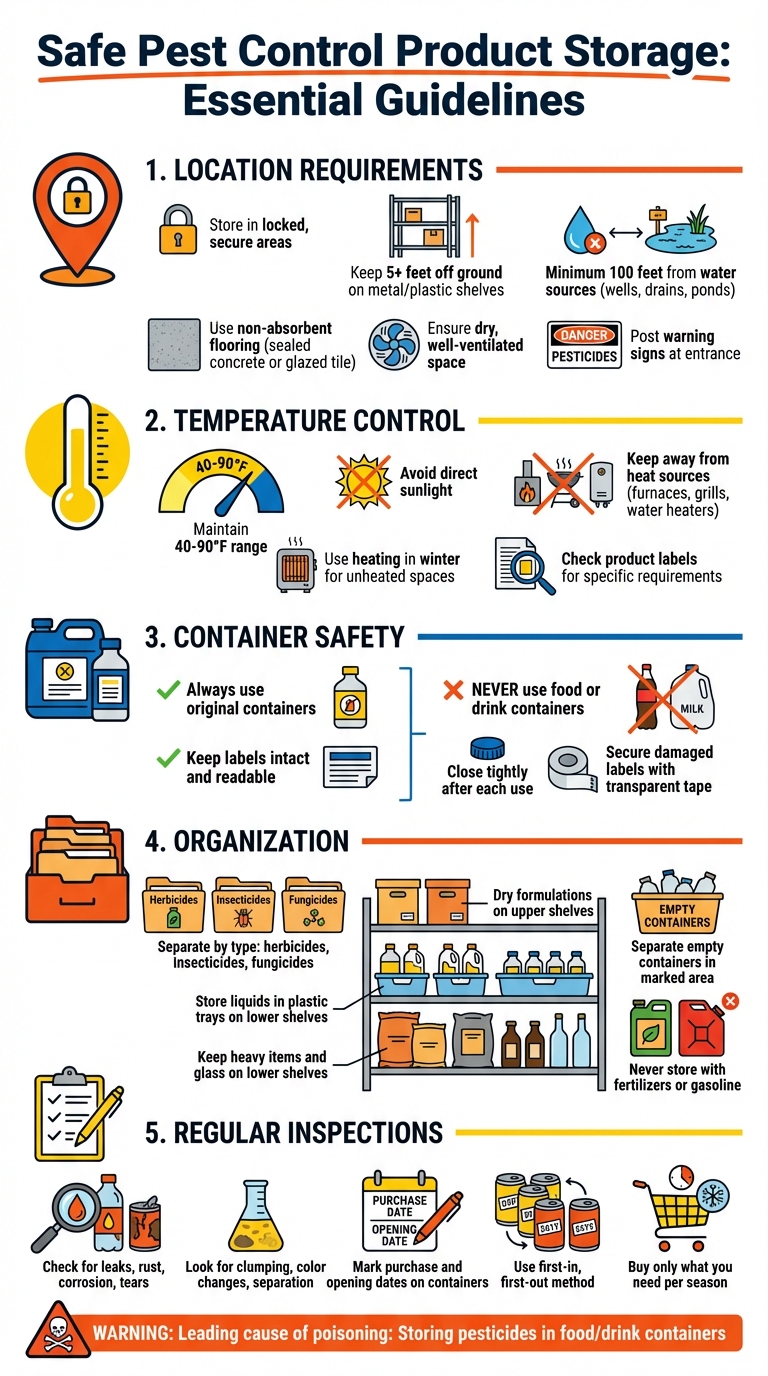
Safe Pest Control Product Storage Guidelines and Best Practices
Pesticide Lockbox Storage For DIY Baits Safety
Pick the Right Storage Location
Storing pesticides safely starts with choosing the right location - a choice that impacts their effectiveness, your household's safety, and the environment. Below are practical tips to help you secure and protect these products.
Store Products Away from Children and Pets
Always keep pesticides in locked, secure areas like utility rooms or garden sheds, accessible only to those trained to handle them. Place them at least 5 feet off the ground on sturdy metal or plastic shelves. These materials are ideal because they won’t absorb chemicals in case of spills. To further ensure safety, post clear warning signs at the storage area’s entrance to alert anyone approaching.
Use a Dry, Well-Ventilated Area
Choose a storage space that is dry and well-ventilated. This helps prevent both chemical degradation and the buildup of harmful vapors. Avoid damp basements, areas prone to flooding, or places with poor air circulation. Never store pesticides near food, animal feed, medical supplies, or clothing. Keep flammable products far from ignition sources like furnaces or grills.
PennState Extension emphasizes:
If water is used to control the fire, then any runoff would be contaminated and therefore would contaminate the surrounding environment.
For flooring, opt for non-absorbent materials such as sealed concrete or glazed tile. Stay away from wood, soil, or carpeting, as these materials are challenging to clean if a spill occurs.
Keep Products Away from Water Sources
Your storage location should also minimize environmental risks. Keep pesticides at least 100 feet away from water sources like wells, drains, ponds, and streams. To prevent moisture issues, elevate containers by 12 inches. For liquid pesticides, use plastic trays on lower shelves to catch leaks, while storing dry formulations on upper shelves to avoid cross-contamination.
Avoid storing pesticides at the base of a slope or in flood-prone areas. If you’re using a separate building for storage, ensure it’s positioned downslope from wells and your home .
Store Products at the Right Temperature
Temperature plays a crucial role in keeping pest control products safe and effective. According to the National Pesticide Information Center, extreme temperatures can alter the chemistry of certain pesticides inside their containers. This can make them less effective - or in some cases, even hazardous.
Keep Temperatures Between 40–90°F
To preserve the chemical stability of most pesticides, store them in environments where the temperature stays between 40°F and 90°F. Freezing temperatures can cause containers made of glass, metal, or plastic to crack or burst. On the other hand, excessive heat can melt plastic, shatter glass, or even cause some products to turn into gas and disperse into the air.
For unheated spaces during winter, consider using a heat source to prevent damage from freezing and thawing cycles. In the summer, avoid storing products in uninsulated areas where temperatures can soar. If necessary, use exhaust fans to reduce heat buildup and remove vapors.
Avoid Direct Sunlight and Heat Sources
Always keep containers out of direct sunlight and away from heat sources like furnaces, water heaters, grills, and lawn mowers . Sunlight can cause rapid overheating, which may damage the active ingredients in the products and increase safety risks - especially for aerosol containers. Additionally, some chemicals, such as certain pool supplies, are strong oxidizers. If exposed to heat or contaminated by fuels, they could ignite spontaneously.
Read Product Labels for Storage Instructions
Check the "Storage and Disposal" section on the product label for specific temperature guidelines. Labels often include warnings like "Keep from freezing" or "Do not store above 100°F". For more detailed information, refer to the product’s Safety Data Sheet (SDS). If you've mixed products, watch for changes like clumping, layering, or discoloration - these are signs of damage caused by improper storage temperatures. Up next, we’ll cover why keeping products in their original containers is essential for maintaining their quality.
Store Products in Original Containers
Always keep pesticides in their original containers to ensure safety and maintain the chemical's integrity. These containers are specifically designed to handle the chemicals they hold, minimizing risks like leaks, corrosion, or melting that can happen with other containers. The National Pesticide Information Center emphasizes:
"The original container is designed to protect the product and it's made of materials that will withstand the chemicals in the product."
Keep Labels Intact and Readable
Labels on pesticide containers are more than just stickers - they’re your guide to safe usage. They include instructions, ingredient details, first aid steps, and emergency contact information. In case of a medical emergency, having the label ensures doctors can identify the exact chemical involved. The EPA registration number on the label is especially critical, as it allows quick access to detailed safety information.
If your label starts to peel or fade, use transparent tape to secure it and keep it legible. Preserving the label ensures you’ll always have the necessary instructions when handling or storing pesticides.
Never Use Food or Drink Containers
Using food or drink containers to store pesticides is one of the leading causes of accidental poisoning. This practice can easily lead to dangerous mix-ups. A nationwide EPA study found that nearly half of households with children under age 5 had at least one pesticide stored within the child’s reach.
Even if you wash an empty food or drink container, it’s not safe for pesticide storage - residual chemicals can linger and cause harm. Frederick M. Fishel from the University of Florida offers a clear warning:
"Never use milk jugs, soft drink bottles, fruit jars, medicine bottles, fuel cans, or other types of non-pesticide containers to store pesticides."
Close Containers Tightly After Each Use
Always make sure pesticide containers are sealed completely after every use, even if they’re equipped with child-resistant caps. These caps are only effective when properly secured.
If the original container is damaged, only transfer the product to an empty container that previously held the exact same pesticide and still has its label attached. For opened bags of powders or granules, place them in resealable plastic bags to protect against moisture and prevent spills.
Next, we’ll cover how to organize your storage area to prevent chemical interactions.
sbb-itb-0bbb908
Organize and Separate Products
Once you've ensured the right location and temperature for storage, keeping your products well-organized is key to avoiding dangerous chemical reactions or contamination. Store herbicides, insecticides, and fungicides in different sections of your storage area to prevent cross-contamination and accidental misuse. Even if products appear similar, mixing different types of pesticides can create serious hazards.
Keep Pesticides Away from Other Chemicals
Never store pesticides alongside fertilizers or gasoline. Some chemicals can react violently when combined. For example, strong oxidizers like pool chemicals can ignite spontaneously if placed near flammable liquids such as gasoline. Additionally, certain volatile products, like specific 2,4-D formulations, can emit vapors that contaminate nearby pesticides, fertilizers, or seeds. Rodenticides and avicides should also be kept separate, as they can absorb odors, which may reduce their effectiveness as bait.
Organize Products by Type
Store dry formulations on upper shelves and liquids in plastic trays to catch potential leaks. Heavier items and glass containers should go on lower shelves to make handling easier and minimize the risk of breakage. Opt for metal or plastic shelving instead of wood, as wood can absorb spills and is harder to clean.
Set Aside Space for Empty Containers
Dedicate a clearly marked area for storing empty, triple-rinsed containers to avoid accidental reuse or contamination. Using a pesticide intended for disposal by mistake can lead to dangerous and costly errors. Fred Fishel from the University of Missouri emphasizes this point:
"If you have pesticides and pesticide containers that are being held for disposal, store them in a special section of the storage site."
Make sure this waste area is locked and secure, just like your main storage space. Even empty containers should be kept out of reach of children and unauthorized individuals.
Up next, we’ll cover how to routinely inspect your storage area to ensure ongoing safety and compliance.
Check Your Storage Area Regularly
After storing your products properly, it's important to keep an eye on them with regular inspections. This helps ensure they stay safe and effective over time. Make it a habit to inspect your storage area and log the dates and findings - it’s a simple way to catch potential problems early.
Look for Leaks, Damage, or Expired Products
During inspections, check containers for any signs of damage like rust, corrosion, tears, splits, or leaks. Pay attention to the labels - if they’re fading, secure them with transparent tape to keep the information visible. Watch for signs of deterioration, such as clumping powders, liquids that separate or change color, or containers showing wear from extreme temperatures.
"If you can't identify the contents of the container, or if you can't tell how old the contents are, follow the advice on safe disposal." - EPA
To keep track of product freshness, write both the purchase date and the date you opened each container directly on the label. This makes it easy to spot items that have passed their shelf life - some chemicals, like certain pesticides, can lose their effectiveness in as little as one month. Use the "first-in, first-out" method to manage your inventory, so older products are used before newer ones.
If you notice any issues during your inspection, address them right away.
Reseal Opened Containers
After using a product, make sure to tightly reseal all containers and bags. This prevents moisture, evaporation, or cross-contamination from affecting the contents. For extra protection, place opened bags of powders or granules into sealable plastic bags.
Buy Only What You Need
Limit your purchases to only what you’ll need for the season. This reduces storage challenges, minimizes waste, and lowers the risk of dealing with expired or damaged products. By buying just enough, you’re also less likely to face the hassle of disposing of unused chemicals safely.
Conclusion
Proper storage practices play a crucial role in ensuring safety and maintaining the effectiveness of pesticides. The process is simple when you stick to a few essential rules: keep pesticides in their original containers with labels intact, store them in locked areas out of reach of children and pets, maintain appropriate temperatures, and organize them by type. These steps form the foundation of safe pesticide storage.
"Safely storing pesticides is important to protect people, pets, and the environment." - EPA
One of the most important safety measures is to never transfer pesticides into food or drink containers. This error is a major cause of accidental poisonings. Additionally, keeping the product label intact is critical, as it provides all the necessary storage instructions.
Make it a habit to inspect your storage area regularly. Look for leaks, damaged containers, or expired products, and address these issues promptly. Purchasing only the amount you need for the current season also helps reduce waste and minimizes risks. These practices not only protect your family and pets but also safeguard the environment while keeping your pesticides effective.
For tailored pest control solutions that are safe for both kids and pets, complete with easy-to-follow instructions, check out Remedy DIY Pest Control.
FAQs
What should I do if I spill a pesticide accidentally?
If a pesticide spill occurs, acting swiftly and safely is essential to protect yourself, others, and the surrounding area. Begin by keeping children, pets, and anyone else away from the spill. Make sure to wear protective gear, such as gloves, long sleeves, goggles, and a mask if necessary - check the product label for specific recommendations.
For liquid spills, use absorbent materials like sand or kitty litter to contain and soak up the pesticide. If dealing with powders, carefully sweep them onto a disposable surface. Gather all contaminated materials and place them in a sealed, clearly labeled container. Follow the disposal instructions provided on the pesticide label or reach out to your local hazardous waste facility for guidance. Avoid using food or drink containers for storing contaminated materials.
Once the cleanup is complete, wash the affected area thoroughly with water and a mild detergent, adhering to any directions on the product label. Make sure to dispose of all waste properly, then wash your hands and any exposed skin with soap and water. If you experience any symptoms or feel unwell, seek medical attention immediately. By following these steps, you can ensure safety and reduce potential harm to the environment.
How do I know if a pesticide has expired or lost its effectiveness?
To determine if a pesticide is past its prime or has lost its effectiveness, begin by checking the label for an expiration or shelf-life date. Beyond that, pay attention to any visible or physical changes in the product. Signs like strange odors, discoloration, thickening, clumping, or the presence of crystals or sludge often mean the active ingredients have degraded, making the pesticide less effective. To preserve its quality and performance, always store the product as directed on the label.
Why should I store pesticides in their original containers?
Keeping pesticides in their original containers is not just a good practice - it’s essential for safety and proper use. These containers come with labels that include critical details, such as how to use the product, its active ingredients, and what to do in case of an emergency. Plus, the packaging is specifically designed to handle the chemicals inside, minimizing the chances of leaks, spills, or accidental exposure. Storing pesticides this way also helps avoid mix-ups or misuse, ensuring they’re used correctly and handled with care.